
核能

Search documents
《华尔街日报》:能源股正形成最狂热的 AI 泡沫 --- The Frothiest AI Bubble Is in Energy Stocks - WSJ
2025-10-19 15:58
Summary of Key Points from the Conference Call Industry Overview - The focus is on the energy sector, particularly on companies with no revenue that are experiencing inflated valuations due to speculation related to artificial intelligence (AI) [5][18]. Core Insights and Arguments - There is a significant concern that the real excess in market valuations is occurring within energy stocks rather than technology stocks, which are often profitable [4][5]. - A group of non-revenue-generating energy companies has collectively reached a market capitalization exceeding $45 billion, driven by expectations that tech companies will eventually purchase power from them [5][6]. - Oklo, a nuclear startup backed by OpenAI's CEO Sam Altman, has seen its shares rise approximately eightfold this year, resulting in a market cap of around $26 billion, making it the largest U.S. public company with no revenue in the past 12 months [6][7]. - Analysts predict that Oklo will not generate substantial revenue until 2028, as it is still in the development phase of small modular nuclear reactors [7][18]. - Another zero-revenue company, Fermi, debuted with a valuation of roughly $19 billion, making it one of the largest no-revenue companies at IPO, alongside Rivian and Corvis [8][9]. - Fermi plans to build 11 gigawatts of power capacity but has only secured equipment for 5% of this goal and lacks binding customer contracts [10][12]. Additional Important Points - Companies developing smaller "micro-modular" nuclear reactors are also seeing high valuations despite not generating revenue, with Nano Nuclear Energy valued at over $2 billion and Terra Innovatum exceeding $1 billion [13]. - Some companies, like NuScale Power and Plug Power, generate revenue but are not expected to turn a profit for several years, with projections indicating profitability may not occur until 2030 [15]. - The speculative nature of investments in energy companies is partly due to the high valuations of profit-generating firms, which have seen significant stock price increases [16]. - There is a historical precedent for zero or minimal revenue companies failing to deliver on their promises, as seen with electric vehicle startups that went public in 2020 [17]. - If the AI bubble bursts, energy companies without revenue are likely to experience the most significant declines, as they lack financial buffers [18].
记者手记:集群星之力“造太阳”
Xin Hua She· 2025-10-19 09:39
Core Insights - The conference on controlled nuclear fusion held in Chengdu gathered nearly 2000 participants from over 60 countries, highlighting the global enthusiasm and commitment towards the commercialization of fusion energy [1][2] Group 1: International Cooperation - The establishment of the first International Atomic Energy Agency (IAEA) Fusion Research and Training Collaboration Center in China signifies a consensus among multiple countries on the importance of international collaboration in the fusion energy sector [2] - Representatives from various countries expressed a strong desire for cooperation and technology exchange, emphasizing the need for diverse collaboration models to share insights on technology and regulation [4] Group 2: Technological Advancements - The fusion energy sector is currently transitioning from scientific research to engineering practice, marking a critical phase in its development [2] - The global fusion energy research has entered a new stage characterized by parallel development and rapid iteration, with scientists and engineers collaborating to envision future energy solutions [4] Group 3: Industry Development - The achievements in the ITER project, particularly the first wall project led by a prominent scientist, demonstrate the significant technological advancements and the development of related industries over the past decades [2] - The "China Circulation No. 3" project, which successfully achieved its first discharge in December 2020, reflects the ongoing commitment and emotional investment of the younger generation in advancing fusion energy [2]

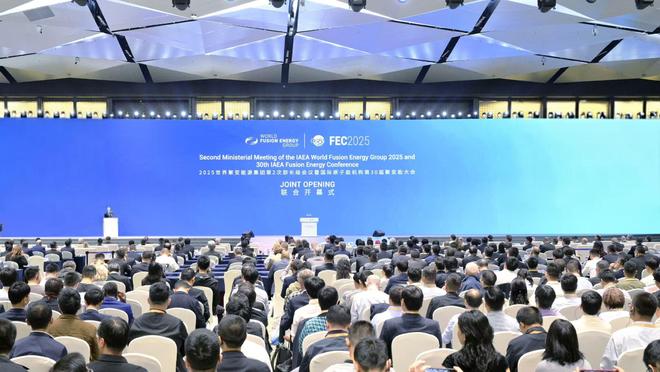
聚变能的研发,走到了哪一步?
Zhong Guo Zheng Quan Bao· 2025-10-18 14:47
Core Insights - The development of fusion energy is progressing towards a new stage, with multiple pathways and rapid iterations being explored globally [4][5] - Achieving controlled nuclear fusion is considered one of the most complex energy systems conceived by humanity, requiring extreme conditions that are difficult to replicate on Earth [3][5] Industry Developments - The main technological routes for fusion energy are magnetic confinement and inertial confinement, with devices like Tokamaks and stellarators being key to magnetic confinement [5] - The International Thermonuclear Experimental Reactor (ITER) is the largest global fusion research project, aiming to demonstrate the feasibility of magnetic confinement fusion by 2040 to 2050 [5] China's Role - China has significantly enhanced its international standing in fusion energy, establishing a research and training collaboration center in Chengdu under the International Atomic Energy Agency [7] - The country has made notable advancements in controlled nuclear fusion technology, including achieving temperatures exceeding 100 million degrees Celsius in its "Chinese Circulation No. 3" project [8] - China is committed to international collaboration in advancing sustainable energy innovation and aims to contribute to a cleaner and more sustainable world [8]
摩根大通:为AI供电的“终极方案”?详解SMR(小型模块化核反应堆技术)
美股IPO· 2025-10-18 08:40
Core Viewpoint - Morgan Stanley identifies Small Modular Reactors (SMR) as a key solution to meet the surging electricity demand from AI and data centers, highlighting their advantages in compact design and modular deployment [1][3]. SMR Technology Advantages and Market Positioning - SMR redefines nuclear energy applications through five core features: small design for flexible deployment, modular construction to reduce costs, capability for both grid-connected and off-grid installations, a fuel cycle lasting up to 30 years, and built-in passive cooling mechanisms [4][5]. - The primary developers of SMR are concentrated in the US, Canada, and Europe, with water-cooled reactors currently dominating the market [5]. - SMR's unique value lies in meeting diverse energy needs, including high-temperature gas-cooled reactors suitable for hydrogen production and industrial applications [5]. Main Technical Routes and Development Progress - SMR technology is categorized into five concepts based on coolant type: water-cooled, molten salt, gas-cooled, heat pipe, and metal-cooled [6][9]. - The light water reactor (LWR) is the most mature technology, with NuScale's designs being the only ones to receive standard design approval from the NRC [6][19]. - Kairos Power has obtained construction permits for its fourth-generation SMR, aiming for operational status by 2027 [20]. Regulatory Environment and Deployment Timeline - The regulatory process for US nuclear plants involves multiple stages of approval from the NRC, with recent reforms aimed at expediting this process [18]. - The Trump administration's regulatory reforms have significantly accelerated the approval timeline, with a target of 18 months for review [18]. Market Opportunities from Data Center Electricity Demand - Major cloud service providers like Amazon and Google are expected to support SMR projects to meet their clean energy needs, with Google already partnering with Kairos Power [22]. - The Department of Energy has included sodium-cooled fast reactors, high-temperature reactors, and molten salt reactors in its 2030 deployment watch list [22]. Commercialization Challenges - The competitive landscape due to multiple technical routes may hinder any single technology from reaching commercial scale [23]. - Supply chain readiness is uneven, with limited availability of HALEU fuel posing significant challenges for advanced SMR concepts [23]. - Economic feasibility remains to be validated, as initial costs and economies of scale are critical tests for SMR projects [23].
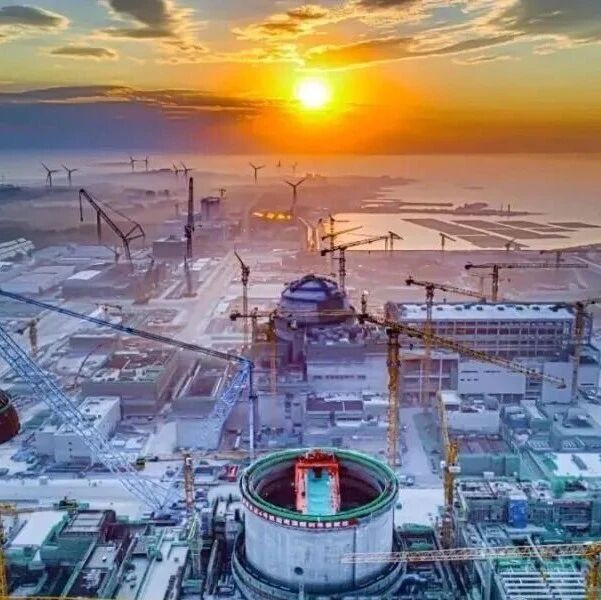
中国同辐(01763.HK)与巴西国家核能委员会签署同位素采购领域合作谅解备忘录
Ge Long Hui· 2025-10-17 14:49
Core Viewpoint - China National Nuclear Corporation (中国同辐) signed a Memorandum of Understanding with the Brazilian National Nuclear Energy Commission (巴西国家核能委员会) to enhance cooperation in the field of isotope procurement, aiming to improve the development and application of isotope products [1] Group 1: Partnership and Cooperation - The agreement focuses on long-term collaboration in isotope product supply, quality management, and information exchange [1] - This partnership is expected to support the development of Brazil's nuclear technology applications and the radioactive pharmaceuticals industry [1] Group 2: Strategic Expansion - China National Nuclear Corporation aims to leverage this signing as an opportunity to expand its international cooperation footprint [1] - The company plans to promote its technology, products, and services internationally, contributing to the peaceful use of nuclear technology and public health initiatives [1]
中国同辐(01763) - 自愿性公告 - 中国同辐与巴西国家核能委员会签署合作谅解备忘录
2025-10-17 14:33
香港交易及結算所有限公司及香港聯合交易所有限公司對本公告的內容概不負責,對其準確性 或完整性亦不發表任何聲明,並明確表示,概不對因本公告全部或任何部份內容而產生或因倚 賴該等內容而引致的任何損失承擔任何責任。 本公司董事會欣然宣佈,近日,在成都舉行的IAEA第30屆聚變能國際大會中國 邊會上,中國同輻與巴西國家核能委員會(CNEN)簽署了《同位素採購領域合作諒 解備忘錄》。雙方將圍繞同位素產品供應、質量管理、信息交流等方面建立長期合 作機制,共同提升同位素產品的研發與應用能力,助力巴西核技術應用及放射性 藥物產業發展。 (於中華人民共和國註冊成立的股份有限公司) (股份代號:1763) 自願性公告 中國同輻與巴西國家核能委員會簽署合作諒解備忘錄 本公告乃中國同輻股份有限公司(「中國同輻」或「本公司」)自願發出以使股東及潛 在投資者知悉本公司之最新業務進展。 作為中國同位素與放射性藥物領域的骨幹企業,中國同輻將以此次簽約為契機, 積極拓展國際合作佈局,推動技術、產品和服務「走出去」,為促進和平利用核技 術和公共健康事業作出貢獻。 承董事會命 中國同輻股份有限公司 董事長 肖亞飛 中國,北京,2025年10月17 ...
中国同辐(01763) - 自愿性公告 - 中国同辐发佈同位素分离新技术,助力高端核医疗和可控核聚变...
2025-10-17 14:27
香港交易及結算所有限公司及香港聯合交易所有限公司對本公告的內容概不負責,對其準確性 或完整性亦不發表任何聲明,並明確表示,概不對因本公告全部或任何部份內容而產生或因倚 賴該等內容而引致的任何損失承擔任何責任。 CHINA ISOTOPE & RADIATION CORPORATION 中國同輻股份有限公司 本公告乃中國同輻股份有限公司(「中國同輻」或「本公司」)自願發出以使股東及潛 在投資者知悉本公司之最新業務進展。 本公司董事會欣然宣佈,近日,中國同輻附屬公司成都中核高通同位素股份有限 公司「中核高通」正式發佈了基於第四代「MOF」材料的同位素分離新技術——「吸 附捕手」,為高端核醫療和可控核聚變領域注入新動能,開闢了產業化發展新前 景。 「吸附捕手」技術創新性引入了2025年諾貝爾化學獎聚焦的第四代「MOF」材料, 突破傳統同位素分離技術的固有框架,在分子尺度上實現分離材料的「定制化設 計」。「吸附捕手」技術展現出「高純度、高效率、低成本、低能耗」的顯著優勢, 應用面廣泛,覆蓋核醫療、核聚變、重水堆、生物醫學研究等多個面向國民經濟 主戰場的關鍵領域,將為我國構建「自主可控、安全穩定」的同位素供應鏈提供核 ...
核能新贵Oklo(OKLO.US)与Newcleo达成协议 获20亿美元投资建设美国核燃料基础设施
智通财经网· 2025-10-17 13:34
Core Viewpoint - Oklo, a nuclear startup, has announced a joint agreement with Newcleo to invest up to $2 billion in developing advanced fuel manufacturing and production infrastructure in the U.S. [1] Group 1: Investment and Collaboration - The investment will cover multiple projects under U.S. regulation, enhancing transatlantic cooperation for energy security and focusing on building a robust and resilient fuel ecosystem [1] - Swedish advanced nuclear technology developer Blykalla is also considering joint investment in these projects and sourcing fuel-related services from Oklo [1] Group 2: Government Support - U.S. Interior Secretary Bergham stated that the agreement integrates Newcleo's advanced fuel expertise into Oklo's power plants and represents a significant investment in U.S. infrastructure and advanced fuel solutions, aligning with former President Trump's "America First Energy Agenda" [1]
普京:全球能源领域面临三大挑战
中国能源报· 2025-10-17 12:07
Core Viewpoint - The global energy sector is facing three major challenges as outlined by Russian President Vladimir Putin during the "Russian Energy Week" forum, emphasizing the reshaping of energy relations, the increasing importance of the electricity sector, and the need for technological sovereignty [1][2]. Group 1: Reshaping Energy Relations - The first challenge is the restructuring of energy relations, driven by the rise of new economic centers and the impact of Western political pressures that have led many European countries to refuse Russian energy, resulting in industrial decline and increased prices [1]. - Russia maintains its leading position in oil production, accounting for approximately 10% of global output, with an expected production of 510 million tons by the end of the year, reflecting a year-on-year decrease of about 1% [1]. - Russia continues to collaborate within the OPEC+ framework to balance the global oil market and is shifting its natural gas supply towards more promising and responsible buyers while enhancing domestic consumption [1]. Group 2: Importance of the Electricity Sector - The second challenge is the growing significance of the electricity sector, with an expectation that global electricity generation will double in the next 25 years, with about 85% of new electricity demand coming from countries in the Global South [1]. - Russia has implemented over 400 hydropower projects across 55 countries and regions and holds nearly 90% of the global nuclear power plant construction market [1]. - Plans are in place to deepen cooperation in the nuclear energy sector with Global South countries through the BRICS cooperation mechanism [1]. Group 3: Technological Sovereignty - The third challenge is the need for technological sovereignty, advocating for energy-producing countries to transition from being equipment buyers to technology leaders, establishing complete autonomy from energy extraction to processing and transportation at the national level [2]. - Russia is committed to comprehensive technological cooperation with foreign partners to enhance its capabilities in the energy sector [2].
普京:全球能源领域面临三大挑战
Zhong Guo Xin Wen Wang· 2025-10-17 09:19
Group 1 - The core challenge in the global energy sector is the restructuring of energy relationships, driven by the rise of new economic centers and the impact of Western political pressures on Russian energy sales [1][2] - Russia maintains a leading position in oil production, accounting for approximately 10% of global output, with an expected production of 510 million tons by the end of the year, reflecting a year-on-year decline of about 1% [1] - The second major challenge is the increasing importance of the electricity sector, with a forecast that global electricity generation will double in the next 25 years, and 85% of new electricity demand will come from countries in the Global South [1] Group 2 - The third challenge for participants in the global energy market is technological sovereignty, emphasizing the need for energy-producing countries to transition from equipment purchasers to technology leaders [2] - Russia is committed to comprehensive technological cooperation with foreign partners to establish complete autonomy in energy extraction, processing, and transportation [2] - The "Russian Energy Week" forum, held from October 15 to 17, 2023, in Moscow, gathered representatives from 85 countries, focusing on the theme of "Co-creating the Energy Future" [2]