
集成电路

Search documents
猜想谁是26年“易中天”系列——臻镭科技
格隆汇APP· 2026-01-27 10:45
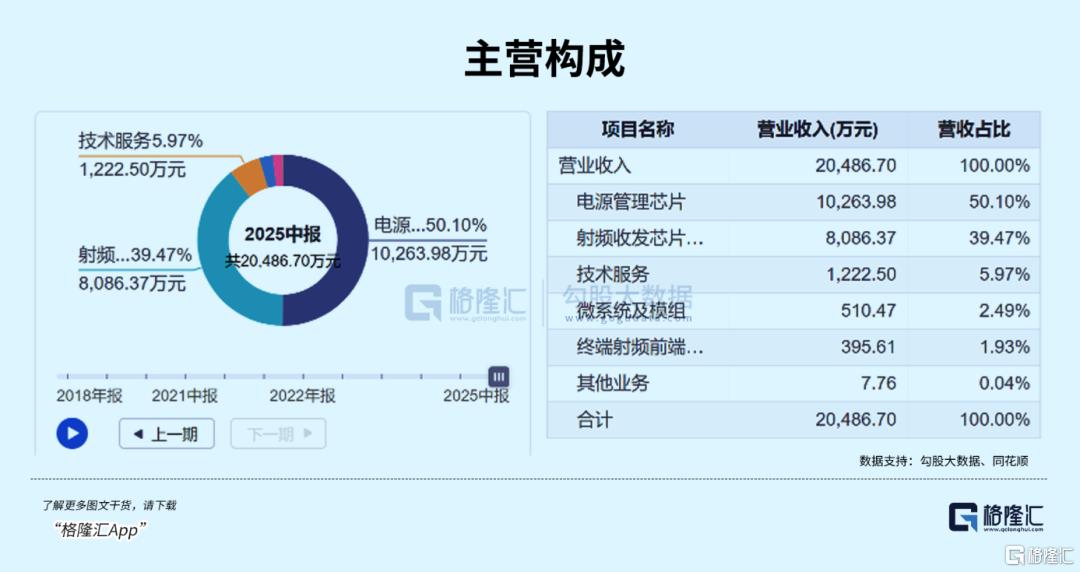
Core Viewpoint - The article emphasizes the potential of Zhenlei Technology (688270) as a key player in the commercial aerospace sector, driven by its technological advantages, industry positioning, and strong performance metrics, particularly in the context of the booming satellite internet and defense information sectors [5][6][12]. Industry and Policy Benefits - Zhenlei Technology's growth is supported by the convergence of three major industry trends: satellite internet, defense informationization, and domestic substitution, providing a strong growth trajectory [6]. - The global low-orbit satellite market is entering a high-frequency launch phase, with significant demand for core hardware, estimated to exceed 470 billion yuan, as companies like China Star Network and Qianfan Constellation plan to deploy over 27,000 low-orbit satellites [7][8]. Core Advantages - Zhenlei Technology has established a robust technological barrier through comprehensive R&D capabilities, holding multiple proprietary technologies and focusing on full-chain product development from chips to systems [13]. - The company has a diversified product matrix that covers critical application scenarios, with significant revenue growth in its core product lines, including a 71.80% increase in revenue from RF transceiver and high-precision ADC/DAC chips [14][19]. Business Breakdown - The company’s four main product lines are driving performance, with the power management chip segment being the largest revenue contributor, accounting for over 50% of total revenue and growing by 95.79% [20][39]. - The RF transceiver and ADC/DAC chips are positioned as the core growth engines, with a revenue share exceeding 39% and a year-on-year growth of 71.80% [19][39]. Financial Performance and Valuation - In the first half of 2025, Zhenlei Technology reported a revenue of 205 million yuan, a 73.64% increase year-on-year, and a net profit of 62 million yuan, reflecting a staggering 1006.99% growth [27][39]. - The company maintains a healthy financial structure with a low debt ratio of 5.99% and a controllable expense ratio of 11.65%, indicating strong operational efficiency [30][31]. Investment Highlights - Zhenlei Technology is positioned to benefit from the satellite internet boom, with a market space exceeding 470 billion yuan for satellite payloads, and is a key domestic supplier benefiting from increasing delivery demands [38]. - The company’s technological advancements and strong financial health suggest a favorable investment opportunity, with projected earnings growth significantly outpacing industry averages, indicating a potential for valuation recovery [32][39].



大港股份:预计2025年净利润同比增长107.36%-153.91%
Xin Lang Cai Jing· 2026-01-27 10:43
大港股份公告,预计2025年度净利润为4900万元到6000万元,同比增长107.36%~153.91%。报告期 内,公司进一步聚焦集成电路测试业务的发展,在客户拓展及中高端测试产品导入环节取得新的进展, 产能利用率提升,测试业务收入实现增长,整体盈利能力提升。 ...

上海:将加快发展集成电路、人工智能、生物医药三大先导产业
Xin Lang Cai Jing· 2026-01-27 10:39
在香港会议展览中心举办的第19届亚洲金融论坛上,上海市委常委、常务副市长吴伟在致辞中指出,时 值"十五五"开局之年,上海正着力构建"2+3+6+6"现代产业体系,具体表现为:推动传统产业数字化、 绿色化转型;加快发展集成电路、人工智能、生物医药三大先导产业;打造新一代电子信息、智能网联 新能源汽车、高端装备、先进材料、新能源及绿色低碳、时尚消费品六大新兴支柱产业;布局未来制 造、未来信息、未来材料、未来能源、未来空间、未来健康六个新的重点领域。 ...
昂瑞微:预计2025年年度归母净利润亏损1.1亿元到-1.5亿元
Xin Lang Cai Jing· 2026-01-27 09:45
Core Viewpoint - The company expects a net profit loss attributable to shareholders of between 110 million to 150 million yuan for the year 2025 due to various operational challenges [1] Group 1: Financial Performance - The anticipated net profit loss for 2025 is projected to be between 110 million to 150 million yuan [1] - The company is experiencing a slowdown in order fulfillment as some clients adjust their purchasing schedules based on their terminal sales expectations and supply chain conditions [1] Group 2: Strategic Adjustments - The company is actively optimizing its customer and order structure to pursue high-quality development, which includes strategically reducing involvement in low-margin and highly competitive projects [1] - The adjustments in strategy have had a negative impact on the company's performance [1] Group 3: Inventory and Asset Valuation - Certain products have been affected by structural changes in customer demand, inventory strategies, and rising material costs, leading to a lower net realizable value than their book value [1] - The company has made provisions for inventory impairment in accordance with the relevant requirements of the Accounting Standards for Enterprises, which has also impacted the current period's performance [1]
猜想谁是26年“易中天”系列——臻镭科技
Xin Lang Cai Jing· 2026-01-27 09:35
Core Insights - The article highlights the potential of Zhenray Technology (688270) as a key player in the commercial aerospace sector, driven by its technological advantages and market positioning in satellite communications and defense information technology [1][29]. Industry and Policy Dynamics - Zhenray Technology's growth is supported by three major industry trends: satellite internet, defense information technology, and domestic substitution, creating a favorable environment for high growth [2]. - The global low Earth orbit (LEO) satellite market is entering a high-frequency launch phase, with significant demand for core hardware, estimated to exceed 470 billion yuan in market space [3][4]. Product and Technology Advantages - Zhenray Technology specializes in RF chips and micro-systems, meeting the demands for miniaturization, low power consumption, and high reliability in satellite applications [3]. - The company has established a strong technological barrier through comprehensive R&D capabilities, holding multiple intellectual property rights and maintaining a leading position in the domestic market [8][29]. Financial Performance - In the first half of 2025, Zhenray Technology reported a revenue of 205 million yuan, a year-on-year increase of 73.64%, and a net profit of 62 million yuan, reflecting a staggering growth of 1006.99% [20][30]. - The company's gross margin stands at 84.54%, with a net profit margin of 30.42%, indicating strong profitability and operational efficiency [20][22]. Market Position and Future Outlook - Zhenray Technology is positioned as a core supplier in the domestic market, benefiting from the increasing demand for satellite launches and defense applications [4][29]. - The company is expected to continue its growth trajectory, with projected revenues reaching 451 million yuan in 2025 and net profits of 130 million yuan by 2027, indicating a robust market outlook [26][30].
臻镭科技:2025年全年净利润同比预增529.64%—642.26%
2 1 Shi Ji Jing Ji Bao Dao· 2026-01-27 09:19
Core Viewpoint - Zhenlei Technology has announced an annual performance forecast, expecting a significant increase in net profit for 2025, driven by growth in demand from special industries and improved operational efficiency [1] Financial Performance - The company anticipates a net profit attributable to shareholders of 123 million to 145 million yuan for 2025, representing a year-on-year increase of 529.64% to 642.26% [1] - The expected net profit after deducting non-recurring gains and losses is projected to be between 104 million and 123 million yuan, reflecting a year-on-year increase of 3678.27% to 4332.00% [1] Market and Industry Dynamics - The company's products and technologies are primarily applied in special fields such as data links, electronic countermeasures, wireless communication terminals, next-generation radios, and phased array communications, as well as in civilian sectors like mobile communication systems and satellite internet [1] - The demand from downstream customers in the special integrated circuit industry has increased due to the domestic special industry cycle, which has positively impacted the company's sales [1] - The company is actively seizing market opportunities in the satellite communication sector, with a steady acceleration in market expansion and significant improvements in project delivery capabilities [1] Operational Efficiency - During the reporting period, the company strengthened cost control, leading to a decrease in operating expenses and an enhancement in operational efficiency and profitability [1]
臻镭科技:2025年净利同比预增530%-642%
Xin Lang Cai Jing· 2026-01-27 09:16
Core Viewpoint - The company expects a net profit attributable to shareholders of 123 million to 145 million yuan in 2025, representing a year-on-year increase of 529.64% to 642.26% [1] Group 1: Company Performance - The company's products and technologies are primarily applied in specialized fields such as data links, electronic countermeasures, wireless communication terminals, next-generation radios, and phased array communications, as well as in civilian areas like mobile communication systems and satellite internet [1] - The demand for products from downstream customers in the special integrated circuit industry has increased due to the influence of the domestic special industry cycle [1] - The company is actively seizing market opportunities in the satellite communication sector, with a steady acceleration in market expansion and a significant improvement in project delivery capabilities, which has driven rapid growth in overall sales revenue [1]
兆芯集成科创板IPO披露首轮审核问询函回复
Bei Jing Shang Bao· 2026-01-27 08:58
Core Viewpoint - Shanghai Zhaoxin Integrated Circuit Co., Ltd. is progressing with its IPO on the Sci-Tech Innovation Board, aiming to raise approximately 4.169 billion yuan for various advanced processor projects and R&D initiatives [1] Group 1: Company Overview - Zhaoxin Integrated focuses on the research, design, and sales of high-end general-purpose processors and supporting chips [1] - The company’s IPO was accepted on June 17, 2025, and entered the inquiry phase on July 9, 2025 [1] Group 2: Fundraising and Investment Plans - The planned fundraising amount is approximately 4.169 billion yuan, which will be allocated to new generation server processors, new generation desktop processors, advanced process processor R&D projects, and a research and development center [1] Group 3: Regulatory Inquiry - The Shanghai Stock Exchange has raised inquiries regarding Zhaoxin Integrated's customer and distribution model, cost and gross margin, as well as R&D investment and capitalization [1]
张江半导体企业,完成数亿元融资 | 上海融资周报(2026年第4期)
Sou Hu Cai Jing· 2026-01-27 07:30
融资综述 加冕研究院据张通社Link数据库统计,1月19日–1月25日,上海企业共发生19起融资事件,其中有7起披露了融资金额,披露比例占36.8%,合计金额29.7 亿元。本周融资事件数比上周少5起。 从行政区域分布来看,本周上海共有8个区发生融资事件。浦东新区融资事件数量最多,有12起。其余各区发生1-2起融资事件。其中,静安区发生1起 2.87亿美元D轮大额融资,金山区发生1起约亿美元的B轮大额融资。 01 左目互娱完成100万元种子轮融资 1月17日,左目互娱(AR+AI项目开发)完成100万元种子轮融资,本轮融资由江夏科投集团独家投资。 融梦科技完成B轮融资 1月19日,融梦科技(AI体育锻炼屏设备)完成B轮融资,本轮融资由泊富基金独家投资。 爱客易智能完成种子轮融资 1月21日,爱客易智能(智能办公)完成种子轮融资,本轮融资由浦东创投集团投资。本轮融资将助力爱客易智能向"下一代AiOFFICE协作平台"的目标加 速迈进,重构智能办公的协同范式。 02 融资事件 人工智能 深穹星核完成数千万天使+轮融资 1月23日,深穹星核(具身智能体)完成数千万天使+轮融资,本轮融资由上市公司友谊时光与元禾原点联 ...

集成电路ETF(159546)涨超2.3%,全球AI服务器出货量同比有望高增
Mei Ri Jing Ji Xin Wen· 2026-01-27 07:24
Core Viewpoint - The integrated circuit ETF (159546) has risen over 2.3% due to the benefits from the AI wave, with significant growth expected in domestic A-share companies' performance by 2025 [1] Industry Summary - The global AI server shipment volume is expected to grow by over 28% year-on-year in 2026, driving price increases for related chips such as storage and CPUs [1] - Samsung Electronics plans to raise the supply price of NAND flash memory by over 100% in Q1 2026, while Intel and AMD are considering a price increase of 10% to 15% for server CPUs in the same quarter [1] - The electronic industry is experiencing a sustained recovery in demand, effective supply clearance, and rising prices for storage chips, with domestic production efforts exceeding expectations [1] - TrendForce forecasts that the storage industry’s output value will grow by 134% year-on-year in 2026, reaching $551.6 billion [1] Company Summary - The integrated circuit ETF (159546) tracks the integrated circuit index (932087), which covers companies involved in the design, manufacturing, packaging, testing, and related materials and equipment of integrated circuits [1] - The index focuses on high-tech and innovative companies, representing the development level of China's integrated circuit industry [1] - The index emphasizes allocation in the technology sector to reflect the overall performance of listed companies related to the integrated circuit industry [1]