
海上风电

Search documents
学习笔记|向海图强 广东推动海洋经济高质量发展
2 1 Shi Ji Jing Ji Bao Dao· 2025-07-31 15:35
Core Viewpoint - The article emphasizes the importance of advancing the construction of a unified national market and high-quality development of the marine economy in Guangdong, which is crucial for building a new development pattern and promoting high-quality growth [1][4]. Group 1: Policy and Regulation - Guangdong has implemented the "Regulations on Promoting High-Quality Development of the Marine Economy," effective from July 1, which focuses on extending marine industries to non-coastal areas and enhancing cooperation in marine capacity [2][4]. - The regulations highlight the need for government planning and guidance to cluster marine enterprises in designated economic zones and explore the establishment of marine industrial parks [2][3]. Group 2: Industry Development - The regulations call for the enhancement of high-end marine engineering equipment manufacturing capabilities and support for breakthroughs in key technologies in deep-sea fishing, marine oil and gas exploration, and marine renewable energy equipment [2][3]. - There is a strong emphasis on the application of new technologies in the marine sector, including the integration of IoT, big data, and artificial intelligence [3]. Group 3: Infrastructure and Economic Growth - The regulations aim to promote the development of offshore wind power and optimize port resources to enhance regional port cluster development [3][4]. - Guangdong's financial commitment to marine economic development is significant, with nearly 2 billion yuan invested over the past seven years to support 315 marine projects [4].
华福证券:深远海海上风电开发将从示范项目开始 重点关注中长期受益产业链
Zhi Tong Cai Jing· 2025-07-31 07:49
深远海海上风电开发将从示范项目开始 根据梳理,浙江和辽宁深远海海上风电推进节奏较快,目前浙江2GW深远海海上风电项目已经完成 EPC、风机、陆上换流阀等重要设备招投标工作;辽宁华电丹东东港一期1GW深远海海上风电项目已经 完成EPC和风机招标,计划2027年12月31日全容量并网。其他沿海省份也在积极推进深远海海风规划和 示范项目,例如广东2023年竞配16GW国管海域项目、广西2023年13.4GW深远海海上风电前期工作咨 询服务招标。目前国内海上风电发展处于从近海到深远海过渡阶段,深远海海上风电建设还没有成熟的 项目经验;而各省积极推进深远海海风示范项目建设,将有助于积累深远海资源开发经验,为后续大规 模开发和建设深远海海上风电奠定基础。 推动海洋经济高质量发展,海上风电担当重任 国家推动海洋经济高质量发展,顶层设计和配套政策预计将逐步落地;做强做优做大海洋产业,海上风 电排在首位,凸显了海风在海洋产业中的重要地位。近年来,海上风电快速发展,用海规模不断扩大, 我国近岸海域可开发利用资源趋于饱和,不同行业用海矛盾日益加剧背景下,强调"规范有序"建设海 风,有利于促进海上风电产业持续健康发展。 风险提示:海 ...
光大证券:海风建设迎来加速 欧洲主要海风国家已明确发展政策目标
智通财经网· 2025-07-31 06:34
2)项目成本降低:一方面,自2024年6月以来欧洲央行已实施八次降息,欧洲海风融资利率不断降低; 另一方面,随着供应链与技术愈加成熟,欧洲海风开发成本已从2010年的5418美元/kW降低至2023年的 3138美元/kW,平准化度电成本(LCOE)已从2010年的0.205美元/kWh降低至2023年的0.067美元/kWh。随 着项目融资、开发成本持续降低,开发商对欧洲海风项目投资意愿得到增强。 智通财经APP获悉,光大证券发布研报称,根据WindEurope,2024年欧洲海风新增装机量为2.6GW,预 计2030年将达到11.8GW。此前俄乌冲突曾引发欧洲天然气危机,当前向可再生能源转型已成为欧洲各 国的战略共识,发展海上风电的重要性持续提高;随着项目融资、开发成本持续降低,开发商对欧洲海 风项目投资意愿得到增强;此外,欧洲多个国家通过行政手段设立政策目标、改革项目拍卖制度等,持 续推动海风加速发展。欧洲海风景气度持续提高,未来随着需求不断释放,国内积极布局欧洲市场的海 风企业有望充分受益。 光大证券主要观点如下: 受益于战略地位提高、项目成本降低、政策驱动等,欧洲海风建设迎来加速 根据WindEur ...





海风专题报告:深远海海上风电已经启航
Huafu Securities· 2025-07-31 05:26
Investment Rating - Industry rating: Outperform the market (maintained) [1] Core Viewpoints - The development of offshore wind power is crucial for promoting high-quality development of the marine economy, with offshore wind power taking the lead in the marine industry [2][5] - The deep-sea offshore wind power development will start with demonstration projects, with significant progress in Zhejiang and Liaoning provinces [2][4] - Investment suggestions focus on the mid-to-long-term beneficiaries of deep-sea offshore wind power development and deep-sea technology [2][49] Summary by Sections Promoting High-Quality Development of Marine Economy - The national strategy emphasizes the importance of offshore wind power in the marine industry, highlighting the need for orderly construction amid increasing competition for marine resources [5][10] Progress of Deep-Sea Offshore Wind Power - Zhejiang has planned six deep-sea offshore wind power zones, with a total capacity of 28GW, and is actively developing demonstration projects [14][37] - Liaoning's first phase of the 1GW deep-sea offshore wind power project is scheduled for full capacity grid connection by December 31, 2027 [34] Investment Recommendations - Focus on the supply chain benefiting from deep-sea offshore wind power development: 1. Submarine cable segment: Recommended companies include Dongfang Cable, Zhongtian Technology, and Hengtong Optic-Electric [49] 2. Offshore wind foundation and marine engineering: Recommended companies include Dajin Heavy Industry, Haili Wind Power, and Tian Shun Wind Power [49] 3. Turbine manufacturers with sufficient orders: Recommended companies include Goldwind Technology, Yunda Co., Sany Heavy Energy, and Mingyang Smart Energy [49]
数读东部海洋经济圈,4.6万亿蓝色成绩单拿下近半壁江山
Zheng Quan Shi Bao Wang· 2025-07-31 05:12
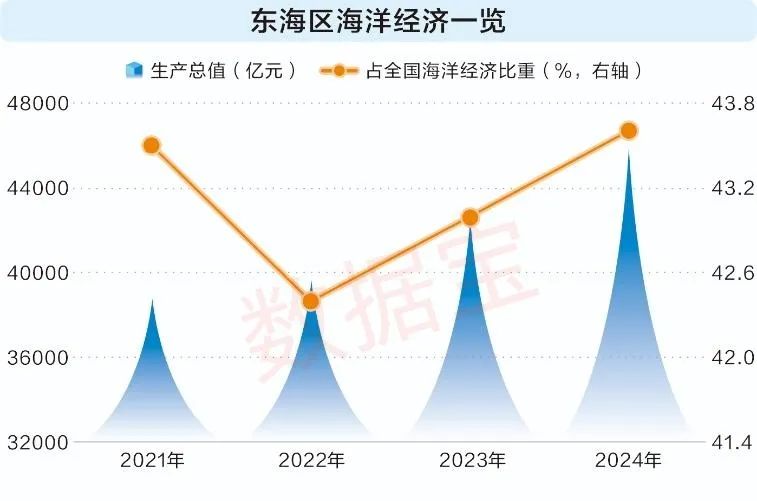
Core Viewpoint - The Eastern Marine Economic Zone, comprising Jiangsu, Shanghai, Zhejiang, and Fujian, is a vital and promising area for marine economic development in China, with significant growth in marine industries and a notable contribution to the national marine GDP [1][5]. Group 1: Marine Economic Growth - In 2024, the marine GDP of the Eastern Marine Economic Zone is projected to reach 45,992.9 billion yuan, representing a year-on-year growth of 7.1% and accounting for 43.6% of the national marine GDP [1]. - The marine industry structure in the Eastern Marine Economic Zone is continuously optimizing, with the primary, secondary, and tertiary industries contributing 4.0%, 36.3%, and 59.7% to the marine GDP, respectively [3][4]. - The total value added of 15 marine industries in the Eastern Marine Economic Zone is expected to grow by 8.5% in 2024, with traditional industries like marine oil and gas, shipbuilding, and marine tourism experiencing double-digit growth [4]. Group 2: Jiangsu Province - Jiangsu's marine economy is set to exceed 1 trillion yuan for the first time in 2024, growing from over 550 billion yuan in 2014 [6]. - The cumulative installed capacity of offshore wind power in Jiangsu reached 11.83 million kilowatts in 2024, with a total power generation of 32.8 billion kilowatt-hours, ranking among the top in the country [8]. - The number of specialized and innovative small and medium-sized enterprises in Jiangsu's marine sector increased by 58.8% year-on-year, reaching 786 by the end of 2024 [8]. Group 3: Zhejiang Province - Zhejiang has the longest coastline in China at 6,715 kilometers and has developed a comprehensive port system centered around Ningbo-Zhoushan Port, which is a global leader in cargo throughput [9][11]. - In 2024, Ningbo-Zhoushan Port achieved a cargo throughput of 1.377 billion tons, a 4% increase, and a container throughput of 39.3 million TEUs, marking an 11% growth [9]. - Zhejiang established a Marine Economy Development Bureau to enhance its marine economic capabilities and plans to invest over 60 billion yuan in 120 strong port projects by 2025 [11]. Group 4: Fujian Province - Fujian's marine GDP is expected to exceed 1.25 trillion yuan in 2024, with a year-on-year growth of 6.1%, maintaining its position as the third-largest marine economy in China [12]. - The total aquatic product output in Fujian reached 9.246 million tons in 2024, with a 3.9% increase, and the province continues to lead in aquatic product exports [12][14]. - Fujian is also focusing on marine biomedicine, with significant developments in marine high-tech industrial parks and a strong emphasis on marine pharmaceuticals [14]. Group 5: Shanghai - Shanghai's marine GDP is projected to reach 1,138.7 billion yuan in 2024, contributing 10.8% to the national marine GDP despite having only 0.35% of the national marine area [15]. - The marine advanced manufacturing sector in Shanghai is thriving, with the shipbuilding industry showing significant growth, including a 20% increase in industrial output value [15][17]. - The marine tourism sector in Shanghai is also expanding, with a nominal growth of 17.6% in value added, making it a new growth point for the industry [18].

数读东部海洋经济圈 4.6万亿蓝色成绩单拿下近半壁江山
Zheng Quan Shi Bao· 2025-07-30 19:01
Core Viewpoint - The East China Sea Economic Zone, including Jiangsu, Shanghai, Zhejiang, and Fujian, is a vital area for China's marine economy, showing significant growth and structural optimization in marine industries, with a projected marine GDP of 45,992.9 billion yuan in 2024, a 7.1% increase year-on-year, accounting for 43.6% of the national marine GDP [9][10]. Group 1: Marine Economic Growth - Jiangsu's marine economy surpassed 1 trillion yuan for the first time in 2024, maintaining a steady growth trend since 2014 [11]. - Fujian's marine GDP exceeded 1.25 trillion yuan in 2024, marking a 6.1% year-on-year growth, ranking third nationally for ten consecutive years [15]. - Shanghai's marine GDP reached 1,138.7 billion yuan in 2024, contributing 10.8% to the national marine GDP, with a significant increase in advanced manufacturing [17]. Group 2: Industry Structure and Performance - In 2024, the East China Sea's marine industry structure showed a decline in the first and second industries' share, with the third industry increasing to 59.7% [10]. - Jiangsu's marine oil and gas industry led with a value-added of 7.73 billion yuan, growing by 37.5%, while other traditional industries also saw double-digit growth [10]. - Shanghai's marine shipbuilding industry achieved a value-added of 21.67 billion yuan, with significant increases in new orders and deliveries [17]. Group 3: Regional Highlights - Zhejiang's Ningbo-Zhoushan Port maintained its position as the world's busiest port, handling 1.377 billion tons of cargo in 2024, a 4% increase [13]. - Fujian is recognized as the "seafood granary," with a total aquatic product output of 9.246 million tons in 2024, leading the nation in various seafood exports [15][16]. - The establishment of the Marine Economic Development Bureau in Zhejiang aims to enhance the province's marine economic potential and support high-quality economic development [14].
广东新能源产业产值规模已达1.1万亿元
Nan Fang Nong Cun Bao· 2025-07-30 09:31
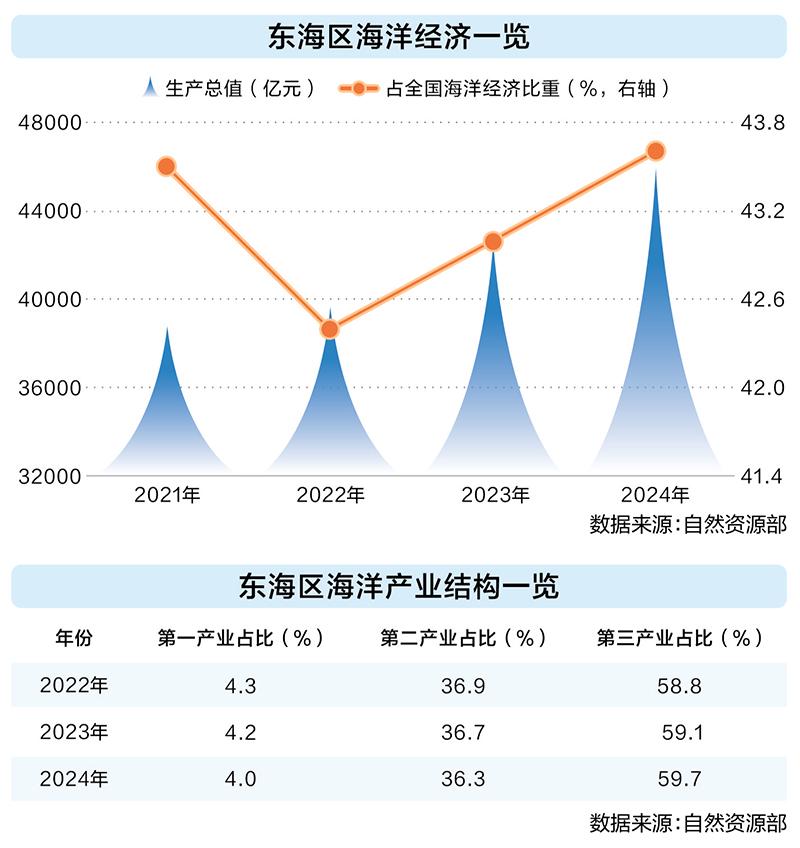
Core Viewpoint - The development of the green low-carbon industry in Guangdong is crucial for achieving carbon peak and carbon neutrality goals, and it serves as a new driving force for high-quality development in the province, with significant strategic importance and market potential [2][3][4]. Group 1: Industry Scale and Achievements - The total output value of the new energy industry in Guangdong is projected to reach 1.1 trillion yuan in 2024 [14]. - Guangdong has created 400 national-level green factories and established the country's first 1 million-ton hydrogen-based vertical furnace project [10][9]. - The total area of green buildings in the province has exceeded 1 billion square meters, with over 95% of new buildings being green [11]. Group 2: Renewable Energy Development - Guangdong has developed a complete industrial chain for offshore wind power, with an installed capacity exceeding 12 million kilowatts, ranking first in the country [13]. - The province's nuclear power installed capacity is also the highest in the nation [13]. - The new energy sector includes offshore wind power, new energy storage, photovoltaics, and hydrogen energy [14]. Group 3: Electric Vehicle and Battery Industry - The automotive industry in Guangdong is expected to achieve revenue exceeding 1.28 trillion yuan in 2024 [16]. - The province is nurturing globally competitive companies in electric and intelligent vehicles, including BYD, GAC Group, and Xpeng Motors, as well as battery manufacturers like Yiwei Lithium Energy and Xinwanda [17][19]. Group 4: Energy Storage and Recycling - The revenue of the new energy storage industry in Guangdong is projected to be around 400 billion yuan in 2024, with an installed capacity of 3.5 million kilowatts, a year-on-year increase of 114% [21]. - The province's energy-saving and recycling technology and service industry accounts for about 10% of the national scale, with several companies recognized in the top 50 environmental enterprises in China [22][24]. Group 5: Future Development Strategies - Guangdong aims to leverage the opportunity to build a world-class green low-carbon industrial cluster in the Greater Bay Area, enhancing its development capabilities and promoting a comprehensive green transformation of the economy and society [29][31]. - The province plans to improve the policy framework for green low-carbon industry development and focus on high-growth and strategic industries [32][34]. - There will be an emphasis on technological innovation and demonstration applications in the green low-carbon sector [35][36].




10万亿海洋经济崛起!硬科技注入产业发展澎湃动力
Zheng Quan Shi Bao Wang· 2025-07-30 01:17
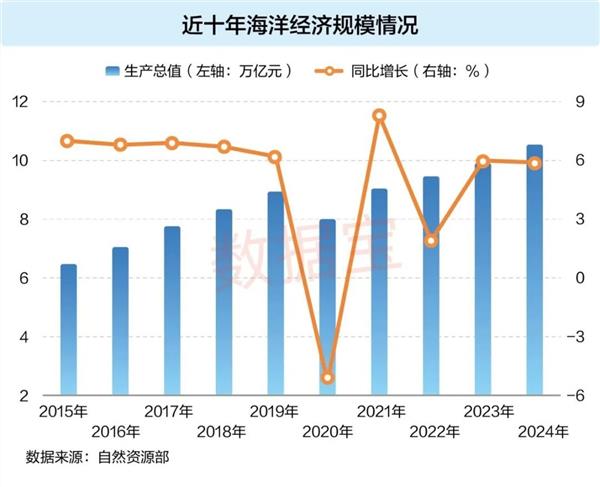
Economic Overview - The scale of China's marine economy is steadily growing, with a historic breakthrough of over 10 trillion yuan expected in 2024, accounting for approximately one-third of global shipping volume and container throughput [1][2] - From 2020 to 2024, the marine economy's scale increased from 8 trillion yuan to 10.54 trillion yuan, indicating a growth rate higher than many traditional industries [2][4] Strategic Importance - The marine economy is positioned as a crucial strategic element in China's modernization efforts, emphasizing high-quality development and exploration of marine resources [2][6] - The marine economy's contribution to GDP is rising, projected to reach 7.81% in 2024, marking a new high since 2020 [4] Technological Innovation - Technological innovation is a key driver for the growth of the marine economy, with emerging industries showing a 7.2% increase in added value in 2024, outpacing the overall marine GDP growth [7][9] - Significant advancements include the establishment of a marine microbial genome database and the development of new marine pharmaceuticals [9] Industry Structure - The marine economy's industrial structure is evolving, with the secondary industry contributing 3.77 trillion yuan in 2024, representing 35.8% of the total, indicating a strong performance since 2019 [10] - Companies like China Shipbuilding are enhancing their capabilities in deep-sea equipment and fostering a cycle of innovation and industry demand [11] Global Competitiveness - China leads globally in several marine sectors, with 69.4% of new marine engineering equipment orders in 2024, maintaining its position for seven consecutive years [12][13] - The country is also a dominant player in offshore wind energy, holding a significant share of the global market and continuing to expand its capacity [13] Future Outlook - The rise of the 10 trillion yuan marine economy is not only a response to economic needs but also a vital part of national strategy, with expectations for further breakthroughs supported by technological advancements [14]
10万亿海洋经济崛起硬科技注入产业发展澎湃动力
Zheng Quan Shi Bao· 2025-07-28 17:59
Group 1 - The core viewpoint of the articles emphasizes the significant growth and strategic importance of China's marine economy, which is projected to exceed 10 trillion yuan in 2024, marking a historic milestone [1][2][8] - The marine economy is defined as economic activities centered around the development and utilization of marine resources, encompassing various sectors such as marine energy, fisheries, shipping, tourism, equipment manufacturing, biomedicine, and environmental technology [2][8] - The marine economy's contribution to China's GDP is increasing, with projections indicating it will account for 7.81% of GDP in 2024, the highest since 2020 [3][8] Group 2 - The marine economy's total output value has grown from 8 trillion yuan in 2020 to 10.54 trillion yuan in 2024, reflecting a growth rate that surpasses many traditional industries [2][3] - In the first quarter of 2025, the marine economy maintained a positive growth trend, with a preliminary marine production value of 2.5 trillion yuan, representing a year-on-year increase of 5.7% [3] Group 3 - Technological innovation is a key driver of growth in the marine economy, with emerging industries in this sector seeing an increase in added value of 7.2% in 2024, outpacing the overall marine production value growth [4] - The marine economy's industrial structure is being optimized, with the second industry's production value reaching 3.77 trillion yuan in 2024, accounting for 35.8% of the total [4] Group 4 - China has established a leading position in various marine sectors, with the country securing 69.4% of the global market share for newly contracted marine engineering equipment in 2024 [6][7] - The shipbuilding industry continues to dominate globally, with China maintaining the top position in shipbuilding completion, new orders, and hand-held orders for 15 consecutive years [6][7] Group 5 - The marine economy is not only a response to economic development needs but also a crucial component of national strategy, leveraging China's rich marine resources and technological capabilities for further breakthroughs [8]
电力设备与新能源行业周观察:海内外人形机器人产业布局加速 价格法修正草案公开征求意见
Xin Lang Cai Jing· 2025-07-27 12:34
Group 1: Humanoid Robots and AI Technology - The humanoid robot industry is accelerating its layout both domestically and internationally, with AI technology breakthroughs expected to lead to mass production [1] - There is a strong demand for domestic substitution of core components in humanoid robots driven by cost reduction needs, indicating a broad market space [1] - Domestic companies that achieve breakthroughs first are likely to benefit significantly [1] Group 2: New Energy Vehicles and Solid-State Batteries - The industrialization of solid-state batteries is progressing, driven by the need for battery technology upgrades, which is a core driver of expanding terminal demand [1] - Solid-state batteries are identified as the next-generation battery technology due to their high energy density and safety advantages [1] - The maturation of battery technology and the improvement of the industrial chain are expected to accelerate the industrialization process of solid-state batteries [1] Group 3: New Energy and Photovoltaic Industry - The public consultation on the price law amendment aims to address "involution" competition, with expectations for the photovoltaic industry to return to an orderly competitive state [2] - Recent price increases in upstream silicon materials and wafers are anticipated to be transmitted downstream, indicating potential for price rebounds in components [2] - Companies benefiting from this trend include JA Solar, Trina Solar, and JinkoSolar, among others [2] Group 4: Offshore Wind Power Projects - Longyuan Power has initiated the preliminary bidding for a 1300MW offshore wind project in Jiangsu, with expectations for the industry chain to follow suit in subsequent bidding processes [3] - The Jiangsu region is projected to contribute over 10GW of offshore wind capacity by 2025-2030, benefiting companies like Haili Wind Power and Zhongtian Technology [3] Group 5: Power Equipment and AIDC - Google has raised its annual capital expenditure, reflecting the rapid growth in domestic and international computing power demand, which will benefit the AIDC industry chain [4] - The demand for high-power density server power supplies and cooling systems is expected to increase due to the high power consumption of AI chips [4]
