
跨境电商

Search documents
邦德学院:跨境电商赛事聚英才,产教融合育新质
Sou Hu Cai Jing· 2026-01-08 13:42
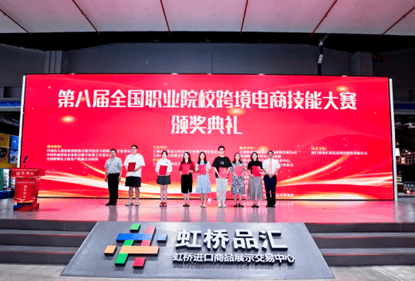
Core Insights - The 8th National Vocational Colleges Cross-Border E-Commerce Skills Competition was held in Shanghai, attracting 6,424 students from 202 schools across 29 provinces and cities [1] - The competition aimed to enhance practical skills in cross-border e-commerce, with 3,820 participants reaching the finals after initial selections [1] - The event was supported by various industry associations and institutions, ensuring professionalism and fairness in the competition [1] Group 1 - Shanghai Bond Vocational and Technical College has been organizing the competition for eight consecutive years, focusing on integrating education with industry needs [2] - The competition serves as a platform for students to showcase their skills and connect theoretical knowledge with practical applications through real business scenarios [2] - The event has seen participation from over 15,000 individuals, highlighting the growing interest and talent in the field of cross-border e-commerce [2] Group 2 - The chairman of Shanghai Bond emphasized the importance of vocational skills competitions in enhancing educational quality and promoting professional development [4] - The competition has gained recognition for its contribution to improving the quality of cross-border e-commerce education and has established a significant brand effect [4] - The competition's innovative format aligns closely with industry demands, incorporating modules on cross-border live streaming and digital marketing [5] Group 3 - Shanghai Bond is set to acquire land in Qingpu District to build a new campus, which will facilitate collaboration with Huawei Group for talent development [5] - The new campus will focus on integrating advanced technology resources and establishing a cloud computing application center, enhancing the training of skilled professionals [5] - This strategic move aims to align educational offerings with industry needs, supporting the digital economy's growth in the Yangtze River Delta region [5]

秀我中国|山东荣成:新年伊始 跨境电商跑出“加速度”
Sou Hu Cai Jing· 2026-01-08 13:31
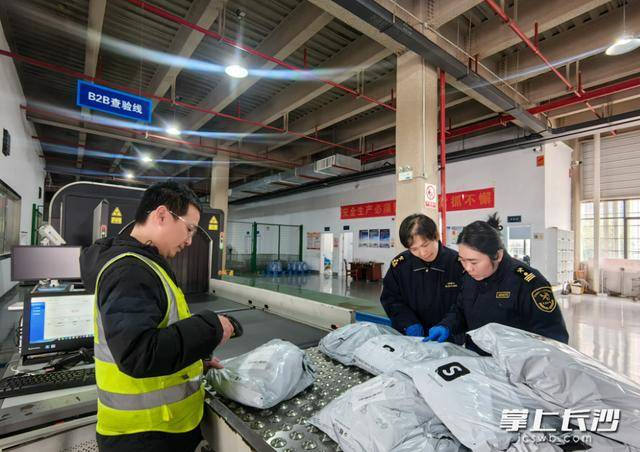
作者:吴飞座、李信君 新华社音视频部制作 近年来,荣成市积极推进智慧监管、优化服务等相关工作,持续提升跨境通关效率,完善通关服务保障 机制,实现跨境电商商品"即报、即审、即查、即放",全力保障货物通关顺畅,助推跨境电商出口跑 出"加速度"。 近日,山东省荣成市石岛管理区石岛新港口岸一派繁忙景象。满载跨境电商货物的"华东明珠8 号"轮、"群山明珠"轮有序靠港。国际快件监管中心的跨境电商监管现场内,叉车在货架区来回穿梭, 工作人员忙着整理货物、分拣装车。 ...
握手未来:中韩友好在数字与温情故事中谱写新篇
Zhong Guo Xin Wen Wang· 2026-01-08 12:35
Group 1 - The core diplomatic visit of South Korean President Lee Jae-myung to China at the beginning of the year signifies the importance of developing Sino-Korean relations and sends a positive signal to the international community about the commitment to a healthy and stable bilateral relationship [1][3] - The bilateral trade volume between China and South Korea is projected to reach $328.08 billion in 2024, marking a year-on-year increase of 5.6%, with China being South Korea's largest trading partner for 21 consecutive years [4] - The areas of cooperation between China and South Korea have expanded from traditional manufacturing to emerging sectors such as high-end manufacturing, cross-border e-commerce, and digital economy, highlighting the complementary advantages of both countries [4] Group 2 - In 2024, the number of people-to-people exchanges between China and South Korea is expected to reach 7.725 million, with 2.595 million South Koreans visiting China and 5.13 million Chinese residents traveling to South Korea, facilitated by over 1,000 regular flights each week [6] - Cultural exchanges have deepened, with the popularity of Korean cosmetics and films in China and the success of Chinese smart appliances in the South Korean market, indicating a significant cultural influence between the two nations [6][8] - Heartwarming stories of mutual assistance between the two peoples, such as a Chinese driver protecting a South Korean tourist and a South Korean coast guard officer sacrificing his life to save a Chinese citizen, illustrate the growing closeness and goodwill between the two nations [8]

郑州开通首条跨境电商国际专线
Zhong Guo Xin Wen Wang· 2026-01-08 11:23
Core Insights - Zhengzhou has officially launched its first cross-border e-commerce international dedicated line, enhancing network services for Southeast Asian countries such as Singapore, Malaysia, Thailand, and Indonesia [1][2] - The initiative aims to address long-standing technical bottlenecks faced by cross-border e-commerce companies, including network lag and IP drift, which have hindered user experience and conversion rates [1] - The dedicated line ensures real-time transmission of high-definition live broadcasts, provides a clean independent IP to mitigate account risk, and complies with cross-border data transmission regulations [1] Industry Overview - As one of China's first comprehensive pilot zones for cross-border e-commerce, Zhengzhou's transaction volume reached 141.66 billion RMB in the first ten months of 2025, marking a 14.5% year-on-year increase [2] - The dedicated line resolves operational challenges for companies that previously needed to send hosts abroad or conduct simultaneous live broadcasts from multiple locations, thereby streamlining the entire process from content production to logistics [2] - Zhengzhou plans to expand its dedicated line services to cover major markets in Europe, North America, and the Middle East by 2026, aiming to build a global cross-border e-commerce communication network [2]
出口渠道拓宽!改革创新助力湖南跨境电商出口提质发展
Sou Hu Cai Jing· 2026-01-08 11:05
Core Insights - Cross-border e-commerce has become a significant engine for foreign trade innovation and a key driver for economic growth in Changsha [3] Group 1: Growth and Efficiency - The cross-border e-commerce export transshipment business at Changsha Huanghua International Airport has seen significant growth, with transshipment cargo volume exceeding 2,900 tons from January to November 2025, doubling compared to the same period in 2024 [1] - The logistics efficiency is highlighted by the rapid processing of goods, with items arriving from Guangdong and being shipped to Africa or other regions on the same day [1][3] Group 2: Operational Mechanisms - The airport has established three efficient transshipment routes: via Guangzhou to Southeast Asia, via Beijing Capital Airport to East Asia, and via Beijing Daxing Airport to Europe, America, and Central Asia [4] - The "air-to-air transshipment" model has emerged as an important supplement to export capacity, optimizing resource allocation and reducing overall transportation costs [3][4] Group 3: Customs and Regulatory Framework - Customs at Changsha Huanghua Airport operates a 24/7 appointment system to ensure rapid inspection and release of goods, with most items cleared for export on the same day or early the next morning [5] - A smooth communication mechanism has been established between customs, logistics companies, and airlines to address any issues during the transportation and inspection process [5] Group 4: Future Prospects - In 2025, Changsha was approved as an airport-based national logistics hub, providing new opportunities for the development of cross-border e-commerce [5] - The focus will be on enhancing logistics facilitation and implementing strategic actions to promote integrated development between the zone and the port, aiming to establish Changsha as a regional distribution center for cross-border e-commerce in Central and Western China [5]
拉美本地化元年:中国企业的新生
创业邦· 2026-01-08 10:33
Core Viewpoint - The article emphasizes that 2025 marks a significant turning point for Chinese businesses entering the Latin American market, particularly in e-commerce, driven by changing consumer behaviors and increasing local investments by Chinese companies [7][12][19]. Group 1: Market Dynamics - Latin America is currently the fastest-growing e-commerce market globally, with a projected growth rate of 12.2% in 2025, significantly outpacing the global average [12]. - The e-commerce penetration rate in Latin America is expected to reach approximately 12%-15% in 2025, indicating substantial growth potential compared to China's over 45% penetration rate [12]. - Major markets like Argentina, Brazil, and Mexico will continue to lead the region's growth, accounting for over 84% of total retail e-commerce sales [15]. Group 2: Consumer Behavior - Latin American consumers are shifting from merely completing online transactions to more rational and value-driven purchasing decisions, favoring practicality and cost-effectiveness over brand prestige [17][18]. - The influence of traditional search engines is declining, with social media and direct engagement becoming crucial for consumer trust and conversion [18]. - The trend of "functionality consumption" is rising, with Chinese brands gaining loyalty through clear product parameters and reliable local after-sales service [18]. Group 3: Business Opportunities - The article highlights that 2025 is witnessing a surge in Chinese businesses actively entering the Latin American market, moving from a phase of observation to tangible operations [15][19]. - The demand for high-quality, cost-effective products remains unmet in the Latin American market, presenting a significant opportunity for Chinese companies [19]. - Trade-type sellers, who quickly sell products sourced from China, dominate the market, while factory-direct D2C brands are expected to grow in the long term [21]. Group 4: Localization Strategies - Chinese companies are increasingly focusing on localization, adapting to local cultures, languages, and consumer preferences to ensure long-term success in Latin America [34][38]. - The integration of local production and supply chains is becoming a trend, with companies like Shein investing in local manufacturing to enhance competitiveness and create jobs [40]. - The article notes that successful market entry requires understanding local regulations and consumer behavior, emphasizing the importance of building trust and relationships in business [43][49]. Group 5: Future Outlook - The Latin American market is expected to undergo significant changes in 2026, with Mexico stabilizing its market conditions and Brazil experiencing tax reforms and increased compliance requirements [23]. - The potential for growth in Argentina is notable due to less competition and high local prices, which Chinese products can help mitigate [23]. - Overall, the article suggests that Latin America is evolving from a mere opportunity to a critical market for Chinese enterprises, necessitating proactive engagement and investment [24][49].

他用500元开启20亿元外贸创业路
Yang Shi Xin Wen Ke Hu Duan· 2026-01-08 08:31
Core Insights - The article highlights the success story of a young entrepreneur, Tu Hongming, who transformed a mere 500 yuan investment into a cross-border e-commerce business with an annual sales revenue of 2 billion yuan by 2025, showcasing the growth of cross-border e-commerce as a vital driver of China's trade growth [1][9]. Group 1: Entrepreneurial Journey - Tu Hongming started his entrepreneurial journey in 2015 with only 500 yuan and has since grown his business to achieve over 20 billion yuan in sales by 2025 [7][9]. - The business began in a small rented apartment in Qianyanliu Village, known as "China's first online store village," and has expanded significantly over the past decade [9][21]. - The company initially focused on a single product category, jewelry, and has now diversified to offer over 100 million Chinese products, processing nearly 200,000 orders daily [11][14]. Group 2: Logistics and Efficiency - The logistics network has improved significantly, reducing shipping times from 25 days to as little as 7 days for deliveries to the United States, thanks to the establishment of 26 "Yi Xin Ou" train routes and direct air routes to various regions [13][14]. - Customs efficiency has also enhanced, with the introduction of a "pre-inspection before shipment" model, reducing the turnaround time for export goods from 2-3 days to under one day [13][14]. Group 3: Product Innovation and Market Expansion - The company has shifted from merely facilitating cross-border e-commerce to developing its own brands in cosmetics and clothing, indicating a strategic move towards brand creation [14][21]. - Plans are underway to expand into the African market, with the establishment of overseas warehouses in Nigeria and the launch of a dedicated cross-border e-commerce website for the region [16][21]. Group 4: Industry Trends and Future Outlook - The article emphasizes the transformation of Yiwu from a manufacturing hub to a center for innovation and brand development, reflecting a broader trend in China's export strategy [14][21]. - The establishment of the Yiwu Global Trade Center and the opening of the first overseas store in Nairobi, Kenya, signify the growing international presence of Yiwu brands [19][21].


我与国家一起前行丨他用500元开启20亿元外贸创业路
Yang Shi Xin Wen Ke Hu Duan· 2026-01-08 07:00
Core Insights - The article highlights the significant growth and development of cross-border e-commerce in China, particularly through the experiences of entrepreneur Tu Hongming, who has transformed his business from a modest start to achieving an annual sales revenue of 2 billion yuan in 2025 [6][8][12]. Group 1: Industry Growth - The "14th Five-Year Plan" suggests support for the development of new business models like cross-border e-commerce, which has become a crucial engine for trade growth in China [1]. - By 2025, it will mark the 10th anniversary of the establishment of China's cross-border e-commerce comprehensive pilot zones, emphasizing the sector's importance [1]. - The logistics network has significantly improved, with the time for shipping to the U.S. reduced from 25 days to 7 days due to enhanced logistics capabilities [12][14]. Group 2: Entrepreneurial Journey - Tu Hongming started his journey in 2015 with only 500 yuan and has since built a company with over 20 billion yuan in annual sales [6][8][12]. - The company began with a focus on jewelry and has expanded to over 100 million products, processing nearly 200,000 orders daily [12]. - The initial challenges included limited logistics options, requiring Tu to personally handle deliveries, showcasing the determination and resourcefulness in the early stages of the business [10][12]. Group 3: Product and Market Expansion - The top-selling categories on Tu's platform include health products, beauty and skincare, and various clothing items, catering to a global market [6]. - The company has begun to develop its own brands in cosmetics and clothing, moving beyond just providing a platform for other sellers [18]. - Plans are in place to expand into the African market, with a focus on establishing a presence in Nigeria and simplifying procurement processes for local merchants [20][22]. Group 4: Technological and Logistical Advancements - The introduction of a "first inspection, then shipment" model by customs has reduced the turnaround time for export goods from 2-3 days to within one day [16]. - The establishment of the Yiwu Global Trade Center has facilitated the convergence of new foreign trade business models and demographics [24]. - The logistics network now includes 26 "Yi Xin Ou" train routes, connecting over 160 cities in Eurasia, enhancing the efficiency of international shipping [14].

成都天府国际空港综合保税区通过国家验收
Zhong Guo Fa Zhan Wang· 2026-01-08 04:23
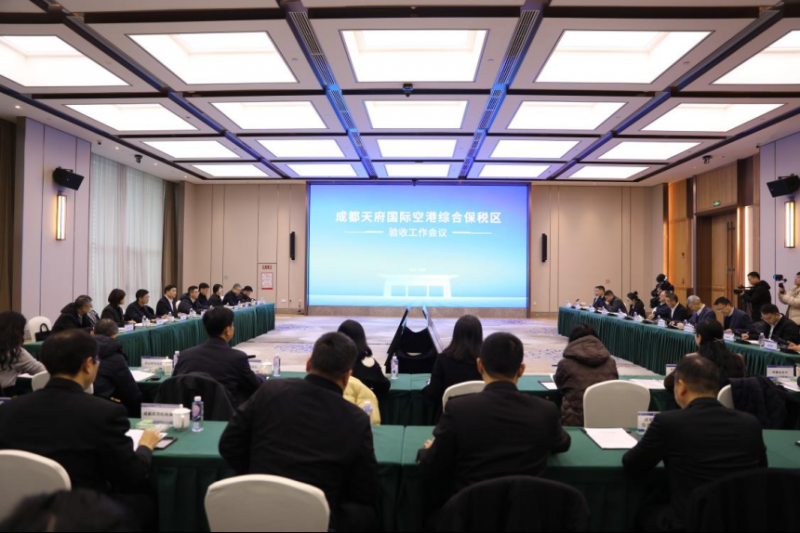
Core Viewpoint - The Chengdu Tianfu International Airport Comprehensive Bonded Zone has successfully passed the formal acceptance by a national joint inspection team, marking a significant step in enhancing the region's logistics capabilities and promoting high-level openness in the Chengdu-Chongqing economic circle [1][5]. Group 1: Overview of the Bonded Zone - The Chengdu Tianfu International Airport Comprehensive Bonded Zone is located in the core area of the Chengdu East New District Air Port Economic Zone, with a planned area of 1.08 square kilometers, officially approved by the State Council on December 22, 2024 [3]. - As the first airport-type comprehensive bonded zone in Sichuan Province, it emphasizes the integration of the zone and port, advancing both infrastructure and institutional innovation simultaneously [5]. Group 2: Development and Operations - The zone operates under a "Management Committee + Company" model, with the Chengdu East New District Management Committee collaborating with Chengdu Industrial Investment Group to establish the Chengdu Tianfu International Airport Urban Investment and Operation Company, facilitating efficient development [7]. - Upon formal operation, the zone aims to attract internationally competitive logistics service providers, supply chain management companies, and trade businesses, focusing on core activities such as international transit, distribution, and re-export trade [7]. Group 3: Strategic Focus and Policy Support - The zone will concentrate on emerging sectors such as aviation maintenance, cross-border e-commerce, cold chain logistics, and digital trade, aiming to build a diversified and high-end industrial ecosystem [7]. - To enhance the business environment, the Chengdu East New District plans to introduce policies supporting high-quality development in the bonded zone, focusing on five key areas: manufacturing, research and design, logistics distribution, testing and maintenance, and sales services [9].
2026年度策略-看好内需顺周期主线-出海关注龙头Alpha
2026-01-08 02:07
Summary of Conference Call Notes Industry and Company Focus - **Industry**: Various sectors including travel, high-end consumption, education, and export markets - **Companies Mentioned**: China Duty Free Group, Lao Pu Gold, Chao Hong Ji, Huatu Shanding, China Oriental Education, Anker Innovations, Star Technology, Small Commodity City, and others Key Points and Arguments Domestic Demand Strategy - **Focus Areas**: - **Cyclical Beta**: Prioritize travel-related sectors such as aviation, hotels, and tourism due to significant demand improvement driven by policy catalysts [1][3] - **High-End Consumption**: Strong recommendations for duty-free and high-end gold jewelry sectors, with expectations of price increases driving both valuation and performance [1][6] - **Value Consumption**: Marginal improvement in demand is unclear; sectors depend on income growth or improvements in PPI and CPI data [1][7] - **Counter-Cyclical Industries**: Education sector shows strong demand resilience, particularly in vocational education and public examination training, with AI technology enhancing efficiency [1][8] Service Consumption - **Characteristics**: Service-oriented consumption is elastic, quick to respond, and has no inventory issues, significantly aiding employment and economic recovery [4][11] - **Current Proportion**: Service consumption accounts for approximately 55% of personal consumption expenditure in China, compared to 70% in the US, indicating room for growth [12] High-End Retail and Luxury Market - **Market Recovery**: High-end retail and luxury markets began to recover in Q2 and Q3 of 2025, driven by a stable high-net-worth population and wealth effect [4][16] - **Consumer Sentiment**: The recovery of middle-class confidence is crucial, as they contribute 60% of luxury sales [16] Export Market Opportunities - **Outlook for 2026**: Anticipation of more opportunities in the second half of 2026, with resilient exports and better-than-expected US demand [9][23] - **Key Companies**: Focus on leading companies with alpha attributes such as Anker Innovations and Star Technology for performance-driven growth [9][23] Education Sector - **Demand Characteristics**: The education sector, particularly vocational training and public examination preparation, is expected to perform well despite overall employment pressures [8][26] - **Key Players**: Companies like Huatu Education and China Oriental Education are highlighted for their strong market positions [8][26] Risks and Challenges - **Currency Fluctuations**: Current RMB exchange rates are stable, with limited risk of significant appreciation that could impact export companies negatively [24] - **Raw Material Prices**: Fluctuations in raw material prices are not seen as a major concern for leading companies due to supply chain dynamics [25] Investment Recommendations - **Cyclical Sectors**: Focus on travel-related industries for potential valuation uplift due to demand recovery [5] - **High-End Consumption**: Investment in duty-free and high-end jewelry sectors is recommended due to positive market sentiment [6] - **Education**: Strong prospects for companies in vocational education and public examination training [26] Additional Insights - **Tea and Restaurant Industries**: Opportunities in the tea industry due to competitive landscape improvements and in the restaurant sector with companies like Xiao Cai Yuan and Guo Quan showing potential for scalable growth [18][20] This summary encapsulates the key insights and recommendations from the conference call, providing a comprehensive overview of the current market landscape and future opportunities across various sectors.