新能源电力

Search documents
海南能源转型走在全国前列
Hai Nan Ri Bao· 2025-11-08 01:43
Core Insights - Hainan has achieved a significant milestone in renewable energy, with installed capacity exceeding 12 million kilowatts, making it the leading power source in the province [2][4] - The proportion of clean energy installations in Hainan has reached 87.1%, while the share of clean energy in total power generation stands at 72.87% [2][4] - The province is actively promoting the construction of a new power system to support its clean energy island initiative and free trade port development, aiming to establish a demonstration province for new power systems by 2030 [4] Renewable Energy Development - Hainan's wind power base in Dongfang City is operational, generating an additional 249 million kilowatt-hours of green electricity annually [2] - The province has completed the integration of three offshore wind farms, adding 2.11 million kilowatts of centralized renewable energy capacity [3] - The first 500 kV provincial digital power grid in the country is nearing completion, which will enhance the safety and efficiency of renewable energy transmission [3] Clean Energy Infrastructure - Hainan has over 4,800 charging stations linked through the "Hainan Charging Network" app, supporting the integration of a large number of new energy vehicles [3] - The implementation plan for the clean energy island's new power system has been officially released, marking a significant step in the province's energy transition [4] - The province's unique island grid structure and rapid development of renewable energy create a strong foundation for pioneering new power system construction [4]
北方国际:公司将持续扩大海外新能源电力资产布局
Zheng Quan Ri Bao Wang· 2025-11-06 12:42
Core Insights - The company aims to continuously expand its overseas renewable energy power asset layout, seeking long-term investment opportunities with potential for stable returns [1] - The company is exploring investments in energy storage projects and increasing investments in existing power operation projects' supporting energy storage facilities to enhance asset efficiency and revenue stability [1] Group 1 - The company will focus on acquiring more investment targets with long-term revenue potential [1] - The company plans to enhance its power operation industry chain by investing in energy storage [1] - The company aims to improve asset efficiency and revenue stability through these investments [1]

东方日升收宁波证监局行政监管措施决定书
Bei Jing Shang Bao· 2025-11-02 04:28
Core Viewpoint - Dongfang Risen (东方日升) has been found to have violated regulations regarding timely disclosure of significant events and management of insider information, leading to administrative regulatory measures from the Ningbo Securities Regulatory Bureau [1] Summary by Relevant Sections Regulatory Violations - Dongfang Risen failed to timely disclose the progress of a significant event regarding the transfer of 100% equity of Ningxia Xuning New Energy Technology Co., Ltd. (宁夏旭宁), which was announced on June 8, 2022. The company was owed 185 million yuan, which was expected to be repaid by August 31, 2022, but as of the end of 2024, 106 million yuan remains outstanding [1] - The company did not properly implement the insider information registrant management system, failing to register individuals with insider knowledge regarding performance forecasts and other significant events [1] Accountability - The Ningbo Securities Regulatory Bureau has stated that the Chairman Lin Haifeng and the Secretary of the Board Xue Shanxing are primarily responsible for the company's violations due to their lack of diligence [1] - As a result of these findings, Dongfang Risen is subject to corrective administrative measures, while Lin Haifeng and Xue Shanxing will undergo regulatory discussions [1] - The violations will be recorded in the securities and futures market integrity database as per the relevant regulations [1]

沃尔核材:10月28日召开董事会会议
Mei Ri Jing Ji Xin Wen· 2025-10-29 17:31
Group 1 - The company,沃尔核材, held its 33rd meeting of the 7th board of directors on October 28, 2025, to review the proposal for the election of non-independent directors [1] - For the first half of 2025, the company's revenue composition was 67.58% from electronic communication and 32.42% from new energy power [1]

新能源板块全线暴涨!新能源ETF(516160)大涨超6%,隆基绿能等多股涨停,阳光电源涨近17%
Xin Lang Cai Jing· 2025-10-29 06:33
Group 1 - The core viewpoint of the articles emphasizes the strong performance of the New Energy ETF (516160) and the underlying index, driven by government initiatives to accelerate the development of a new energy system and strategic emerging industries [1][2] - The New Energy ETF has risen by 6.07%, with a trading volume of 361 million yuan, reflecting a robust market interest in renewable energy stocks [1] - Key stocks within the index, such as Aters, Sungrow Power, and LONGi Green Energy, have shown significant gains, with Aters up by 19.97% and Sungrow Power up by 16.55% [1] Group 2 - The "14th Five-Year Plan" suggests the establishment of emerging pillar industries, focusing on the accelerated development of new energy and new materials, particularly in solid-state battery technology [2] - Solid-state batteries are identified as a next-generation lithium battery technology with potential for large-scale application in the electric vehicle sector, marking a significant opportunity for industry upgrades [2] - Major companies like CATL and EVE Energy are targeting 2027 for small-scale production of solid-state batteries, indicating a clear path towards industrialization and investment opportunities in the equipment sector [2]

广东新能源电价市场化改革正式启动实施
Zhong Guo Dian Li Bao· 2025-10-28 08:27
Core Insights - Guangdong Province has released two significant documents establishing a sustainable pricing settlement mechanism for new energy projects, allowing for various participation methods in the market, marking a new era for renewable energy in the province [1] Group 1: Market Dynamics - By April 2025, wind and solar energy will surpass coal as the largest power source in Guangdong, with installed capacity reaching 77.43 million kilowatts, a year-on-year increase of 50.5% [2] - The marketization of renewable energy began in December 2022, with pilot programs for participating in the electricity spot market, and by November 2025, the pricing for wind and solar energy will be fully market-driven [2][4] Group 2: Pricing Mechanism - The core of the 263 document is that the pricing for renewable energy will be determined by the market, with a distinction between existing and new projects for price settlement [4] - Existing projects will have a mechanism price of 0.453 yuan per kilowatt-hour, while new projects will obtain pricing through competitive bidding [4] Group 3: Service Enhancements - Guangdong Electric Power has implemented a centralized accounting model for efficient billing of renewable energy projects, enhancing the customer service experience for solar power users [3] - The company aims to continuously optimize the integration and market entry services for renewable energy, promoting a new power system that coordinates generation, grid, load, and storage [3] Group 4: Green Energy Initiatives - The number of green energy projects available to electricity users has increased, with a full lifecycle management system for green certificate issuance and trading being established [5] - As of October 1, 5444 new renewable energy projects have registered for competitive bidding, indicating strong market interest and participation [5]
华自科技:主要参与长顺县新能源电力系统建设和外送服务
Zheng Quan Ri Bao Wang· 2025-10-23 09:45
Group 1 - The company, Huazi Technology, is actively involved in the construction of new energy power systems and delivery services in Changshun County, with related work progressing in an orderly manner [1]

广东新能源上网电价市场化改革启动实施 近8000万千瓦新能源将全面进入电力市场
Ren Min Ri Bao· 2025-10-22 21:58
Core Insights - Guangdong Province has initiated a comprehensive market mechanism for renewable energy pricing, allowing wind and solar projects to participate in both spot and long-term trading, marking a new phase in renewable energy integration [1][4] Group 1: Renewable Energy Capacity - As of September 2025, the installed capacity of wind and solar energy in Guangdong reached 77.43 million kilowatts, representing a year-on-year increase of 50.5%, surpassing coal power as the largest source of installed capacity in the province [2] - The province has been proactive in launching market-oriented reforms for renewable energy, with a pilot program for renewable energy participation in the electricity spot market starting in December 2022 [2][3] Group 2: Market Mechanism and Pricing - The new pricing mechanism distinguishes between existing and new renewable energy projects, with existing projects receiving a fixed price of 0.453 yuan per kilowatt-hour, while new projects will obtain pricing through competitive bidding [4] - The competitive bidding process for new projects allows for price determination based on market conditions, enhancing the economic viability of renewable energy projects [4] Group 3: Digital Integration and Services - Guangdong Electric Power Company is enhancing its digital integration services to streamline the connection of renewable energy projects to the grid, improving customer service and operational efficiency [3] - The company is implementing a centralized accounting model for electricity billing, facilitating efficient financial transactions across the entire energy supply chain [3] Group 4: Green Energy Certificates - The introduction of green energy certificates is expanding the range of renewable energy projects available to electricity users, supporting diverse corporate green energy consumption needs [5] - As of early October, 5,444 new renewable energy projects have registered for the first round of competitive bidding, indicating strong market interest and participation [5]
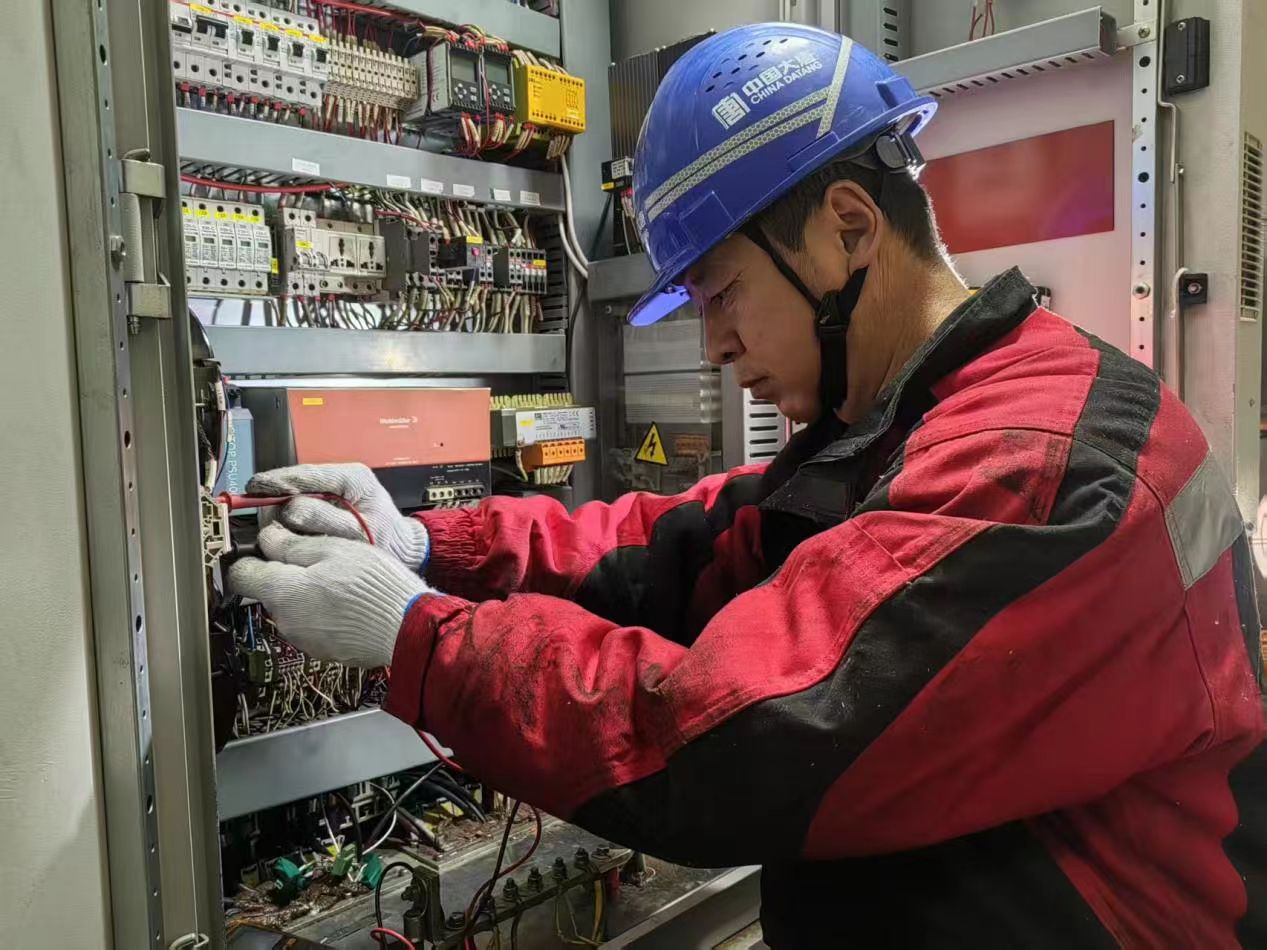
大唐蒙东新能源事业部全面启动党的二十届四中全会保电实战 筑牢电力供应安全防线
Zhong Guo Neng Yuan Wang· 2025-10-21 09:05
Core Viewpoint - The Datang Mengdong New Energy Division has officially entered the power supply guarantee phase for the 20th National Congress of the Communist Party of China, implementing a comprehensive six-day power supply assurance task to ensure stable electricity supply during the conference [1][3]. Group 1: Organizational Measures - The division has issued a special power supply guarantee plan, with operational centers quickly responding to deploy high standards and strict requirements for power supply measures [1]. - An organizational system has been strengthened, with responsibilities assigned to all personnel to ensure detailed breakdown of power supply tasks across the entire chain [1]. Group 2: Risk Management - The division focuses on key production areas, conducting a "look back" on hidden dangers in conjunction with autumn inspections, establishing a problem ledger, and ensuring dynamic resolution of issues to eliminate risk blind spots [1]. - A "non-essential work not permitted" control mechanism is strictly enforced, enhancing supervision of high-risk operations such as high-altitude and confined space work [1]. Group 3: Operational Strategies - Operational centers are optimizing station operation strategies through intelligent monitoring systems, enhancing real-time monitoring of key parameters such as irradiance and power output [3]. - Environmental control measures are being upgraded, particularly in regulating solid waste disposal processes [3]. Group 4: Emergency Response - The emergency response system has been fully activated, conducting targeted drills for extreme weather scenarios such as strong winds and heavy snow, and enhancing rapid repair capabilities for equipment failures [3]. - The division strictly implements a "daily scheduling, zero reporting" system to ensure timely reporting of power supply dynamics, reinforcing the power supply security during the conference [3].

关键时刻!绩优基金经理发声
中国基金报· 2025-10-19 13:14
Core Viewpoint - The A-share third quarter report season has begun, with over 80% of the nearly 150 listed companies that have disclosed performance forecasts reporting positive results, indicating a strong overall performance in the market [2]. Group 1: Highlights of Performance Forecasts - The electronics, semiconductor, and consumer electronics sectors show significant growth due to strong demand, with many companies in the semiconductor products and equipment industry reporting positive forecasts [15]. - The chemical and agricultural products sectors are benefiting from rising product prices and effective cost control, with strong recoveries in sub-sectors like pesticides and vitamins [15]. - The renewable energy sector, particularly in electricity and photovoltaics, is experiencing notable growth driven by cost reductions and project launches [15]. - The technology growth, new energy, and biopharmaceutical sectors are performing well, with some companies reporting net profit growth exceeding 50%, indicating potential for exceeding expectations [15][27]. Group 2: Investment Strategy and Market Outlook - The third quarter reports are crucial for adjusting investment strategies, with a focus on identifying high-growth companies and industry trends through systematic analysis [17]. - Key indicators to monitor include profit quality, cash flow status, and changes in industry competition, especially in the technology growth sector, which has seen significant gains this year [18]. - The reports are expected to influence market trends for the fourth quarter and into 2026, as they reflect the operational results of companies for the year [17][18]. Group 3: Sector-Specific Opportunities - The technology sector remains strong, with a focus on AI-related industries, semiconductor materials, and equipment, as well as robotics and solid-state batteries [27]. - Traditional cyclical sectors, such as chemicals, coal, and steel, are expected to benefit from policy support and price recovery, presenting investment opportunities [30]. - The renewable energy sector, particularly in energy storage, is experiencing a demand surge and profitability recovery, with leading companies showing low valuations [29][30]. Group 4: Risk Management - Investors should be cautious of stocks with high expectations that may not meet performance forecasts, as well as those with high valuations that do not align with growth [22][23]. - It is essential to monitor the synchronization of revenue and profit growth, as discrepancies may indicate sustainability issues [22]. - The market's emotional volatility and high trading density in certain sectors should also be considered to mitigate risks during the earnings season [24][38].