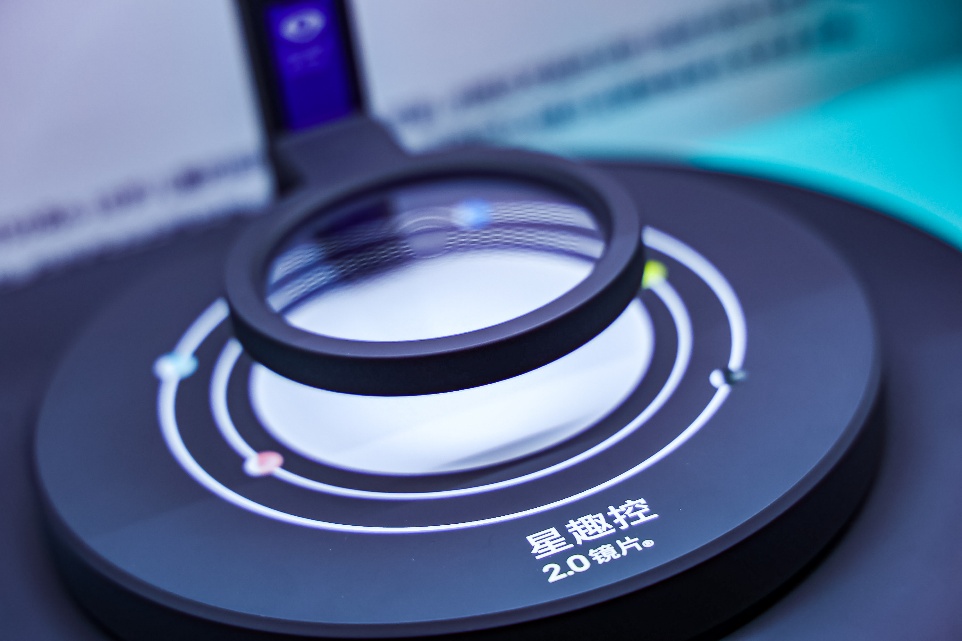
眼镜

Search documents
美团医药健康牵手四家口眼上游品牌 持续扩大“放心”系列“朋友圈”
2 1 Shi Ji Jing Ji Bao Dao· 2025-11-10 12:25
Core Insights - The eighth China International Import Expo concluded with over 4,000 enterprises participating, resulting in significant partnerships and collaborations [1] Group 1: Strategic Collaborations - Zeiss Optical and Meituan Health signed a strategic cooperation agreement focusing on authenticating lens products, leveraging Meituan's platform capabilities and Zeiss's industry authority to build a leading verification and authenticity system [1] - Meituan Health expanded its "Safe Plant" project by partnering with three international implant brands, aiming to promote standardization in the dental industry [2] - Meituan's partnerships with four upstream brands in the dental and optical sectors indicate growing recognition of its supply chain empowerment capabilities [3] Group 2: Market Context and Challenges - The Chinese eyewear market has surpassed 100 billion yuan, with a 89% year-on-year increase in related searches on Meituan's platform for myopia prevention in 2024 [1] - The dental market faces a significant gap with over 2 billion teeth needed, and the aging population (21% over 60 years old) is driving demand, but issues like information opacity and high decision costs hinder industry growth [2] Group 3: Service Enhancements - Meituan's "Safe Match" project aims to address consumer concerns regarding lens authenticity by implementing a standardized verification process and ensuring that participating optical stores have proper authorization [1] - The "Safe Plant" project offers four commitments: certified institutions, dedicated doctors, fall protection, and price transparency, marking a significant breakthrough in consumer healthcare services [2]

徐曙海率队赴上海参观进博会并走访企业 扩大高水平对外开放 开创合作共赢新局面
Zhen Jiang Ri Bao· 2025-11-10 00:12
Group 1 - Mayor Xu Shuhai led a delegation to the China International Import Expo in Shanghai to promote Zhenjiang and seek cooperation opportunities for high-quality development [1] - During the expo, Xu engaged with executives from companies like Goldsun Group and Danfoss to discuss advanced technologies and products, inviting them to invest in Zhenjiang's key industrial chains [1] - Company representatives expressed optimism about Zhenjiang's development prospects and indicated plans for further investment to support the city's modern industrial system [1] Group 2 - The year marks the 30th anniversary of EssilorLuxottica's entry into China and the 16th anniversary of its establishment in Zhenjiang, with Mayor Xu attending the celebration and emphasizing the importance of the partnership [2] - Xu highlighted Zhenjiang's position as China's largest lens and frame production base and encouraged further innovative projects from EssilorLuxottica to enhance collaboration [2] - The event was attended by various officials, including the president of EssilorLuxottica Greater China, indicating strong regional support for the partnership [2] Group 3 - Jiangsu Sop Group signed a cooperation agreement with Linde Gas, with Mayor Xu emphasizing the significance of this partnership for Zhenjiang's industrial development [3] - Linde's representatives discussed project progress and expressed commitment to deepening collaboration in areas like centralized gas supply and equipment upgrades [3] - The supply and marketing grain and oil company aims to enhance food security and is encouraged to accelerate project construction in Zhenjiang [3] Group 4 - During the Shanghai visit, Xu participated in the 2025 Jiangsu Open Innovation Development International Consultation Conference, engaging with leaders from companies like Total Lubricants and Henkel [4] - The discussions focused on enhancing cooperation and achieving mutual benefits, with an emphasis on digital empowerment and central-local collaboration [4] - The city government held a meeting to promote Zhenjiang's investment environment and invite potential partners for future cooperation [4]
5个行业闷声发财:就在我们身边看似不起眼,却躺着赚钱
Sou Hu Cai Jing· 2025-11-09 13:36
Core Insights - The article highlights the resilience of certain industries that continue to thrive despite economic downturns and the ongoing pandemic, revealing hidden profit opportunities in seemingly mundane sectors [1][6]. Group 1: Eyewear Industry - The eyewear industry is characterized by high profit margins, with frame costs ranging from a few dozen to over a hundred yuan, while retail prices can reach hundreds or even thousands of yuan [1]. - Average gross profit margins for eyewear stores are reported to be at least 45%, although high rent and labor costs can compress net profit margins [1]. Group 2: Breakfast Industry - The breakfast industry, despite its labor-intensive nature, offers significant profit potential, as illustrated by a couple selling scallion pancakes, where the cost per pancake is less than 0.5 yuan, but the selling price is around 3 yuan [3]. - If they sell 1,000 pancakes daily, their income can reach 2,500 yuan, indicating a lucrative return on their efforts [3]. Group 3: Vegetable Retail Industry - Vegetable vendors face demanding work hours but can achieve substantial profits, with purchasing costs often only a few cents to a couple of yuan per kilogram, while selling prices can range from 5 to over 10 yuan per kilogram [5]. - Strategic location near large residential areas can enhance profitability for vegetable shops, despite costs associated with spoilage and rent [5]. Group 4: Funeral Industry - The funeral industry is known for its high profit margins, particularly in the sale of funeral services and products, such as urns that can be sold for thousands to tens of thousands of yuan, despite their low purchase cost [5]. - The sale of burial plots also presents significant profit opportunities, with prices for a one-square-meter plot often exceeding tens of thousands of yuan [5]. Group 5: Recycling Industry - The recycling industry, often overlooked, presents lucrative opportunities, as waste materials can be sold at multiples of their purchase price after processing [5]. - For instance, scrap metal from old wires can be sold for a higher price after extraction, and old mobile phones can yield profits when resold to repair shops [5]. Conclusion - The article concludes that despite challenging economic conditions, there are numerous "quietly profitable" industries that can provide substantial earnings for operators willing to engage in them [6].

青海明靓眼镜有限公司成立 注册资本10万人民币
Sou Hu Cai Jing· 2025-11-08 14:15
Core Viewpoint - Recently, Qinghai Mingliang Glasses Co., Ltd. was established with a registered capital of 100,000 RMB, indicating a new player in the medical and optical equipment market [1] Company Summary - The legal representative of Qinghai Mingliang Glasses Co., Ltd. is Zhao Huixian [1] - The company is engaged in the sale of various medical devices, including both Class I and Class II medical devices, as well as general consumer goods and optical products [1] - The company has a diverse range of business activities, including the sale and rental of medical equipment, optical glass sales, and the manufacturing of glasses [1] Industry Summary - The establishment of Qinghai Mingliang Glasses Co., Ltd. reflects the growing market for medical and optical devices in China, particularly in the context of increasing demand for healthcare and wellness products [1] - The company is positioned to operate in both the medical device sector and the consumer goods market, which may provide opportunities for growth and diversification [1]
厦门市优好仁眼镜有限公司成立 注册资本10万人民币
Sou Hu Cai Jing· 2025-11-08 03:47
Core Insights - Xiamen Youhao Ren Eyewear Co., Ltd. has been established with a registered capital of 100,000 RMB and is represented by Hong Yukun [1] Company Overview - The company is engaged in various business activities including the sale and manufacturing of eyewear, optical glass sales, and the sale of first-class medical devices [1] - The company also focuses on internet sales (excluding items requiring permits), artificial intelligence application software development, and electronic product sales [1] - Additional services include rehabilitation aids adaptation services, brand management, and information technology consulting [1] Regulatory Compliance - The company is authorized to operate third-class medical device sales, subject to approval from relevant authorities [1] - Business activities are conducted in accordance with the business license and relevant regulatory approvals [1]
汨罗市三江镇星诚眼镜店(个体工商户)成立 注册资本10万人民币
Sou Hu Cai Jing· 2025-11-07 07:45
Core Viewpoint - A new individual business, Xingcheng Glasses Store, has been established in Sanjiang Town, Miluo City, with a registered capital of 100,000 RMB, focusing on the sale of glasses and related optical products [1] Company Summary - The legal representative of the newly established Xingcheng Glasses Store is Li Yanfei [1] - The business is registered with a capital of 100,000 RMB [1] - The store's operating scope includes the sale of glasses (excluding contact lenses), manufacturing of glasses, sales of optical instruments, sales of Class I medical devices, and internet sales (excluding items requiring permits) [1] Industry Summary - The business is involved in both licensed and general projects, indicating a diverse range of activities within the optical retail and manufacturing sector [1] - The store is permitted to engage in food sales, subject to relevant approvals, highlighting a potential diversification strategy [1] - The operational activities are subject to legal compliance and require necessary approvals from relevant authorities [1]
全球巨头“放大招”,医疗黑科技、潮玩美妆齐刷屏
Guo Ji Jin Rong Bao· 2025-11-07 02:36
Group 1: Event Overview - The 8th China International Import Expo (CIIE) is held from November 5 to 10 at the National Exhibition and Convention Center in Shanghai [1] - The event showcases 461 new products, technologies, and services, transforming into a global stage for innovation [2] Group 2: Medical and Health Innovations - The medical device and healthcare exhibition area features significant innovations, including Siemens Healthineers' brain-machine interface solution, which integrates advanced imaging and navigation technologies [3] - Sanofi's innovative drug, Tregalizumab, for delaying the progression of Type 1 diabetes, has been approved in China after its debut at the expo [4] - Abbott presents over ten innovative products, including a dynamic blood glucose monitoring system that meets international standards [5] Group 3: Pharmaceutical Developments - GSK introduces several groundbreaking products, including the first approved RSV vaccine and a long-acting treatment for chronic hepatitis B [6] - EssilorLuxottica showcases new products for myopia management and wearable devices, emphasizing innovation in vision health [7] Group 4: Life Sciences and Technology - Illumina presents new solutions for protein detection and gene sequencing, highlighting advancements in life sciences [8][9] - The company emphasizes local manufacturing and partnerships to enhance its technological capabilities in China [8] Group 5: Consumer Goods and Sustainability - LEGO Group unveils five globally launched products inspired by Chinese culture, focusing on sustainability and creativity [10][11] - Kao's freeplus brand showcases its research in amino acid-based skincare, aiming to deepen its market presence in China [11] Group 6: Market Strategies and New Products - Skechers uses the expo as a strategic platform for launching new sports products, reinforcing its commitment to the Chinese market [12][13] - Ausnutria presents 61 products across various nutritional categories, emphasizing innovation and market responsiveness [14]
山东省海阳市市场监管局发布2025年计量“双随机、一公开”抽查结果(标准计量科)
Zhong Guo Zhi Liang Xin Wen Wang· 2025-11-06 09:04
Core Points - The Haiyang Market Supervision Administration has published the results of the 2025 measurement "double random, one open" inspection, highlighting compliance and issues found during the inspections [2][3] Group 1: Company Compliance - Haiyang Yongneng Biotechnology Co., Ltd. and Hanlan (Haiyang) Solid Waste Disposal Co., Ltd. both had issues identified during energy measurement supervision checks, but these issues have been rectified [2] - Yantai Jin'ao Environmental Technology Co., Ltd. also had issues found during the energy measurement supervision check, which have been resolved [2] - Several companies, including Haiyang Sanlian Home Appliance Co., Ltd. and Haiyang Jingyi Optical Store, reported no issues during their respective measurement checks [2][3] Group 2: Measurement Checks - The inspection covered various sectors, including energy measurement, water efficiency labeling, and legal measurement unit usage [2][3] - Notable companies such as China Petroleum and Sinopec had no issues reported during the inspections of their fuel dispensers [2][3] - The inspections also included checks on medical measurement instruments at Haiyang Xin'an Central Hospital, which reported no issues [3]
依视路助听眼镜进博会中国首秀:美国售价约1200美元,中国暂无上市时间表
Xin Lang Cai Jing· 2025-11-06 08:56
Core Insights - The article highlights the debut of Nuance Audio's innovative hearing glasses by EssilorLuxottica at the China International Import Expo, showcasing a new integrated solution for individuals with mild to moderate hearing loss [1] Product Overview - Nuance Audio integrates proprietary open-ear hearing technology into glasses, providing a comprehensive solution for users with hearing impairments [1] - The glasses feature directional microphones that accurately capture sounds from the user's front, which are processed and transmitted to built-in mini speakers [1] - The unique directional technology filters out environmental noise, enhancing the listening experience [1] - The audio components of Nuance Audio are designed to be "completely invisible" [1] - The glasses can be customized with prescription lenses for myopia or presbyopia as needed [1] Market Launch and Sales - Nuance Audio received FDA approval and CE certification in February, leading to its launch in the U.S. and several European countries [1] - The retail price for the glasses in the North American market is approximately $1,200 [1] - There is currently no confirmed timeline for the product's launch in China [1] - EssilorLuxottica plans to accelerate the introduction of this innovative product into global markets, including China, through traditional hearing aid channels, optical product wholesale channels, and its own retail network [1]
进博会倒计时:跨国巨头“上新”不断,共享中国市场机遇
Guo Ji Jin Rong Bao· 2025-11-02 10:32
Group 1: Core Insights - The eighth China International Import Expo (CIIE) is set to showcase global innovation and the commitment of multinational companies to the Chinese market [1] - The event will feature returning exhibitors, referred to as "CIIE babies," who have evolved into global innovation leaders [1] Group 2: Company Innovations - EssilorLuxottica will present the StarFun® smart glasses equipped with the new StarFun® 2.0 lenses, which enhance myopia management significantly compared to previous versions [2][4] - The StarFun® lenses utilize H.A.L.T. MAX technology, improving the effectiveness of myopia prevention by doubling the non-focusing signal area [2] - The smart glasses also include a wear-time monitoring module, enhancing user experience and eye protection [4] Group 3: Panasonic's Showcase - Panasonic will highlight its AI-driven smart home appliances and solutions that extend from home to urban living, emphasizing a holistic approach to lifestyle enhancement [7][9] - The company will present customized living space solutions tailored to different family demographics, showcasing innovations in kitchen, bathroom, and living room designs [9][10] - Panasonic's AI strategy will be unveiled, focusing on its role in driving digital transformation in China [11] Group 4: Schneider Electric's Innovations - Schneider Electric will demonstrate its advancements in digital technology and energy solutions, particularly in data centers, oil and gas, and park management [12][13] - The company will showcase its newly upgraded MasterPacT MTZ air circuit breaker, which will officially launch during the expo [12] - Schneider Electric aims to promote digital and green transformations through AI-enabled solutions and partnerships with local companies [13] Group 5: ABB's Contributions - ABB will present nearly 50 digital and intelligent solutions, including eight new products debuting in China, under the theme "Integrity and Innovation" [13][14] - The company will introduce the SSC600+CogniEN EDGE AI solution for power system failure prediction, achieving a 95% accuracy rate in forecasting risks [14] - ABB emphasizes local production, with over 90% of its robots manufactured in China, showcasing its commitment to the local market [14]