酒业

Search documents
珍酒李渡吴向东:希望白酒不仅深耕中国也能走向国际舞台
Xin Lang Cai Jing· 2026-01-29 11:42
Core Insights - The event "Praise for China's Economy - Entrepreneur Night" was held on January 29 in Beijing, honoring notable figures in the Chinese liquor industry, including Wu Xiangdong, Chairman of Zhenjiu Lidou Group [1][8] - The event highlighted the integration of traditional brewing spirit with modern business wisdom, emphasizing the importance of quality and long-term strategies in the liquor industry [3][10] Group 1: Event Overview - The event featured prominent attendees such as Zhang Yuliang, Chairman of Greenland Group, and Zhou Yanlong, General Manager of Quanjude Group, who expressed their support for the liquor industry and the economy [1][8] - Wu Xiangdong received accolades for his commitment to the development of the Chinese liquor industry, launching strategic products like "Dazhen Zhenjiu" and "Niushi Beer" [3][10] Group 2: Industry Perspectives - Jin Guanshu, former Deputy Secretary-General of the United Nations, praised the unique brewing process and scientific management of Zhenjiu, highlighting its large-scale production capabilities [4][11] - Zhang Yuliang expressed hope that Zhenjiu Lidou would continue to provide high-quality products and services to the country and consumers, regardless of economic conditions [3][10] Group 3: Future Aspirations - Wu Xiangdong emphasized the need for Chinese liquor products to not only thrive domestically but also gain international recognition, noting that currently, one-fifth of exported liquor goes to South Korea [6][13] - The focus on attracting younger consumers to traditional liquor was discussed, with Wu suggesting that they should first appreciate beer or wine before transitioning to Chinese liquor [6][12]

珍酒李渡吴向东:年轻人要在学会喝啤酒、葡萄酒后 再来喝我们自己的国粹级白酒
Xin Lang Cai Jing· 2026-01-29 11:37
Core Viewpoint - The event "Praise for China's Economy - Entrepreneur Night" held on January 29 in Beijing highlighted the achievements of the Chinese liquor industry, particularly focusing on the contributions of the Zhenjiu Liduo Group and its chairman Wu Xiangdong, who is recognized for blending traditional brewing spirit with modern business acumen [1][8]. Group 1: Event Highlights - The event featured notable figures such as Zhang Yuliang, chairman of Greenland Group, and Zhou Yanlong, general manager of Quanjude Group, who expressed their hopes for the continued success of the liquor industry and the importance of quality products for consumers [3][12]. - Wu Xiangdong emphasized the need for Chinese liquor products to not only thrive domestically but also gain international recognition, aiming for broader acceptance of Chinese baijiu globally [6][13]. Group 2: Industry Insights - Wu Xiangdong introduced strategic products like "Da Zhen · Zhenjiu" and "Bull Market Beer," showcasing a new business model aimed at adapting to market changes and consumer preferences [3][10]. - The event underscored the importance of quality and craftsmanship in the liquor industry, with testimonials highlighting Zhenjiu's unique brewing process and large-scale production capabilities [4][11]. Group 3: Future Aspirations - Industry leaders expressed optimism about the future of the liquor market, suggesting that adapting to new consumer trends and maintaining high standards will be crucial for success [3][12]. - Wu Xiangdong's vision includes attracting younger consumers to baijiu, encouraging them to appreciate the cultural significance of the drink after experiencing other types of alcohol [6][13].
珍酒李渡吴向东:白酒是一匹烈马,但也是中国人的汉血宝马
Xin Lang Cai Jing· 2026-01-29 11:37
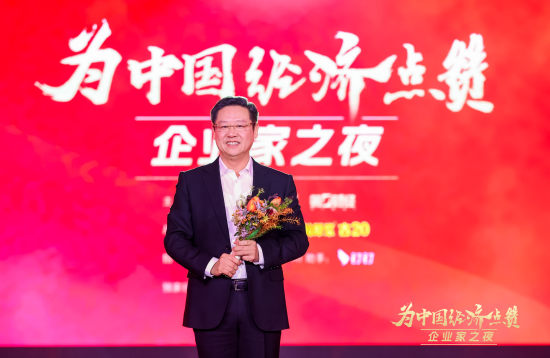
专题:为中国经济点赞——企业家之夜2025盛典 "为中国经济点赞——企业家之夜"于1月29日在北京举行。珍酒李渡集团、华致酒行董事长 吴向东出席 接受致敬。绿地集团董事长、总裁张玉良,全聚德集团党委书记、董事、总经理周延龙,联合国前副秘 书长金垣洙为其见证荣誉。 致敬词: 他是传统酿造精神与现代商业智慧融合的践行者,始终致力于推动中国酒业发展。酒业深度调整之际, 他坚守"长期主义",推出战略级产品"大珍·珍酒"和"牛市啤酒",开创全新商业模式。他更以躬身践行的 姿态,打造冠绝酒业群雄的超级IP。他用行动证明,在这个追求速度的时代,沉心打磨品质,才是最持 久、最珍贵的竞争力。 金垣洙回忆了一年前赴珍酒李渡的经历,他表示 ,珍酒酿造工艺独特、管理科学规范、产能规模宏 大。这杯酒,是匠心、科技与自然共酿的杰作。 张玉良表示,希望珍酒李渡在未来,无论是风雨还是阳光,都能持续地为国家和白酒产业、消费者提供 更多优质的产品和服务。 周延龙表示,作为实体经济的代表,甚至是传统服务行业实体经济的代表,让我们一起努力,赢得更多 的消费者、更多的媒体为实体经济点赞,为中国经济点赞,相信在新的消费模式之下,我们一定会有更 好的未来 ...
皇台酒业股价涨5.78%,鹏华基金旗下1只基金位居十大流通股东,持有437.5万股浮盈赚取332.5万元
Xin Lang Cai Jing· 2026-01-29 05:37
从皇台酒业十大流通股东角度 1月29日,皇台酒业涨5.78%,截至发稿,报13.92元/股,成交1.69亿元,换手率7.16%,总市值24.70亿 元。 资料显示,甘肃皇台酒业股份有限公司位于甘肃省武威市凉州区西关街新建路55号,成立日期1998年9 月29日,上市日期2000年8月7日,公司主营业务涉及白酒、葡萄酒的生产、批发和零售。主营业务收入 构成为:粮食白酒93.23%,葡萄酒5.81%,其他0.96%。 酒ETF(512690)基金经理为张羽翔。 截至发稿,张羽翔累计任职时间10年138天,现任基金资产总规模343.29亿元,任职期间最佳基金回报 125.39%, 任职期间最差基金回报-67.82%。 数据显示,鹏华基金旗下1只基金位居皇台酒业十大流通股东。酒ETF(512690)三季度增持163.46万 股,持有股数437.5万股,占流通股的比例为2.47%。根据测算,今日浮盈赚取约332.5万元。 酒ETF(512690)成立日期2019年4月4日,最新规模188.77亿。今年以来亏损3.82%,同类排名 5464/5551;近一年亏损9.69%,同类排名4281/4285;成立以来收益40.2 ...

飞天茅台价格全线上涨
新华网财经· 2026-01-29 01:14
Core Viewpoint - The price of Feitian Moutai continues to rise, with the 25-year Feitian scattered bottle price returning to the 1600 yuan mark, driven by seasonal demand and the company's policy interventions to stabilize prices [1][4]. Price Trends - As of January 28, 2026, the wholesale prices for various Moutai products have increased, with the 26-year Feitian original box priced at 1590 yuan (up 35 yuan), and the 25-year Feitian original box at 1600 yuan (up 35 yuan) [1][2]. - The 24-year Feitian original box price rose to 1750 yuan, while the 23-year original box reached 1820 yuan [2]. - The classic version of the zodiac horse (Ma Moutai) has seen a cumulative increase of 400 yuan over three days, now priced at 2650 yuan [3]. Market Dynamics - The increase in prices is attributed to Moutai's proactive measures to control supply and stabilize prices, alongside heightened demand during the Spring Festival [4]. - Retail prices for Feitian Moutai have reportedly risen to around 1700 yuan per bottle, with significant sales volumes noted by distributors [3]. - There is a noted shortage of Ma Moutai, with some distributors suggesting consumers purchase early due to anticipated price increases before the holiday [3]. Consumer Behavior and Supply Chain - The iMoutai platform has been experiencing high demand, with products selling out quickly, indicating a strong consumer interest despite logistical challenges [6]. - iMoutai has announced plans to enhance its distribution strategy by adding new shipping warehouses to improve delivery times [6]. Stock Market Performance - Despite the rising prices of Moutai products, the stock price of Kweichow Moutai has been underperforming, with a decline of 3.88% year-to-date as of January 28, 2026 [8]. - Analysts suggest that the white liquor industry may stabilize and recover, with potential opportunities for bottom-fishing in the market [7].

威扬酒业控股(08509.HK)考虑转往主板上市 董事会寻求专业意见评估可能性
Ge Long Hui· 2026-01-28 08:48
格隆汇1月28日丨威扬酒业控股(08509.HK)发布公告,董事会正就GEM转往主板上市的可能性("可能转 板")事宜,寻求专业意见,以评估其资格及适当性,并衡量可能转板的可能性。于本公告日期,评估及 衡量尚处于初步阶段,公司并未就可能转板向联交所提呈正式申请。 ...
威扬酒业控股(08509)可能从GEM转往主板上市
智通财经网· 2026-01-28 08:45
智通财经APP讯,威扬酒业控股(08509)发布公告,董事会正就GEM转往主板上市的可能性事宜,寻求 专业意见,以评估其资格及适当性,并衡量可能转板的可能性。 于本公告日期,评估及衡量尚处于初步阶段,本公司并未就可能转板向联交所提呈正式申请。本公司将 适时另行刊发公告以供股东及潜在投资者知悉可能转板的进展。 ...
为什么有的酒企能穿越周期持续增长,而你的却不能?丨争鸣
Sou Hu Cai Jing· 2026-01-28 08:16
Core Insights - Understanding the five stages of brand competition in the liquor industry is essential for companies aiming for long-term success, as it allows them to effectively allocate limited resources and maintain relevance in a changing market [2][3][4]. Group 1: Brand Competition Stages - The liquor industry's brand competition has evolved through five distinct stages, each representing a layer of capabilities that companies must develop to transition from survival to leadership [4][5]. - The five stages are: 1. Product Supremacy 2. Image Construction 3. Mindshare Occupation 4. User Relationship Competition 5. Value and Ecological Competition [5][6][7]. Group 2: Dynamic Matching of Brand and Revenue Stages - There is a dynamic relationship between brand development stages and revenue growth stages, where successful companies often have brand capabilities that are either ahead of or in sync with their revenue expansion [4][5]. - Companies that fail to align their brand capabilities with their growth stages risk falling into a "scale without profit" dilemma [4][5]. Group 3: Resource Allocation Models - A resource allocation model is proposed for different revenue stages, emphasizing the importance of focusing on product quality in the early stages and gradually shifting towards brand image and user relationships as companies grow [41][42][43]. - For companies with annual revenues below 50 million, 90% of resources should focus on product capabilities, while those with revenues between 10 billion and 50 billion should allocate 40% to product and 35% to user relationships [41][42]. Group 4: Theoretical Frameworks - The evolution of brand competition is supported by various marketing theories, including the Unique Selling Proposition (USP) theory, brand image theory, positioning theory, and brand loyalty theory, which provide frameworks for understanding consumer behavior and brand strategy [11][15][19][25]. - The current competitive landscape requires companies to build a brand ecosystem that resonates with consumers' values and social responsibilities, moving beyond mere profit motives [30][31][32]. Group 5: Strategic Implications - Companies must create a "brand capability configuration map" that aligns with their strategic goals and current market position, ensuring that resources are allocated effectively to navigate the complexities of competition [34][39]. - The transition from a product-focused approach to one that emphasizes brand mission and ecological systems is crucial for long-term sustainability and growth in the liquor industry [27][28][32].

深圳一老板在京东拍卖竞拍“捡漏”调酒派对送员工 助员工求婚成功
Sou Hu Wang· 2026-01-27 02:01
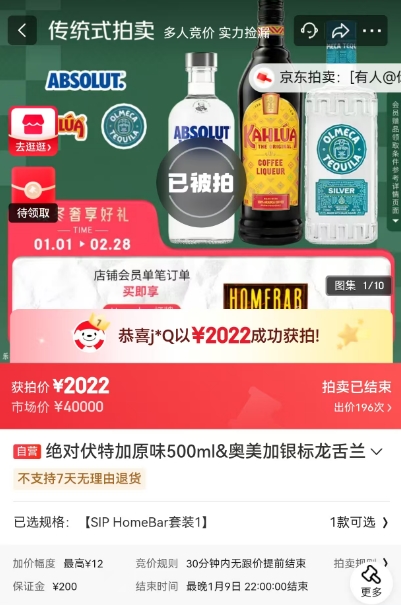
京东超市宴席酒负责人表示,现场"随份子"送祝福并不是临时起意,今年年货节也推出了"买宴席酒, 可获得京东超市'随份子'送祝福的抽奖活动",最高金额可达万元。京东宴席酒不仅汇聚了茅台、五粮 液等主流名酒,还与全国各地知名酒企业深度合作,独家开发了一系列的寓意美好、设计精美的宴席专 属产品供消费者选择。京东宴席酒致力于通过丰富的选择、创新的服务和可靠的保障,让每一对新人的 婚礼筹备更轻松、宴请更有面。 近日,京东拍卖上一项独特拍品——"冠军调酒师定制调酒服务",经过多轮竞价,最终以2022元落槌成 交。拍得该服务的是深圳某企业负责人张先生。在得知员工小李正筹备求婚却苦于没有合适场地后,他 特意拍下这份服务作为惊喜礼物,助力员工营造浪漫氛围,迈向人生重要时刻。 求婚派对现场,冠军调酒师以专业娴熟的技艺展示调酒技艺,馥郁的酒香与现场灯光交织,烘托出温馨 而动人的气氛。小李趁势深情告白,成功求婚,赢得全场热烈掌声。更令人惊喜的是,京东超市在获悉 喜讯后,第一时间"随份子"送上多重贺礼:除了赠予新人一瓶结婚当天同日期生产的茅台用作纪念外, 更承诺免费承包新人结婚当天的所有宴席用酒,上百款宴席专属用酒可以随便挑,并提供新人 ...

新一代消费者更愿意为“意义”买单?
Sou Hu Cai Jing· 2026-01-26 05:11
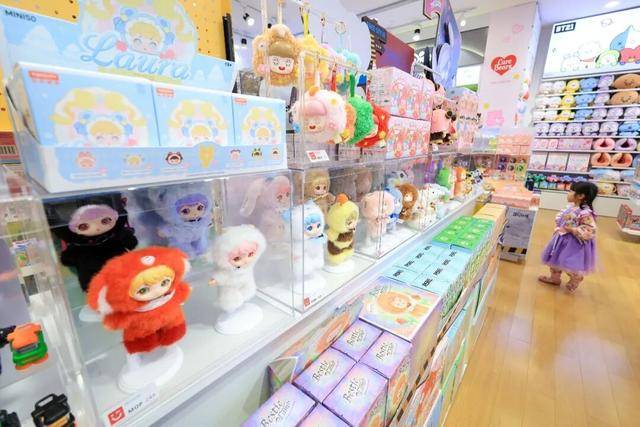
Core Insights - The underlying logic of consumption is shifting from "what to buy" to "why to buy," emphasizing meaning and emotional connection in consumer choices [1][4][8] Group 1: New Consumer Trends - The new generation of consumers is willing to pay a premium for cultural values, emotional experiences, and identity labels, indicating a shift towards meaning-driven consumption [4][6] - Products like LABUBU have become social currency for the Z generation, reflecting their desire for self-expression and unique identity [2][6] - The trend of "meaning consumption" is reshaping market dynamics and consumer choices, aligning with broader economic policies aimed at expanding domestic demand [4][8] Group 2: Generational Consumption Shifts - Older generations are also engaging in meaning consumption, transitioning from basic needs to activities that enhance dignity and social connections in retirement [7] - The consumption patterns of different generations highlight a move from material accumulation to cultural recognition and emotional resonance [6][7] Group 3: Policy and Economic Implications - The Chinese government is strategically fostering multiple trillion-level consumption sectors to stimulate domestic demand, indicating a significant policy shift towards meaning-driven consumption [8] - High-quality development in the consumer sector is moving from standardized products to personalized demands, necessitating a modern market ecosystem that encourages innovation and diversity [8]