
养老服务

Search documents
悦心健康股价涨5.01%,国泰基金旗下1只基金位居十大流通股东,持有196.29万股浮盈赚取49.07万元
Xin Lang Cai Jing· 2025-12-02 01:58
Group 1 - The core viewpoint of the news is that Yuexin Health has seen a stock price increase of 5.01%, reaching 5.24 CNY per share, with a trading volume of 1.23 billion CNY and a turnover rate of 2.63%, resulting in a total market capitalization of 48.19 billion CNY [1] - Yuexin Health, established on June 8, 1993, and listed on August 23, 2007, operates in high-end building ceramics and health-related materials, focusing on comprehensive hospitals, reproductive health, and elderly care services [1] - The revenue composition of Yuexin Health includes: 35.96% from marble tiles, 31.86% from antique tiles, 11.19% from health services, 8.71% from warehouse leasing, 6.71% from ceramic tiles, 5.09% from glass tiles, and 0.48% from other tile products [1] Group 2 - Among the top ten circulating shareholders of Yuexin Health, Guotai Fund's ETF has entered the list, holding 1.9629 million shares, which is 0.21% of the circulating shares, with an estimated profit of approximately 490,700 CNY [2] - The Guotai CSI All-Index Building Materials ETF was established on June 9, 2021, with a current scale of 1.102 billion CNY, yielding 13.06% this year, ranking 3285 out of 4206 in its category [2] - The fund manager of the Guotai CSI All-Index Building Materials ETF is Huang Yue, who has been in the position for 4 years and 302 days, with a total asset scale of 35.78 billion CNY [3]

【延安】多元养老绘就“夕阳红”
Shan Xi Ri Bao· 2025-12-01 22:34
Core Viewpoint - Yan'an City is implementing multi-faceted measures to promote high-quality development in elderly care, enhancing the quality of life for senior citizens through improved policies and services [1][2]. Group 1: Pension Policy Enhancements - Starting from July, Yan'an City has raised the minimum basic pension standard to 220.5 yuan per month, benefiting many residents [2]. - The city has introduced new pension contribution tiers of 4000, 5000, and 6000 yuan, creating a total of 10 contribution options ranging from 300 to 6000 yuan, with government subsidies varying from 45 to 300 yuan [2]. - The annual maximum accumulation for individual accounts can reach 12,300 yuan, promoting a "more contributions yield more benefits" approach [2]. Group 2: Rural Elderly Care Innovations - Wuqi County has developed a "neighborly mutual assistance" model to address the dining challenges faced by elderly residents, converting idle courtyards into "elderly dining halls" [3]. - The county has established 20 rural mutual assistance elderly care points, with plans to expand to 100, ensuring that elderly care remains accessible within the community [3]. Group 3: Community Engagement and Support - Community initiatives have been established where elderly residents actively participate in local governance and support services, fostering a sense of responsibility and community [4]. - The "Warm Sun Door Knocker" service team, led by elderly volunteers, has provided assistance to over 200 individuals, addressing various community needs [4]. - Yan'an City has built 35 elderly care institutions, 88 community day care centers, and 805 rural mutual happiness homes, continuously advancing services for home-based elderly care [4].
韩国一户人家庭占比超36%:“一人经济”升温,老年孤独问题引关注
Di Yi Cai Jing· 2025-12-01 04:57
Core Insights - The number of single-person households in South Korea is projected to reach 8.55 million by 2027, 9.71 million by 2037, and nearly 10 million by 2042, reflecting a significant societal shift [1] - As of last year, single-person households accounted for 36.1% of all households in South Korea, marking a notable increase from 27.2% in 2015 and 31.7% in 2020 [1][3] - The rise in single-person households is attributed to changing social structures, with a notable impact on consumption patterns and the emergence of new business models [1][4] Demographic Trends - The increase in single-person households is primarily driven by two demographic groups: young individuals under 29 years old (19.8%) and seniors aged 70 and above [3] - Young people are increasingly opting for shared living arrangements and services, such as car-sharing, due to economic factors and the high costs associated with car ownership [3][4] - The number of new car registrations among individuals in their 20s has significantly declined, dropping to 2.9066 million units in the first half of 2025, representing only 5.7% of total registrations [4] Economic Implications - The demand for small-sized products, single-person dining options, and mini kitchen appliances has surged, leading to the emergence of new business sectors catering to single-person households [4] - Despite the growth of single-person households, there are signs of a potential reversal, as marriage and birth rates have shown some recovery this year [4] Aging Population Challenges - The aging population in South Korea is contributing to the rise of single-person households among the elderly, with over 10 million individuals aged 65 and above, representing 20.1% of the total population [5] - By 2052, it is estimated that 51.6% of single-person households will consist of individuals aged 65 and older, increasing the demand for social services and healthcare [5] - A recent survey indicated that only 34.2% of elderly individuals living alone consider themselves healthy, with nearly one-third reporting feelings of loneliness [5][6]


联合国开发计划署发布银发经济系列报告
Zheng Quan Ri Bao Wang· 2025-11-30 12:26
Core Insights - The UNDP has released three reports on China's silver economy, emphasizing the importance of high-quality development in creating an inclusive and sustainable aging society [1][2] - The reports analyze the construction of the elderly care service system, financial empowerment, and the multidimensional vulnerabilities of the elderly population [1] Group 1: Reports Overview - The report "Improving the Elderly Care Service System through Silver Economy Development" highlights the critical role of a robust elderly care service system in addressing aging challenges and the key role of the silver economy in expanding high-quality elderly care services [1] - "Financial Empowerment of China's Silver Economy: Promoting Inclusive and Sustainable Development in an Aging Society" identifies key investment opportunities in China's elderly care industry, including smart devices and home modifications for the elderly, using the SDG Investor Map methodology [1] - "Research on the Multidimensional Vulnerabilities of China's Elderly Population" systematically assesses the overall well-being of the elderly based on the UNDP's multidimensional vulnerability analysis framework [1] Group 2: Event Highlights - The event was hosted by the UNDP and supported by Industrial Securities Co., Ltd., featuring constructive discussions on the development paths of the silver economy [1][2] - Key speakers emphasized that appropriate policy guidance and effective financing mechanisms can transform the challenges of population aging into opportunities for inclusive growth [2] - The event included two thematic discussions focusing on creating a high-quality, inclusive elderly care service ecosystem and exploring sustainable pension financing pathways, with participation from experts in finance and elderly care services [2]
聚焦“十五五”规划建议丨积极应对人口老龄化 健全养老事业和产业协同发展政策机制
Xin Hua She· 2025-11-30 11:34
Core Insights - The article emphasizes the importance of developing a coordinated policy mechanism for the elderly care industry in response to China's aging population [1][2] - It highlights the significant growth potential of the elderly care service sector, which is both a vital public welfare initiative and a promising industry [1] Summary by Sections Policy Development - The proposal from the Central Committee aims to actively address population aging and improve the synergy between elderly care services and industry development [1] - The establishment of a robust policy mechanism is deemed essential for implementing the national strategy to tackle aging and for achieving high-quality development in elderly care services [2] Achievements and Progress - Over the past five years, China has introduced various policies that have led to notable advancements in elderly care services [1] - By the end of 2024, the number of elderly care institutions and facilities is expected to reach 406,000, with a total of 7.993 million beds, and the proportion of nursing beds has increased from 48% in 2020 to 65.7% [1] Future Outlook - The elderly population in China is projected to exceed 400 million by around 2035, entering a phase of severe aging, and will surpass 500 million by the middle of this century [1] - The next five years will require further reforms and the establishment of a policy mechanism that focuses on addressing issues and achieving goals, enhancing the roles of government, market, society, and families in elderly care [2]
未来五年,什么工作吃香?
Shang Hai Zheng Quan Bao· 2025-11-29 11:49
Core Insights - The "Suggestions" document outlines China's economic and social development blueprint for the next five years, focusing on structural changes in the employment market driven by industrial upgrades, technological transformations, and demographic shifts [3] Emerging Industries - The document emphasizes the cultivation of emerging industries, including new energy, new materials, aerospace, and low-altitude economy, which are expected to create new job opportunities across the entire industrial chain [7][8] - The low-altitude economy alone is projected to have a talent gap of 1 million for drone operators by 2030, with the market expected to exceed 1 trillion yuan [7][8] Digital Economy - The rise of AI and digital technologies is transforming traditional jobs while creating high-value new roles, with over 20 new occupations related to AI identified in the past five years [13][14] - The AI industry is projected to grow significantly, with job postings increasing by 3% and job seekers by 39% in the first three quarters of 2025 [14] Service Sector - The service sector is expected to absorb more labor due to rising demands in health, elderly care, and childcare services, with the elderly care industry seeing a job growth rate of 29.2% [15][17] - The document highlights the need for professionalization and standardization in the service industry to enhance consumer experience and attract more employment [17] Flexible Employment - The number of flexible employment workers has reached 84 million, with various new job forms emerging to meet diverse labor needs [24][25] - The document calls for improved social security systems and protections for flexible workers to ensure their rights and benefits [25] Cross-Border Employment - The document outlines the expansion of high-level openness, with cross-border e-commerce becoming one of the fastest-growing employment sectors, creating diverse job opportunities [28][30] - By 2030, the cross-border e-commerce market is expected to create approximately 45 million jobs, with over 30% of these positions going to recent graduates [28] Rural Revitalization - New farmers and entrepreneurs are driving innovation in rural areas, with policies aimed at modernizing agriculture and promoting rural employment [33][34] - The document emphasizes the importance of attracting talent to rural areas to enhance local economies and job opportunities [34] Cultural Industry - The cultural industry is rapidly evolving, with a high demand for talent that combines cultural knowledge and technical skills, particularly in digital cultural sectors [37][38] - By 2030, the demand for virtual reality professionals is expected to exceed 6.8 million positions, reflecting the industry's growth [38] Aging Population - The aging population is creating a significant demand for elderly care services, with a projected shortfall of 5.5 million caregivers [42][43] - The document highlights the need for a robust elderly care system and the development of specialized training programs to meet this demand [43] Green Jobs - The green economy is expected to generate numerous new jobs, with the demand for roles like energy storage operation managers projected to exceed 100,000 by 2030 [45][46] - The document emphasizes the importance of interdisciplinary talent in the green sector, which is anticipated to double in size over the next five years [46] Regional Employment - The document outlines strategies for regional development to balance employment opportunities across different areas, moving from a focus on major cities to a more distributed model [49][50] - The emphasis on new urbanization strategies aims to create job clusters in county-level cities, enhancing local employment prospects [51]

民生一件事 | 养老有“医”靠 多点发力守护幸福“夕阳红”
Yang Shi Wang· 2025-11-29 06:32
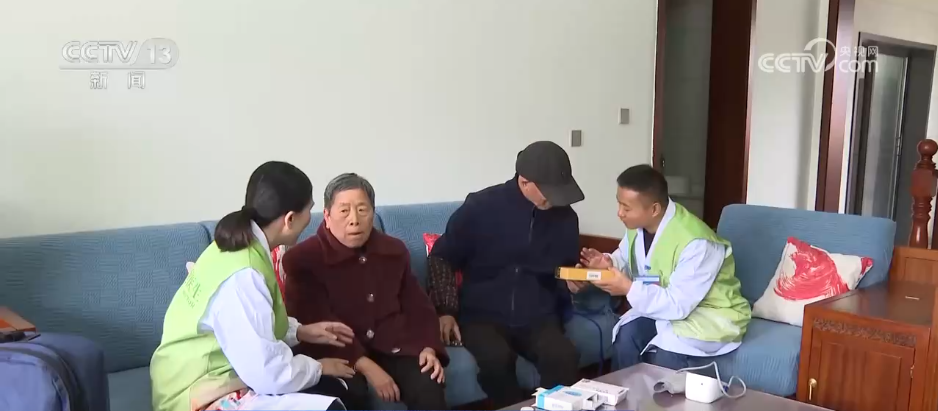
Core Viewpoint - The Chinese government is launching a three-year initiative to promote integrated medical and elderly care services, aiming to enhance home and community-based care for the elderly, with a target of achieving at least 80% coverage of family doctor contracts for elderly individuals with disabilities, high age, or other special difficulties by the end of 2027 [1] Group 1: Policy and Initiative - The initiative involves the development of home and community-based integrated medical and elderly care services [1] - By 2027, the government aims for a family doctor contract coverage rate of no less than 80% for elderly individuals facing special difficulties [1] Group 2: Implementation and Case Studies - In Chengdu's Wenjiang District, 10 grassroots medical institutions have formed 107 family doctor service teams to provide chronic disease management and vaccination services to elderly residents [3] - In Jiangxi's Wanyuan County, six township health centers have been transformed into nursing homes, providing over 500 nursing beds [9] - A 76-year-old resident in Wanyuan County showed significant health improvement after receiving care in a local nursing home [7] Group 3: Talent Development and Training - There is a significant demand for elderly care professionals, with over 10 million potential caregivers needed based on the current ratio of certified caregivers to elderly individuals [10] - The government plans to expand the training of elderly care professionals, with at least 30 new programs in medical and elderly care management by the end of 2027 [12] Group 4: Technological Integration - The initiative will leverage digital platforms and artificial intelligence to enhance the reliability and professionalism of elderly care services [15] - Smart devices are being used to improve medical care for the elderly, such as wearable technology that monitors health conditions and alerts medical teams in emergencies [17] Group 5: Community and Rehabilitation Services - The establishment of intelligent rehabilitation centers in rural areas aims to facilitate recovery for elderly individuals at their doorstep [19] - These centers will integrate traditional Chinese medicine with modern rehabilitation techniques, enhancing the overall quality of care [19]
一张刮刮乐20元其中4元是公益金 今年苏州市级福彩公益金资助40个项目
Su Zhou Ri Bao· 2025-11-29 00:36
Core Insights - The article highlights the allocation and impact of the Suzhou municipal welfare lottery funds, emphasizing their role in supporting various social welfare projects, particularly in elderly care, child welfare, and emergency assistance. Group 1: Elderly Care - In 2023, approximately 69.6 million yuan of the Suzhou welfare lottery funds is dedicated to elderly care, supporting 13 specific projects [2][3] - The "Family Companionship Project" at Suzhou Social Welfare Institute provides care and companionship for over 180 long-term hospitalized elderly individuals, focusing on both physical and psychological needs [3] - An additional 10.59 million yuan is allocated for accident insurance for seniors aged 60 and above, enhancing their safety and security [3] Group 2: Support for Disabled Individuals - The Suzhou Autism Awareness Experience Center, funded by the welfare lottery, aims to educate the public about autism and provide resources for affected families [4][5] - A total of 847,000 yuan is allocated to support rehabilitation education programs for children with disabilities, continuing a seven-year funding commitment [5] Group 3: Child Welfare - The welfare lottery funds 9.7 million yuan for 11 child welfare projects, including financial support for low-income youth and initiatives to fulfill the wishes of disadvantaged children [6] - The "Future Project" provides 6,000 yuan annually to 550 eligible low-income youth for non-compulsory education expenses [6] Group 4: Emergency Assistance - The Suzhou welfare lottery has established an emergency assistance fund, providing timely financial support to families facing sudden hardships, with an increase in aid amounts from 3,000-5,000 yuan to 5,000-8,000 yuan starting in 2024 [7] - Over the past 11 years, this initiative has allocated more than 2.5 million yuan to assist over 400 families in crisis [7] Group 5: Other Social Welfare Initiatives - Additional allocations include 12.74 million yuan for the reconstruction of the Suzhou Rescue Management Station and 10 million yuan for medical assistance for low-income individuals [8]
全市养老机构消防应急演练观摩活动举行
Su Zhou Ri Bao· 2025-11-29 00:35
昨天(11月28日)下午,市民政局、市应急管理局、市消防救援局联合举办了全市养老机构消防应 急演练现场观摩活动。 本次活动组织来自各县级市(区)的养老机构负责人现场观摩,通报全市养老机构首批消防应急救 援结对共建单位名单。 副市长查颖冬参加活动。 消防应急演练在横泾康养中心进行,模拟场景为一房间因电气线路老化起火,引燃被褥等可燃物、 触发火灾报警。中心接警后立刻启动灭火疏散应急预案,工作人员进行先期灭火及排烟等处置,组织人 员有序疏散。因现场火势扩大,一位老人未能及时疏散至紧急集合点、被困阳台,消防部门出动云梯车 等开展救援。演练后,市消防救援部门进行了点评。 ...
延伸养老服务的关爱触角(编辑手记)
Ren Min Ri Bao· 2025-11-28 22:00
(责编:白宇、卫嘉) 关爱夕阳红,能做的还有许多。当社会各界不断延伸养老服务的关爱触角,我们就能更加积极主动地应 对人口老龄化,助力老年人享受更好社会保障和更高质量生活。 《 人民日报 》( 2025年11月29日 04 版) 老年人就餐无需走远路,在家门口甚至不出门就能吃上实惠、安心的餐食。青海西宁市城中区南川西路 街道东台社区增设幸福食堂助餐点的举措,把对银发群体的关爱化为实际行动,以点点滴滴的努力、扎 扎实实的工作,换来了老人们的肯定和幸福。 小小助餐点,彰显着为人民服务的情怀担当。主动作为、协调多方、整合资源,增设助餐点的设想得以 较快实现;在此基础上,又发动网格员提供送餐服务、因应老年人需求调整食谱、拓展助餐点便民服务 功能,这体现的是多想一层、多做一步的良好作风。 ...