
智能机器人

Search documents
湖南百利工程科技股份有限公司 关于全资子公司转让下属控股公司股权的公告
Zhong Guo Zheng Quan Bao - Zhong Zheng Wang· 2025-09-13 03:58
Transaction Overview - Hunan Baili Engineering Technology Co., Ltd. (the "Company") through its wholly-owned subsidiary Changzhou Baili Lithium Battery Smart Factory Co., Ltd. (referred to as "Baili Lithium") signed a share transfer agreement with Wuxi Baiqing Intelligent Robot Technology Co., Ltd. (referred to as "Wuxi Baiqing") shareholder Zhu Yueyuan in August 2022, acquiring 60% of Wuxi Baiqing's shares for a cash consideration of 1.2 million yuan [2] - Recently, Baili Lithium signed a share transfer agreement to sell 40.1% of its shares in Wuxi Baiqing back to Zhu Yueyuan and Jia Shaohua for a cash consideration of 1 yuan, reducing its stake from 60% to 19.9% [2] Counterparty Information - The counterparties for the transaction are Zhu Yueyuan and Jia Shaohua, who are natural shareholders of Wuxi Baiqing, each holding 20% of the shares prior to the transfer [3] Target Company Information - Wuxi Baiqing was established on May 5, 2016, with a registered capital of 12 million yuan. Its main business includes the research and development of intelligent robots, manufacturing and sales of industrial robots, and various technical services [4] Financial Interactions - As of August 2025, Baili Technology had accounts receivable from Wuxi Baiqing amounting to 2.6 million yuan. A four-party agreement was signed to transfer this receivable to Baili Lithium, which will offset its payables to Wuxi Baiqing [5] - Baili Lithium had no accounts receivable from Wuxi Baiqing as of August 2025, but had a guarantee balance of 5 million yuan, expiring on December 29, 2026 [5] Share Transfer Agreement Details - The share transfer involves 40.1% of Wuxi Baiqing's shares, with the transfer price set at 1 yuan. The agreement stipulates that the transfer must be completed within 15 working days after payment [6][7] Impact of the Transaction - The share transfer is part of the Company's strategic transformation to focus on high-end intelligent equipment and smart factory solutions for new materials and energy sectors. It aims to optimize resource allocation and improve operational efficiency without adversely affecting the Company's financial status or shareholder interests [12]

2025服贸会上,各类创新服务集中亮相
Da Zhong Ri Bao· 2025-09-13 01:26
Group 1 - The 2025 China International Service Trade Fair showcases various innovative services that are reshaping consumer experiences and lifestyles [2] - The aging population in China is driving demand for home care solutions, with companies like Shandong Xinyue Health Technology presenting products designed for elderly care [3][4] - Shandong Xinyue's home care solutions include a set of four products aimed at improving the living conditions of elderly individuals at home, emphasizing the need for a more suitable home environment [4] Group 2 - China Unicom introduced the Mifang card, which allows users to make digital payments and use public transportation, enhancing convenience for both locals and foreign visitors [5] - China Mobile's 5G new calling service offers real-time translation during calls, facilitating communication between speakers of different languages [6] - The digital consumption sector is rapidly evolving, with a focus on creating innovative consumption scenarios to drive market growth [6] Group 3 - The presence of intelligent robots at the fair highlights their growing role in various sectors, including banking and healthcare [8] - As of December 2024, there are 451,700 intelligent robot companies in China, with a registered capital of 64,445.57 billion yuan, indicating significant growth in the industry [8] - Companies are encouraged to develop specialized robots to capture niche markets, particularly in the manufacturing sector [8]



多伦科技与众擎机器人达成战略合作,共推具身智能机器人在重点领域场景创新落地
Jiang Nan Shi Bao· 2025-09-12 14:19
Core Insights - The strategic partnership between Duolon Technology and Shenzhen Zhongqing Robot Technology aims to promote the large-scale application of embodied intelligent robots in public security, traffic management, and new retail sectors, aligning with national development strategies for embodied intelligence [1][4] Group 1: Company Overview - Duolon Technology has over 30 years of experience in the transportation sector, covering more than 400 cities in China, and has accumulated extensive industry data and market resources in areas such as AI and transportation [2] - Shenzhen Zhongqing Robot Technology has established itself as a significant emerging force in the field of embodied intelligent robots, with notable technological advantages in core components, embodied intelligence, and motion control algorithms [2] Group 2: Collaboration Focus - The partnership will focus on three main areas: - Scene-oriented product development targeting actual needs in public security, traffic, and new retail, including products like intelligent service robots and security patrol robots [3] - Technological collaboration and innovative integration leveraging Duolon’s industry data and algorithms alongside Zhongqing’s technical expertise to enhance product intelligence [3] - Joint promotion and brand building through product showcases, technical seminars, and industry exhibitions to increase brand influence in the intersection of application scenarios and embodied intelligence [3] Group 3: Strategic Alignment - This collaboration is a direct response to national strategies regarding "AI + manufacturing" and the embodied intelligent robot industry, facilitating business expansion and transformation for Duolon while providing valuable application scenarios for Zhongqing [4] - The "scene + technology" cooperation model is expected to accelerate the commercialization of robotic technology in specific verticals, offering a new paradigm for industry development [4] - The partnership is anticipated to reshape various industries through rapid technological innovation and integration, providing new pathways for digital transformation and large-scale commercialization of new technologies [4]

海外华媒在长春感受科创“未来感”
Zhong Guo Xin Wen Wang· 2025-09-12 12:27
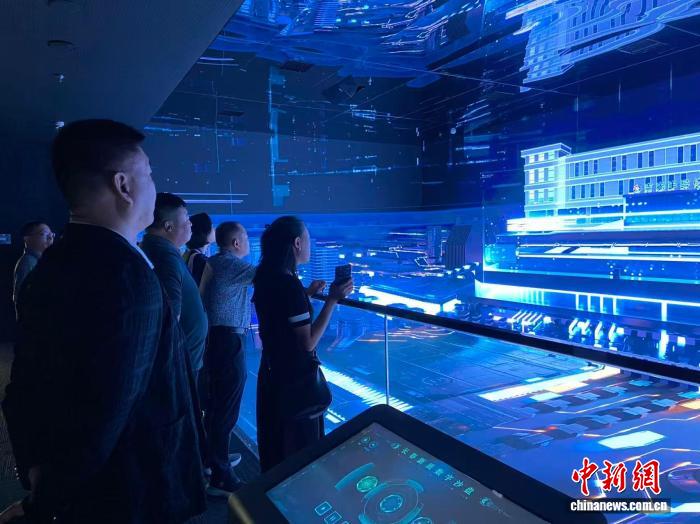
Core Insights - The event "Five Colors of Jilin, Four Seas Sound" showcased technological innovation in Changchun, attracting representatives from over 10 countries and regions to explore the North Lake Future Science City [1][3] - The Changchun New Quality Productivity Development Promotion Center highlighted advancements in ten key industries, including new energy vehicles, aerospace, high-end equipment, optoelectronic information, modern agriculture, and biomedicine [3][4] - The event emphasized the importance of talent in driving technological innovation, with the Northeast Sea Innovation Center serving as a platform for international innovation and talent aggregation [3][4] Industry Highlights - The Changchun New Quality Productivity Development Promotion Center featured a digital sand table demonstration that showcased operational conditions and R&D achievements in a 720-degree panoramic view [1][3] - The center provided a dual-channel platform for enterprises to display, connect, and trade their innovative products [3] - Notable products included ginseng and its derivatives, such as black ginseng wine and ginseng enzyme drinks, which demonstrated advanced processing technology [3] - Companies like Pengyao Technology collaborated with institutions like Jilin University and the Chinese Academy of Sciences to develop boron compounds for applications in nuclear power and radiation protection [3][4] - The presence of companies like Xiaobai Intelligent Technology, which focuses on AI and robotics, reflects the vibrant innovation landscape in Changchun's high-tech industry [4]

神州答卷|江淮日新向未来
Xin Hua Wang· 2025-09-12 11:46
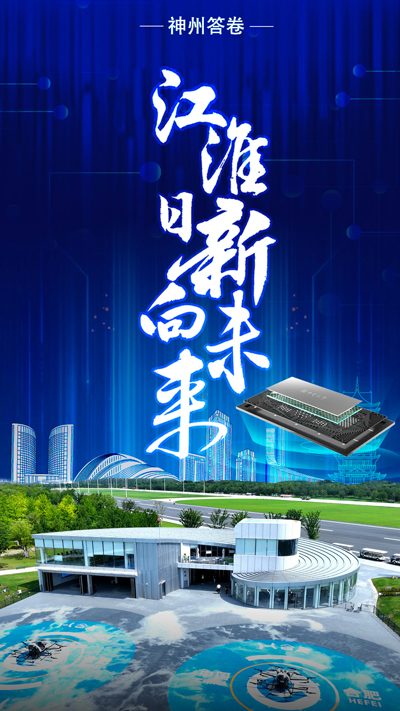
Group 1: Innovation and Development - The core theme of the articles revolves around the importance of innovation in driving economic growth and addressing challenges in Anhui province [2][10][24] - Anhui has proposed 47 major questions related to innovation to tackle current and future development issues, aiming to establish itself as a significant hub for technological innovation and new industries [2][10] - The province's industrial revenue has increased from 3.8 trillion yuan in 2020 to 5.49 trillion yuan in 2024, with a rise in the contribution of high-tech industries to industrial value added [5][9] Group 2: Automotive Industry - Anhui's automotive production reached 1.7557 million units in the first seven months of this year, with 855,300 units being new energy vehicles, showing significant growth compared to previous years [3][5] - The Jianghuai Automobile's Zun Jie super factory in Hefei is a key player in the smart manufacturing sector, utilizing over 1,800 robots for automated production [3][5] Group 3: Challenges and Opportunities - Despite the growth, there are challenges such as a decline in fixed asset investment and profits for industrial enterprises, indicating a need for stronger internal demand [9][10] - The province is focusing on stabilizing and enhancing its automotive industry competitiveness while addressing difficulties in other sectors like photovoltaics and foreign trade [10][22] Group 4: Future Industry Development - Anhui is implementing a "7+N" future industry cultivation plan targeting fields like quantum technology, space information, and advanced materials, aiming for a future industry scale of 500 billion yuan by 2030 [18][20] - The province is also exploring innovative methods for industry cultivation, including establishing investment platforms and promoting collaboration between scientists and engineers [20][25] Group 5: Innovation Ecosystem - A comprehensive innovation ecosystem is being developed, with a focus on integrating government, industry, academia, finance, and application to enhance innovation capabilities [25][31] - The province aims to cultivate over 2 million talents for emerging industries by 2027, with a significant increase in R&D investment and output [25][28]
强强联合拓美洲!极智嘉新签美国 VARGO、Zion两大合作伙伴
Sou Hu Wang· 2025-09-12 01:23
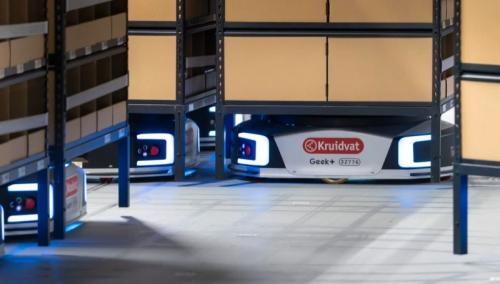
Core Insights - Geek+ continues to expand its international market presence and partnerships, showcasing its leadership in the global smart robotics sector through various projects and collaborations [1] Group 1: International Expansion and Partnerships - Geek+ deepens its collaboration with Watsons Group to deploy the first robot fulfillment project in the Benelux region, enhancing operational efficiency by doubling order processing capacity [2] - The first autonomous mobile robot project in South Africa, developed in partnership with ECC for Takealot Group, wins the African Supply Chain Excellence Award, setting a new benchmark in Johannesburg's logistics sector [4] - Strategic partnerships with VARGO® and Zion Solutions Group aim to enhance e-commerce and retail fulfillment automation in the Americas, leveraging advanced technologies for improved operational efficiency [6][8] Group 2: Product Showcasing and Industry Recognition - Geek+ showcases three major picking solutions at the IMHX 2025 exhibition in the UK, highlighting innovations that address industry pain points and improve operational resilience [10] - The company’s solutions are also featured at six partner booths, demonstrating diverse application scenarios in the logistics sector [13]
聚焦“两区”建设 打造高水平开放新高地
Bei Jing Ri Bao Ke Hu Duan· 2025-09-12 00:12
Core Viewpoint - Chaoyang District has positioned itself as a significant window for the capital's opening-up, focusing on high-standard implementation of the "Two Zones" initiative since 2020, leading to enhanced investment openness, trade facilitation, and innovative open models [1][4][5]. Investment and Economic Development - Over the past five years, Chaoyang District has implemented over 150 pilot reform policies, resulting in 109 innovative projects and 87 institutional innovations, with 15 measures replicated nationwide [4][5]. - The district has attracted major projects such as Alibaba's Beijing headquarters and the Beijing International Big Data Exchange, with a total of 4,473 projects recorded and 2,644 implemented [4][5]. Financial and Trade Openness - Chaoyang has deepened financial sector openness, establishing the first foreign-funded securities company in China, Standard Chartered Securities, and leading in the number of approved telecom business types [5][12]. - The district has completed a cross-border trade digitalization pilot with Singapore, enhancing trade facilitation and establishing a service center for port collaboration [5][6]. Cross-Border Flow and Data Management - The district has initiated comprehensive reforms for cross-border capital flow, becoming a leader in international payment services and cross-border investment facilitation [5][6]. - It has established data flow service centers and implemented the first personal information export standard contract in the country, enhancing data management capabilities [6][10]. Industry Innovation and Technology - Chaoyang has developed 20 specialized industrial parks focusing on sectors like AI, digital healthcare, and the metaverse, with over 1,400 companies in the metaverse industry cluster [8][9]. - The district has launched the first digital healthcare park in the city, housing over 240 enterprises in AI and new drug development [9]. International Cooperation and Investment Attraction - Since 2021, Chaoyang has established 2,398 new foreign enterprises, accounting for 28.4% of the city's total, with actual foreign investment reaching $17.4 billion [11][12]. - The district has expanded its international investment network, engaging with countries like the UK and Germany to foster cooperation in various industries [13][14]. Service and Infrastructure Enhancement - Chaoyang has improved its international service capabilities, establishing a friendly consumption environment for foreign visitors and enhancing payment services [17][18]. - The district has launched initiatives to optimize living conditions for expatriates, including the distribution of a foreigner handbook and the establishment of international talent apartments [19][20].

彰显科技融合服务新未来
Jing Ji Ri Bao· 2025-09-11 22:15
Group 1: Core Themes of the Event - The 2025 China International Service Trade Fair emphasizes the integration of technology and services, showcasing innovative solutions and promoting deep integration of service trade and investment [1][4] - The event serves as a high-end platform for international exchange and cooperation, reflecting China's commitment to an open and inclusive service trade environment [4][6] Group 2: Technological Innovations - The fair highlights the application of advanced technologies, such as humanoid robots that perform music and Tai Chi, demonstrating the potential of technology in cultural service trade [2][3] - Various robots and AI products showcased at the event illustrate the immersive experiences enabled by artificial intelligence, enhancing interaction and engagement [3][6] Group 3: Global Participation and Collaboration - The event features participation from 85 countries and international organizations, with nearly 2000 enterprises, including around 500 Fortune 500 companies, underscoring its global significance [4][5] - A memorandum of cooperation was signed between Chinese and Brazilian institutions to promote traditional Chinese medicine, indicating a focus on international collaboration in service trade [5] Group 4: Service Trade Development - The fair is positioned as a vital platform for observing new consumption trends in China, with service retail sales increasing by 5.2% year-on-year from January to July [7] - The event showcases high-quality service brands and innovative service supply, contributing to the expansion of service consumption and new business models [7][8] Group 5: Digital and Cultural Integration - The introduction of the ULive ultra-high-definition digital audiovisual solution allows for immersive viewing experiences, expanding the reach of cultural performances [8] - The venue, Shougang Park, hosts diverse activities that integrate culture, tourism, and sports, promoting new consumption scenarios and enhancing the service trade landscape [8]
新石器成立科技公司 含AI及机器人业务
Zheng Quan Shi Bao Wang· 2025-09-11 04:44
人民财讯9月11日电,企查查APP显示,近日,重庆准时达科技有限公司成立,法定代表人为李子夷, 经营范围包含:智能机器人销售;智能机器人的研发;人工智能硬件销售;新能源汽车整车销售等。企 查查股权穿透显示,该公司由新石器慧通(北京)科技有限公司全资持股。 ...

申万宏源证券晨会报告-20250911
Shenwan Hongyuan Securities· 2025-09-11 00:42
Group 1: Real Estate Industry Analysis - The real estate industry is currently facing fundamental challenges and policy constraints, with broad demand having bottomed out after four years of adjustment. The key issue lies in purchasing power rather than demand, as the increase in second-hand home transactions has not stabilized prices due to a weak middle class affecting the housing chain [2][8] - The "Good House" policy is expected to create a new path for recovery, leading to a five-fold resonance in core cities. This includes the creation of new products and markets, urban renewal, housing consumption upgrades, wealth reallocation under capital controls, and stock market strength contributing to the recovery of the housing market [8][2] - Core cities like Hong Kong have shown signs of recovery, with multiple favorable factors driving price stabilization. Other cities such as Shanghai, Beijing, and Shenzhen are also approaching recovery, supported by the aforementioned five-fold resonance [8][2] Group 2: Robotics Industry Analysis - The global market for lawn mowers is projected to reach USD 37.4 billion in 2024, with a year-on-year growth of 7.5%. The penetration rate of robotic lawn mowers is expected to reach 7.5% in 2024, driven by the increasing demand for garden tools in North America and Europe [3][9] - The shift towards lithium battery-powered and smart lawn mowers is evident, with the market for new energy garden machinery expanding significantly. The cost advantages of boundary-free robotic mowers over traditional models are also highlighted [9][3] - Domestic companies are rapidly gaining market share in the lawn mower sector, leveraging technological advancements and strong R&D capabilities. Companies like Ninebot and Ecovacs are leading the way with innovative products and significant revenue growth [9][3]