
体育

Search documents
多部门详解扩大服务消费“19条” 将开展消费新业态、新模式、新场景试点城市建设
Shang Hai Zheng Quan Bao· 2025-09-17 19:28
Core Viewpoint - The Ministry of Commerce and nine other departments have jointly issued policies aimed at expanding service consumption, focusing on resolving bottlenecks and enhancing consumer experience through specific measures [1][2]. Group 1: Policy Measures - The policy measures consist of five areas and 19 specific tasks aimed at promoting service consumption [1]. - The measures emphasize a combination of improving people's livelihoods and stimulating consumption, optimizing supply while stimulating demand, and balancing domestic and foreign openness [1]. Group 2: Implementation Strategies - The Ministry of Commerce plans to select around 50 pilot cities for new consumption formats, focusing on cities with large populations and strong development potential [2]. - The National Development and Reform Commission will implement the "Artificial Intelligence +" initiative to accelerate AI applications in service consumption, enhancing various service enterprises [2]. Group 3: Financial Support - Recent policies from the Ministry of Finance include interest subsidies for personal consumption loans and loans for service industry entities [2]. - As of the end of July, the balance of household consumption loans, excluding personal housing loans, reached 21.04 trillion yuan, with a year-on-year growth of 5.34% [2]. Group 4: Inbound Consumption Growth - In the first half of the year, over 19 million inbound foreign visitors were recorded, a 30% increase year-on-year, with visa-free entries growing by 54% [3]. - The number of duty-free shops has tripled compared to the end of 2024, and the number of people benefiting from duty-free refunds has increased by 248% [3].
新产品新模式新业态涌现 消费增长潜能持续释放
Shang Hai Zheng Quan Bao· 2025-09-17 19:28
Group 1 - The core viewpoint of the articles highlights the robust growth in consumer spending in China, with retail sales of consumer goods increasing by 4.6% year-on-year in the first eight months of the year, and service retail sales growing by 5.1% [1] - The emergence of "emotional consumption" reflects an upgrade in consumer demand, shifting from basic needs to personalized and quality-oriented demands as material conditions improve [2] - The retail sales of household appliances, audio-visual equipment, cultural office supplies, and furniture saw year-on-year growth rates exceeding 10% in August, significantly outpacing overall retail sales growth [2] Group 2 - The integration of sports events with local tourism and shopping has become a significant driver of economic growth, with Jiangsu Province reporting a nearly 200% increase in summer tourist attraction bookings since July [3] - The "tourism+" model, which combines tourism with various sectors such as performing arts and technology, is gaining popularity and stimulating consumer activity [5] - The introduction of silver tourism trains, aimed at the elderly population, reflects the growing market potential for services catering to aging demographics, with plans for 1,860 such trains in 2024 [6] Group 3 - The application of AI in consumer sectors is driving rapid growth in related industries, with significant increases in the manufacturing value of smart vehicle equipment and integrated circuits [7][8] - Policies aimed at optimizing tax refunds for outbound tourism and supporting the development of international consumer cities are being implemented to enhance domestic demand [9] - The government is focusing on deepening reforms and opening up to facilitate domestic and international economic circulation, with a goal of achieving high-quality development [10][11]
以高质量服务提振消费、扩大内需——聚焦扩大服务消费系列政策举措
Xin Hua She· 2025-09-17 15:51
Core Viewpoint - The article emphasizes the importance of service consumption in improving people's livelihoods and driving economic growth, highlighting recent policy measures aimed at expanding service consumption in China [1]. Group 1: Policy Highlights - The policy measures are characterized by three main principles: combining benefits for people's livelihoods with consumption promotion, optimizing supply while stimulating demand, and balancing domestic and foreign openness [2]. - Specific measures include accelerating the establishment of long-term care insurance, increasing the supply of quality resources in cultural tourism and sports, and expanding pilot programs in telecommunications, healthcare, and education [2]. - The initiative to develop pilot cities for new consumption formats aims to enhance high-quality service supply and stimulate consumer demand through innovative scenarios and models [2]. Group 2: Supply and Demand Dynamics - The approach focuses on enhancing service quality and expanding consumer demand by promoting innovation, improving service levels, and creating a conducive environment for market activities [3]. - Key areas of consumer demand include culture, tourism, elderly care, childcare, and sports services, with a strong emphasis on community-based services [3]. - The cultural and tourism sector is highlighted as a significant component of service consumption, with initiatives to improve tourist attractions and develop new economic models [3]. Group 3: Financial Support for Service Consumption - Financial support is crucial for expanding service consumption, with the People's Bank of China implementing measures to enhance credit availability for service sectors [4]. - A specific fund of 500 billion yuan has been established to guide financial institutions in increasing credit for key service consumption areas and the elderly care industry [5]. - As of July, the loan balance for key service consumption sectors reached 2.79 trillion yuan, reflecting a year-on-year growth of 5.3% [5]. Group 4: High-Quality Development of Service Consumption - Service consumption accounted for 46.1% of per capita consumption expenditure last year, contributing 63% to overall consumption growth, indicating its increasing dominance [6]. - The government plans to foster integrated consumption scenarios and enhance urban convenience through various initiatives, including cultural and tourism events [6]. - There is significant potential for growth in inbound consumption, with plans to optimize visa policies and enhance the experience for international tourists [6]. Group 5: Upcoming Initiatives in Cultural and Tourism Consumption - The Ministry of Culture and Tourism is set to launch a national cultural and tourism consumption month, offering over 330 million yuan in consumer subsidies [7]. - A three-year action plan for cultural and tourism consumption will be initiated, including measures like discount vouchers and incentives for inbound tourism [7].
多部门详解扩大服务消费新政 50城将试点建设消费新场景
2 1 Shi Ji Jing Ji Bao Dao· 2025-09-17 15:27
Core Viewpoint - The Chinese government is implementing a series of policies to expand service consumption, aiming to shift the consumption structure from goods to services as the economy matures, with a focus on attracting quality service resources and enhancing domestic consumption [1][6]. Group 1: Policy Measures - The newly released measures include 19 specific tasks across five areas, targeting various sectors such as cultural venues, sports events, education, high-end healthcare, and leisure tourism [1]. - The government plans to introduce additional policies for high-quality development in the accommodation industry and the integration of railways and tourism [1]. - A "1+N" policy system has been established, with over 30 related policy documents already issued [1]. Group 2: Market Trends - The shift towards service consumption is supported by international experience, indicating that when GDP per capita reaches around $15,000, the consumption structure tends to favor services [1]. - The service consumption expenditure per capita in China is projected to reach 46.1% of total consumption by 2024, indicating significant growth potential compared to developed countries [5]. Group 3: Technological Integration - The integration of new technologies such as 5G, IoT, big data, and AI is accelerating in the consumption sector, with a notable rise in "AI + consumption" applications [2]. - In August, the sales of robot-related products in Beijing's E-TOWN exceeded 330 million yuan, with over 190,000 units sold, highlighting the growing market for AI-driven consumer products [2]. Group 4: Pilot Cities and New Consumption Scenarios - The government will select around 50 pilot cities with large populations and strong development potential to innovate and diversify consumption scenarios [4]. - The focus is on enhancing the supply of quality consumption and promoting new consumption formats to stimulate market vitality [4]. Group 5: International Tourism and Service Optimization - The number of inbound tourists is expected to reach 130 million in 2024, with total spending projected at $94.2 billion, reflecting a significant increase from 2023 [7]. - Efforts are being made to improve the convenience of inbound tourism services, including the implementation of tax refund policies and the introduction of multilingual support at major airports [7].
行业景气环比改善,服务消费政策落地,有望享多重红利
2025-09-17 14:59
Summary of Conference Call Records Industry Overview - The service consumption in China is significantly lower than in developed countries, currently at approximately 30% compared to 70% in the US, indicating substantial growth potential [1][2] - The new policies aim to enhance service consumption, particularly in the cultural and tourism sectors, with local governments actively improving service quality [1][2] Key Policy Insights - Five major increments in the new policy include: 1. Optimizing student holiday arrangements to explore spring and autumn breaks, benefiting tourism [1][4] 2. Encouraging IP collaborations to promote cross-industry partnerships [1][4] 3. Linking sports events with cultural tourism to boost consumer engagement [1][4] 4. Promoting AI applications in various sectors such as e-commerce and education [1][4] 5. Regulating non-academic training institutions to encourage market-oriented vocational training [1][4] Impact on Specific Sectors - **Tourism and Hospitality**: - The expansion of the visa-free entry policy is expected to significantly boost inbound tourism, particularly benefiting major cities like Beijing and Shanghai, as well as OTA platforms and hotels [3][9][12] - **Cultural and Sports Events**: - The policy encourages the introduction of international sports events and supports local sports activities, which will benefit event organizers and related industries, enhancing investor expectations [1][6] - **Education and Training**: - The new regulations for non-academic training institutions will favor companies like New Oriental and others in the vocational training sector [7][8] Financial and Economic Support - The government plans to utilize central budget investments and local special bonds to support cultural tourism and elderly care facilities, which will attract social capital investment [13] - Financial tools will be employed to increase credit availability, directly benefiting companies involved in consumer lending, such as Chongqing Department Store [13] Additional Considerations - The adjustment of student holiday schedules is anticipated to increase tourism frequency while alleviating congestion during peak seasons [11][12] - The integration of AI in service sectors is expected to enhance operational efficiency and reduce costs, indicating a significant trend in future consumption development [10]


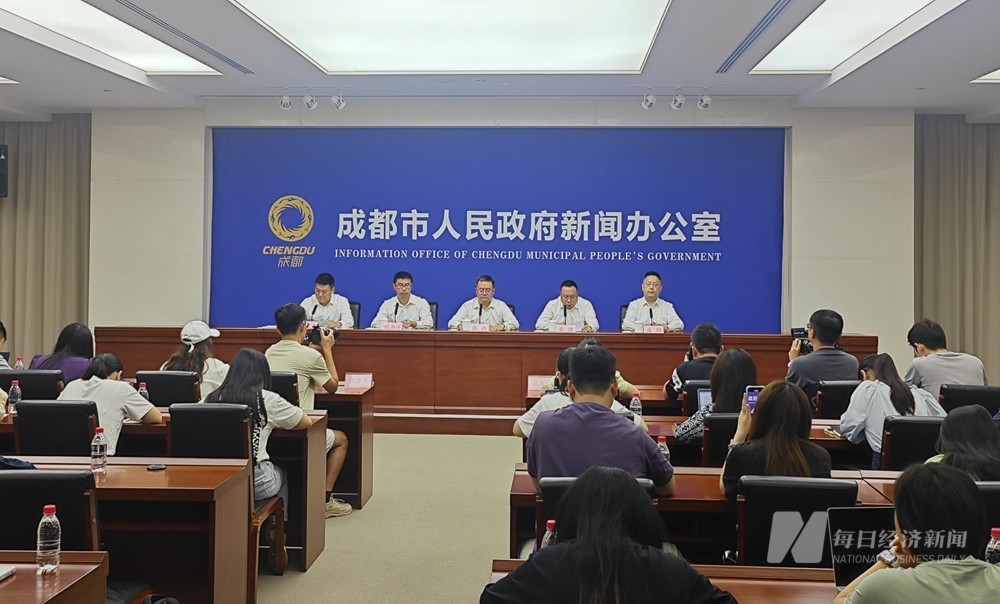
抢抓“黄金周”发力促消费 成都超1亿元“大礼包”来了 | 今秋十月去哪儿 万千气象成都行
Mei Ri Jing Ji Xin Wen· 2025-09-17 14:20
Group 1 - Chengdu government is launching a consumption promotion campaign for the upcoming National Day and Mid-Autumn Festival, with a total of 850 million yuan in e-commerce vouchers, over 400 million yuan in dining vouchers, and 5 million yuan in accommodation vouchers [1] - The campaign, themed "Ten Thousand Sceneries in Chengdu," will cover shopping, food, cultural tourism, and night-time consumption, with a focus on providing discounts in various sectors including shopping, dining, performances, and sports events [1] - Tourists can enjoy discounts on ten categories of products by using the 850 million yuan e-commerce vouchers through major e-commerce platforms when they are located in Chengdu [1] Group 2 - Chengdu will host the "2025 Chengdu International Food Carnival" during the holiday period, along with the "2025 Munich Beer Festival Tianfu Carnival Week," to cater to diverse dining needs of citizens and tourists [2] - The city is capitalizing on the growing sports atmosphere by promoting various top-tier events, including the upcoming 13th World Dance Sport Championship, and other sports events like the AFC Champions League and the Chengdu Marathon [2] - Chengdu aims to create a new consumption model by integrating events with tourism and commerce, transforming event traffic into economic growth through initiatives like event carnivals and consumer markets [2]

金秋十月去哪儿,万千气象成都行!
2 1 Shi Ji Jing Ji Bao Dao· 2025-09-17 13:01
Group 1: Consumption Promotion Activities - Chengdu will launch a series of consumption promotion activities themed "Wanjian Qixiang Chengdu Xing" during the National Day and Mid-Autumn Festival holidays [1] - The local government will distribute 85 million yuan in consumption vouchers, allowing visitors to enjoy discounts on various products through major e-commerce platforms [1] - Over 40 million yuan in dining vouchers will be issued, covering more than 16,000 stores, including 6,000 large discount vouchers [1] Group 2: Cultural and Tourism Events - Chengdu will host over 300 themed activities and special scenic routes, promoting the "Park City, Happy Chengdu" brand [2] - Major national-level cultural events such as the 14th China Arts Festival and the 15th China Music Golden Bell Award will take place [2] - A second round of 5 million yuan in tourism accommodation vouchers will be distributed, along with various cultural tourism packages for visitors [2] Group 3: Sports Events - Chengdu aims to capitalize on the autumn season to host various top-tier sports events, including the 13th World Dance Sport Championship and the 2025 Chengdu Tennis Open [3] - International esports events such as the 2025 League of Legends World Championship and Intel Extreme Masters will also be held [3] - A 6-hour live promotion event and a holiday itinerary guide will be launched to help tourists plan their visits [3]
多部门解读扩大服务消费“19条”
Zheng Quan Shi Bao· 2025-09-17 12:23
Core Viewpoint - The Chinese government has introduced a series of policies aimed at expanding service consumption, focusing on enhancing supply and stimulating demand to drive economic growth [4][7]. Group 1: Policy Measures - Approximately 50 pilot cities will be selected nationwide based on population size, driving potential, and development prospects to test new consumption models and scenarios [2][8]. - As of the end of July, the loan balance in key service consumption sectors reached 2.79 trillion yuan, a year-on-year increase of 5.3%, with an addition of 164.2 billion yuan since the beginning of the year [2][10]. - The People's Bank of China is actively supporting qualified financial institutions to issue financial bonds and asset-backed securities to broaden funding sources and enhance consumer credit supply capacity [2][10]. Group 2: Focus on Supply and Demand - The measures aim to address bottlenecks in service consumption development, combining benefits for the public with consumption promotion, optimizing supply, and stimulating demand [4][6]. - The government emphasizes the importance of high-quality service supply, aiming to attract more quality service resources through both opening up to foreign investment and reducing internal market restrictions [5][6]. Group 3: Financial Support - The People's Bank of China has implemented structural monetary policy tools to support service consumption and elderly care, guiding financial institutions to innovate products and services [10][11]. - The financial support for consumption sector entities, particularly small and medium-sized enterprises, has significantly increased, with a notable rise in credit allocation [10][11].
刚刚,四部门联合发声!这些好消息与你有关→
Jin Rong Shi Bao· 2025-09-17 11:39
Core Points - The Ministry of Commerce and nine other departments jointly issued policies to expand service consumption, outlining 19 specific measures across five areas [1][2] Group 1: Policy Measures - The policies include pilot city construction for new consumption formats and models, support for innovative service consumption scenarios, and collaboration between quality consumption resources and well-known IPs [2] - Measures to extend operating hours for popular cultural and tourism venues and encourage the introduction of high-level international sports events are also included [2][3] - The policies aim to enhance training for personnel in elderly care, domestic services, and long-term care, while also supporting the construction of inclusive childcare institutions [2][3] Group 2: Supply and Demand - The policies emphasize a dual approach of optimizing supply and stimulating demand, proposing to increase the supply of quality cultural, tourism, and sports consumption resources [4] - Support measures from the demand side include enhancing consumer credit support and organizing promotional activities to increase service consumption time [4] Group 3: Opening Up - The policies advocate for both external opening and internal deregulation, proposing to expand pilot openings in telecommunications, healthcare, and education sectors [5][6] - Measures to attract foreign investment and private capital by relaxing market restrictions in high-end medical and leisure sectors are also highlighted [6] Group 4: Technological Integration - The National Development and Reform Commission plans to promote the application of artificial intelligence in service consumption, encouraging innovation and the creation of new consumption scenarios [7] - The focus will also be on enhancing service quality through vocational training and establishing a credit-based incentive and penalty system in key sectors [7] Group 5: Financial Support - The Ministry of Finance announced a plan to distribute over 330 million yuan in consumption subsidies during the upcoming National Day cultural tourism consumption month [8] - The People's Bank of China has implemented various financial support policies to boost service consumption supply and meet residents' service consumption needs [9]
商务部:将出台涉及住宿业、铁路与旅游融合发展等系列政策文件
2 1 Shi Ji Jing Ji Bao Dao· 2025-09-17 10:43
Core Insights - The Chinese government is implementing a series of policies to expand service consumption, focusing on both domestic and international markets [1][2] Group 1: Policy Measures - The policy measures aim to enhance foreign investment in service sectors such as telecommunications, healthcare, and education while also reducing restrictions in high-end medical and leisure sectors to attract more private and foreign capital [1] - A total of over 30 policy documents have been released to establish a "1+N" policy system for service consumption [2] Group 2: Development Strategies - The Ministry of Commerce plans to promote high-quality service consumption through six key strategies, including policy formulation, creating diverse consumption scenarios, and organizing significant consumption activities [2][3] - The government emphasizes the importance of creating engaging consumption environments and platforms to enhance consumer experiences and satisfaction [3]