私募基金

Search documents
私募基金管理规模增加
Jin Rong Shi Bao· 2025-08-27 01:44
Core Insights - The report from the China Securities Investment Fund Industry Association indicates a decrease in the number of private fund managers and funds in July, while the total fund size increased by 0.42 trillion yuan [1][2]. Group 1: Private Fund Management - As of the end of July, there were 19,700 active private fund managers managing 139,430 funds, with a total fund size of 20.68 trillion yuan [2][4]. - In July, 22 new private fund managers were registered, with 6 being private securities investment fund managers and 16 being PE/VC fund managers, showing a continued growth trend [2]. - The number of registered private fund managers is concentrated in major regions, with Shanghai, Beijing, and Shenzhen leading, accounting for 72.20% of the total [2][3]. Group 2: Fund Size and New Registrations - The total number of private equity and venture capital funds increased, with 1,689 new private fund registrations in July, totaling 1,074.27 billion yuan [3][4]. - The private equity investment funds accounted for 131 new registrations with a scale of 113.57 billion yuan, while venture capital funds had 245 new registrations with a scale of 167.89 billion yuan [3][4]. Group 3: Investment Market Trends - The PE/VC market showed significant activity in July, with 823 investment cases recorded, a 1% increase month-on-month and a 44% increase year-on-year [5][6]. - Investment scale reached 90.88 billion yuan in July, reflecting a 16% year-on-year growth [6]. - The most active investment sectors included electronic information, semiconductors, artificial intelligence, and biomedicine, with a notable focus on small and medium-sized enterprises [6].
金自天正: 钢研大慧私募基金管理有限公司审计报告及财务报表(信会师报字[2025]第ZG224029号)
Zheng Quan Zhi Xing· 2025-08-26 18:15
Audit Report and Financial Statements - The audit report indicates that the financial statements of Steel Research Dahui Private Fund Management Co., Ltd. have been prepared in accordance with the relevant accounting standards and provide a true and fair view of the company's financial position as of May 31, 2025 [1][3] - The financial statements are intended solely for equity transfer assessment and are not suitable for other purposes [1][3] - The company has a registered capital of RMB 300 million, with major shareholders including Steel Research Investment Co., Ltd. holding 80% [2][3] Financial Reporting Basis - The financial statements are based on the going concern assumption, and the company is responsible for ensuring that the financial statements are free from material misstatement due to fraud or error [1][3] - The company has established internal controls to ensure the accuracy of financial reporting [1][3] Important Accounting Policies - The accounting period is from January 1 to December 31, and the company uses RMB as its functional currency [3][4] - Financial instruments are classified based on the business model and cash flow characteristics, with specific criteria for measuring at amortized cost or fair value [4][5] - Inventory is measured at cost, which includes procurement costs and processing costs, and is accounted for using the first-in, first-out method [16][17] Long-term Investments - Long-term equity investments in joint ventures and associates are accounted for using the equity method, with adjustments made for the share of profits or losses [18][19] - The company assesses long-term equity investments for impairment when there are indications that the carrying amount may not be recoverable [21] Fixed Assets and Depreciation - Fixed assets are recognized at cost and depreciated using the straight-line method over their useful lives, which range from 3 to 30 years depending on the asset type [22] - The company evaluates fixed assets for impairment and adjusts the carrying amount if the recoverable amount is less than the carrying value [22] Borrowing Costs - Borrowing costs directly attributable to the acquisition or construction of qualifying assets are capitalized, while other borrowing costs are recognized as expenses in the period incurred [23][24] Intangible Assets - Intangible assets are recognized when it is probable that future economic benefits will flow to the company and the cost can be measured reliably [25] - The company conducts impairment tests on intangible assets with finite useful lives and recognizes losses if the carrying amount exceeds the recoverable amount [26]

康希通信: 康希通信关于参与投资私募基金暨关联交易的公告
Zheng Quan Zhi Xing· 2025-08-26 16:40
Core Viewpoint - The company plans to invest RMB 30 million in the Shanghai Haiwang Hezhong Private Equity Fund, which focuses on growth and mature enterprises in key industries such as integrated circuits, high-end manufacturing, and biomedicine, aligning with the company's main business [1][2][3] Investment Overview - The investment will be made as a limited partner (LP) in the Haiwang Hezhong fund, which has a total subscription amount of RMB 2.11 billion, with the company's contribution representing 1.4218% of the total [3][7] - The investment is intended to leverage the expertise and resources of professional investment institutions to optimize the company's investment structure and capture industry opportunities [2][15] Related Party Transactions - The investment involves a related party transaction as Shanghai Pudong Haiwang Private Fund Management Co., Ltd., the general partner (GP) of the fund, is associated with the company through an external director [1][4] - The transaction does not constitute a major asset restructuring as defined by regulations [1][4] Decision and Approval Process - The investment was approved by the company's board of directors and independent directors, with the related party abstaining from the vote, and does not require shareholder approval [2][17] - The independent directors believe the investment will enhance the company's ecological layout in the industry chain and is conducted on fair and reasonable terms [17] Fund Management and Structure - The fund will have a lifespan of 8 years, with a 5-year investment period followed by an exit period, during which the GP can extend the investment or exit periods under certain conditions [7][13] - The management fee for the fund is set at 2% per year, based on the partners' subscribed capital during the investment period [9][10] Financial Impact - The investment will not be consolidated into the company's financial statements and is expected to have no adverse impact on the company's operations or financial health [15][16] - The company will fulfill its capital contribution obligations as per the GP's payment notice [3][16]
康希通信: 招商证券股份有限公司关于格兰康希通信科技(上海)股份有限公司参与投资私募基金暨关联交易的核查意见
Zheng Quan Zhi Xing· 2025-08-26 16:40
招商证券股份有限公司 关于格兰康希通信科技(上海)股份有限公司 参与投资私募基金暨关联交易的核查意见 招商证券股份有限公司(以下简称"招商证券"或"保荐机构")作为格兰 康希通信科技(上海)股份有限公司(以下简称"康希通信"或"公司")首次 公开发行股票并上市持续督导的保荐机构,根据《证券发行上市保荐业务管理办 法》 《上海证券交易所科创板股票上市规则》 《上海证券交易所上市公司自律监管 指引第 11 号——持续督导》 《上海证券交易所科创板上市公司自律监管指引第 1 号——规范运作》等相关法律、法规和规范性文件的规定,对康希通信参与投资 私募基金暨关联交易的事项进行了核查,具体情况如下: 一、参与投资私募基金暨关联交易概述 (一)基本情况 为借助专业投资机构的经验和资源,拓宽投资方式和渠道,把握公司所在行 业的投资机会,优化公司投资结构,实现产业协同。公司作为有限合伙人(LP) 参与投资上海海望合纵私募基金合伙企业(有限合伙) (以下简称"海望合纵")。 公司拟以自有资金出资人民币 3,000.00 万元,出资金额占海望合纵总认缴出 资额的 1.4218%。 本次投资中公司未对其他投资人承诺保底收益或进行退 ...

内斗升级!这家量化私募,再发风险提示!
券商中国· 2025-08-26 15:25
Group 1 - The core issue involves internal conflicts at Jingqi Investment, with allegations of serious violations by certain internal personnel and external parties, including fraudulent operations related to fund subscriptions and redemptions [1] - The company has identified four products involved in these irregular transactions, including the Lejin Shangfeng No. 1 Private Securities Investment Fund [1] - A formal complaint has been made requesting the revocation of the fund management qualifications of implicated parties, including Shanghai Jingqi Investment Management Co., Ltd. and Shenzhen Lejin Asset Management Co., Ltd. [1] Group 2 - The internal conflict escalated publicly starting June 2023, with founder Fan Siqi announcing his resignation as fund manager and initiating the liquidation of certain products he managed [2] - Fan Siqi claimed that the rapid changes in the market environment caused significant stress, impacting his ability to manage the company effectively [2] - The company clarified that the liquidation only affected a small portion of its total assets under management, asserting no substantial impact on overall operations [2] Group 3 - Tang Jingren accused Fan Siqi of unauthorized actions, including data deletion and improper liquidation, leading to his removal from the company [3] - Fan Siqi has addressed various rumors regarding financial dealings and operational issues, asserting that his actions were necessary and justified [3] - The company is pursuing legal avenues to address the fallout from Fan Siqi's decisions and the subsequent impact on operations [3]

天海防务: 关于拟对外投资设立产业基金的公告
Zheng Quan Zhi Xing· 2025-08-26 14:12
Overview - Tianhai Fusion Defense Equipment Technology Co., Ltd. plans to establish a partnership with several entities to create the Jiujiang Green Smart Ship Port and Shipping Industry Fund, with a registered capital of 100 million yuan, where the company will contribute 9 million yuan, accounting for 9% of the total investment [1][2][20]. Investment Details - The fund will focus on investment opportunities in the maritime economy, particularly in the areas of green, intelligent, integrated, and international development [6][12]. - The fund's operational period is set for ten years, with an investment period of five years and an exit period of three years, which can be extended if necessary [8][12]. Partners and Structure - The fund will have two general partners: Shanghai Yingchang Private Fund Management Co., Ltd. and a yet-to-be-established entity, Guangdong Min Tianhai Venture Capital (Sanya) Co., Ltd. [7][12]. - Other limited partners include Ruichang City Chiwu Industrial Holding Group Co., Ltd. and Zhoushan Yiqiao Asset Management Co., Ltd. [7][12]. Financial Arrangements - The fund will distribute profits based on a tiered structure, with different percentages allocated to partners depending on the level of returns achieved [17][19]. - Limited partners will only be liable for the fund's debts up to their contributed capital, while general partners will bear unlimited joint liability [18][19]. Strategic Goals - The investment aims to leverage the fund's platform and partners' capabilities to expand business in the shipping and port sectors, aligning with the company's strategic development goals [20].

私募“双十基金”达32只,梁宏旗下产品在列!
Sou Hu Cai Jing· 2025-08-26 08:16
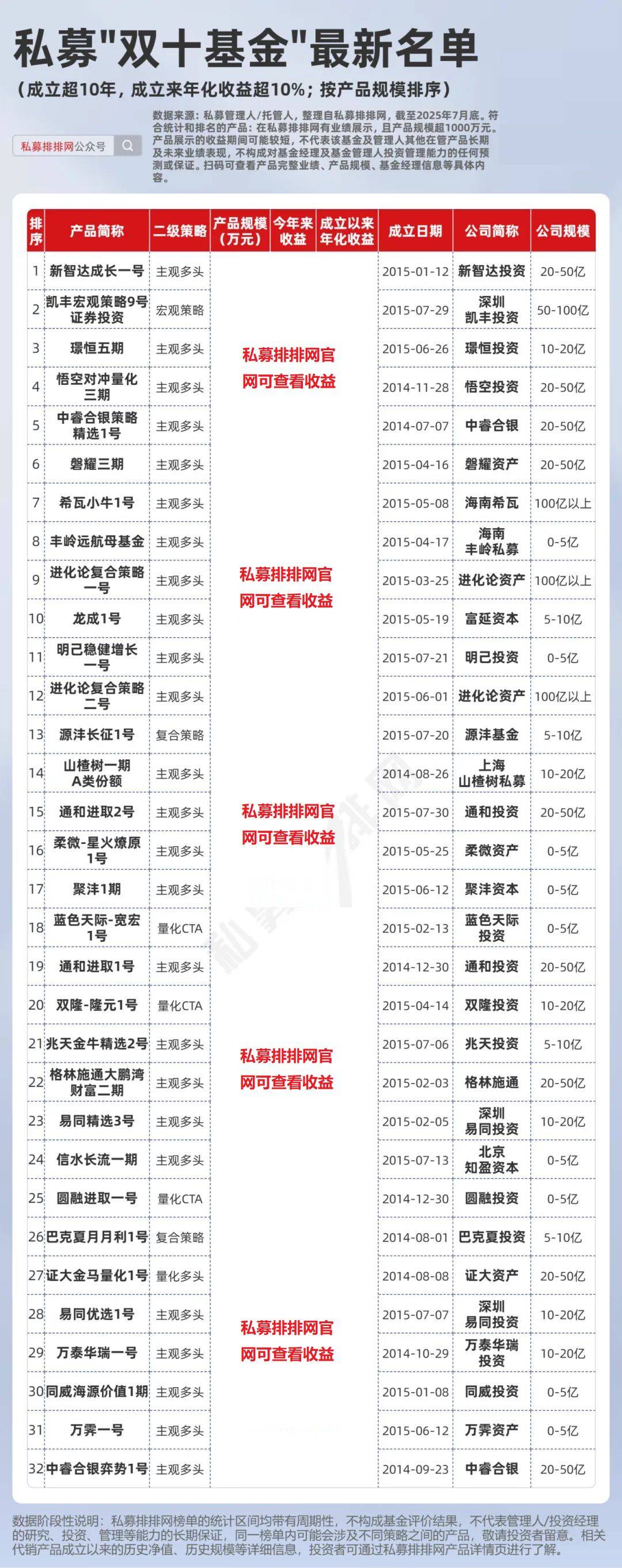
Group 1 - The article emphasizes the importance of long-term performance in the capital market, highlighting that strategies need to be continuously learned and iterated to achieve sustained profits [1] - It categorizes private equity products into "long-distance running" types, focusing on those with outstanding performance over the past five years and those established for over ten years, referred to as "double ten funds" [1] - As of July 2025, there are 61 private equity products that have been established for ten years, with 32 of them achieving an annualized return of over 10%, accounting for approximately 52% [2] Group 2 - Among the "double ten funds," 14 products reached historical highs in July 2025, with 25 of them being subjective long/short products [2] - Notable private equity firms such as Evolutionary Assets, Shenzhen Yitong Investment, Tonghe Investment, and Zhongrui Huyin each have two products listed among the top performers [3] - The article provides a detailed table of various private equity products, including their strategies, sizes, and performance metrics, showcasing the diversity in the market [4][5] Group 3 - The subjective long/short product "Xi Wa Xiao Niu No. 1," managed by Liang Hong, was established near the peak of the last bull market and has shown significant returns [5][6] - Liang Hong expresses a preference for core companies that can be compared with international leaders, rather than supply chain stocks [6][7] - The article also discusses the performance of quantitative long/short products, noting that the average annualized return for these products over the past five years is 13.27% [12] Group 4 - The multi-asset strategy products have an average annualized return of 10.84% over the past five years, with several products reaching historical highs in July 2025 [16] - The article highlights the performance of bond strategy products, which have an average annualized return of 11.87% over the past five years, with many products achieving historical highs recently [24] - It concludes with a focus on the performance of futures and derivatives strategy products, which also show strong returns and historical highs [20]
鸣石基金:AI驱动+本土化创新!十五年持续迭代量化投研版图
Sou Hu Cai Jing· 2025-08-26 07:34
Core Insights - The article highlights the growing popularity and impressive performance of quantitative private equity funds, particularly focusing on Ming Stone Fund, which has established itself as a leading player in the industry since its inception in 2010 [1][2]. Company Overview - Ming Stone Fund was founded in December 2010 and currently employs over 100 staff globally, with more than 80% of the research team holding advanced degrees from prestigious universities [2]. - The founder and general manager, Dr. Yuan Yu, has a strong academic background, having obtained a Ph.D. in Finance from the Wharton School and previously worked at the Federal Reserve Bank of the United States [4][2]. Investment Strategy - The fund has developed a unique Chinese-style three-factor model (CH-3) that adapts the popular Fama-French model to better fit the Chinese market, focusing on market, size, and value factors [12]. - Ming Stone Fund employs a proprietary "Five-Ring Multi-Core" quantitative research system, which includes five key research stages: factor, AI, optimization, risk control, and trading [9][13]. AI Integration - Since 2021, the fund has increasingly integrated AI into its quantitative research processes, establishing the G-Lab AI laboratory to enhance efficiency and adaptability of investment strategies [13][14]. - The fund's approach combines academic research with AI-driven factor selection, ensuring a robust theoretical foundation for its investment strategies [14]. Performance Metrics - Ming Stone Fund's quantitative stock selection product, "Ming Stone Spring 28," ranked third among top private equity quantitative stock selection products in terms of excess returns over the past three years [15]. - The fund attributes its strong performance to its efficient research system, adaptable strategies, and the favorable market environment characterized by increased liquidity and volatility [16]. Risk Management - The fund emphasizes risk control by utilizing a self-developed multi-factor risk control model, which enhances the predictive capability for volatility in high-frequency trading strategies [18].
伯特利: 伯特利关于对外投资的进展公告
Zheng Quan Zhi Xing· 2025-08-25 16:20
Group 1 - The core viewpoint of the announcement is that Wuhu Berteli Automotive Safety Systems Co., Ltd. is making a strategic investment in a new venture capital partnership to capitalize on growth opportunities in emerging industries [1][2] - The company is investing a total of RMB 20 million, with a 99% ownership stake in the partnership, while the private fund management company holds a 1% stake [1] - The newly established partnership, named Gongqingcheng Bokin Venture Capital Partnership, will focus on investing in high-growth unlisted companies in sectors such as humanoid robots, automotive intelligence, and new travel technologies [2] Group 2 - The partnership has completed registration with the Asset Management Association of China and has obtained the Private Investment Fund Registration Certificate [2] - The fund manager is Xiamen Zongheng Jinding Private Fund Management Co., Ltd., and the custodian is Bank of Communications Co., Ltd. [2] - The registration date for the fund is August 22, 2025 [2]

百亿私募阵营洗牌 深圳红筹投资管理规模重回百亿以上
Xi Niu Cai Jing· 2025-08-25 10:10
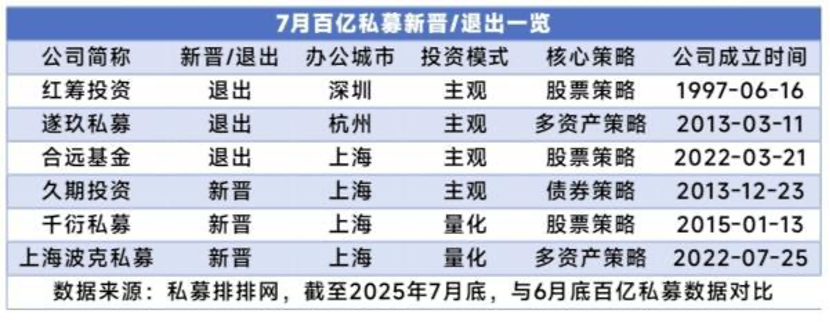
Core Insights - The article provides an overview of the new entrants and exits among billion-yuan private equity firms as of July, highlighting changes in investment strategies and company statuses [1] Group 1: Company Changes - Shenzhen Hongchou Investment exited the billion-yuan private equity list, focusing on stock strategies since its establishment in June 1997 [1] - Suijiu Private Equity from Hangzhou also exited, employing a multi-asset strategy since March 2013 [1] - Huyuan Fund from Shanghai exited, utilizing stock strategies since March 2022 [1] - Jiuqi Investment from Shanghai entered the list, focusing on bond strategies since December 2013 [1] - Qianyan Private Equity from Shanghai entered the list, employing quantitative stock strategies since January 2015 [1] - Shanghai Boke Private Equity entered the list, utilizing a multi-asset strategy since July 2022 [1] Group 2: Company Performance - Shenzhen Hongchou Investment reported stable operational conditions since Q1 2025, with asset management scale remaining above 10 billion yuan despite minor fluctuations due to investor activities [1][2] - The company emphasizes a long-term investment philosophy aimed at achieving absolute returns over the medium to long term, refraining from commenting on short-term market phenomena [2]