
私募

Search documents
内斗升级!这家量化私募,再发风险提示!
Zheng Quan Shi Bao Wang· 2025-08-26 15:28
Core Viewpoint - The internal conflict at Jingqi Investment has escalated, with allegations of serious violations by certain internal personnel and external parties, leading to potential legal actions against implicated fund managers [1][2]. Group 1: Internal Conflict and Management Changes - The company has decided to remove Fan Siqi from the position of legal representative, with the change expected to be completed by the end of August [2]. - Fan Siqi announced his resignation as fund manager on June 10, citing significant pressure from market changes and management responsibilities [2]. - Following his resignation, Fan Siqi claimed he was unfairly ousted from the company during a shareholder meeting, which he described as a "thorough betrayal" [2][3]. Group 2: Allegations of Misconduct - Jingqi Investment has identified serious violations involving internal personnel and external parties, including repeated collection of subscription fees and misappropriation of fund assets [1]. - A risk warning letter was issued, requesting the revocation of fund management qualifications for implicated parties, including Shanghai Jingqi Investment Management Co., Ltd. and Shenzhen Lejin Asset Management Co., Ltd. [1]. - Fan Siqi has been accused of unauthorized actions, including data deletion and improper fund liquidation, which have negatively impacted the company [3]. Group 3: Communication and Public Statements - The company has communicated with regulatory authorities regarding the ongoing issues and plans to pursue legal action [2]. - Fan Siqi's recent statements addressing various rumors about the company have been met with skepticism from other stakeholders, who assert that his actions have caused harm to the firm [3].
21对话|相聚资本总经理梁辉:主观私募推出独立量化策略
2 1 Shi Ji Jing Ji Bao Dao· 2025-08-26 05:24
Core Insights - The article highlights the growing trend of quantitative investment in the context of a strengthening small and micro market, with a projected peak in 2025 as AI and quantitative technologies continue to evolve [1] - The total scale of private quantitative funds in the market has surpassed 1.49 trillion yuan, reflecting an increase of over 80 billion yuan since the end of 2024 [1] - The launch of a multi-asset absolute return independent quantitative strategy by the established subjective private equity firm, Jiangju Capital, marks a significant shift towards quantitative investment [1][2] Company Strategy - Jiangju Capital's decision to transition from subjective to quantitative investment is based on the maturity of its quantitative resources and technology, as well as a forward-looking approach to strategy innovation and long-term development [2] - The firm aims to achieve steady, low-volatility absolute returns, positioning its new strategy against "fixed income +" or market-neutral products [1][3] - The quantitative team at Jiangju Capital has been developing various quantitative sub-strategies since 2009, with the independent quantitative product plan emerging in 2023 as these strategies matured [3][4] Investment Focus - The multi-asset absolute return strategy combines various asset classes and strategies to mitigate portfolio volatility and capitalize on the positive return attributes of stocks, bonds, and certain commodities [3][4] - The strategy integrates multiple quantitative underlying strategies, including quantitative stock selection and risk parity, rather than following mainstream index-enhanced strategies [4] - Jiangju Capital's approach emphasizes long-term effective fundamental research, avoiding crowded market competition and focusing on the stability of factors over time [5] Market Outlook - The A-share market has shown signs of a technical bull market, with the Shanghai Composite Index surpassing 3,800 points, reflecting a cumulative increase of over 30% from the bottom [6] - The firm anticipates a slow bull market in the medium to long term, contingent on factors such as sustained market liquidity, corporate profit recovery, and coordinated macro policies [6] - Jiangju Capital identifies four key investment directions: AI infrastructure, capital market-related stocks, competitive consumer companies, and globally competitive firms with significant overseas business [6][7] Strategy Evolution - Jiangju Capital has upgraded its active investment strategies, expanding from a growth-focused approach to include dividend and commodity stock strategies [7] - The firm has balanced strategy weights in portfolio management to avoid excessive exposure to any single style while ensuring adequate allocation to advantageous directions [7] - The focus on stock selection has shifted towards emphasizing safety margins and the price-to-earnings ratio, seeking high potential returns with lower downside risks [7]
相聚资本总经理梁辉:主观私募推出独立量化策略
2 1 Shi Ji Jing Ji Bao Dao· 2025-08-26 05:17
随小微盘市场风格的走强,以及AI与量化技术的持续迭代融合,2025年,量化投资再度迎来高光时 刻。第三方数据显示,截至今年二季度末,全市场私募量化基金总规模已突破1.49万亿元,较2024年底 增长超过800亿元。 量化投资热度持续攀升的背景下,一些主观多头私募机构也开始积极布局量化赛道,探索第二增长曲 线。 近日,21世纪经济报道获悉,酝酿布局多年后,老牌主观私募相聚资本正式推出了多资产绝对回报的独 立量化策略。该策略主要对标"固收+"或者市场中性产品,追求实现持续、稳健、低波的绝对回报目 标。 无论是身为老牌主观私募向量化"跨界",还是在权益牛市中选择推出以稳健回报为目标的量化策略,似 乎都颇为独树一帜。但在梁辉看来,这一决策既基于公司量化资源与技术的成熟,也源于其在策略创新 和长远发展方面的前瞻思考。 谈及近期A股市场走势,梁辉指出,本轮上涨是对中国经济长期向好基本面的反应,中长期慢牛行情值 得期待。在主动投资策略方面,他表示将更加注重个股基本面趋势与估值性价比的平衡,并在行业层面 重点关注供需格局的变化。以多资产、多策略实现绝对回报 虽是一家主观多头私募,相聚资本并非是量化投资的"新兵"。据了解,相聚 ...
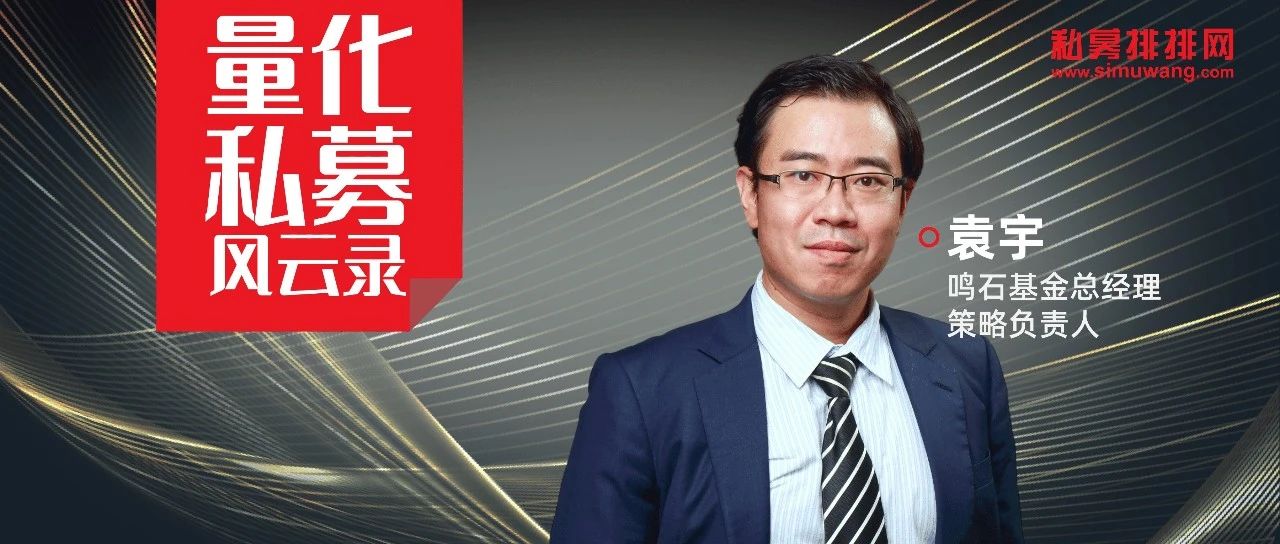
鸣石基金:AI驱动+本土化创新!十五年持续迭代量化投研版图 | 量化私募风云录
私募排排网· 2025-08-25 04:05
Core Viewpoint - The article highlights the growing popularity and impressive performance of quantitative private equity funds, particularly focusing on Ming Stone Fund, which has established itself as a leading player in the industry since its inception in 2010 [1][3]. Group 1: Company Overview - Ming Stone Fund was founded in December 2010 and currently employs over 100 staff globally, with more than 80% of the research team holding advanced degrees from prestigious universities [1]. - The founder and general manager, Dr. Yuan Yu, has a strong academic background, having obtained a PhD in Finance from the Wharton School and previously worked at the Federal Reserve Bank [3][4]. Group 2: Investment Strategy - The fund has developed a unique three-factor model tailored to the Chinese market, which includes market, size, and value factors, effectively explaining most cross-sectional return anomalies in the A-share market [13]. - Ming Stone Fund employs a proprietary "Five-Ring Multi-Core" quantitative research and investment system, which includes five key research stages: factor, AI, optimization, risk control, and trading [9][14]. Group 3: AI Integration - Since 2021, the fund has significantly increased the role of AI in its investment research, establishing the G-Lab AI laboratory to enhance efficiency across all research stages [14]. - The fund's factor library consists of 30,000 factors, primarily derived from manual research, supplemented by machine learning, ensuring a balance between interpretability and differentiation [15]. Group 4: Performance Metrics - Ming Stone Fund's quantitative stock selection product, "Ming Stone Spring 28," ranked third among top private equity quantitative stock selection products in terms of excess returns over the past three years [16]. - The fund attributes its strong performance to its efficient research system, adaptive strategies, and the favorable market environment, which has enhanced its ability to capture liquidity premiums [18]. Group 5: Market Insights - The article discusses the potential of small-cap stocks represented by the CSI 1000 index, which is expected to perform well due to its low institutional coverage and pricing inefficiencies [20]. - The fund emphasizes the importance of risk control, utilizing a self-developed multi-factor risk control model to manage volatility and exposure effectively [21].

私募“双十基金”达32只,梁宏旗下产品在列!量化多头近5年20强全部新高!
私募排排网· 2025-08-23 07:00
Core Viewpoint - The article emphasizes the importance of long-term performance in private equity funds, highlighting that only a few funds can achieve consistent returns over extended periods, thus necessitating continuous learning and strategy iteration in the capital market [1]. Group 1: Long-term Private Equity Products - As of July 2025, there are 61 private equity products that have been established for over 10 years, with 32 of them achieving an annualized return of over 10%, representing approximately 52% of the total [2]. - Among these, 14 funds reached historical highs in July 2025, with subjective long/short products making up 25 of these funds [2]. Group 2: Performance of Specific Funds - The "Xiwa Little Bull No. 1" fund, managed by Liang Hong, was established on May 8, 2015, and has shown significant performance, with annualized returns nearing ***% and returns exceeding ***% this year [5]. - The article lists various funds and their strategies, including subjective long/short and macro strategies, with specific funds achieving notable returns and historical highs [3][4][6]. Group 3: Strategy Performance Rankings - For funds established for over 5 years, there are 1,303 products, with 32 achieving annualized returns exceeding ***% and 132 exceeding ***% [6]. - The top 20 funds in the subjective long/short category have an average annualized return of 9.2%, with the threshold for the top performers being over ***% [6][7]. Group 4: Quantitative and Multi-Asset Strategies - In the quantitative long/short category, 72 products have an average annualized return of 13.27%, with the top 20 funds achieving returns above ***% [13]. - Multi-asset strategy products have an average annualized return of 10.84%, with the top performers coming from firms like Qianhai Guoen Capital and Honghu Private Equity [17]. Group 5: Bond Strategy Performance - The bond strategy products have an average annualized return of 11.87%, with the top products achieving significant returns and historical highs [28].

排排网全球执行总裁张朝晖:私募“出海”步伐提速 多元化服务能力提升可期
Zheng Quan Ri Bao Wang· 2025-08-22 12:59
Group 1 - The core viewpoint is that overseas long-term capital is increasingly allocating to Chinese assets, with domestic private equity becoming the preferred channel for foreign investment in China, facilitating the inclusion of various asset classes such as A-shares, Hong Kong stocks, US dollar bonds, and commodities into a unified strategy framework to diversify risks and extend product lines [1] - Zhang Chaohui highlighted that some quantitative private equity founders possess both experience from renowned overseas hedge fund models and local data mining capabilities, allowing them to quickly adapt mature algorithms to local microstructures, creating a composite barrier of "global experience + local adaptation" [1] - As of now, nearly 400 private equity institutions hold Hong Kong's No. 9 license, indicating a significant acceleration in internationalization, with a high proportion of billion-yuan private equity firms venturing abroad [1] Group 2 - Looking ahead, it is anticipated that with the increasing openness of China's capital markets and the resonance of global asset allocation needs, more private equity firms will initiate multi-license layouts, achieving strategy diversification, risk dispersion, and brand elevation, thereby further expanding the global influence of Chinese private equity [2] - The establishment of 排排网全球 aims to leverage over 20 years of financial technology capabilities and experience to extend globally, creating a one-stop information hub that connects hedge funds, mutual funds, insurance, and education resources, enabling high-net-worth Chinese individuals to capture global opportunities regardless of their location [2]
A股市场行情回暖 百亿私募仓位指数升至82.29%
Zheng Quan Shi Bao Wang· 2025-08-22 10:06
星石投资预计,本轮行情并未结束,如果往后面1年或者1年半去看的话,国内经济基本面将出现一个明 显的拐点,那么到那个时候,在基本面的推动下,会有更多行业出现投资机会。 百亿私募方面,截至2025年8月15日,满仓百亿私募占比高达61.97%,较前一周的37.16%提升显著。中 等仓位百亿私募占比则从53.25%大幅下降至31.06%,此外,低仓和空仓百亿私募占比分别降至5.71%和 1.26%。 对于百亿私募机构大幅加仓的情形,排排网集团旗下融智投资FOF基金经理李春瑜认为,主要有以下几 方面原因:其一,市场行情向好。近期 A 股市场持续震荡走强,整体呈现相对稳定且略带上涨的趋 势,为投资布局提供了良好环境。其二,投资者情绪乐观。市场交投活跃,整体情绪偏向积极,投资者 信心稳步增强,这一氛围推动百亿私募加大仓位配置。其三,结构性机会凸显。以AI为代表的科技领 域,叠加部分周期股、医药股等板块迎来配置窗口期,显著吸引百亿私募积极布局。其四,赚钱效应驱 动。前期市场的良好表现使部分基金积累了可观收益,赚钱效应逐步显现,进一步促使百亿私募加仓以 把握更多收益机会。 对于近期的市场行情,星石投资认为,去年行情启动是从政 ...
百亿私募大幅加仓至八成 创下年内单周最大加仓
Zhong Guo Jing Ying Bao· 2025-08-22 09:56
Group 1 - The core viewpoint of the article highlights that stock private equity has increased its positions for two consecutive weeks, with the stock private equity position index reaching 74.86%, up 0.64% from the previous week [1] - Notably, large private equity firms with over 10 billion yuan have significantly increased their positions, with their position index rising to 82.29%, marking an 8.16% increase and the largest weekly increase of the year [1] - Following this increase, the position index for large private equity firms has returned to above 80% after four weeks, indicating a strong bullish sentiment [1] Group 2 - The proportion of medium-position large private equity firms has decreased sharply from 53.25% to 31.06%, suggesting a shift in investment strategy [1] - The percentages of low-position and empty-position large private equity firms have also declined, with low-position firms at 5.71% and empty-position firms at 1.26% [1]
历史上“反内卷”行情期间私募产品表现如何?
私募排排网· 2025-08-22 00:00
Core Viewpoint - Since 2022, China has faced significant deflationary pressure, with the GDP deflator index showing negative year-on-year growth for nine consecutive quarters, and the PPI recording negative year-on-year growth for 33 months, leading to a decline in corporate revenue and profit margins [2] Group 1: Historical Context of Supply-Side Reforms - In 2010, following the global financial crisis, the Chinese government implemented measures to stimulate economic growth, leading to overcapacity in high-energy consumption sectors. The introduction of power rationing resulted in a significant rise in the Shanghai Composite Index, which increased by approximately 39% from July to November 2010 [3] - The supply-side reform initiated in 2016 aimed to address overcapacity in industries such as steel and coal, with a focus on reducing inventory and leveraging economic growth. The Shanghai Composite Index rose by about 36% from the first trading day after the 2016 Spring Festival to the end of 2017 [7][8] Group 2: Performance of Private Equity Strategies - During the observation period from July 2, 2010, to November 5, 2010, subjective long-only strategies achieved an average return of 21.26%, with a maximum drawdown of 3.39% [6] - In the 2016-2017 supply-side reform period, quantitative CTA strategies outperformed with an average return of 24.35%, while subjective long strategies maintained a dominant presence in the market, with about 70% of these strategies yielding positive returns [8] Group 3: Recent Trends and Government Initiatives - The "dual carbon" goals introduced in 2021 have led to a significant market response, with the CSI 500 index rising by approximately 15.04% during the observation period from March 15, 2021, to October 26, 2021. The average return for private equity strategies during this period was 16.90% [9][12] - The current "anti-involution" trend is still in its early stages, with the government emphasizing self-regulation within industries to avoid excessive competition. The lack of strong administrative measures suggests a focus on long-term industry optimization rather than immediate intervention [15]

【券业观察】 完善制度 严防券商与私募利益输送
Zheng Quan Shi Bao· 2025-08-21 18:38
Core Viewpoint - The recent rebate incident involving a well-known quantitative private equity firm has exposed systemic flaws in the industry, leading to reputational damage and raising concerns about the integrity of the market [1][4]. Group 1: Formation of the Rent-Seeking Chain - The incident is a result of multiple intertwined factors, with the involved brokerage firm bearing significant responsibility due to internal governance failures and lack of oversight [2]. - The brokerage's trading volume surged from 34 billion in 2018 to 1 trillion in 2021, while internal control mechanisms did not keep pace, creating opportunities for rent-seeking behavior [2]. - The quantitative private equity firm concentrated 58% of its products with a single brokerage, exceeding reasonable diversification levels, which increased the risk of profit-sharing arrangements [2]. - Personal greed acted as a catalyst, with significant sums of money being funneled through various channels, highlighting the extent of corruption within the profit-sharing chain [2]. Group 2: Regulatory Gaps - The inadequacy of regulatory frameworks allowed the involved parties to exploit loopholes, as existing regulations on rebates are vague and lack sufficient punitive measures [3]. - The high turnover rates typical of quantitative trading, often exceeding 100 times annually, have led to substantial commission sizes, prompting brokerages to offer high rebate rates to attract clients [3]. - The unique characteristics of quantitative trading have not been adequately addressed by regulatory frameworks, resulting in a gray area that has fostered unhealthy industry practices [3]. Group 3: Impact on the Industry - The rebate incident has inflicted three major shocks on the securities industry, primarily damaging investor confidence as management fees may have been misallocated [4]. - The industry landscape is likely to undergo restructuring, with compliance pressures pushing quantitative firms to diversify their brokerage partnerships [4]. - Regulatory scrutiny is expected to intensify, leading to more rigorous examinations of brokerage custody operations and the flow of commissions between private equity firms and brokerages [4]. Group 4: Path Forward - To recover from the fallout of the rebate incident, the quantitative private equity sector must implement a diversified brokerage strategy, limiting any single custodian's share to no more than 30% [5]. - Brokerages need to enhance their internal control systems by establishing clear separations between marketing, execution, and risk management functions [5]. - Regulatory frameworks must be upgraded to include mandatory disclosure of commission expenditures and establish a reporting system for related transactions between brokerages and private equity firms [5][6]. - Investors should take proactive measures by choosing firms with diversified custodial arrangements and transparent commission disclosures [6].