高等教育

Search documents
中教控股(00839):迈入稳健内生增长新时期
HTSC· 2025-11-27 02:10
Investment Rating - The investment rating for the company is maintained as "Buy" with a target price of HKD 3.68 [1][5]. Core Insights - The company has entered a new phase of stable organic growth, shifting focus from external expansion to internal growth and value enhancement, with long-term profitability remaining robust [1][2]. - For FY25, the company reported total revenue of RMB 7.363 billion, a year-on-year increase of 11.9%, and a net profit of RMB 506 million, up 0.8% year-on-year, aligning with performance forecasts [1][3]. - The company has optimized capital expenditures to RMB 2.66 billion, a decrease of nearly 45% year-on-year, indicating a transition to a more cash flow-focused growth period [2][5]. Summary by Sections Financial Performance - FY25 domestic revenue grew by 11.8% and international revenue by 14.8%, continuing a trend of simultaneous volume and price increases [2]. - The full-time student enrollment reached 282,000, a 5% increase year-on-year, with the higher education segment seeing a 9% growth in enrollment [2]. - The gross profit margin for FY25 was 53.32%, a decline of approximately 2 percentage points due to increased investments in faculty and teaching quality [3]. Profitability and Taxation - The net profit for FY25 was RMB 506 million, with a one-time impairment of goodwill and intangible assets amounting to RMB 17.06 billion (after tax RMB 16.75 billion) impacting short-term results [3]. - The company’s income tax expense increased significantly to RMB 320 million, reflecting proactive optimization of the group structure [3]. Regulatory Environment - The Guangdong Provincial Education Department has released a draft for the classification management reform of private higher education institutions, which could support sentiment and valuation recovery for the company if successful [4]. Future Projections - Adjusted net profit estimates for FY26-28 are projected at RMB 2.037 billion, RMB 2.137 billion, and RMB 2.175 billion respectively, with a dividend policy expected to resume in FY27 at a 40% payout ratio [5][10]. - The company’s weighted average cost of capital (WACC) is maintained at 14.89%, with a perpetual growth rate of 1% [5][11].
清华大学:严禁将AI生成内容直接用作学业成果
Zhong Guo Qing Nian Bao· 2025-11-26 23:35
针对研究生群体,"学位论文及实践成果篇"强调,严禁使用人工智能实施代写、剽窃、伪造等行为,研 究生指导教师需提供规范性指导并进行全过程监督,确保学术训练的完整性和学位论文及实践成果的原 创性。 参与《指导原则》制定工作的清华大学在线教育中心主任王帅国表示,《指导原则》也为未来在学术研 究、管理服务等更多场景中拓展人工智能应用边界预留了充分空间,"我们希望它是一个有生命力的、 能随着技术演进不断生长的指导体系"。 中青报·中青网记者 王璟瑄 《指导原则》由"总则""教学篇""学位论文及实践成果篇"3部分构成,覆盖当前教学与学术研究的核心 场景。"总则"部分明确了学校"积极而审慎"的基本立场,并提出"主体责任""合规诚信""数据安全""审慎 思辨""公平包容"五大核心原则。 "主体责任"原则强调人工智能始终是辅助工具,师生才是教学与学习的主导者;"合规诚信"原则要求师 生对人工智能使用情况及生成内容依规进行披露声明,严禁学术不端;"数据安全"原则严禁师生使用敏 感信息、涉密数据或未授权数据训练或驱动人工智能模型;"审慎思辨"原则提醒师生通过多源验证防范 因过度依赖导致的思维惰化;"公平包容"原则呼吁主动识别并努力 ...
36所本科高校都开了AI专业江苏高等教育按下智能化“快进键”
Xin Hua Ri Bao· 2025-11-26 23:28
Core Insights - The integration of generative AI into daily life is accelerating, with "embodied intelligence" frequently trending, as the 20th National Congress of the Communist Party of China promotes the comprehensive implementation of the "AI+" initiative [1] - Jiangsu province is actively responding to national strategies to seize opportunities in "AI + higher education" [1] Group 1: AI Education Ecosystem - Jiangnan University has introduced an AI course that combines virtual and physical classroom experiences, allowing AI to assess student engagement and generate comprehensive analyses [2] - Over the past three years, Jiangsu's education department has issued several policies to create a new ecosystem for "AI + education," aiming for comprehensive integration across all educational stages [2] - A total of 36 undergraduate institutions in Jiangsu have established AI majors, with 7 universities offering "AI+" dual degree programs, and several new interdisciplinary undergraduate programs have been launched [2] Group 2: Vertical AI Models - Jiangnan University released the world's first food science-specific AI model, FoodSeek, while Southeast University introduced an ethical AI model, "Wendao," for vertical applications [3] - Nanjing University has built a high-standard intelligent computing center and a university-level data center to support AI applications, focusing on algorithms, computing power, and data [3] Group 3: Practical Learning Approaches - At Southeast University, students in the "Future Robotics" course learn by creating intelligent robots, with AI assisting in problem-solving [4] - Jiangsu universities have been early adopters of AI in education, with Nanjing University set to offer a core AI course to all incoming undergraduates starting in Fall 2024 [4] - Faculty members are encouraged to use AI tools to enhance teaching and engage students in problem-solving [4] Group 4: Industry Collaboration - Nanjing University is developing a practical education ecosystem through partnerships with local industries, addressing real-world challenges in AI [5] Group 5: Ethical and Responsible AI Use - The increasing use of generative AI among students raises questions about setting reasonable boundaries for its application in education [6] - Internationally, educational institutions are shifting from banning to guiding the use of generative AI tools, emphasizing ethical and responsible usage [6] - Jiangsu's education department highlights the need for a robust ethical framework and safety measures to support the high-quality development of AI-enabled education [6]
2025,留学新动态
Ren Min Ri Bao Hai Wai Ban· 2025-11-26 23:09
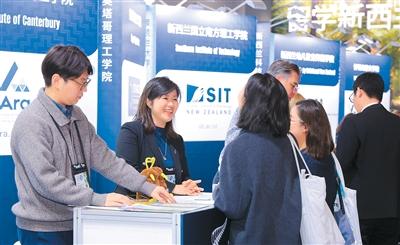
Core Insights - The 2025 China International Education Expo was held in Beijing, featuring nearly 400 institutions from 38 countries and regions, allowing face-to-face interactions with students and parents [1] Group 1: STEM Education - STEM education was a major highlight of the expo, with significant interest in computer-related programs, particularly from Singapore's Nanyang Technological University, which has established "3+1" programs with several Chinese universities [2] - The German education sector attracted many inquiries, especially regarding industrial programs, with a noted increase in students interested in business directions alongside traditional engineering fields [2] - New Zealand, as the guest country, showcased 15 diverse institutions, with a focus on STEM and AI education, indicating a growing interest from Chinese students in these fields [2][4] Group 2: International Education Trends - There is a rising trend among parents considering sending their children abroad for middle and high school education, with a focus on enhancing language skills and independent thinking [4] - The UK is a preferred destination for many families due to its comprehensive A-Level curriculum, which is globally recognized and supports holistic development through extracurricular activities [4] - New Zealand has implemented guidelines to ensure the safety and well-being of international students, reflecting its commitment to providing quality education and support [4] Group 3: Cost-Effectiveness of Studying Abroad - The number of Russian institutions participating in the expo has increased, with a focus on fields like clinical medicine and engineering, appealing to students due to lower costs compared to Western countries [6] - Southeast Asia, particularly Thailand, is gaining attention for its high cost-effectiveness in education, with several universities receiving international accreditation for their engineering programs [6] Group 4: Educational Collaboration and Reports - The expo was part of the 26th China International Education Annual Conference, which released 25 significant reports and signed 27 cooperation agreements, focusing on international collaboration in education [7]

美大学新生能力“大跳水”?美媒曝加州高校数学“惨剧”:许多人连初中数学都算不出来
Huan Qiu Shi Bao· 2025-11-26 22:49
同时,一份教务委员会的报告指出,SAT考试"极大地增强加州大学预测学生未来是否能取得成功的能 力",其作用超越了高中综合成绩。加州大学圣地亚哥分校的报告也印证了人们的担忧,即取消SAT考 试会削弱招生标准,并指出"学生的课程水平、成绩与其实际学术能力之间存在不匹配的现象"。该报告 还表示,加州大学录取新生更多来自"资源匮乏高中",进一步拉低了入学新生的平均水准。这实际上 是"对少数族裔和低收入学生录取比例较高"的一种委婉说法。 新生水平下降的现象在该州各大学似乎普遍存在:加州大学各校区约一半的数学系主任表示,"无法从 大学微积分开始学习的大一新生人数在过去5年里翻了一番。"而这门课程曾经是加州顶尖高中2年级学 生的必修课;另一半系主任则表示,这一数字翻了三番。(王建国译) 报告显示,过去5年里,加州大学圣地亚哥分校新生入学时的学术水平急剧下降,尤其是在数学方面, 写作和语言技能方面也是如此。委员会认为,这一趋势对学生未来的职业生涯和大学的教学使命都构成 了严峻挑战。 加州大学董事会于2020年5月以"提高招生公平性和教育质量"为由,取消了以SAT考试成绩作为入学标 准之一的要求,导致新生水平"大跳水"。报告称 ...
菏泽市应急管理局借助科技副职桥梁深化校地合作
Qi Lu Wan Bao· 2025-11-26 12:06
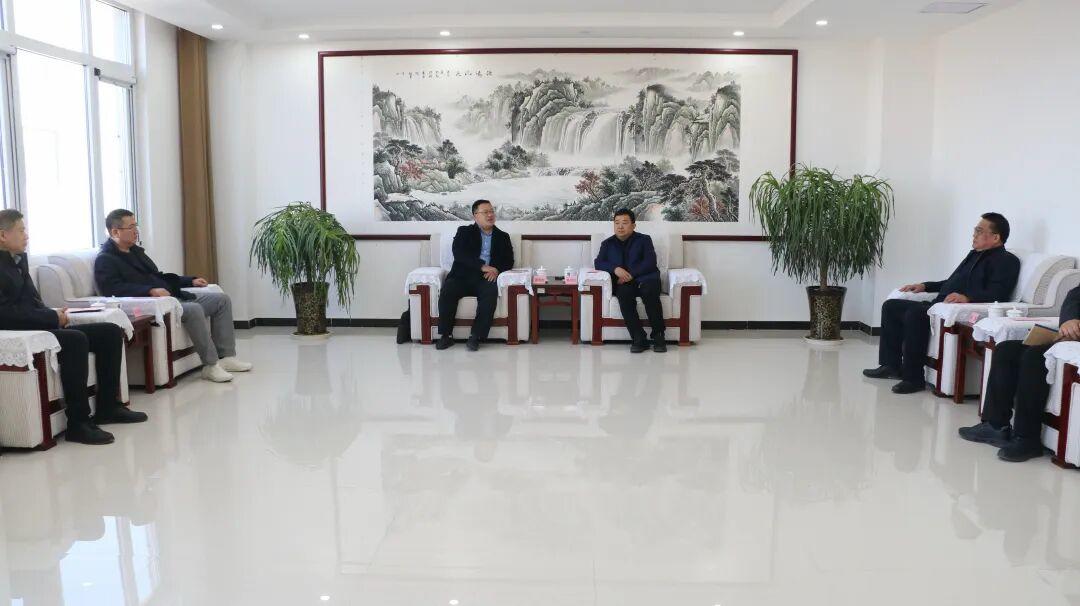
座谈会上,高尚柱同志对黄德杰书记一行的到来表示热烈欢迎。他指出,山东科技大学在安全工程、智能装备、化工矿山、应急技术等领域具有显著优 势,特别是袁建军同志到我局挂职,为双方合作搭建了重要桥梁。希望双方以此为契机,在人才培养、科技研发、成果转化等方面开展深度合作。 黄德杰书记表示,学院将全力支持袁建军同志履行好科技副职职责,充分发挥山东科技大学人才和科技优势,积极服务地方应急管理事业发展。双方围绕 应急管理信息化建设、专业人才培养、技术研发应用等合作方向进行了深入交流探讨。 齐鲁晚报.齐鲁壹点周千清 近年来,市委组织部高度重视科技人才引进与校地合作平台搭建,精准选派山东科技大学袁建军同志到菏泽市应急管理局挂职,为菏泽市应急管理事业发 展注入新动能。为充分发挥科技副职的桥梁纽带作用,推动应急管理事业与高校资源的深度融合,11月25日,菏泽市应急管理局与山东科技大学智能装备 学院开展专题交流活动。山东科技大学智能装备学院党委书记黄德杰,市应急管理局党委书记、局长高尚柱出席活动。 ...
豆包与浙江大学哲学学院成立“AI人文创新实验室”
Bei Jing Shang Bao· 2025-11-26 11:44
Core Insights - Doubao AI has established the "AI Humanities Innovation Laboratory" in collaboration with the Philosophy School of Zhejiang University [1] - The partnership aims to enhance students' AI literacy and practical skills through courses and training camps [1] - Long-term research will be conducted on college students' AI usage behaviors and needs, collecting real feedback on product models and functions [1] - The initiative seeks to uncover unique applications of AI among faculty and students [1]
豆包联合浙江大学哲学学院 共同成立“AI人文创新实验室”
Zheng Quan Ri Bao Wang· 2025-11-26 11:43
Group 1 - The establishment of the "AI Humanities Innovation Laboratory" is a collaboration between Doubao AI and the Philosophy Department of Zhejiang University, aimed at enhancing students' AI literacy and practical skills through courses and training camps [1] - The laboratory seeks to create a symbiotic system where humanities lead technology and technology supports humanities, fostering a composite ability in students to utilize humanistic thinking in technology and vice versa [1] - The first training camp, focusing on "AI + Humanities," has commenced, with 59 students from the Philosophy Department divided into 10 groups to transform their academic knowledge into visualized results and innovative applications [1] Group 2 - This is not the first collaboration between Doubao and the Philosophy Department of Zhejiang University; previous initiatives included hands-on programming applications that integrate AI with philosophy [2] - Doubao has also partnered with other prestigious universities such as Peking University and Fudan University to conduct AI training camps and courses, positioning itself as a tool for university students to enhance learning and self-improvement [2] - Doubao plans to continue expanding its presence in more universities to better assist faculty and students in utilizing AI effectively [2]
科技日报:湖工大聚焦非洲“刚需”开展务实合作
Ke Ji Ri Bao· 2025-11-26 02:45
Core Insights - The fourth China-Africa Industrial Innovation and Technology Transfer Cooperation Forum was held in Wuhan, showcasing significant collaboration between Hubei University of Technology and African partners [1][2] - Hubei University of Technology launched 108 projects focused on technology transfer and industrial cooperation with Africa, covering areas such as smart manufacturing, biomanufacturing, new materials, smart grids, big data, and artificial intelligence [1] - Since the forum's inception in 2022, Hubei University has published over 630 cooperation and technology transfer intentions, establishing strategic partnerships with over 60 African universities and enterprises [1] Group 1 - Hubei University of Technology has established over 70 partnerships in more than 20 African countries, signing over 100 cooperation agreements in various fields including talent training and joint laboratories [2] - The university has recently been approved for a national-level joint laboratory focused on green construction and intelligent operation, collaborating with Addis Ababa University to promote technology application in African infrastructure [2] - The forum was co-hosted by Hubei University, the China-Ethiopia Joint Laboratory, and other organizations, indicating a strong institutional support for China-Africa collaboration [3]
这场新商科教育革新会引领未来吗?
Hang Zhou Ri Bao· 2025-11-26 02:13
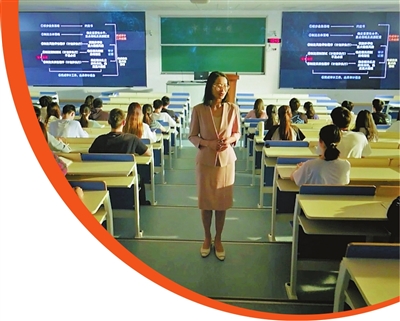
当数智化浪潮席卷全球,文科教育如何破局出新——这是高等教育在新时代必须直面的发展之问。 依托学校"浙江省人工智能教育应用试点校"平台优势,"十四五"以来,商学院积极拥抱教育发展新趋 势,以数智化为牵引,尝试探索出一条培养高素质应用型"新商科"人才的特色路径。 教什么、怎么教、如何评 每个环节都在变化 传统商科教育技术壁垒如何破 12个模块、83个知识点、359个知识节点——在商学院"中级财务会计(甲)"的课堂上,一幅"彩色 藤蔓"知识图谱徐徐展开,以清晰而富有层次的结构,串联起课程的完整知识体系。 这只是其中一种形态。除了"彩色藤蔓",树状图、网状图、思维导图……各类图谱交替呈现,共同 构建了一个融合知识层、能力层与资源层的立体化学习系统。 课后,记者随机翻阅了几位学生的课堂笔记,发现一个共同的变化:曾经密布纸页、零散分布的知 识点,如今被几张脉络清晰的图表"串珠成链",知识点之间的逻辑关系一目了然。 "概念抽象、知识孤立",曾是不少商科学生的学习痛点。"过去学生容易在细节中迷失方向,如今 他们能够站在更高的视角,俯瞰知识的全貌。"这是知识图谱投入使用以来,商学院副院长楼建伟最大 的感受,"学生学起来更清楚、 ...