问道

Search documents
当8000万外国人涌入中国,携程靠什么让外国人留下来?
Sou Hu Cai Jing· 2026-02-26 03:19
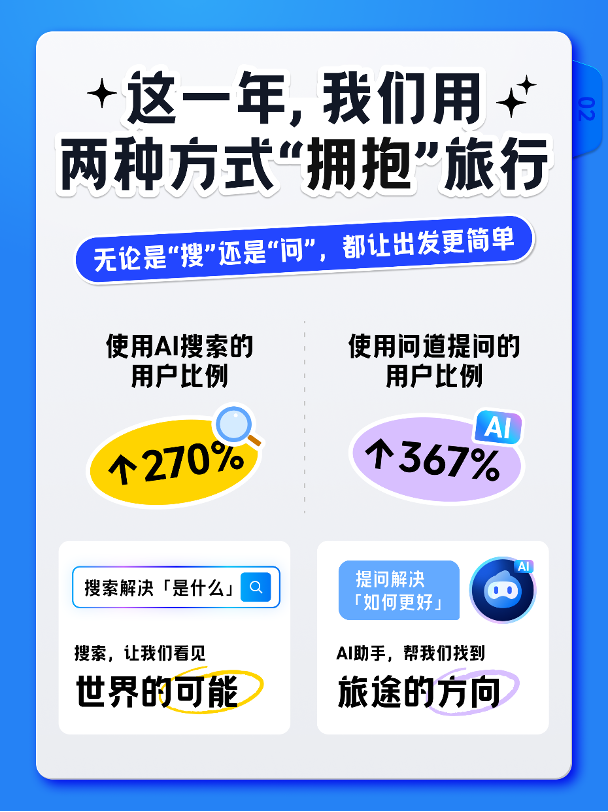
Core Insights - The article highlights the anticipated resurgence of inbound tourism in China, projecting that by 2025, the number of inbound tourists will exceed 80 million, setting a new historical record [6] - It emphasizes that while policy changes, such as the expansion of visa-free travel, play a role in attracting tourists, the more significant challenge lies in enhancing the overall travel experience for foreign visitors [1][4] Group 1: Inbound Tourism Growth - Inbound tourism is expected to reach over 80 million visitors by 2025, marking a historical high [6] - The growth is attributed not only to policy changes but also to the need for better communication of travel options and experiences to foreign tourists [1][4] Group 2: AI Solutions for Tourism - Ctrip's AI translation engine, "Smart Translation Future," produced 6 billion words of content in one year, covering 25 core languages, enhancing the accessibility of Chinese tourism resources [5] - The AI technology allows for multi-language coverage of scenic spots and activities, enabling foreign tourists to discover and book lesser-known attractions that were previously only available in Chinese [5][9] Group 3: Decision-Making Enhancements - Ctrip's AI-driven itinerary planning tool acts as a local guide, efficiently organizing travel plans by understanding user needs and providing comprehensive travel solutions [9][10] - The use of AI in travel planning has led to a 270% increase in users utilizing AI for travel searches and a 367% surge in users engaging with AI Q&A products [12] Group 4: Service Experience Improvements - Ctrip has deployed smart ticket machines in 241 scenic spots across China, supporting over 16 languages to facilitate seamless ticket purchasing for foreign tourists [15] - AI customer service has improved communication efficiency, allowing real-time translation between foreign tourists and domestic service staff, thus enhancing the overall service experience [16]


全国政协常委金石:以人工智能点燃高等教育的“新质引擎”
Xin Lang Cai Jing· 2026-02-12 20:34
Core Viewpoint - The core focus of the article is on how higher education must adapt and iterate in response to the rapid advancements in artificial intelligence, which is reshaping human knowledge at an exponential rate [1]. Group 1: Education and AI Integration - The gap between the rapid evolution of algorithms in laboratories and the slower pace of traditional education and talent cultivation is a critical issue that needs to be addressed [1]. - The transformation in education should not merely involve digitizing teaching methods but should focus on reshaping the underlying logic of academic disciplines [1]. - There is a pressing need to integrate AI deeply into educational frameworks to better serve talent development and promote educational reform [1]. Group 2: AI4SEU Action Plan - The "AI4SEU" initiative aims to embed artificial intelligence into every traditional discipline through supply-side structural reforms [2]. - The university has made early investments in emerging fields such as low-altitude technology, 6G, organ chips, and future robotics [2]. - The focus should shift from teaching basic AI operations to promoting deep integration of AI into core research areas, enhancing both technology and professional capabilities [2]. Group 3: Development of Domain-Specific Models - The shift from general large models to "domain-specific large models" represents a strategic battleground for higher education to support industry transformation [2]. - The university has supported the development of several domain-specific models, including quantum computing software and models in concrete materials and law [2]. - Combining "professional depth" with "intelligent breadth" is seen as a core element of new productive forces, with a recommendation for universities to create proprietary domain models to gain asymmetric advantages in international tech competition [2]. Group 4: Future of Talent Development - The emphasis is on breaking down disciplinary barriers through AI empowerment and timely assessment of technological trends to reconstruct talent cultivation models [3]. - The goal is to provide sustainable and systematic support for the formation of new productive forces, thereby strengthening the foundation for China's modernization [3].
北汽极狐正式公布首款MPV定名问道V9
Zhong Guo Qi Che Bao Wang· 2026-02-10 09:25
Group 1 - The company officially announced its high-end product series named "Wenda" [1] - The first MPV product has been officially named "Wenda V9" [1]
携程报告:旅行决策进入“双引擎”时代 多维数据诠释“友好”力量
Zheng Quan Ri Bao Wang· 2025-12-30 10:15
Core Insights - The core trend in travel decision-making is shifting from geographical coordinates to emotional needs, driven by a dual engine of "search engine + AI dialogue" [1] Group 1: AI and User Engagement - In 2025, the proportion of users utilizing AI for travel planning in searches is expected to increase by 270% year-on-year [2] - The user base for the AI Q&A product "Wenda" has seen a staggering growth of 367% year-on-year [2] - Travel is evolving from mere information retrieval to an important means of emotional regulation and life extension [2] Group 2: Cultural and Emotional Drivers - Concerts, events, and film IPs are emerging as new travel triggers, with searches for locations related to the film "Nezha 2" increasing by over 70% [3] - The release of "Zootopia 2" led to a 50% rise in search interest for Disney, while searches for the filming location of "Detective Chinatown 1900" surged by 473% within a week [3] - The analysis of dialogues on the "Wenda" platform reveals a strong emotional healing demand behind travel motivations [3] Group 3: Corporate Social Responsibility and Employee Welfare - The "2025 Annual Friendly Report" highlights Ctrip's achievements in promoting global cultural integration, industry innovation, ESG sustainability, and a friendly workplace environment [3] - Ctrip has made significant progress in low-carbon strategies and building a diverse and inclusive workplace [3] - The "Spring Festival Return to Work Policy," in place for three years, will expand in 2026 to include nearly a thousand employees in first-tier suburban customer service roles, offering two months of remote work benefits [3] Group 4: Leadership Vision - Ctrip's CEO emphasizes the importance of creating a friendly work environment and providing tangible support for employees' family and career development [4] - The company aims to continuously listen to employee feedback and translate consensus into actionable steps [4]
“问道”大模型:当好伦理风险防控“专家”
Ke Ji Ri Bao· 2025-12-01 00:45
Core Viewpoint - The launch of the "Wenda" ethical AI model aims to address ethical risks in technology and business decisions, providing a decision support system for various stakeholders in society [1][2]. Group 1: Model Functions and Applications - "Wenda" features five main functions: ethical risk assessment and auditing, ethical dilemma simulation and decision-making, ethical alignment design assistance, dynamic knowledge base and case teaching, and exploration of cutting-edge ethical paradigms [1]. - The model serves as an ethical "auditor" for businesses, automatically reviewing commercial decisions, advertising content, and algorithm models for ethical risks [2]. - It acts as a compliance detection tool for AI development, helping researchers incorporate ethical considerations from the design phase to avoid biases and risks [2]. Group 2: Addressing AI Challenges - "Wenda" aims to systematically identify and assess various ethical risks in AI applications, proposing actionable governance paths from a Chinese context [3]. - The model addresses the issue of "AI hallucination" by utilizing structured knowledge construction, multi-modal responses, layered security mechanisms, and an automatic optimization loop to reduce errors in AI outputs [3][4]. Group 3: Knowledge Structure and Future Development - The model is built on a foundation of classic ethical literature, significant ethical cases in China, relevant laws, and ethical norms from recent social events, forming a "knowledge tree" for structured knowledge output [4]. - Future developments will focus on optimizing human-machine interaction, creating a feedback loop for model iteration, and expanding applications in research, industry, and education to promote the synergy between AI and social ethics [4].
江苏高等教育按下智能化“快进键”
Xin Hua Ri Bao· 2025-11-27 07:30
Core Insights - The integration of generative AI into daily life is accelerating, with a focus on "embodied intelligence" as part of the national strategy to implement "AI+" in higher education [1] - Jiangsu province is actively responding to national strategies to seize opportunities in "AI+ higher education" [1] Group 1: AI Education Ecosystem - Jiangnan University has introduced an AI course that combines virtual and physical classroom experiences, allowing AI to assess student engagement and generate comprehensive analyses [2] - Over the past three years, Jiangsu's education department has issued multiple policies to create a comprehensive "AI+ education" reform ecosystem, covering all educational stages [2] - A total of 36 undergraduate institutions in Jiangsu have established AI majors, with 7 universities offering "AI+" dual degree programs, and several new interdisciplinary undergraduate programs have been launched [2] Group 2: Vertical AI Models - Jiangnan University released the world's first AI model dedicated to food science, named FoodSeek, while Southeast University introduced an ethical AI model called "Wendao" [3] - Nanjing University has built a smart computing center and a data center to support AI applications, focusing on algorithms, computing power, and data [3] Group 3: Classroom Innovations - Southeast University's "Future Robotics" course emphasizes practical skills in robot manufacturing, integrating AI assistance for problem-solving [4] - Nanjing University will offer an AI core course to all undergraduate freshmen starting in the fall of 2024, with other universities following suit [4] - Educators are encouraged to use AI as a teaching assistant to enhance student engagement and problem-solving skills [4] Group 4: Industry Collaboration - Nanjing University is creating a practical education ecosystem by collaborating with local industries to address real-world challenges [5] Group 5: AI Usage Guidelines - The increasing use of generative AI among students raises questions about setting reasonable boundaries for its application in education [7] - Internationally, educational institutions are shifting from banning to guiding the use of generative AI tools, emphasizing ethical and responsible usage [7] - There is a focus on developing students' comprehensive skills, critical thinking, and innovation capabilities through AI integration in various academic activities [7]
36所本科高校都开了AI专业江苏高等教育按下智能化“快进键”
Xin Hua Ri Bao· 2025-11-26 23:28
Core Insights - The integration of generative AI into daily life is accelerating, with "embodied intelligence" frequently trending, as the 20th National Congress of the Communist Party of China promotes the comprehensive implementation of the "AI+" initiative [1] - Jiangsu province is actively responding to national strategies to seize opportunities in "AI + higher education" [1] Group 1: AI Education Ecosystem - Jiangnan University has introduced an AI course that combines virtual and physical classroom experiences, allowing AI to assess student engagement and generate comprehensive analyses [2] - Over the past three years, Jiangsu's education department has issued several policies to create a new ecosystem for "AI + education," aiming for comprehensive integration across all educational stages [2] - A total of 36 undergraduate institutions in Jiangsu have established AI majors, with 7 universities offering "AI+" dual degree programs, and several new interdisciplinary undergraduate programs have been launched [2] Group 2: Vertical AI Models - Jiangnan University released the world's first food science-specific AI model, FoodSeek, while Southeast University introduced an ethical AI model, "Wendao," for vertical applications [3] - Nanjing University has built a high-standard intelligent computing center and a university-level data center to support AI applications, focusing on algorithms, computing power, and data [3] Group 3: Practical Learning Approaches - At Southeast University, students in the "Future Robotics" course learn by creating intelligent robots, with AI assisting in problem-solving [4] - Jiangsu universities have been early adopters of AI in education, with Nanjing University set to offer a core AI course to all incoming undergraduates starting in Fall 2024 [4] - Faculty members are encouraged to use AI tools to enhance teaching and engage students in problem-solving [4] Group 4: Industry Collaboration - Nanjing University is developing a practical education ecosystem through partnerships with local industries, addressing real-world challenges in AI [5] Group 5: Ethical and Responsible AI Use - The increasing use of generative AI among students raises questions about setting reasonable boundaries for its application in education [6] - Internationally, educational institutions are shifting from banning to guiding the use of generative AI tools, emphasizing ethical and responsible usage [6] - Jiangsu's education department highlights the need for a robust ethical framework and safety measures to support the high-quality development of AI-enabled education [6]
省级平台落地,深圳南山区游戏电竞产业规模超千亿
2 1 Shi Ji Jing Ji Bao Dao· 2025-11-14 03:32
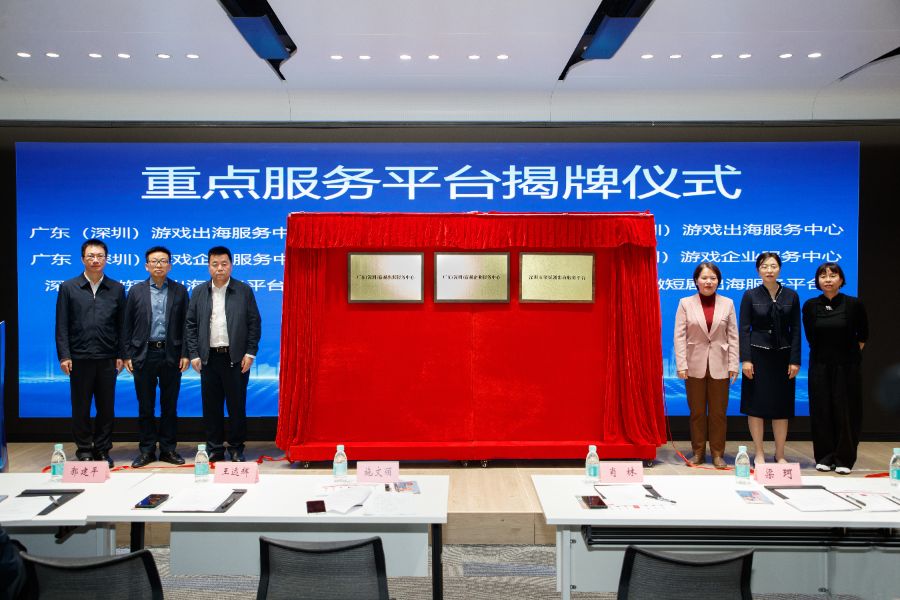
Core Insights - The establishment of the Guangdong (Shenzhen) Game Enterprise Service Center and the Guangdong (Shenzhen) Game Overseas Service Center aims to enhance the local gaming industry by providing comprehensive support services [1][3] Group 1: Service Centers Overview - The Guangdong (Shenzhen) Game Enterprise Service Center focuses on resource matching, policy analysis, license consultation, and compliance services, leveraging Nanshan's advantages in innovation, education, and capital [1] - The Guangdong (Shenzhen) Game Overseas Service Center will create a platform for market research, policy consulting, entrepreneurship incubation, distribution operations, and talent empowerment, promoting the growth of overseas gaming enterprises [1][3] Group 2: Collaborative Efforts - The two service centers will collaborate with the Shenzhen (Nanshan) Game Innovation Development Center and the upcoming Shenzhen Game Industry Association to form a three-tiered service system that promotes resource sharing and collaborative development [3] - Partnerships have been established with the Harmony Ecosystem (Shenzhen) Innovation Center and Shenzhen Vocational and Technical University to enhance technology adaptation and talent supply in the gaming sector [3] Group 3: Policy Support - The Nanshan District announced the "Shenzhen Nanshan Promotion of High-Quality Development Support Policy for the Gaming and E-sports Industry," which includes ten specific measures to support startups and attract top-tier gaming clubs [3][4] Group 4: Industry Scale and Growth - The gaming and e-sports industry in Nanshan has reached a scale of over 100 billion, with major companies like Tencent and Dreamland Technology contributing to the ecosystem [4]




全球首个!东大发布系统级伦理垂域大模型“问道”
Yang Zi Wan Bao Wang· 2025-11-12 14:36
Core Insights - The world's first system-level ethical domain model "Wendao" was officially launched at Southeast University, aiming to serve as an ethical thinking partner and decision support system for various stakeholders in complex technological and social issues [1][2] Group 1: Model Development and Features - "Wendao" was developed under the leadership of Professor Wang Jue, integrating resources from multiple interdisciplinary platforms, including national key laboratories and ethical development think tanks [1] - The model encompasses a functional matrix covering the entire ethical governance process, focusing on five core areas: ethical risk assessment and auditing, ethical dilemma simulation and decision-making, ethical alignment in design, dynamic knowledge base and case teaching, and exploration of ethical frontiers [2] Group 2: Cultural and Legal Alignment - "Wendao" is rooted in Chinese traditions of "seeking the way" and "inquiring into learning," aiming to explore the logic and ethical boundaries of technological development while providing systematic solutions for building a trustworthy intelligent governance system [2] - The model integrates the essence of Confucianism, Buddhism, and Taoism, aligning with current domestic laws and regulations, serving as an intelligent assistant for government policy-making, regulatory ethical reviews, corporate compliance, and public education [2] Group 3: Future Development and Applications - Future plans for "Wendao" include optimizing human-machine interaction mechanisms, developing systematically and progressively, and opening feedback channels for experts and users to create a positive feedback loop for model iteration [3] - The model aims to expand its deep applications in research, industry, and education, contributing to the collaborative development of artificial intelligence and social ethics [3]
三季度净利增长超过300%,A股分红大户又要分红了:1股高达6元!
Mei Ri Jing Ji Xin Wen· 2025-10-28 14:37
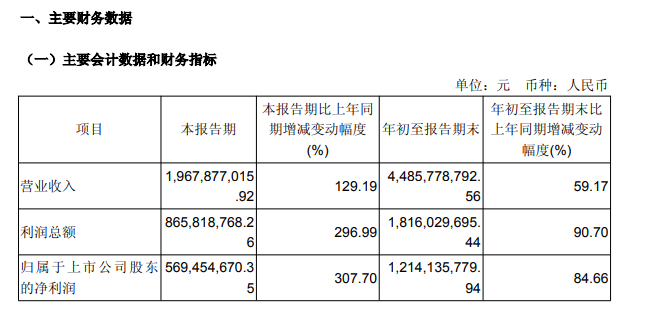
Core Insights - In the first three quarters of 2025, the company achieved operating revenue of 4.486 billion yuan, a year-on-year increase of 59.17%, and a net profit attributable to shareholders of 1.214 billion yuan, up 84.66% [1][2] - For the third quarter alone, the company reported operating revenue of 1.968 billion yuan, a significant year-on-year growth of 129.19%, and a net profit of 569 million yuan, which represents a remarkable increase of 307.70% [1][2] Financial Performance - The total revenue for the first three quarters was 4.486 billion yuan, with a profit margin increase of 59.17% compared to the previous year [2] - The total profit for the third quarter was 866 million yuan, reflecting a 296.99% increase year-on-year [2] - The net profit attributable to shareholders for the third quarter was 569 million yuan, marking a 307.70% increase compared to the same period last year [2] Dividend Policy - The company plans to distribute a cash dividend of 60 yuan (before tax) for every 10 shares, totaling approximately 430 million yuan, which accounts for 75.6% of the net profit for the third quarter [3] - Cumulatively, the company has distributed cash dividends 14 times since its listing in 2017, amounting to over 6.9 billion yuan, with an average dividend payout ratio of nearly 70% [3][4] Business Operations - The company launched several new games in the first three quarters, including "杖剑传说 (Mainland Version)" and "问剑长生 (Mainland Version)", which contributed significantly to revenue growth [5] - The core mobile game "问道手游" generated revenue of 1.499 billion yuan, a decrease of 7.02% year-on-year, while the new titles contributed 1.166 billion yuan and 713 million yuan respectively [5] - The company's overseas revenue reached 588 million yuan, showing a nearly 60% increase year-on-year [5] Market Position - As of October 28, the company's stock closed at 458.14 yuan per share, with a market capitalization of approximately 33 billion yuan [6]