
网约车

Search documents
盛威时代拟港股IPO 业绩持续亏损
Zhong Guo Zheng Quan Bao· 2025-09-12 15:25
Core Viewpoint - Shengwei Times Technology Co., Ltd. has submitted an application for listing on the Hong Kong Stock Exchange, primarily providing urban ride-hailing services and intercity passenger transport information services, but has reported continuous losses in recent years [1][2]. Financial Performance - The net profits for Shengwei Times from 2022 to the first half of 2025 are as follows: -499 million yuan, -482 million yuan, -426 million yuan, and -90 million yuan, indicating ongoing financial losses [2]. - The operating revenues for the same period are: 816 million yuan, 1.206 billion yuan, 1.594 billion yuan, and 903 million yuan, showing a growth trend in revenue despite the losses [2]. Business Operations - Shengwei Times has established operations in over 30 provinces and regions, providing customized passenger transport services in collaboration with various transport enterprises [2]. - The company ranks 14th in the domestic ride-hailing market based on total gross transaction value (GTV) for 2024 [2]. - The revenue from ride-hailing services constitutes a significant portion of total revenue, accounting for 86.2%, 85.3%, 88.9%, and 90.4% from 2022 to the first half of 2025 [2]. Liabilities and Financial Health - The net current liabilities of Shengwei Times increased from 2.442 billion yuan as of December 31, 2024, to 2.534 billion yuan as of June 30, 2025, primarily due to an increase in implied valuation leading to a rise in redemption rights issued to investors by 78 million yuan [3]. Industry Competition - The industry in which Shengwei Times operates is highly competitive, with significant risks associated with maintaining market share against existing and new competitors [4]. - Revenue from the top five customers has decreased from 7.1% of total revenue in 2022 to 3.8% in the first half of 2025, indicating a potential risk in customer concentration [4]. - The company’s largest supplier accounted for 7.2% of total procurement costs in 2022, which has remained relatively stable over the years [4].
盛威时代拟港股IPO,业绩持续亏损
Zhong Guo Zheng Quan Bao· 2025-09-12 15:21
Core Viewpoint - Shengwei Times Technology Co., Ltd. has submitted an application for listing on the Hong Kong Stock Exchange, primarily providing urban ride-hailing services and intercity passenger transport information services, but has reported continuous losses in recent years [1][2]. Financial Performance - The company reported net profits of -499 million, -482 million, -426 million, and -90 million CNY for the years 2022, 2023, 2024, and the first half of 2025, indicating ongoing financial losses [2]. - Revenue figures for the same periods were 816 million, 1.206 billion, 1.594 billion, and 903 million CNY, showing a gradual increase in revenue despite the losses [2]. - The revenue from ride-hailing services constituted 86.2%, 85.3%, 88.9%, and 90.4% of total revenue for the years 2022, 2023, 2024, and the first half of 2025, highlighting the significance of this segment to the company's overall performance [2]. Business Operations - Shengwei Times has established operations in over 30 provinces and has partnered with multiple passenger transport companies to offer customized transport services [2]. - The company has also engaged in digital projects for provincial road transport in 17 provinces as of June 30, 2025 [2]. - According to Frost & Sullivan, Shengwei Times ranked 14th in the domestic ride-hailing service market based on total gross transaction value (GTV) for 2024 [2]. Liabilities and Financial Health - The company's net current liabilities increased from 2.442 billion CNY as of December 31, 2024, to 2.534 billion CNY as of June 30, 2025, primarily due to an increase in implied valuation leading to a rise in redemption rights issued to investors by 78 million CNY [3]. Competitive Landscape - The industry is characterized by intense competition, with the company serving both passenger and enterprise clients, including government agencies [4]. - Revenue from the top five customers accounted for 7.1%, 6.3%, 4.3%, and 3.8% of total revenue for the years 2022, 2023, 2024, and the first half of 2025, indicating a diverse customer base [4]. - The largest customer contributed 4.3%, 2.9%, 1.1%, and 1.3% to total revenue during the same periods, suggesting a decreasing reliance on any single customer [4].
又涨价了,一年“躺赚”百万的网约车平台牌照涨至200万
3 6 Ke· 2025-09-12 12:20
Core Viewpoint - Despite the announcement of reduced commission rates by major ride-hailing platforms, drivers have not experienced a significant increase in income, primarily due to the complexities of commission algorithms and the ongoing low fare rates in the industry [1][9]. Group 1: Commission Rate Changes - Major platforms like Didi, T3, and Gaode have reduced their maximum commission rates to 27%, down from the previous 30%, while Caocao has lowered it to 22.5% [1]. - Drivers report that the reduction in commission rates has not translated into higher earnings due to opaque commission calculations and the presence of numerous small platforms driving down fare rates [1][9]. Group 2: Transparency Issues - Drivers have expressed frustration over the lack of transparency in commission calculations, with many unable to verify the actual commission taken from their earnings [2][4]. - The complexity of the commission structure often leads to discrepancies between the displayed commission rates and the actual rates, with some drivers reporting effective rates exceeding the stated limits [3][4]. Group 3: Order Reselling Practices - The practice of order reselling among platforms has led to compounded commission rates, where drivers may receive significantly less than expected due to multiple layers of commission [5][6]. - Instances of drivers receiving only a fraction of the fare paid by passengers highlight the hidden costs associated with order reselling, with effective commission rates sometimes exceeding 50% [5][6]. Group 4: Low Fare Rates - Many drivers have noted that the fundamental issue lies in the low mileage rates, which are often below 50% of traditional taxi fares, impacting their overall income [7][9]. - In cities like Shanghai, the average mileage fee is around 1.1 yuan per kilometer, while in some regions, it can drop to as low as 0.8 yuan, further exacerbating the income challenges for drivers [7]. Group 5: Regulatory Environment - Regulatory bodies have begun to take notice of the issues surrounding order reselling and opaque commission practices, with new guidelines being introduced to curb these practices [10][11]. - Despite regulatory efforts, reports indicate that practices like "shadow billing" and order reselling continue to persist in the industry [10][11]. Group 6: Market Dynamics - The market for ride-hailing platform licenses remains competitive, with prices for licenses in less developed regions rising significantly, indicating ongoing demand despite regulatory challenges [12]. - The increase in the number of licensed platforms, even amidst the removal of non-compliant ones, suggests a complex and evolving market landscape [12][13].

网约车司机收入竟然位居蓝领第二、满意度第一?
Hu Xiu· 2025-09-12 10:00
Core Insights - The average monthly income of ride-hailing drivers is 7,623 yuan, ranking second only to truck drivers [1] - Ride-hailing drivers express a higher satisfaction with their income compared to truck drivers, delivery workers, and construction workers [1] - The working environment for ride-hailing drivers is perceived as more comfortable and secure, akin to that of urban white-collar workers, with air conditioning and a sense of safety while accepting orders [1]
盛威时代赴港IPO:阿里输血下的增长神话与独立生存考
Xin Lang Zheng Quan· 2025-09-12 08:26
Core Viewpoint - Shengwei Times Technology Co., Ltd. is attempting to relist on the Hong Kong Stock Exchange after its initial application failed in November 2024, facing multiple challenges including reliance on Alibaba, continuous losses, and numerous complaints from consumers [1][2]. Business Overview - Shengwei Times positions itself as a leading provider of intercity and urban road passenger transport information services, focusing on intercity transport services and urban ride-hailing services [1]. - The company has developed a "Cloud Station" system to digitize traditional passenger transport stations and offers a comprehensive SaaS solution called "Passenger Transport Da" for transport companies [1]. - As of June 2025, the company holds 204 ride-hailing licenses, with 1.7 million registered drivers and 84,000 active drivers monthly, processing an average of 240,000 orders daily [1]. Financial Performance - Revenue increased from 816 million yuan in 2022 to 1.594 billion yuan in 2024, reflecting a compound annual growth rate of approximately 40% [1]. - However, the net losses for the parent company were 499 million yuan, 482 million yuan, and 426 million yuan over the same period, totaling around 1.4 billion yuan due to high driver subsidies and market expansion costs [2]. - In the first half of 2025, revenue reached 903 million yuan, with adjusted losses reduced to 9.33 million yuan, indicating a significant improvement in loss rate to 1% [2]. Dependency on Alibaba - Alibaba is the largest shareholder with a 27.01% stake, and over 80% of Shengwei Times' revenue comes from ride-hailing services, with 90% of that revenue dependent on cooperation with Gaode [2]. - The total transaction volume generated through Gaode accounted for 92.9%, 89.5%, 93.9%, and 94.5% of the company's ride-hailing service GTV from 2022 to the first half of 2025 [2]. Regulatory and Market Challenges - The company faced numerous consumer complaints, with over a thousand complaints related to "365 Ride-Hailing" on the Black Cat Complaint platform, primarily concerning service quality and regulatory compliance [2]. - In 2024, "365 Ride-Hailing" was subject to 35 administrative penalties, mainly for violations related to driver certification and vehicle licensing [3]. - The competitive landscape for ride-hailing services is intensifying, with recent IPOs of similar companies like Dida and Qiji facing poor market performance, raising investor skepticism about profitability and business models [3]. IPO and Future Prospects - The upcoming IPO represents not only a fundraising opportunity but also a test of the company's business model and market competitiveness [4]. - The company must reduce its dependency on a single platform and demonstrate its technology's neutrality to attract orders outside the Alibaba ecosystem [4]. - Funds raised from the IPO are intended for enhancing platform capacity, expanding provincial passenger transport digital projects, and exploring acquisition and strategic alliance opportunities [4]. Market Sentiment - The capital market's willingness to invest in a company heavily reliant on Alibaba, with ongoing losses and numerous complaints, remains uncertain [5]. - Shengwei Times must prove it is not merely an "outsourced worker" within the Alibaba ecosystem but a technology company with core capabilities, independent customer acquisition, and a clear path to profitability [5].
如何当好一个职业董事长?
Hu Xiu· 2025-09-12 03:34
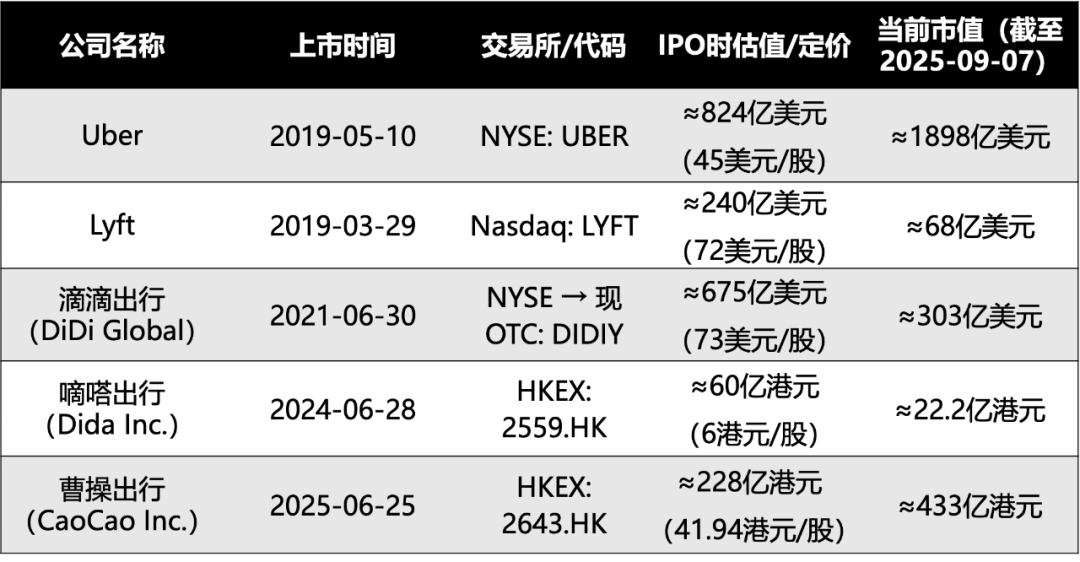
Group 1 - The article discusses the emergence of a new role in corporate governance known as the "professional chairman," highlighting its significance in the context of China's evolving business landscape [1][2] - The article reflects on the journey of various global ride-hailing platforms, including Uber, Lyft, Didi, and CaoCao, as they navigate their paths to capital markets and address the challenges of the ride-hailing business [3][4] - A comparison table illustrates the market positions of these companies, showcasing their IPO valuations and current market values, with CaoCao's market value noted as approximately 43.3 billion HKD as of September 7, 2025 [5] Group 2 - The appointment of a professional chairman at CaoCao was a bold decision by the major shareholder, Li Shufu, aimed at introducing new perspectives and methods to the management team [5][6] - The chairman emphasized the importance of building trust through listening and understanding the team's challenges, which was crucial for effective collaboration [7][8] - The strategic shift from a focus on high growth to prioritizing efficiency and cost control was necessary due to external market pressures and internal competition [11][12] Group 3 - The company underwent significant restructuring, including a 40% workforce reduction and a 50% budget cut, to adapt to the changing market conditions and ensure sustainability [12][14] - The chairman's approach involved balancing the diverse interests of various stakeholders, including major shareholders and management, to foster a collaborative decision-making environment [15] - The future vision for the ride-hailing industry is centered around the development of Robotaxi, which is seen as the ultimate evolution of the business model, driven by advancements in autonomous driving technology [16] Group 4 - The article outlines a methodology for effective leadership, emphasizing the importance of listening, understanding different perspectives, maintaining a holistic view, and managing operational rhythms [17][18][19][20][21] - The chairman's role is likened to that of a brake operator, ensuring that the company balances speed with efficiency and quality in its operations [21][22]
平台算法和劳动规则协商取得积极进展
Jing Ji Ri Bao· 2025-09-12 00:43
Group 1 - The core viewpoint is that national trade unions are actively promoting algorithm negotiations among platform companies, with expected coverage of over 20 million new employment form workers [1][2] - As of now, 15 leading platform companies have been included in the initiative, with 7 companies, including T3 Travel and Didi, having signed special agreements on algorithms and labor rules [1] - The agreements stipulate that labor remuneration will not be lower than the local minimum wage, and measures such as the gradual elimination of "overtime deductions" are being implemented [1][2] Group 2 - The focus of the algorithm negotiations includes core worker rights such as labor remuneration, rest rights, labor safety, and algorithm transparency [2] - In the ride-hailing industry, agreements have been made to publicly disclose pricing rules and reduce commission rates, along with enhancements to fatigue prevention rules [2] - New features such as abnormal order interception and mandatory rest reminders have been introduced to improve worker safety and well-being [2]
全国人大常委会法工委依法开展备案审查工作 清理法规 平等对待企业(坚持和完善人民代表大会制度)
Ren Min Ri Bao· 2025-09-11 22:00
Group 1 - The central government emphasizes the need to deepen the construction of a unified national market and optimize market competition order [1] - Recent reviews by the National People's Congress (NPC) Standing Committee have identified and corrected various local regulations that impose unnecessary burdens on enterprises, such as the property warranty fund requirement [2][3] - The property warranty fund, which is typically 1%-3% of the total construction cost, has been recognized as a significant financial burden for construction companies [2][3] Group 2 - Local regulations requiring ride-hailing platforms to establish branches in the city of operation have been deemed unreasonable and unnecessary, increasing operational costs for companies [4][5][7] - The NPC Standing Committee has initiated a review of local regulations that conflict with national policies aimed at promoting a unified market, identifying several regulations that need to be amended or abolished [7][8] - The review process has led to the identification of 178 local regulations that require modification or repeal to ensure fair competition and equal treatment of enterprises [7][8] Group 3 - Employment discrimination based on local residency requirements for taxi drivers has been highlighted, with several cities having regulations that restrict non-local residents from obtaining taxi operating licenses [9][10] - The NPC Standing Committee has received multiple suggestions to review and amend these discriminatory regulations, aligning them with national policies promoting equal employment rights [9][10]
平台算法和劳动规则协商取得积极进展 预计覆盖新就业形态劳动者逾2000万人
Jing Ji Ri Bao· 2025-09-11 21:59
Core Insights - The article highlights the proactive measures taken by labor unions in China to promote algorithm negotiations within platform companies, aiming to cover over 20 million new employment form workers this year [1][2] Group 1: Labor Negotiations - Labor unions have initiated a concentrated action for collective negotiations in 2025, focusing on algorithm negotiations with platform companies [1] - 15 leading platform companies have been included in this initiative, with 7 companies already signing specialized agreements regarding algorithms and labor rules [1] Group 2: Key Agreements - The agreements established by several platforms ensure that labor remuneration is not less than the local minimum wage and include provisions for bad weather subsidies while gradually eliminating "overtime deductions" [2] - In the ride-hailing industry, there are commitments to public pricing rules and reduced commission rates, along with enhanced fatigue prevention measures and features for intercepting abnormal orders and mandatory rest reminders [2] Group 3: Regional Collaboration - 15 provinces and cities, including Beijing, Hebei, Jilin, and Shanghai, are actively guiding local branches of platform companies to conduct regional negotiations, resulting in 33 regional negotiation or opinion consultation meetings [1]
盛威时代招股书解读:营收大增39.8%,净亏损隐忧几何?
Xin Lang Cai Jing· 2025-09-11 16:26
Core Viewpoint - The company, Shengwei Times Technology Co., Ltd., is pursuing an IPO in Hong Kong amidst a competitive mobility service market, revealing significant financial growth but persistent net losses, raising concerns about underlying risks and challenges [1] Business Model - Shengwei Times has established a comprehensive mobility service system, covering ride-hailing, passenger transport services, and digital solutions, collaborating with various stakeholders to meet diverse passenger needs [2] - The ride-hailing service collaborates with major platforms like Gaode for customer acquisition, while passenger services utilize systems like "Cloud Station" to empower transport stations and companies [2] Financial Performance - Revenue has shown rapid growth with a compound annual growth rate (CAGR) of 39.8%, with projected revenues of RMB 816 million, RMB 1.206 billion, and RMB 1.594 billion for 2022, 2023, and 2024 respectively [3] - The company has recorded continuous net losses, with losses of RMB 499 million, RMB 482 million, and RMB 426 million for the years 2022 to 2024, indicating ongoing financial challenges [3][4] - Gross margins have fluctuated and remain low, with gross margins of 6.6%, 7.1%, and 3.5% for the years 2022 to 2024, reflecting volatility in profitability [3][4] Revenue Structure - Ride-hailing services dominate the revenue structure, accounting for 86.2%, 85.3%, and 88.9% of total revenue from 2022 to 2024, while passenger services show stable growth [6] Financial Challenges - The company faces significant financial pressure due to ongoing net losses and high debt levels, with net liabilities reaching RMB 1.463 billion, RMB 1.946 billion, and RMB 2.369 billion from 2022 to 2025 [12] Competitive Landscape - The company ranks 14th in the ride-hailing market by GTV in 2024 and is the largest provider of intercity passenger transport information services in China, but faces intense competition from both new and established players [8] Customer and Supplier Analysis - Customer concentration is low, with the top five customers contributing only 7.1% to total revenue, indicating a diversified risk but potential vulnerability to customer attrition [9] - Supplier concentration remains stable, with the top five suppliers accounting for 12.7% to 10.0% of total procurement costs, necessitating strong relationships to mitigate supply chain risks [10] Shareholding and Management - The company has a concentrated shareholding structure, with the controlling shareholder group holding approximately 42.20% of voting rights, which may influence corporate governance [13] - The management team has extensive industry experience, but details on the incentive mechanisms for core management remain unclear, complicating assessments of alignment with shareholder interests [14]