乳制品

Search documents
梁惠玲会见雀巢大中华区董事长兼首席执行官马凯思一行
Sou Hu Cai Jing· 2026-01-17 01:57
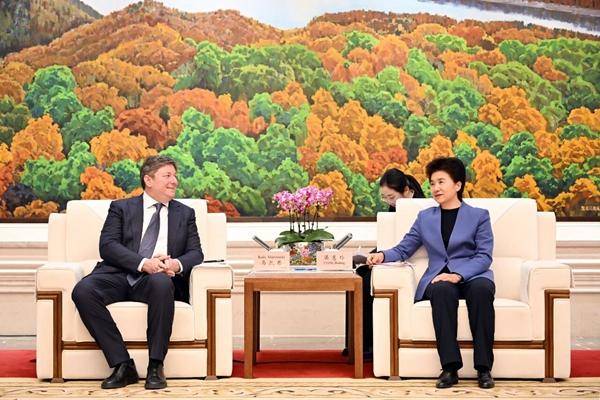
Core Viewpoint - The meeting between the Heilongjiang Provincial Governor Liang Huiling and Nestlé Greater China CEO Mark Schneider highlights the ongoing investment and collaboration between Nestlé and Heilongjiang, emphasizing the province's commitment to creating a favorable business environment for foreign investments [3][5]. Group 1: Investment and Business Environment - Heilongjiang is actively promoting high-quality development and expanding high-level openness to attract foreign investment, creating a favorable market environment for companies like Nestlé [3]. - Nestlé has been expanding its investment in Heilongjiang, with the Daqing factory being the first Nestlé factory in China, showing positive operational performance [3]. - The provincial government aims to enhance the business environment by implementing policies that align with national economic strategies, thereby attracting more foreign enterprises [3]. Group 2: Collaboration and Innovation - Nestlé is encouraged to leverage Heilongjiang's high-quality dairy resources to develop new product lines and technologies, transforming the Daqing factory into a high-end production base for formula milk and dairy products [3]. - There is a focus on strengthening collaboration between Nestlé and local research institutions and universities to foster innovation and expand industry-academia cooperation [3]. - The commitment to green manufacturing and carbon neutrality practices is emphasized, aiming for sustainable development within the dairy industry [5].

婴幼儿发酵乳工厂在哈尔滨新区投产
Xin Lang Cai Jing· 2026-01-16 22:12
(来源:黑龙江日报) 转自:黑龙江日报 本报16日讯(记者薛婧)16日,在哈尔滨新区健康食品产业园内,随着满载婴幼儿辅食酸奶的卡车发往 舟山馋文化电子商务有限公司位于武汉的全国中心仓,黑龙江宝宝馋了乳业有限公司婴幼儿发酵乳工厂 项目正式投产。 该项目是东北地区首个婴幼儿灌装辅食酸奶项目,也是哈尔滨新区2026年首个落地投产的产业项目,标 志着新区在绿色健康食品产业领域迈出新的一步。该项目实现了黑龙江乳品向高端化、高附加值、精细 化婴童食品的赛道升级,补齐了本地乳品产业链在高端制造环节的关键一环,展现出以新质生产力驱动 产业升级的引领性和示范意义。 据悉,黑龙江宝宝馋了乳业有限公司婴幼儿发酵乳工厂采用汉通生物与哈尔滨工业大学联合研发的专属 菌株,奶源选用完达山A2有机奶,实现全产业链哈尔滨新区闭环运营。该工厂设计年产能8000吨,预 计年产值1亿元,将有力支持"宝宝馋了"在全国市场的供应需求。 "项目从签约到投产仅用5个月,创下了企业在全国工厂建设中的最快纪录。"舟山馋文化电子商务有限 公司供应链副总裁、黑龙江宝宝馋了乳业有限公司总经理许方方介绍,在项目建设过程中,哈尔滨新区 组建专项服务小组,全程跟进企业在选 ...
内蒙古伊利实业集团股份有限公司关于境外全资子公司参与中国优然牧业集团有限公司配售及认购新股的公告
Shang Hai Zheng Quan Bao· 2026-01-16 18:56
Core Viewpoint - Inner Mongolia Yili Industrial Group Co., Ltd. is participating in a share placement and subscription of new shares in China Youran Dairy Group Co., Ltd. through its wholly-owned subsidiary, aiming to enhance its supply chain efficiency and secure high-quality milk sources for better development in the dairy processing business [1][6]. Group 1: Transaction Overview - The company, through its subsidiary Boyuan Investment Holdings Ltd., holds a 33.93% stake in Youran Dairy. It will sell 299,250,000 shares at HKD 3.92 per share and simultaneously subscribe for the same number of new shares at the same price [1][2]. - The total subscription amount for the new shares is HKD 1,173,060,000 [3]. Group 2: Approval Process - The transaction was approved by the company's board of directors on January 14, 2026, with unanimous support, and does not require shareholder approval as it falls within the board's authority [3][4]. Group 3: Pricing Basis - The pricing for the sale and subscription was based on the latest market price of Youran Dairy prior to the agreement and was determined through fair negotiations between the parties involved [4]. Group 4: Financial Arrangements - Funding for the transaction will come from various sources, including potential capital increases from the company to Boyuan Investment and self-raised funds by Boyuan Investment [5]. Group 5: Impact on the Company - The transaction is strategically significant as it allows the company to secure high-quality milk sources and enhance its competitive position in the dairy industry, aligning with its long-term development goals [6].

三元股份:预计 2025 年营收63.5 亿元,亏损1.78 亿元至3.56 亿元
Bei Jing Shang Bao· 2026-01-16 13:48
Core Viewpoint - The company expects to report a significant net loss in 2025 due to impairment related to its investment in the French joint venture HCo, despite projecting a substantial increase in net profit when excluding this impact [1][2] Group 1: Financial Projections - The company anticipates achieving approximately 6.35 billion yuan in revenue for 2025 [1] - The expected net loss attributable to shareholders for 2025 is projected to be between 178 million yuan and 356 million yuan [1] - After excluding the impact of the impairment, the company forecasts a net profit attributable to the parent company of between 260 million yuan and 318 million yuan for 2025 [1] Group 2: Impairment and Investment Impact - The impairment is primarily due to the acquisition of StHubert and its sales company ValleItalia, which resulted in a 49% stake held by the company in HCo [1] - The anticipated impairment loss on long-term equity investments is estimated to be between 496 million yuan and 616 million yuan [1] - The company expects a significant increase in net profit growth of 374% to 480% year-on-year for 2025 when excluding the impairment effects [2] Group 3: Operational Quality Improvement - The company projects a substantial increase in its net profit excluding non-recurring items, with an expected growth of 705% to 899% year-on-year for 2025 [2] - This indicates a significant improvement in the actual operational quality of the company [2]

临近春节,天润用科技“鲜”行一步!
Xin Lang Cai Jing· 2026-01-16 13:37
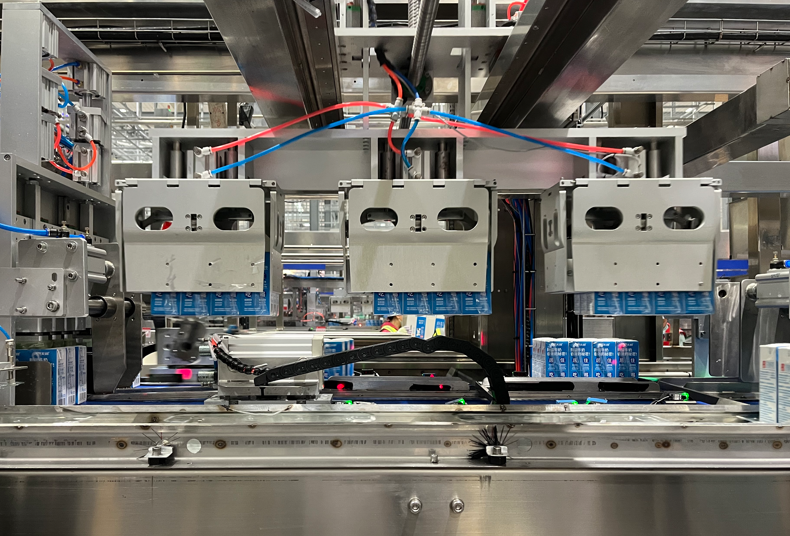
Core Viewpoint - The demand for dairy products is increasing as the Spring Festival consumption peak approaches, and Xinjiang Tianrun Dairy Industry Co., Ltd. is ramping up production to meet this demand [1][11]. Group 1: Production Capacity and Technology - Tianrun Dairy has fully activated its production facilities, utilizing smart filling lines and fully automated palletizing robots to enhance efficiency [3][13]. - The company has transitioned from manual control to intelligent control, significantly improving production efficiency and enabling it to better handle cyclical consumption fluctuations [5][15]. - The daily production capacity has reached 350 tons, with the introduction of intelligent palletizing robots reducing labor intensity for workers [7][17]. Group 2: Quality Control - Tianrun Dairy prioritizes product quality and safety, implementing a comprehensive quality control system that spans from raw milk testing to production monitoring and finished product inspection [9][19]. - The company conducts over 40 strict tests on its products, covering various dimensions such as microbiological, nutritional components, sensory indicators, and packaging integrity [11][21]. - Increased inspection frequency and dedicated quality control personnel during the shipping process ensure that product quality is maintained despite high production demands [9][19].

三元股份(600429.SH):2025年度预亏1.78亿元至3.56亿元
Ge Long Hui A P P· 2026-01-16 12:25
Core Viewpoint - The company Sanyuan Co., Ltd. (600429.SH) reported a significant reduction in long-term equity investments due to impairment provisions from its affiliate HCo France S.A.S. for the fiscal year 2025, leading to expected net losses for the year [1] Financial Summary - The expected net profit attributable to the parent company for 2025 is projected to be between -356 million yuan and -178 million yuan [1] - The expected net profit attributable to the parent company, excluding non-recurring gains and losses, is projected to be between -376 million yuan and -198 million yuan [1] - After excluding the aforementioned factors, the company anticipates a net profit attributable to the parent company of between 260 million yuan and 318 million yuan for 2025 [1] - The expected net profit attributable to the parent company, excluding non-recurring gains and losses, is projected to be between 240 million yuan and 298 million yuan for 2025 [1]
三元股份:预计2025年度净亏损1.78亿元至3.56亿元
Xin Lang Cai Jing· 2026-01-16 11:11
Core Viewpoint - The company announced that its affiliated enterprise, HCo France S.A.S., will recognize impairment in the fiscal year 2025, leading to a significant reduction in long-term equity investments and an expected net loss attributable to the parent company of between 178 million to 356 million yuan in 2025 [1] Group 1 - The company holds a stake in HCo France S.A.S. [1] - Impairment will be recognized in the fiscal year 2025 [1] - The expected net loss for 2025 is projected to be between 178 million to 356 million yuan [1]
三元股份:2025年营收63.5亿左右,受参股企业减值影响或亏损
Xin Lang Cai Jing· 2026-01-16 11:11
Core Viewpoint - The company expects a revenue of approximately 6.35 billion yuan in 2025, indicating a year-on-year decline due to impairment provisions related to its 49% stake in French HCo, leading to a significant reduction in long-term equity investments [1] Financial Performance Summary - The projected net profit attributable to the parent company for 2025 is expected to be between -356 million yuan and -178 million yuan, indicating a loss compared to the previous year [1] - The projected net profit excluding non-recurring items is expected to range from -376 million yuan to -198 million yuan, also reflecting a loss year-on-year [1] - Excluding the impact of the impairment, the expected net profit attributable to the parent company is forecasted to be between 260 million yuan and 318 million yuan, representing a year-on-year growth of 374% to 480% [1] - The expected net profit excluding non-recurring items is projected to be between 240 million yuan and 298 million yuan, showing a year-on-year increase of 705% to 899% [1] - The impairment testing is not yet completed, and final figures may vary [1]
伊利股份:境外子公司参与优然牧业配售及认购新股
Xin Lang Cai Jing· 2026-01-16 10:02
Group 1 - The company, Yili Group, announced that it holds a total of 33.93% equity in Youran Dairy through its wholly-owned subsidiaries, Boyuan Investment and Jinguang Holdings [1] - On January 16, 2026, Boyuan Investment will participate in the placement and subscription of new shares of Youran Dairy, selling 299 million shares at a price of HKD 3.92 per share, while subscribing to the same number of new shares, with a total subscription price of HKD 1.173 billion [1] - After the completion of the transaction, the company's total shareholding will increase from 33.93% to 36.07% [1]
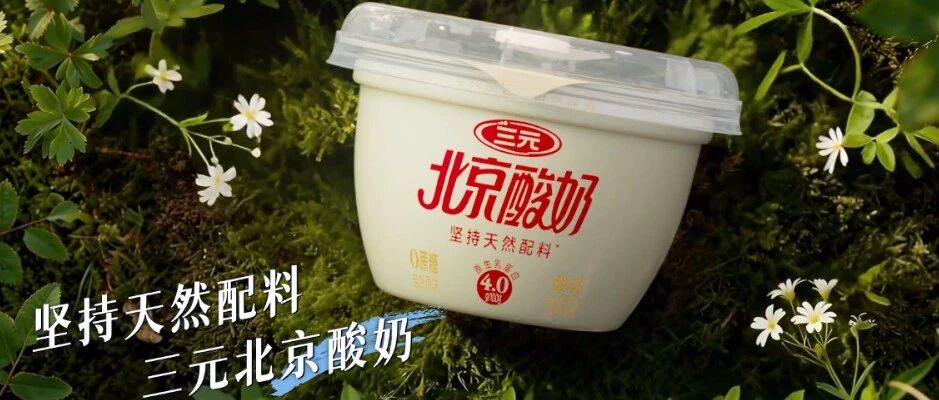
三元“聚焦北京”战略再落关键一子:“北京酸奶”携双背书入市
第一财经· 2026-01-16 09:23
Core Viewpoint - The launch of "Sanyuan Beijing Yogurt," the first yogurt in China to receive both "clean label" and "natural ingredients" certifications, represents a significant step in Sanyuan Food's comprehensive renewal strategy [1][3]. Product Innovation - The new yogurt series includes four flavors: "Natural Original," "Papaya Pineapple Passion Fruit," "Lime Grapefruit," and "Strawberry Raspberry Fig," all made with natural ingredients and free from synthetic and genetically modified components [5]. - Sanyuan Beijing Yogurt aims to meet the health-conscious trends in food consumption by presenting a simplified and natural ingredient list, emphasizing the brand's commitment to consumer trust and sovereignty [3][6]. Market Positioning - The product is positioned to disrupt the yogurt market, showcasing Sanyuan's determination to drive long-term growth through high-quality offerings [3]. - The yogurt's design reflects a shift from the previous trend of adding various functional ingredients to a focus on natural, healthy, and nutritious attributes, utilizing 100% proprietary milk sources and high-quality fermentation strains [6][9]. Consumer Trends - A survey indicates that over 68% of consumers frequently check food ingredient lists, with simple and understandable ingredients being the second most important factor influencing purchase decisions [7]. - The yogurt's "clean label" certification addresses consumer demand for transparency and health, providing both physiological health benefits and psychological satisfaction regarding purity and control [7]. Competitive Landscape - The introduction of Sanyuan Beijing Yogurt is seen as an upgrade in competitive dimensions within the food sector, as simpler products often require higher implementation standards in terms of raw materials, processes, and flavors [9]. - The combination of "natural ingredients" and "clean label" creates a new model that builds consumer trust through authoritative endorsements, establishing a higher barrier to entry in the yogurt market [9]. Strategic Focus - Sanyuan Food, as a local state-owned enterprise, has a strong foundation in dairy supply and has established advanced digital farming systems across its 29 modern dairy farms [11]. - The company has undergone a strategic restructuring to focus on its core strengths and enhance brand assets, as evidenced by the successful launch of "Beijing Fresh Milk" in September 2025 [11][14]. - The new yogurt product is expected to complement "Beijing Fresh Milk" in various consumption scenarios, enhancing Sanyuan's market share in the low-temperature dairy segment in Beijing and North China [14].