
水产养殖

Search documents
2025阳澄湖大闸蟹开捕:店招包装统一,每亩只许售卖600只
Bei Ke Cai Jing· 2025-09-26 02:41
新京报贝壳财经讯(记者俞金旻)9月26日,2025苏州阳澄湖大闸蟹正式开捕。 蟹农周先生告诉贝壳财经记者:"'熔断机制'对踏实养蟹的人来说是好事,只要把螃蟹养得好,就不愁 卖不上好价钱。今年阳澄湖大闸蟹整体长势良好,预计十月中下旬正式进入销售旺季。" 另据中国农业大学国家农业市场研究中心评估,阳澄湖大闸蟹品牌价值已达282.65亿元,位居全市农业 品牌首位,带动近十万人就业,全产业链规模约350亿元。 此外,2025年新版阳澄湖大闸蟹防伪标识也在开捕仪式上发布。今年防伪蟹扣和防伪标贴由苏州市阳澄 湖大闸蟹行业协会统一发放和管理,共有5577家养殖户和1022家销售公司加入市协会会员,其授权信息 均在官网公示,可以实时查询,基本实现阳澄湖大闸蟹农产品地理标志516.04平方公里保护范围内的养 殖户和销售公司全面覆盖。 今年的防伪标识在延续"一蟹一扣"的机制上,还增加了"一箱一贴"的双重防伪。湖区围网养殖为"蟹壳 红",高标准养殖为"蟹壳青",标签正面为镭射材料,反面二维码根据逻辑变色显示。打开微信扫描防 伪标识二维码可查看防伪信息,系统自动核验标识一致性后进入防伪溯源详情信息页面。从而构建起从 养殖到餐桌的全程 ...
(ASX: FAU)加速推进澳洲Gimlet金矿钻探作业 西非Nimba项目延伸高品位金矿化带 黄金资源版图雏形初现
Sou Hu Cai Jing· 2025-09-25 13:52
Group 1 - First Au Limited (ASX: FAU) is accelerating drilling operations at its Gimlet gold project in Western Australia while also advancing its Nimba project in West Africa, aiming to enhance its gold resource portfolio [3][5][6] - The Gimlet project has received regulatory approval, and a 2,500-meter reverse circulation drilling program has commenced, targeting an inferred resource of 120,000 ounces of gold at a grade of 3.19 g/t Au [5][6] - The Nimba project, located near Endeavour Mining's Ity mine, has confirmed gold mineralization extensions, with an initial 3,000-meter diamond drilling program underway [7][8] Group 2 - The drilling at Gimlet is expected to provide critical geological data to support future open-pit and underground mining studies, enhancing the confidence in the existing resource [5][6] - The Nimba project is strategically positioned within the West African Craton gold belt, with significant nearby resources, indicating strong exploration potential [6][7] - First Au Limited plans to focus on resource expansion, feasibility data acquisition, and project value reassessment over the next 6 to 12 months [8]

江浙沪“当日尝鲜”,全国200城“次日达”!大闸蟹寄递战升级
Yang Zi Wan Bao Wang· 2025-09-25 11:33
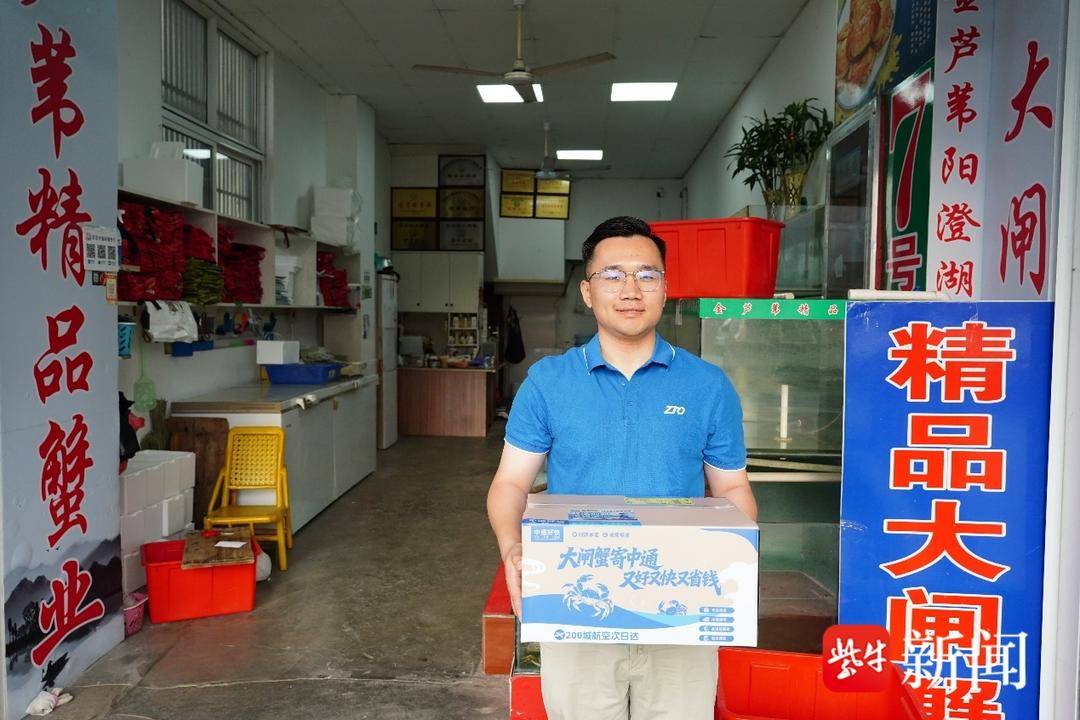
Core Insights - The rise of live-streaming sales and cold chain logistics has made hairy crabs a seasonal delicacy available nationwide, with significant competition among logistics companies to capture this high-value market [1][3] - The logistics of hairy crab delivery require high efficiency and service standards, with companies like Zhongtong, JD Logistics, and SF Express enhancing their capabilities to meet consumer demand [1][3] Group 1: Logistics Developments - Zhongtong has set up multiple collection points and mobile cold chain vehicles in key production areas, ensuring temperature control from catch to sorting [1] - Zhongtong has introduced new air routes and an intelligent cold chain system, achieving "next-day delivery" in 200 cities nationwide, with same-day delivery in major cities of Jiangsu, Zhejiang, and Shanghai [3] - JD Logistics has invested in autonomous vehicles, drones, and AI technologies to improve delivery experiences, increasing collection points by over 100% and extending collection cut-off times [3] - SF Express has launched a dedicated intelligent express transfer center for hairy crabs, linking over 100 front-end collection points for all-weather delivery assurance [3] Group 2: Market Trends - The peak harvesting season for hairy crabs in Jiangsu began on September 22, with major production areas like Suqian and Yangcheng Lake starting their catch shortly after [3] - The quality and yield of Jiangsu hairy crabs have improved this year, with data showing 7,970 existing companies related to hairy crabs in China, predominantly established 5-10 years ago [4] - Suzhou accounts for over 50% of the total number of companies related to hairy crabs, with a significant portion of these companies having registered capital of less than 1 million yuan [4] - In 2024, 489 new companies related to hairy crabs have been registered, with 289 registered so far this year [4]

摩洛哥推动海藻养殖发展蓝色经济
Shang Wu Bu Wang Zhan· 2025-09-25 05:53
Core Insights - The first national seaweed farming dialogue conference was held in Rabat, Morocco, organized by the National Agency for Aquaculture Development (ANDA) and the World Bank, focusing on the development path, human capital, infrastructure, and industrial prospects of seaweed farming in Morocco [1] Group 1: Market Potential - The global seaweed market is growing at approximately 10% annually, with expectations to exceed $30 billion in the next decade [1] - Morocco has a natural advantage for seaweed farming due to its approximately 3,500 kilometers of coastline [1] Group 2: Economic Impact - Current seaweed production in Morocco is about 3,500 tons, with potential capacity exceeding 600,000 tons [2] - Achieving an annual seaweed production of 300,000 tons could create around 36,000 jobs and generate approximately $450 million in annual revenue [1] Group 3: Development Goals - ANDA has identified about 4,700 hectares suitable for macroalgae farming, with 1,000 hectares already allocated to 70 seaweed farms [2] - The development goal is not only to produce raw materials but also to extend into deep processing, establishing a complete value chain to enhance local industrial capacity and product value [2] Group 4: Challenges and Support - Key challenges for sustainable development include simplifying administrative approval processes, improving cold chain and transportation infrastructure, reducing production costs, enhancing coordination among industry stakeholders, and balancing large-scale farming with ecological protection and community interests [2] - The World Bank is willing to assist Morocco in institutional reforms, infrastructure investment, risk sharing, and supporting private investment [2]
大闸蟹产量提升 中秋节后蟹价将有所下降
Bei Jing Shang Bao· 2025-09-24 14:22
Core Insights - The autumn season is favorable for the growth of hairy crabs, leading to an expected increase in production and a decrease in overall prices compared to last year [1][4]. Group 1: Weather and Production - The weather conditions in August were optimal for hairy crab growth, with no prolonged high temperatures and frequent rainfall [4]. - The expected price of hairy crabs is projected to be at least 10% lower than last year due to increased production [4]. Group 2: Market Trends and Consumer Behavior - The quality of hairy crabs in the market varies significantly, leading to a consumer experience akin to "opening a blind box" [4]. - There is a shift in consumer behavior, with a growing preference for purchasing hairy crabs for personal consumption rather than as gifts, emphasizing the demand for crabs that are fat and tasty [4]. Group 3: Quality Standards and Technology - The market lacks clear standards for measuring crab quality, which disrupts pricing and consumer experience [4]. - Hema has introduced a "digital crab inspector" that uses visual AI technology to assess the size and weight of crabs, calculating a K-value to grade their quality [4]. Group 4: Sales Growth and Market Expansion - Hema's sales of hairy crabs have been consistently growing, with a projected year-on-year increase of nearly 20% in 2024 [5]. - The sales regions for hairy crabs are expanding beyond Jiangsu, Zhejiang, and Shanghai, with growth observed in Southwest, Central China, and North China [5]. Group 5: Supply Challenges - The supply of hairy crabs faces challenges from adverse weather conditions such as high temperatures and droughts, which can delay molting and affect market availability [5]. - To ensure stable supply, Hema has expanded its sourcing to multiple lake regions, including Xinjiang, Northeast China, and the Yellow River estuary in Shandong [5].
2025达州丰收节开幕,“水产美食消费季” 同日启动
Sou Hu Cai Jing· 2025-09-24 12:24
Core Viewpoint - The event in Dazhou, Sichuan, showcases agricultural achievements and aims to promote the development of the agricultural sector, emphasizing food security and modern agricultural practices [1][3][16]. Agricultural Development - Dazhou has established 5.011 million acres of high-standard farmland, ranking second in Sichuan, and contributes 9.1% of the province's grain output with only 8.2% of the arable land [3]. - The city has created the first modern agricultural machinery equipment park in hilly areas, enhancing agricultural productivity [3]. Rural Improvement - Dazhou has provided over 700 million yuan in agricultural subsidies annually, benefiting more than 800,000 farming households [8]. - The region has renovated 177,000 rural toilets and achieved a 94% coverage rate for rural tap water, with over 27,000 kilometers of rural roads constructed [8]. Specialty Products - Dazhou ranks fourth in the province for crayfish production and first for hairy crabs, which have won national awards [10]. - The area produces 20% of the country's freshwater non-nucleated pearls, showcasing the potential of its aquaculture industry [10]. Modern Fisheries Development - Dazhou is a key area for the billion-yuan aquaculture industry in Sichuan, with over 170,000 acres of farming water and more than 25,000 farming entities [14]. - The local government is promoting high-quality development in modern fisheries through a comprehensive action plan [14]. Future Development Goals - The city aims to enhance grain production, agricultural efficiency, and farmers' income, focusing on brand development and strengthening leading enterprises [16]. - Dazhou is committed to creating a favorable environment for agriculture, encouraging respect and support for farmers [16].

水产品食物消费显著增长 成居民优质蛋白重要来源
Zhong Guo Jing Ji Wang· 2025-09-24 04:01
Core Insights - The 17th National Nutrition Science Conference was held in Beijing from September 21 to 23, focusing on "Nutritional Innovation - Promoting High-Quality Development of National Health" [1] Production and Consumption Data - China's per capita production of aquatic food has significantly increased from 4.5 kg/person/year in 1980 to 50.4 kg/person/year in 2023, a growth of 10.2 times [2] - The share of energy, protein, and fat from aquatic food in total food production has increased by 2.6%, 9.1%, and 1.9% respectively [2] - Per capita consumption of aquatic food rose from 4.4 kg/person/year in 1980 to 43.5 kg/person/year in 2023, an increase of 8.9 times [2] - The share of energy, protein, and fat from aquatic food in total food consumption has increased by 4.1%, 13.8%, and 1.7% respectively [2] - Aquatic food has become an important part of residents' dietary structure, particularly as a source of high-quality protein [2] Future Goals and Strategies - The "Food and Nutrition Development Outline of China (2025-2030)" aims for an average annual consumption of aquatic food to exceed 29 kg by 2030 [2] - Strategies to achieve aquatic food consumption goals include a comprehensive approach to developing marine and freshwater food resources, enhancing policy support, and promoting industry optimization and market expansion [3] - Emphasis on nutrition-oriented practices throughout the entire supply chain, from breeding and aquaculture to processing, is essential [3] - Public consumption guidance is necessary to create a virtuous cycle of "nutritional guidance for consumption and consumption guiding production" [3]
苏州市活动在常熟沙家浜举行 “最忆是苏乡”晒乡村短视频大赛启动
Su Zhou Ri Bao· 2025-09-24 00:32
已连续举办8届的"'蟹'逅沙家浜"螃蟹达人挑战赛今年进一步扩大规模,拓展至环阳澄湖周边板 块。比赛中,多支参赛队伍围绕"团队捆蟹"和"一抓准称重"两个项目展开激烈角逐,展示精湛技艺和丰 富经验,促进区域交流与学习。 活动期间,"最忆是苏乡"苏州人晒乡村短视频大赛启动,邀请全民用镜头记录苏式乡村。 昨天(9月23日),我国迎来第八个中国农民丰收节。当天上午,"庆农业丰收享美好生活"2025中 国农民丰收节苏州市活动在常熟沙家浜镇芦荡村开幕。 沙家浜镇深耕"蟹文章",镇域登记养殖面积达2.72万亩,年产量2984吨。活动现场,沙家浜"蟹经 济"再升级。常熟市大闸蟹产业链党委有效聚合政府部门、金融机构、高校院所等资源要素,创新打 造"链通聚能蟹逅四季"党建品牌,建立健全组织、技术、品牌、市场、文旅、金融等6大赋能机制,全 方位支持大闸蟹产业提档升级。 ...
守护阳澄湖大闸蟹“真”滋味
Su Zhou Ri Bao· 2025-09-24 00:32
Core Viewpoint - The article highlights the measures taken by Suzhou to ensure the quality and authenticity of Yangcheng Lake hairy crabs, which are set to be harvested on September 26, emphasizing the importance of brand protection and consumer trust in the market. Quality Control - The unique environment of Yangcheng Lake contributes to the superior taste of the hairy crabs, with farmers reporting larger sizes and higher yields this year due to favorable weather conditions [2] - A consensus in the industry has emerged to implement a "one crab, one tag" system for authenticity, with a unique digital ID for each crab to ensure traceability [2] - The introduction of a "circuit breaker mechanism" aims to prevent issues like overselling and false advertising in online sales, with strict limits on the number of crabs sold per acre [3] Regulatory Improvements - Various regulatory bodies in Suzhou are actively working to enhance market standards and consumer confidence through inspections and legal guidance [4] - The market supervision bureau has initiated a monitoring system for online sales, focusing on preventing misleading descriptions and ensuring compliance among e-commerce platforms [5] Channel Expansion - Restaurants and crab farms are preparing for the upcoming sales season, with upgrades and new offerings to attract customers [6] - The local government has introduced "crab tasting tours" to promote the consumption of authentic Yangcheng Lake hairy crabs, highlighting popular dining locations [6] - Companies are expanding their sales channels by collaborating with major e-commerce platforms and supermarkets to enhance direct sales and live-streaming promotions [6] New Variety Development - Efforts are underway to cultivate new crab varieties that can withstand high temperatures and low oxygen levels, with initial trials showing promising results [7]
这家蟹商本周六开启大闸蟹全国供应
Mei Ri Shang Bao· 2025-09-23 22:15
"从杭州第一家专卖店发展至今,过硬的品质始终是我们的根基。"周氏水产相关负责人周佳伟表示,今 年恰逢企业成立20周年,更需以优质产品回馈广大消费者的信任。作为集自产自销、自有土地及工厂于 一体的品牌,其核心竞争力源于后端供应链的精细化运营。从大闸蟹培育到送达消费者手中,各环节均 有保障,目前已服务亚冬会、海康威视(002415)、中石化等企业,获市场长期认可。 商报讯(记者蔡杭吉)随着中秋、国庆"双节"临近,品尝大闸蟹的时节也悄然到来。作为陪伴消费者二十 载的老牌企业,浙江周氏水产有限公司(以下简称"周氏水产")将于9月27日正式开启本年度大闸蟹提货 周期,持续至11月15日。以二十年品质积淀为基石,周氏水产正以供应链精细化运营与暖心服务,为全 国消费者送上秋日鲜味。 为应对"双节"提货高峰,周氏水产提前布局供应链。货源储备上,全国配载中心的暂养池数量从26个增 加至39个,可容纳10万斤大闸蟹,同时扩大冷库规模,储备更多保温冰,确保冷链运输的鲜活度;库存 调配方面,门店备货周期从去年的两天一备升级为一天一备,实时补充库存;品质把控上,挑蟹师团队 从15人扩充至30人,严选符合标准的大闸蟹。物流配送环节,依托 ...