
休闲零食

Search documents
盐津铺子的“增长神话”,是零食行业的“幸存者偏差”吗?
Sou Hu Cai Jing· 2025-11-29 04:41
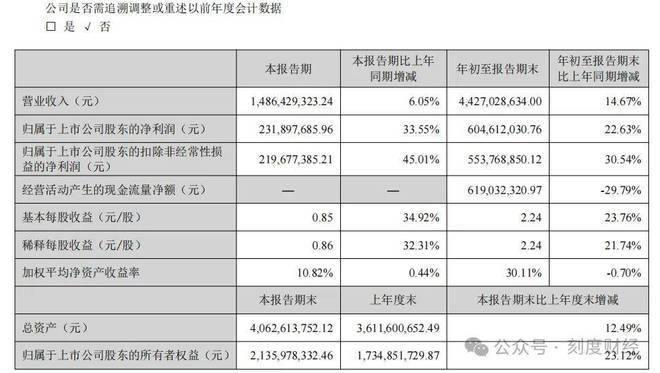
Core Insights - The snack industry is experiencing intense competition, with companies like Salted Fish and others facing challenges in profitability despite revenue growth [1][3] - Salted Fish has shown resilience, reporting a revenue of 44.27 billion yuan and a net profit of 6.05 billion yuan for the first three quarters of 2025, marking year-on-year growth of 14.67% and 22.63% respectively [1][3] - The company is expanding its market presence by targeting high-end channels and investing in a production base in Thailand [3][19] Financial Performance - For Q3 2025, Salted Fish achieved a revenue of 14.9 billion yuan, a 6.1% increase year-on-year, with a net profit of 2.3 billion yuan, reflecting a significant 33.6% growth [1][3] - The company's gross margin improved by 1.0 percentage points to 31.6%, driven by higher sales of high-margin konjac products and optimization of product structure [3][5] - The first three quarters of 2025 saw a net profit margin of 13.66%, with a cash flow from operating activities of 619 million yuan, indicating a decline of 29.79% [2][8] Market Position and Strategy - Salted Fish has successfully captured market share in the high-end snack segment while also expanding its distribution channels, covering over 40,000 retail outlets [5][15] - The company relies heavily on its konjac products, which accounted for 26.9% of total revenue in the first half of 2025, with a staggering year-on-year growth of 155.10% [10][12] - Despite its successes, Salted Fish faces challenges due to over-reliance on a single product category and the potential for market saturation [12][13] Industry Challenges - The snack industry is shifting from a focus on channel expansion to a need for innovation and efficiency, with many companies struggling to adapt [9][16] - Salted Fish's growth strategy has not addressed fundamental industry issues such as product homogeneity and weak innovation capabilities [9][17] - The competitive landscape is intensifying, with companies needing to enhance supply chain efficiency and product differentiation to maintain market relevance [16][20] Future Outlook - The snack market is projected to exceed 3.8 trillion yuan in 2025, but the underlying challenges of low entry barriers and intense competition remain [20][21] - Salted Fish's current growth model, which capitalizes on health trends and channel advantages, may not be sustainable in the long term without significant innovation and market adaptation [20][21] - The company must transition from being a beneficiary of market trends to a creator of lasting value to avoid potential declines in growth [21]

食品饮料2026年投资策略:拐点显现、板块次第筑底、积极布局
China Post Securities· 2025-11-28 13:40
Group 1: Economic Indicators and Consumer Trends - The CPI in October showed a slight improvement, with a year-on-year increase of 0.2% and a month-on-month increase of 0.2%, indicating a potential recovery trend that may continue into the first half of next year [6][10] - The retail sales of consumer goods in October reached 46,291 billion yuan, growing by 2.93% year-on-year, with significant improvements in essential consumption categories such as food and beverages [10] - The restaurant sector saw a monthly revenue of 5,199 billion yuan in October, reflecting a year-on-year growth of 3.8%, driven by the National Day and Mid-Autumn Festival holidays [10] Group 2: Frozen and Food Supply Industry - The frozen food and catering industry is witnessing a shift from price wars to product innovation and channel development, with companies focusing on quality and service rather than just price competition [11] - Major players like Anjiyuan and Qianwei Central Kitchen are transitioning their strategies to emphasize product quality and operational efficiency, leading to improved profitability [11][15] - The industry is entering a "hard strength reshuffle period," where companies are expected to enhance their product offerings and service capabilities to maintain competitiveness [11] Group 3: Snack Food Sector - The snack food sector is experiencing a weak recovery, with a clear differentiation in growth among brands and channels, driven by strategic adjustments and product innovations [33][34] - The emergence of the konjac category as a significant growth driver, with market potential expected to reach 300 billion yuan by 2025, indicates a strong consumer demand for healthy snacks [34][40] - Companies like Yummy Foods and Salted Fish are leveraging their core products and channel strategies to achieve substantial growth, with a focus on high-margin products and efficient cost management [34][42] Group 4: Specific Company Strategies - Anjiyuan is focusing on high-margin products and channel expansion, with significant growth in its core offerings like volcanic stone grilled sausages and high-end dumplings [12][13] - Qianwei Central Kitchen is seeing improvements in its direct sales and distribution channels, with a focus on enhancing profitability through strategic adjustments in customer structure and resource allocation [15][18] - Salted Fish is capitalizing on the konjac trend and optimizing its product mix to improve profitability, with a strong emphasis on high-margin products and efficient channel management [40][41]




来伊份增收不增利、第三季度亏损扩大至7466万 转型阵痛与盈利挑战待解
Xin Lang Zheng Quan· 2025-11-28 09:23
Core Viewpoint - The revenue growth of Laiyifen has not been able to prevent the expansion of losses, indicating that the company's strategic adjustments are costly and the path to breaking through remains long [1][2]. Group 1: Financial Performance - For Q3 2025, Laiyifen reported a revenue of 9.14 billion yuan, a year-on-year increase of 25.2%, but the net profit attributable to shareholders worsened from a loss of 57.55 million yuan to a loss of 74.66 million yuan [1]. - The company's total revenue for the first three quarters reached 28.5 billion yuan, up 13.1% year-on-year, while the net profit attributable to shareholders increased from a loss of 42.62 million yuan to a loss of 125 million yuan [1]. - The operating cash flow net amount was 78.22 million yuan, a decline of 64.5% year-on-year, indicating weakened cash generation ability [1][4]. Group 2: Strategic Adjustments - Laiyifen is shifting its focus from scale expansion to optimizing single-store profitability and promoting franchising under the "Ten Thousand Families" strategy [2]. - The restructuring of store formats has led to a reduction in direct-operated stores and an increase in franchise stores, which has incurred various costs that negatively impact profits [3]. - The new business's gross profit structure differs from the original business, affecting overall profitability, with a decline in overall gross margin despite reduced sales and management expense ratios [4]. Group 3: Industry Challenges - The competitive landscape is tightening, with discount brands rapidly penetrating the market, attracting price-sensitive consumers with lower prices and a wider range of SKUs [5]. - Laiyifen's online business remains a weak point, with penetration rates significantly below the industry average, compounded by past decisions that missed e-commerce opportunities [5]. - Food safety issues have emerged as a concern, with past incidents exposing quality control vulnerabilities, which could hinder the expansion of the franchise model [5]. Group 4: Operational Challenges - The traditional advantage of direct-operated stores is diminishing, facing continuous contraction due to high fixed costs in rent and labor amid weak consumer recovery [6]. - Laiyifen's management has prioritized franchise transformation and efficiency improvement, launching a support plan for franchisees to aid store operations [7]. - The company's ability to navigate industry changes and successfully transform remains uncertain, as it faces a critical period of increased industry concentration [7].

三只松鼠员工入职要改姓“鼠”?
盐财经· 2025-11-25 09:12
Core Viewpoint - The article discusses the unique naming culture at Three Squirrels, where employees adopt names starting with "Squirrel," reflecting the company's branding and internal culture [5][6]. Group 1: Company Culture - Three Squirrels has a culture where employees are encouraged to use names prefixed with "Squirrel," such as "Squirrel Dad" for the founder and "Squirrel Mom" for the CEO, creating a friendly and approachable atmosphere [5][6]. - This naming convention is not mandatory, as company representatives clarified that there are no repercussions for not adopting a "Squirrel" name [5][6]. Group 2: Recent Controversies - A recent incident involved a customer questioning the name "Return Squirrel" on a return label, which was perceived as having negative connotations. The company responded that this naming is part of their culture and not intended to offend [5][6]. - The founder, Zhang Liaoyuan, emphasized that if employees enjoy this naming practice and it aligns with the company's values, it contributes positively to the corporate culture [5][6]. Group 3: Company Performance - Three Squirrels, founded in 2012 and listed in 2019, has experienced significant revenue decline, with a reported revenue of 7.759 billion yuan for the first three quarters of the year, a year-on-year increase of 8.22%, but a net profit drop of 52.91% to 161 million yuan [6]. - As of November 24, the company's stock price was 22.46 yuan, with a market capitalization of 9.022 billion yuan [7].

良品铺子 x 央视新闻:一颗云南坚果,“大” 写中国自信
Zhong Guo Shi Pin Wang· 2025-11-18 08:58
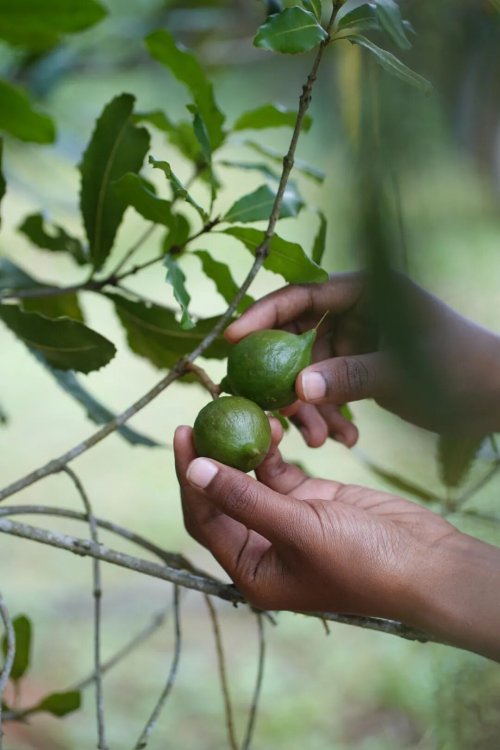
Core Insights - The article highlights the successful transformation of the macadamia nut industry in Yunnan, China, particularly in Ximeng County, where local farmers have shifted from small-scale cultivation to a more organized and profitable industry with the help of leading companies like Liangpinpuzi [1][2][4]. Group 1: Industry Development - The macadamia nut has evolved from an imported product to a national staple in China, with Yunnan becoming the largest production base globally, accounting for 47% of the world's macadamia nut area by 2025 [4]. - The local environment, characterized by high selenium content and favorable climatic conditions, contributes to the unique quality of Yunnan macadamia nuts, which are now marketed as a health food due to their nutritional benefits [6][4]. Group 2: Company Strategy - Liangpinpuzi has played a crucial role in establishing quality standards and modern agricultural practices, which have significantly improved the quality and marketability of local macadamia nuts [10][11]. - The company has implemented a systematic approach to empower the supply chain, including setting planting standards and offering higher prices for quality raw materials, thereby boosting farmers' confidence and income [11][13]. Group 3: Market Impact - The production of macadamia nuts in Yunnan has seen substantial growth, with the total industry output value reaching 10.16 billion yuan in 2024, a 71.04% increase from 2023, benefiting over 740,000 farmers [13][15]. - Liangpinpuzi's efforts have not only enhanced local production but also positioned Yunnan macadamia nuts as a premium product in both domestic and international markets, contributing to the region's economic development [15][17]. Group 4: Future Prospects - The company aims to replicate its successful model across various regions in China, focusing on sourcing high-quality local products and enhancing the overall value chain from production to consumer [20]. - Liangpinpuzi's commitment to integrating agricultural, industrial, and commercial sectors is expected to further elevate the status of local specialties, transforming them into recognized brands and driving rural revitalization [20].

来伊份(603777):坚守品质,重塑门店,合作创新,期待逐步突破
Dongxing Securities· 2025-11-13 06:45
Investment Rating - The report gives a "Buy" rating for the company, indicating a positive outlook for future performance [8]. Core Insights - The company is a leader in the Chinese snack food chain industry, focusing on meat and nut products, and is undergoing strategic transformation in channel structure, regional layout, cost control, and new business models [1][3]. - The company has shifted from a direct sales model to a dual strategy of "direct sales + franchising," with franchise stores surpassing direct stores for the first time in 2024, accounting for 51.9% of total stores [1][2]. - The company has partnered with Tencent to leverage AI technology for enhancing offline consumer experiences, which is expected to improve operational efficiency and reduce R&D costs [3]. Summary by Sections Company Overview - Founded in 1999, the company has over 3,000 stores across major cities in China and a total membership of 94.77 million [17]. - The company offers a wide range of products, including nuts, meat snacks, and baked goods, with over 1,500 items [17][26]. Financial Performance - Revenue has shown volatility, with a decline of 9.25% in 2023 and 15.25% in 2024, reaching 3.37 billion yuan [9][30]. - The company reported a net profit of 57.05 million yuan in 2023, but is projected to incur losses in 2024, with a net loss of 75.27 million yuan [9][30]. - The gross margin has been under pressure, decreasing to 41% in 2024, influenced by increased competition and a higher proportion of lower-margin franchise operations [58]. Regional Analysis - The East China region is the primary revenue source, contributing 86.94% of total revenue in 2024, with a gross margin of 40.76% [30][34]. - The company is expanding its presence outside the East China region, with significant growth potential observed in areas like Anhui [35]. Business Model Transition - The company is transitioning from a direct sales model to a franchise model, with franchise revenue growing from 4.81% in 2019 to 23.67% in 2024, reflecting a five-year CAGR of 31.99% [1][53]. - The direct sales revenue in 2024 was 20.20 billion yuan, accounting for 62.95% of total revenue, but showing a decline of 21.39% [53]. Product Categories - The company’s product mix includes 13 core categories, with meat products and seafood being the largest segment, accounting for 29.94% of revenue in 2024 [43][49]. - The company has launched over 600 new products in 2024, focusing on high-potential items to enhance its product offerings [26]. Cost Management - The company has successfully reduced sales expenses by approximately 25% in 2024 compared to 2022, achieving a reduction of 325 million yuan [2][64]. - Despite the increase in operating costs due to the shift towards franchising, the company is implementing measures to control expenses and improve profitability [58][65].
良品铺子陷“渠道萎缩+价格下降”负循环 控制权转让终止后如何自救?
Xin Lang Cai Jing· 2025-11-11 08:17
Core Viewpoint - The company, Liangpinpuzi, reported a significant decline in revenue and net profit for the first three quarters of 2025, indicating a continuous downward trend in performance and raising concerns about its financial stability [1][2]. Financial Performance - For the first three quarters of 2025, Liangpinpuzi achieved revenue of approximately 4.14 billion yuan, a year-on-year decrease of 24.45%, and incurred a loss of about 122 million yuan, compared to a profit of 19.39 million yuan in the same period last year [1][2]. - The company's gross margin fell from nearly 29% in Q3 2023 to 24.96% in Q3 2025, while the sales expense ratio reached 24.27%, leading to a total expense ratio of 28.71% [2][3]. - Inventory and accounts receivable did not decrease in tandem with the declining revenue, with accounts receivable increasing by 6% to 281 million yuan, and inventory remaining stable at 394 million yuan [4]. Market Position and Strategy - Liangpinpuzi has positioned itself as a "high-end snack" brand since 2018, but has faced challenges due to weak terminal demand and intense competition in the snack market, leading to a halt in its growth engines of "premiumization" and "channel expansion" [2][3]. - The company has initiated large-scale price reductions and the closure of franchise stores starting November 2023, which has directly contributed to sales shrinkage and further decline in gross margin [2][3]. Ownership and Control Issues - Following a significant drop in stock price, major investors have begun to reduce their holdings, with the total market value of Liangpinpuzi falling from over 30 billion yuan at its peak to around 5 billion yuan currently [5][6]. - The planned transfer of control from the current major shareholder, Ningbo Hanyi, to Guangzhou Light Industry Group was terminated due to unmet conditions, adding uncertainty to the company's governance [7]. - The current major shareholder has a high percentage of pledged shares, raising concerns about potential risks associated with shareholding stability [6][7].
2025年零食行业消费趋势洞察-艺恩
Sou Hu Cai Jing· 2025-11-10 10:50
Group 1 - The core viewpoint of the report indicates that the Chinese snack market will continue to grow positively in 2024, driven by health, personalization, and scenario-based consumption, with a shift from "satiation needs" to "emotional value" and "social attributes" [1][5][29] - Young consumers account for over 70% of the market, showing a preference for ingredients and nutrition while also being willing to pay for emotional appeal, aesthetics, and IP collaborations [1][5][29] - The optimistic outlook for the snack industry includes key segments such as nuts, meat snacks, and baked goods, with mixed nuts remaining a focus despite a decline in social media heat [1][5][19] Group 2 - Consumer demand is distinctly segmented into three categories: stress relief, novelty seeking, and healthy light snacks, with workplace individuals and students showing different preferences [2][31] - Key purchasing considerations for consumers include taste, snack ingredients, and consumption scenarios, with home, late-night, travel, and binge-watching being significant contexts for consumption [2][34] - Regional specialty snacks are gaining traction through "culture + innovation," while health snacks are shifting from "quantity control" to "precise nutrition," with low-calorie, low-GI, and high-protein products seeing a surge in popularity [2][5][29] Group 3 - Marketing trends show that Xiaohongshu has become a primary platform for commercial investment, with growth in both investment amounts and content output, while Douyin's investment has decreased [2][5][29] - Brands are adopting a "health + scenario + word-of-mouth" strategy to effectively reach target audiences, with leading brands like Wei Long, Lay's, Oreo, and Three Squirrels excelling in social media engagement [2][5][29] - The social media volume for snack recommendations and reviews has seen significant interaction, with Xiaohongshu's snack recommendation topic achieving 1.33 billion interactions, a 28% year-on-year increase [11][12][29]

来伊份:“出海”版图已覆盖超18国
Guan Cha Zhe Wang· 2025-11-10 07:33
Core Insights - The company, Laiyifen, showcased its new identity as a "global brand management ecosystem platform" at the 8th China International Import Expo, presenting five core brands collectively instead of a single brand [1] - Laiyifen aims to accelerate its "going out + import" dual circulation system, focusing on both international expansion and local market penetration [1][2] Brand Highlights - The five core brands presented include: - Laiyifen: Focused on high-quality healthy snacks - Yami: Specializing in imported foods - Zui'ai: Concentrating on sauce-flavored liquor - Huwei: Engaged in whiskey - Yangchuanji: Targeting community retail business [1] - The Zui'ai brand made its debut at the expo and is expected to become a significant growth driver within 3-5 years [1] - Yangchuanji has already established over 300 stores and plans to achieve a "thousand-store" target by 2027 [1] International Expansion Strategy - Laiyifen's international strategy follows a three-step approach, starting with targeting Chinese communities, then expanding to Southeast Asian markets, and finally to mainstream markets in North America and Australia [2] - The company has entered over 18 countries, including the USA, Canada, Australia, and Germany, since beginning its overseas market layout in 2019 [2] Product Offerings and Collaborations - At the expo, Laiyifen displayed over 60 export products, including dried fruits, nuts, and sauce-flavored liquor, highlighting its unique Chinese offerings [1] - The company has introduced nearly 40 imported products, including items like Malaysian chocolate and Belgian caramel cookies, marking a shift from simple trade to deep collaborative development [2] - Laiyifen has signed procurement agreements totaling nearly 1.22 billion yuan over the past seven years, with expectations to exceed 250 million yuan in the current expo [3]
万辰集团量贩零食助力盈利增9倍 线下门店超1.5万家股价年涨百元
Chang Jiang Shang Bao· 2025-11-09 23:36
Core Viewpoint - The snack food industry is undergoing significant transformation, with companies like Wancheng Group emerging as leaders in the bulk snack retail model, posing challenges to traditional retail players like Three Squirrels and Liangpinpuzi [1][4]. Financial Performance - Wancheng Group reported a revenue of approximately 366 billion yuan for the first three quarters of 2025, marking a year-on-year increase of over 77% [1][2]. - The company's net profit attributable to shareholders reached 8.55 billion yuan, reflecting a year-on-year growth of over 900% [2][3]. - The bulk snack business contributed significantly to this performance, with revenues of 361.58 billion yuan and net profits of 15.95 billion yuan in the same period [1][5]. Business Strategy - Wancheng Group has rapidly expanded its bulk snack business, acquiring brands like Haoxianglai and Laiyoupin to strengthen its market position [1][7]. - The company has increased its offline store count to over 15,000 by mid-2025, indicating aggressive expansion [2][8]. - The shift to a bulk retail model has allowed Wancheng Group to enhance operational efficiency and brand strength, leading to substantial profit growth [4][5]. Market Dynamics - The bulk snack retail model is disrupting traditional sales methods, forcing established retailers to adapt [4][10]. - Wancheng Group's financial health is robust, with cash reserves of 41.93 billion yuan, significantly exceeding its interest-bearing liabilities [6][9]. - The competitive landscape in the bulk snack sector is intensifying as traditional retailers pivot to this model [10]. Future Outlook - The sustainability of Wancheng Group's rapid growth remains a key focus, with market expectations high for continued performance [11].