低空经济

Search documents
重庆探路低空“总师模式”
Feng Huang Wang Cai Jing· 2026-02-13 12:28
Core Insights - 2026 is a critical turning point for China's low-altitude economy, transitioning from policy frameworks to commercial realities [1] - Chongqing has introduced a unique strategy in the low-altitude economy, highlighted by the successful first flight of its eVTOL and the establishment of a significant industrial fund [2] - The competitive landscape in China's low-altitude economy is characterized by three distinct paths: Shenzhen's vertical integration, Guangzhou/Hefei's lead firm model, and Chongqing's system capability output [3] Group 1: Policy and Governance - The new Civil Aviation Law mandates provincial governments to enhance supportive policies, leading cities like Jinan and Huangshi to develop local governance frameworks for low-altitude flight services [1] - Chongqing's low-altitude economic development is marked by a focus on systematizing governance and operational standards, moving beyond mere product competition [2] Group 2: Competitive Landscape - The three paths in the low-altitude economy include Shenzhen's focus on vertical integration with over 15,000 industry chain enterprises, Guangzhou/Hefei's lead firm approach with companies like EHang, and Chongqing's emphasis on system capability output led by the Aerospace Science and Technology Group [3] - Chongqing's model is gaining value as it demonstrates effective airspace utilization and rapid administrative processes, contrasting with Guangdong's challenges in infrastructure [3] Group 3: Structural Framework - The establishment of the Chongqing Low Altitude Economic Development Company is part of a four-tiered structure involving national strategic interests and local operational management [4][5] - The first tier involves the China Aerospace Science and Technology Group, focusing on national security and economic growth, while the second tier is represented by the Aerospace Ninth Academy, which manages system operations [4][5] Group 4: Capital Dynamics - The 20 billion yuan Aerospace Industrial Fund in Chongqing represents a complex structure of financial and industrial capital, indicating a shift from project-based funding to asset-based investment [6] - This model suggests a market-driven expansion of the low-altitude economy, moving away from reliance on government subsidies [6] Group 5: Future Outlook - The low-altitude sector is expected to face challenges post-2026, including diminishing advantages in airworthiness and the need for robust infrastructure [8] - The ability to provide comprehensive solutions for airspace management and operational standards will become a critical competitive advantage [8][9] - The 2026 timeline is pivotal for defining the industry's structure, with a shift from product competition to comprehensive urban airspace management [10]

东方中科股东户数连续下降,2025年业绩预亏
Jing Ji Guan Cha Wang· 2026-02-13 10:58
经济观察网东方中科(002819)于2025年12月与中山华特雅低空经济发展有限公司、深圳市城市交通规 划设计研究中心股份有限公司达成合作,签订中山无人机试飞测试基地项目与深圳坪山智能网联测试场 项目,并正式加入粤港澳大湾区低空经济产业联盟,标志着公司在低空经济领域的布局深化。低空经济 是近期市场热点,五部门发文提出到2027年低空公共航路地面移动通信网络覆盖率目标,相关概念股受 关注。 以上内容基于公开资料整理,不构成投资建议。 财报分析公司于2026年1月31日发布2025年业绩预告,预计净利润为-1.70亿元至-1.30亿元,同比变动区 间为18.73%至37.85%。前三季度数据显示,营业收入20.12亿元,同比增长3.24%,净利润为-8218.55万 元,同比增长2.04%。 股票近期走势截至2026年1月31日,东方中科股东户数为31323户,较1月20日减少3434户,环比下降 9.88%,为连续第二期下降。同期股价表现方面,2月6日披露数据时股价为27.52元,本期筹码集中以来 累计下跌6.11%;最新行情显示,2月13日收盘价为28.11元,近5日涨跌幅为2.85%,但20日涨跌幅仍 为- ...
事关芯片,深圳重磅发布
半导体芯闻· 2026-02-13 09:35
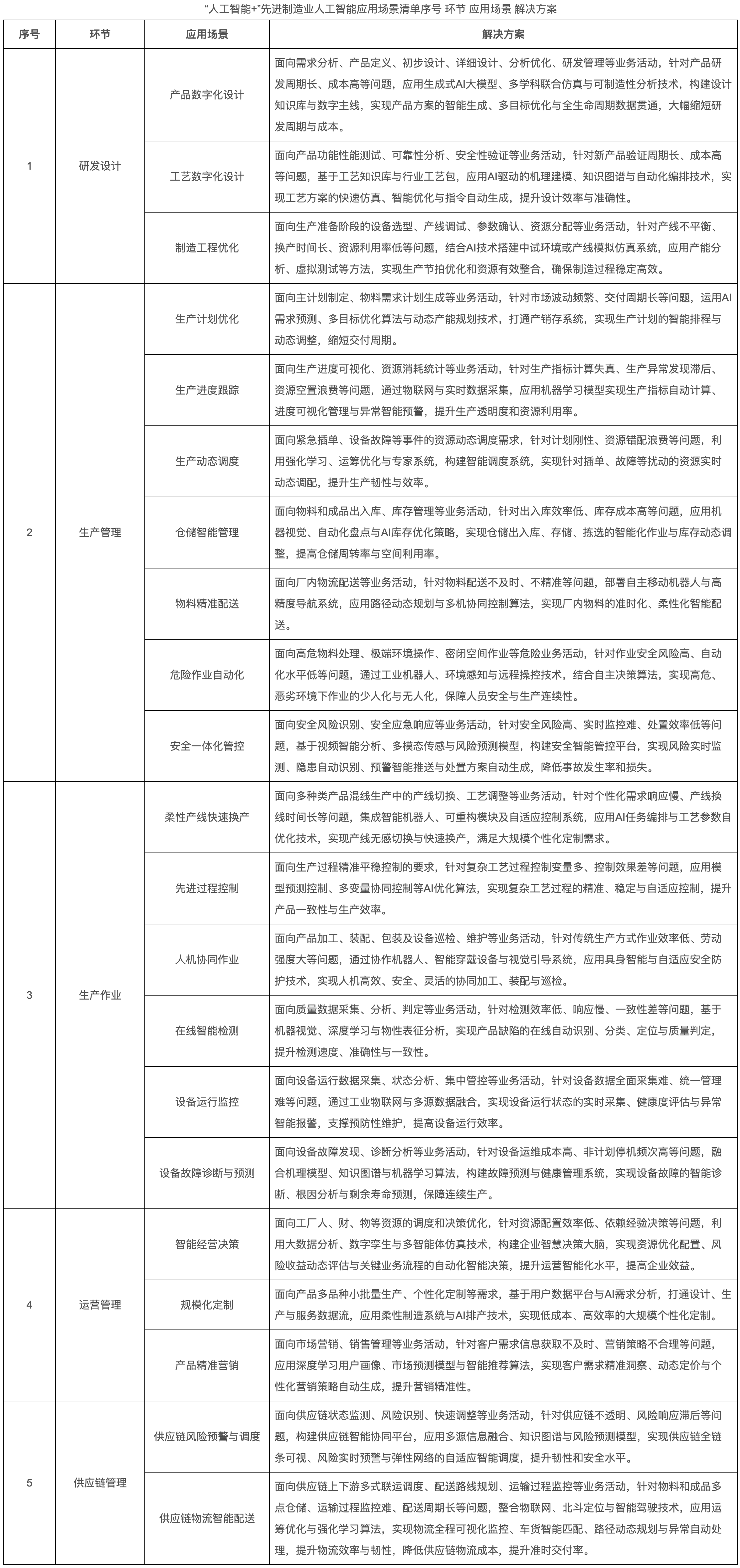
Core Viewpoint - Shenzhen has released the "Artificial Intelligence+" Advanced Manufacturing Action Plan (2026-2027), aiming to integrate AI technology deeply into the manufacturing process and enhance the semiconductor industry through AI applications [1][3]. Group 1: Key Support Platforms - The plan emphasizes the establishment of an Industrial Intelligence Innovation Center and aims to accelerate the construction of provincial and national manufacturing innovation centers [5]. - It supports the development of industrial software and knowledge alliances, focusing on standardizing industrial knowledge and creating leading autonomous industrial software products [5][6]. Group 2: Empowering Key Industry Clusters - AI will be applied to critical areas of the semiconductor industry, optimizing chip design and software coding efficiency, with a focus on developing high-performance SoC chips for various AI applications [8]. - The plan also highlights the importance of AI in robotics, promoting the development of multimodal interaction technologies and enhancing the capabilities of robots in industrial settings [8][9]. - In the low-altitude economy, the plan aims to establish a drone autonomy evolution system and enhance drone capabilities for various applications, improving resource scheduling and operational efficiency [9]. Group 3: AI in Electronics and Healthcare - The plan encourages collaboration among leading enterprises in the electronic information manufacturing sector to explore potential AI application scenarios and develop benchmark projects [9]. - In the pharmaceutical and medical device sectors, the plan promotes the integration of AI in drug development and medical technology, aiming to accelerate innovation and enhance the capabilities of medical devices [10].


经济地理丨从地方两会看2026年经济增长发力点
Sou Hu Cai Jing· 2026-02-13 07:49
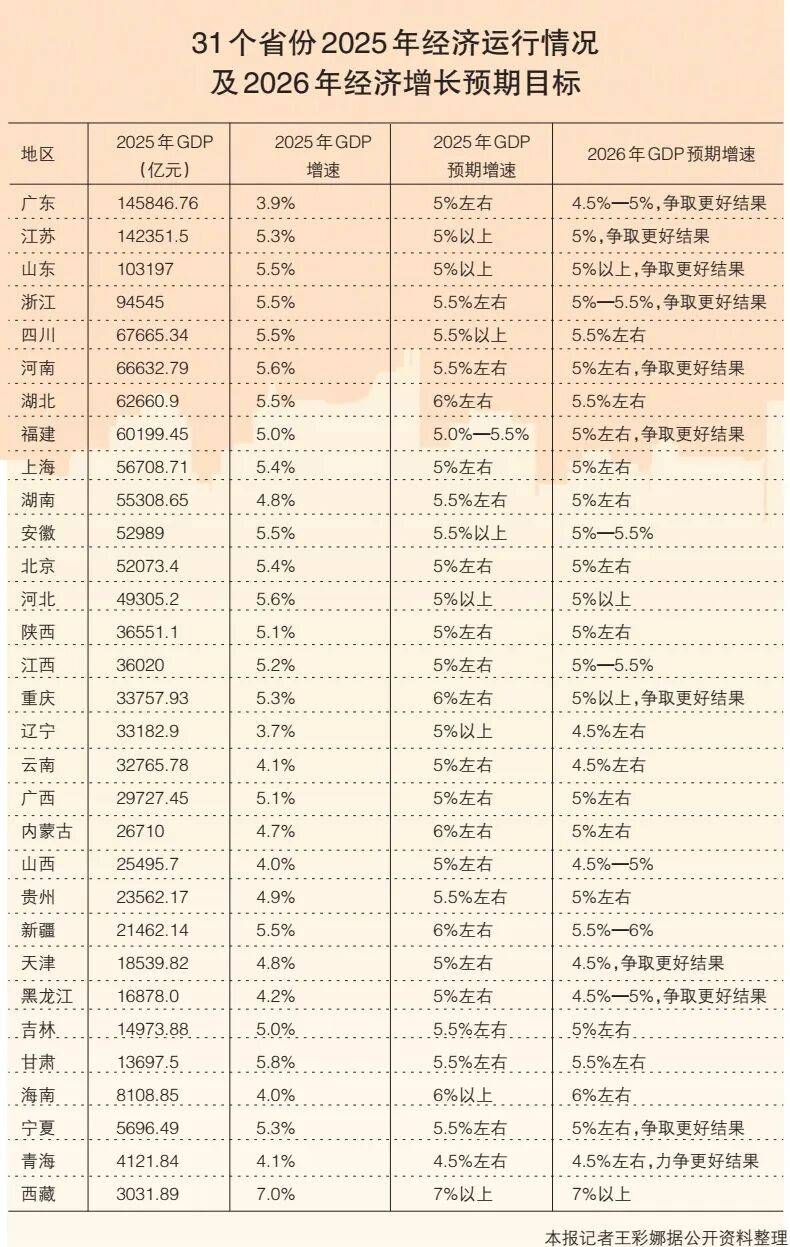
Core Viewpoint - The 2026 economic growth targets set by various provinces in China reflect a pragmatic approach, emphasizing quality over speed, with a focus on differentiated regional development strategies [1][2][3]. Group 1: Economic Growth Targets - Provinces such as Hainan and Hubei set GDP growth targets of around 6% and 5.5% respectively, while many others aim for approximately 5% [2][6]. - Only Jiangxi raised its growth target for 2026 from 5.0% to a range of 5.0%-5.5%, while 18 provinces lowered their targets or set them within a lower range [3][4]. - The overall weighted GDP growth target for all provinces is approximately 5.0%, indicating a decrease compared to 2025, with more provinces setting targets below 5% [6]. Group 2: Regional Development Strategies - A differentiated development pattern is emerging, characterized by "central regions leading, eastern regions supporting, and western regions catching up" [7]. - Central provinces are leveraging industrial transfer and domestic demand to maintain higher growth rates, while eastern provinces are focusing on high-end, intelligent, and green transformations [7]. Group 3: Innovation and Industrial Upgrading - The emphasis is on technological innovation as a core driver for economic growth, with local governments prioritizing the development of new productive forces and modern industrial systems [8][9]. - Traditional industries are being upgraded alongside the emergence of new industries, with specific targets set for technological improvements and digital transformation [8]. Group 4: Domestic Demand and Reform - The focus is on activating domestic demand through consumption and investment, with local governments implementing measures to enhance the business environment and expand high-level openness [10][11]. - Initiatives include enhancing consumer experiences and optimizing investment strategies to ensure effective and sustainable growth [10][11].
亿航智能股价回调,商业化突破与短期业绩承压并存
Jing Ji Guan Cha Wang· 2026-02-12 22:55
经济观察网 亿航智能(EH.OQ)近期股价呈现"利好下跌"态势,即尽管公司释放积极业务动态,但股 价仍出现回调。这一现象主要源于市场对短期业绩兑现与长期价值的综合反应。 业务进展情况 机构观点 摩根大通于2025年11月下调亿航智能评级至"持有",目标价降至13美元,提示短期业绩风险。但赛迪研 究院2026年2月报告指出,低空经济已进入规模化发展关键阶段,长期成长逻辑未改。 财务承压与交付延迟:尽管业务前景积极,公司2025年第三季度营收同比下滑27.7%至9250万元人民 币,交付量环比下降38.2%至42架,主要因部分客户付款延迟导致30架订单收入未能确认。管理层维持 全年营收5亿元人民币的预期,但市场对四季度集中交付的兑现能力存疑。 股票近期走势 2026年2月6日至12日,亿航智能股价区间振幅达9.32%,其中2月12日单日下跌4.34%至11.46美元,同期 纳斯达克指数下跌2.03%。下跌可能反映以下因素:短期业绩压力:三季度营收与交付量双降,叠加净 亏损同比扩大70.7%,削弱投资者信心;流动性制约:近5日成交额仅2762万美元,低流动性放大股价 波动;板块情绪传导:低空经济板块虽获政策支持,但 ...
今日视点:金融机构正成为新兴科技的“战略合伙人”
Xin Lang Cai Jing· 2026-02-12 22:48
炒股就看金麒麟分析师研报,权威,专业,及时,全面,助您挖掘潜力主题机会! ■ 李 文 近期,沃飞长空宣布完成近10亿元新一轮融资,本轮融资由中信建投领投,创下开年以来低空经济领域 最大单笔融资纪录。此外,多家具身智能企业正在推进A股上市流程,另有多家企业向港交所提交IPO 申请。金融机构乃至资本市场对人工智能等新兴科技领域的支持力度持续提升。 责任编辑:高佳 第一,资本市场已初步形成支持科技创新的新生态。人形机器人企业密集启动IPO,最直接的制度驱动 力来自2025年6月份证监会推出的科创板"1+6"改革举措。该政策明确支持人工智能、商业航天、低空经 济等领域企业以第五套标准上市,为未盈利硬科技企业开辟了适配的资本通道。此外,这一制度红利正 在与地方产业引导基金、国家级战略性新兴产业基金形成接力。多地已设立低空经济、具身智能等主题 产业基金,通过"政府引导+市场运作"的模式,在Pre-IPO阶段为优质标的提供资本补充,进一步平滑企 业从研发到上市的融资曲线。资本市场正在从传统"融资市场"向"创新引擎"转变,主动适配科技产业的 演进节奏。 第二,从财务跟投到战略共担,金融机构实现角色"进阶"。在将政策红利转化为 ...
三部门为低空经济“上保险” 到2027年,无人驾驶航空器强制投保责任保险
Shang Hai Zheng Quan Bao· 2026-02-12 17:42
国家发展改革委2月12日发布消息称,国家发展改革委、金融监管总局、中国民航局近日印发《关于推 动低空保险高质量发展的实施意见》(下称《意见》)提出,构建覆盖全链条、全场景、全主体的低空 保险服务体系,到2027年无人驾驶航空器责任保险强制投保制度初步建立。 专家表示,这是推动低空经济产业从"野蛮生长"向"规范发展"转变的关键一步。 针对无人驾驶航空器飞行风险的公共性特征,《意见》明确,加快建立责任保险强制投保制度。到2027 年,无人驾驶航空器责任保险强制投保制度初步建立,低空保险产品不断丰富,更好满足各类应用场景 保障需求。 国家信息中心经济预测部研究员张晓兰对此表示,这是筑牢低空公共安全底线的关键举措。强制投保制 度的建立,不仅能有效保障公众人身财产安全,还能倒逼运营主体提升安全管理水平。 《意见》提出加强全链条管理,推动将强制投保要求纳入飞行活动审批等管理环节的审查前置条件,研 究建立与强制投保相关的责任主体、责任认定、处置程序等制度规定。同时,《意见》要求依法制定具 体实施办法,在风险可控原则下明确基本责任范围和最低保障限额,着力解决强制投保"落地难"问题。 中国民航科学技术研究院低空经济室有关专家表 ...
金融机构正成为新兴科技的“战略合伙人”
Zheng Quan Ri Bao· 2026-02-12 15:42
■李文 以沃飞长空的融资历程为例,该公司已完成五轮融资,每一轮均有清晰的功能定位。这体现出一种逐渐 标准化的融资节奏:初创期依靠风险投资验证技术路线,成长期借助产业资本打通应用场景,Pre-IPO 阶段由券商系资本提供资源赋能,上市后则通过二级市场融资支撑研发迭代。在企业不同成长阶段,金 融机构各司其职,"接力"完成对科技创新的长周期陪伴。与此同时,商业银行与保险等金融机构也在加 快适配性工具创新。知识产权质押贷款、科技研发损失保险、专利执行保险等产品逐步落地,为高研发 投入的科技企业提供更多元的信用支撑。 从财务跟投到战略共担,金融机构的角色不再止步于资本供给,而是深度嵌入创新内核,成为驱动技术 产业化的重要力量。这一角色的确立,将帮助新兴科技企业在关键成长期获得长期、稳定、有温度的资 本陪伴。随着耐心资本矩阵持续完善,一个资本与科技双向赋能、共生共荣的创新生态正加速形成。 第一,资本市场已初步形成支持科技创新的新生态。人形机器人企业密集启动IPO,最直接的制度驱动 力来自2025年6月份证监会推出的科创板"1+6"改革举措。该政策明确支持人工智能、商业航天、低空经 济等领域企业以第五套标准上市,为未盈利硬 ...
刚刚,利好来了!深圳,重磅发布!
券商中国· 2026-02-12 14:43
事关"人工智能+",深圳最新发文。 今日(2月12日),据深圳工信微信公众号消息,深圳市工业和信息化局近日印发《深圳市"人工智能+"先进制造业行动计划(2026—2027年)》(以下简称《行动 计划》),从打造重点支撑平台、赋能重点产业集群、强化工作保障三个方面提出了13条具体举措,抢抓智能化与工业化交汇融合的历史机遇,加快人工智能技术 与制造业全过程、全要素深度融合。 《行动计划》明确,推动人工智能技术应用于半导体产业链的关键环节,利用AI优化芯片设计、软件代码等领域和环节的效率。以AI芯片为突破口做强半导体产 业,面向AI手机、AI眼镜、智能机器人等各类AI终端需求,研发高性能、高能效专用SoC主控芯片,支持存算一体、存内计算等新型架构处理器。 深圳重磅发布 2月12日消息,深圳市工业和信息化局近日印发《深圳市"人工智能+"先进制造业行动计划(2026—2027年)》,其中提出,到2027年,在"人工智能+"先进制造业领 域,建成国家人工智能应用中试基地(消费领域移动终端方向),建设工业智能体创新中心,组建工业知识联盟,开放百个应用场景,打造百个垂直行业模型及工 业智能体,推广百个示范应用,形成"一基地、 ...

深圳:到2027年,在“人工智能+”先进制造业领域建成国家人工智能应用中试基地
Xin Lang Cai Jing· 2026-02-12 11:17
Core Viewpoint - Shenzhen's "Artificial Intelligence +" Advanced Manufacturing Action Plan (2026-2027) aims to integrate AI technology deeply into the manufacturing sector, promoting new industrialization and enhancing traditional industries through innovation and application of AI [1][2][3]. Group 1: Overall Requirements - The plan targets the realization of new industrialization by accelerating AI's integration into all aspects of manufacturing, including R&D, production management, and supply chain management, aiming for comprehensive smart development by 2027 [3]. Group 2: Key Support Platforms - Establishment of an Industrial Intelligent Body Innovation Center to support the development of intelligent systems capable of environmental perception and autonomous decision-making [4]. - Development of industrial software and knowledge alliances to standardize industrial knowledge and create leading autonomous software products [5]. Group 3: Empowering Key Industry Clusters - AI will enhance the electronic information manufacturing sector by integrating algorithms, data sharing, and collaborative computing resources to improve smart transformation [6]. - In the semiconductor and integrated circuit industries, AI will optimize chip design and software efficiency, focusing on high-performance SoC chips for various AI applications [7]. - The automotive manufacturing sector will see AI applied in smart connected vehicles, enhancing design, production, and testing processes [8]. - AI will support robotics by developing multi-modal interaction technologies and enhancing operational efficiency in various industrial applications [9]. - High-performance materials manufacturing will leverage AI for process optimization and predictive control, creating a responsive materials ecosystem [10]. - The low-altitude economy will benefit from AI-driven drone capabilities, enhancing operational efficiency across various applications [11]. - AI will accelerate drug development and medical device innovation, integrating AI with biotechnology for improved healthcare solutions [12]. - Traditional industries will explore new optimization paths through AI, focusing on personalized production and supply chain intelligence [13]. Group 4: Strengthening Work Guarantees - Increased financial support for the "Artificial Intelligence +" advanced manufacturing sector, encouraging collaboration between AI and traditional manufacturing policies [12]. - Establishment of application scenario open centers to facilitate supply-demand matching and promote AI applications in manufacturing [13]. - Ongoing training and demonstration promotion in AI technologies to address industry pain points and showcase successful applications [13].