
农机装备

Search documents
绘就河南“智造”新图景
He Nan Ri Bao· 2025-09-16 23:22
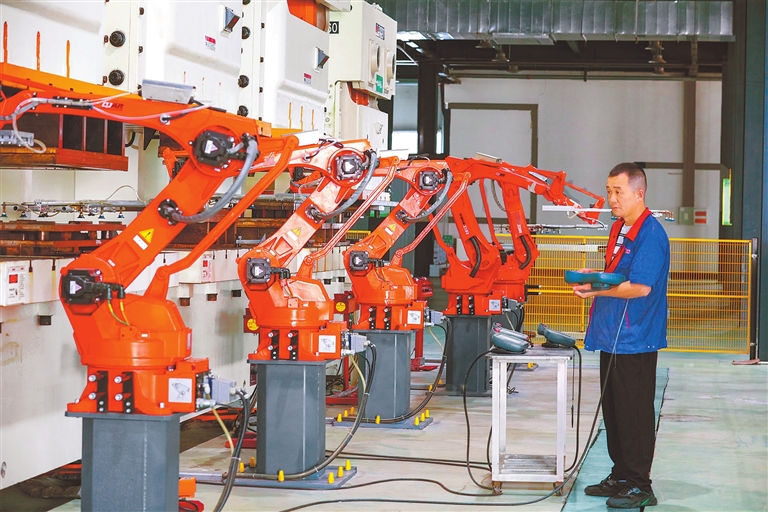
Core Insights - The article emphasizes the transformation of the manufacturing industry in Henan through intelligent manufacturing and digitalization, which is seen as a strategic choice to adapt to technological revolutions and industrial changes [2][3][4]. Group 1: Intelligent Manufacturing Transformation - As of mid-2023, the coverage rate of intelligent application scenarios among industrial enterprises in Henan reached 87.2%, with 1,685 provincial-level smart workshops and factories established [2]. - The Zhengzhou Coal Machine Smart Park, recognized as the first "lighthouse factory" in the global coal machinery industry, has achieved over 30% increase in production and over 100% improvement in labor efficiency, reducing production cycles from 28 days to 9 days [3]. Group 2: Digital Transformation Initiatives - Henan is implementing a comprehensive digital transformation action plan, focusing on diagnosing and formulating tailored transformation strategies for enterprises that have not yet undergone digital upgrades [4][5]. - The province has organized over 3,700 experts to provide free diagnostic services to 21,000 enterprises, with successful practices being promoted nationwide [5]. Group 3: Future Development Plans - The development of 15 industrial AI models and the establishment of four national centers for promoting digital transformation in manufacturing are part of Henan's action plans for 2023-2027 [6]. - The province aims to accelerate the integration of AI into various industries, enhancing the digitalization and modernization of manufacturing processes [6][7].


“陕西造”智能农机装备技术国内领先
Shan Xi Ri Bao· 2025-09-16 00:46
Core Insights - The launch of the "FasTest·ZhiKun" smart agricultural machinery brand marks a significant breakthrough in China's agricultural equipment sector, overcoming key core technologies and reducing reliance on foreign components [1][2] - FasTest showcased 9 agricultural assembly products and 9 core components, indicating a comprehensive range of offerings in power machinery, harvesting machinery, and smart agricultural core components [1] - The company has established itself as a leader in the automotive transmission field, with over 70% market share in China and exports to more than 50 countries [1] Company Developments - FasTest has been expanding into agricultural equipment since 2018, achieving significant technological advancements in power shifting and CVT systems [2] - The company is investing 500 million yuan to build a production base for high-power tractor transmission systems, expected to enhance production capacity significantly by the end of the year [2] - The strategic shift from a single focus to a diversified approach in related fields is highlighted by the introduction of smart agricultural equipment [2] Industry Context - Despite a mechanical cultivation rate exceeding 75% in China, the high-end agricultural equipment market has been dominated by foreign brands due to technological barriers [2] - The entry of FasTest into the high-end smart agricultural equipment market is anticipated to accelerate the localization process of agricultural machinery in China [2]
“河南造”大国重器何以持续“上新”?制造强省建设展现“六新”成效
Zhong Guo Xin Wen Wang· 2025-09-10 20:18
Core Insights - Henan Province has made significant progress in industrialization during the "14th Five-Year Plan" period, achieving six new outcomes in manufacturing strength [1][5]. Industrial Economic Performance - Henan's industrial economy ranks first among central and western provinces, with an average annual growth rate of 6.1% in industrial added value, surpassing the national average by 0.2 percentage points [2]. - Industrial investment in Henan has an average annual growth rate of 16.7%, exceeding the national average by 6.1 percentage points [2]. - The province covers 41 major industrial categories, with several clusters recognized as national advanced manufacturing clusters [2]. Emerging Industries and Future Layout - Henan is focusing on transforming traditional industries while nurturing emerging industries and planning for future industries, with strategic emerging industries and high-tech industries accounting for 24.8% and 14% of the industrial output, respectively [3]. - The province has initiated a "6+14" future industry matrix and established 20 provincial-level future industry pilot zones [3]. Technological Advancements - Henan has built 27 provincial laboratories and 55 provincial industrial research institutes, enhancing the integration of technology and industry [5]. - The province has achieved breakthroughs in key technologies, including the development of the world's first 25-megawatt wind power main shaft and the highest 10-meter hydraulic support [6]. Smart Manufacturing and Infrastructure - The coverage rate of intelligent application scenarios in industrial enterprises has reached 87.2%, with 23.54 million 5G base stations established [7]. - The province has built 49 provincial-level industrial internet platforms, connecting over 22.27 million devices [7]. Green Development Initiatives - Henan aims for carbon peak and carbon neutrality, with a green transformation coverage rate of 85.6% in key industries [7]. - The energy consumption per unit of industrial added value has decreased by 15.6% over the past four years [7]. Industrial Ecosystem Improvement - The number of provincial-level specialized and innovative small and medium-sized enterprises has reached 4,098, with 414 national "little giant" enterprises [8]. - The total number of industrial enterprises in Henan has reached 26,600, with manufacturing loans exceeding 900 billion yuan [8].
各地加快打造先进制造业集群
Shang Hai Zheng Quan Bao· 2025-09-05 20:25
Group 1 - The advanced manufacturing clusters in Ningbo, Zhejiang East Industrial Mother Machine, Hangzhou Bay Modern Textile and Apparel, and Jintai Hilly Area Agricultural Machinery Equipment are showing strong development momentum with significant core data and industrial upgrade results [1][2][3] - In Ningbo's green petrochemical cluster, the industrial added value above designated size increased by 5.3% year-on-year from January to July, with the petroleum processing industry growing at 15.6%, significantly outperforming the industrial average [1] - The Zhejiang East Industrial Mother Machine cluster has gathered over 2,000 enterprises, achieving an output value of nearly 280 billion yuan in 2023, with a notable acceleration towards high-end manufacturing driven by innovation and industrial chain collaboration [1] Group 2 - The Hangzhou Bay Modern Textile and Apparel cluster, recognized as a global textile production and trading center, reported a 9.6% year-on-year growth in the dyeing industry, with a production value of 19.25 billion yuan from January to April [2] - Zhejiang Yingfeng Technology Co., Ltd. invested over 1 billion yuan to build a new "future factory," which is expected to enhance production efficiency and market competitiveness through smart dyeing equipment and information management systems [2] - The Jintai Hilly Area Agricultural Machinery Equipment cluster has a total output value exceeding 90 billion yuan, with over 3,000 agricultural machinery-related enterprises in Taizhou, accounting for over 40% of the province [3] Group 3 - The development path for advanced manufacturing clusters in China should focus on four key directions: promoting leading industries, cross-regional industrial collaboration, cross-industry cluster synergy, and upstream and downstream collaboration within the cluster [3] - A systematic approach is suggested for building world-class advanced manufacturing clusters, aiming to cultivate 10 such clusters by 2030 and 20 by 2035, based on industry maturity [4]
一座经济大省需要什么样的农业?
21世纪经济报道· 2025-08-29 03:47
Core Viewpoint - The article emphasizes the long-term nature of profitability in agriculture, highlighting the integration of technology and supply chain management to reduce costs and enhance sustainability in the industry [2]. Summary by Sections Agricultural Value and Economic Contribution - Guangdong's agricultural output value is projected to reach 970.12 billion in 2024, ranking among the top in the country, with significant revenue from agricultural processing enterprises [2]. - The province has cultivated 5,507 leading agricultural enterprises, contributing nearly 1 trillion in annual revenue [2]. Industry Structure and Development - Agriculture, while not a dominant sector in Guangdong's economy, plays a crucial role in connecting primary, secondary, and tertiary industries [3]. - The emergence of marine ranching exemplifies a new business model that integrates various stages of the agricultural supply chain, from seed breeding to processing and trading [3]. Seed Breeding and Innovation - Seed breeding is likened to the core components of a smartphone, crucial for determining agricultural output and quality [5]. - Guangdong has made significant strides in seed resource preservation, with 368,000 agricultural seed resources collected, ranking high nationally [5]. - The province aims to implement the "Yue Strong Seed Core" project to lead industry upgrades through seed innovation [5]. Challenges in Seed Industry - Despite advancements, challenges remain, including a lack of leading enterprises and insufficient innovation capabilities in the seed industry [6]. - Recommendations include enhancing research output and establishing a national key laboratory for biological breeding [6][7]. Agricultural Machinery and Technology - Agricultural machinery is identified as a key area for development, with Guangdong's mechanization rate for rice reaching 81.3% in 2024 [9]. - Companies like DJI and XAG dominate the agricultural drone market, holding approximately 96% market share [9]. - The province faces challenges in scaling agricultural machinery production and addressing the needs of smallholder farmers [10]. Future Prospects and Global Expansion - The agricultural sector is viewed as still in its infancy, with significant growth potential driven by technology [12]. - Companies like XAG are expanding internationally, with over 30% of their business coming from overseas markets, indicating strong demand for smart agricultural equipment globally [12].
广东人大把脉农业现代化:一座经济大省需要什么样的农业?
2 1 Shi Ji Jing Ji Bao Dao· 2025-08-27 23:48
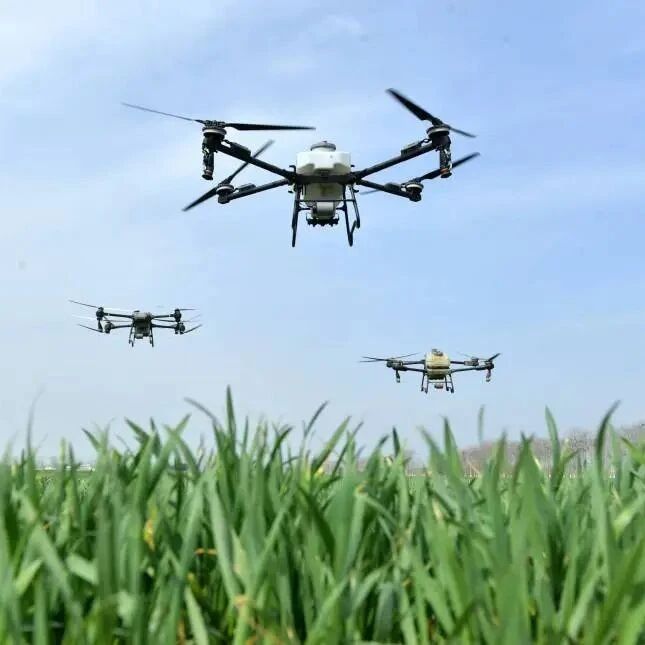
Group 1: Agricultural Industry Overview - The agricultural sector in Guangdong is not a major contributor to the economic structure but plays a crucial role in connecting various industries [2] - In 2024, the total output value of agriculture, forestry, animal husbandry, and fishery in Guangdong is projected to be 970.121 billion yuan, ranking among the top in the country [1] - Guangdong has cultivated 5,507 leading agricultural enterprises, with annual revenue nearing 1 trillion yuan [1] Group 2: Seed Breeding and Innovation - Seed breeding is critical as it determines the yield, quality, resistance, cost, and safety of agricultural products [3] - Guangdong has collected and preserved 368,000 agricultural germplasm resources, ranking first in the country [3] - The province has developed 36 super rice varieties, 40 livestock and poultry varieties, and 43 aquatic varieties, accounting for approximately 28%, 15%, and 14% of the national total, respectively [3] Group 3: Agricultural Machinery and Technology - Guangdong's agricultural machinery has shown strong market competitiveness, with a mechanization rate of 81.3% for rice cultivation in 2024 [6] - DJI and XAG dominate the domestic agricultural drone market with a combined market share of approximately 96% [6] - The province aims to enhance the development of small and medium-sized agricultural machinery to support agricultural mechanization [7] Group 4: Challenges and Recommendations - The agricultural sector faces challenges such as a lack of leading enterprises in crop seed industries and insufficient independent innovation capabilities [4] - Recommendations include strengthening research output and establishing a national key laboratory in the field of biological breeding [4][5] - There is a call for long-term, precise support policies for key breeding enterprises to alleviate financial pressures [5] Group 5: Future Prospects and Global Expansion - The agricultural sector is viewed as being in its early stages, with significant future growth potential [8] - Companies like XAG have expanded their agricultural drone services to over 70 countries, with international business accounting for over 30% of their revenue [9] - The demand for smart agricultural equipment is expected to grow in countries like Thailand, Vietnam, and Brazil, indicating a promising market for future expansion [9]
链上发力 激活产业新动能
Su Zhou Ri Bao· 2025-08-24 23:19
Core Insights - The article highlights the importance of precise industry chain matching in enhancing regional economic competitiveness and fostering collaboration among enterprises [2][4][11] Group 1: Industry Chain Matching Activities - Wujiang District has organized 43 industry chain matching events this year, facilitating efficient connections between enterprises and enhancing collaboration within the industry [3][10] - The events have successfully attracted various enterprises, including those in the agricultural machinery, textile, and artificial intelligence sectors, to engage in direct discussions and partnerships [5][9][12] Group 2: Government Initiatives and Support - The Wujiang government has established a service brand "Intelligent Gathering of Enterprises, Chain in Wujiang" to promote precise matching and support traditional and emerging industries [15] - The government aims to enhance the quality of industrial development by focusing on the precision and efficiency of enterprise services [15] Group 3: Sector-Specific Developments - The textile industry has seen significant engagement, with over 50 well-known children's clothing brands participating in matching events, leading to direct feedback on market demands and innovation directions [6][7] - The automotive industry is also a focus, with a goal to exceed 20 billion yuan in scale within two years, driven by collaboration among suppliers and manufacturers [11] Group 4: Long-term Industry Growth - The matching activities are expected to foster a positive cycle of talent, capital, and technology aggregation, particularly in the semiconductor sector, enhancing the region's innovation capacity [13] - The collaboration between enterprises is anticipated to lead to increased orders, resource matching, and an overall boost in industry resilience and competitiveness [11][14]

孙东升:把握着力点 激发新活力
Jing Ji Ri Bao· 2025-08-22 00:11
Group 1 - The core viewpoint emphasizes the need for comprehensive rural revitalization as a key task for modernizing agriculture and rural areas in China, requiring calibration of focus points and activation of policies, markets, factors, and entities [1] - There is a significant gap in agricultural modernization compared to new industrialization, information technology, and urbanization, necessitating a focus on improving agricultural production capacity and resource utilization [1] - Ensuring food security is highlighted as a priority, with strategies to enhance grain production capabilities and maintain the 1.8 billion acres of arable land [1] Group 2 - The need for a diversified investment environment to support rural revitalization is stressed, requiring the implementation of policies that encourage financial, social, and fiscal investments [2] - Enhancing agricultural technology and equipment is crucial for improving competitiveness, with a focus on innovation in seed industry, agricultural machinery, and digital agriculture [2] - The importance of prioritizing rural development and optimizing resource allocation is noted, with an emphasis on integrating urban and rural development and promoting the free flow of resources [3]
把握着力点 激发新活力
Jing Ji Ri Bao· 2025-08-21 22:12
Group 1 - The core viewpoint emphasizes the necessity of advancing rural revitalization as a key task for achieving agricultural modernization in China, highlighting the need to calibrate focus points and activate policies, markets, and resources [1] - The article stresses the importance of enhancing agricultural modernization levels and increasing comprehensive production capacity, with a focus on improving land output rates, resource utilization, and labor productivity [1] - It underscores the significance of ensuring food security by enhancing grain production capabilities and adhering to the strategy of "storing grain in the land and technology," while maintaining the red line of 1.8 billion acres of arable land [1] Group 2 - The article discusses the need to optimize the multi-source investment environment for rural revitalization, emphasizing the importance of a friendly investment environment to mobilize various stakeholders [2] - It highlights the necessity of enhancing agricultural technology and equipment support to improve agricultural competitiveness, prioritizing innovation in seed industry, agricultural machinery, and digital agriculture [2] - The article calls for the implementation of a priority development approach for agriculture and rural areas, advocating for the integration of human, material, and financial resources to promote comprehensive rural revitalization [3]
深圳跑出超千亿农企,龙头数量全国霸榜
2 1 Shi Ji Jing Ji Bao Dao· 2025-08-20 02:00
Core Insights - Shenzhen has emerged as a leading city in China for agricultural enterprises, with 20 companies listed in the "2024 China Agricultural Enterprises Top 500," the highest among first-tier cities [1][2] - The total revenue of agricultural leading enterprises in Shenzhen surpassed 260 billion yuan in 2024, indicating significant growth and market influence [3][6] Group 1: Agricultural Enterprises in Shenzhen - Shenzhen is home to 226 agricultural leading enterprises, including 14 national-level and 133 provincial-level enterprises, ranking first and third in Guangdong province respectively [3] - Major companies like Youhe Group, Xinrongmao, and Baiguoyuan have significantly contributed to the city's agricultural exports, with total agricultural product imports and exports exceeding 150 billion yuan [3][10] - Deep Agricultural Group has established a vast trading platform with annual transactions of 220 billion yuan and 33 wholesale markets across 22 cities [3][4] Group 2: Technological Innovation and Modern Agriculture - Shenzhen's agricultural development is characterized by a focus on technological innovation, with numerous digital agriculture companies, including Tencent and Huawei, leading the way [7][8] - The establishment of national agricultural technology parks and various innovation platforms has facilitated advancements in agricultural practices, such as the "优薯计划" which enhances seed propagation efficiency [4][5] - Companies are increasingly adopting data-driven approaches to agriculture, moving from traditional methods to smart farming solutions [8][9] Group 3: Support for Rural Revitalization - Agricultural leading enterprises in Shenzhen are actively involved in rural revitalization efforts, with procurement of assistance products exceeding 17 billion yuan in 2024 [6][9] - Initiatives like the "Internet + Digital" consumption assistance platform have been established to connect agricultural products directly to markets, benefiting local farmers [9][10] - Shenzhen enterprises have invested over 18.9 billion yuan in cooperative regions, supporting the construction of agricultural demonstration bases and helping 2 million impoverished individuals [8][9] Group 4: Global Market Expansion - Shenzhen's agricultural enterprises are expanding their reach globally, establishing trade relationships with countries in the Middle East, Southeast Asia, and Europe [10] - Deep Agricultural Group has achieved a total trade volume of 3.51 billion yuan in commodities, with significant contributions from both domestic and international markets [10] - The focus on building a standardized and digital supply chain system aims to enhance the international competitiveness of Chinese agricultural products [10][11]
