
可穿戴设备

Search documents
8小时众筹百万美元 华强北商家观望智能戒指
Shen Zhen Shang Bao· 2025-10-09 23:10
Group 1 - Shenzhen JiuZhi Technology's RingConn Gen 2 raised over $4 million on Kickstarter, setting a record for the category within 8 hours [1] - The smart ring market is gaining attention, but there are limited retailers in Shenzhen, with fewer than 4 specialized sellers [1] - The monthly shipment of smart rings has reached around 80,000 to 90,000 units, nearing the monthly shipment of smartwatches [1] Group 2 - Most smart rings available are "white label" products focused on health monitoring, with prices ranging from 100 to 200 yuan [1] - The current smart rings are generally thick and lack aesthetic appeal, but there is a trend towards customization services [2] - The international smart ring market is becoming competitive, with companies like Oura and Samsung offering advanced features and personalized experiences [2] Group 3 - Domestic manufacturers, including JiuZhi Technology, Huami, and Transsion, are accelerating their product development in the smart ring sector [2] - White label manufacturers need to enhance product quality and brand image while exploring market opportunities through affordability and customization [2] - Strengthening copyright protection and patent applications will be crucial for manufacturers to tackle market challenges [2]
全球品牌大事记(2025年9月)
Sou Hu Cai Jing· 2025-10-09 08:17
Core Insights - The article summarizes significant global brand events that occurred in September 2025, highlighting the evolving landscape of brand management and strategic positioning across various industries. Group 1: National Brands - On September 3, China showcased its military capabilities during a grand parade, emphasizing its strategic confidence and modern defense systems, including advanced nuclear missiles, which reflect the nation's commitment to sovereignty and global standing [4]. - Albania appointed an AI system as a minister to reform its public procurement, positioning the country as an innovator in digital governance and attracting global attention [7]. - The completion of the world's highest bridge in Guizhou, China, demonstrates the country's engineering prowess and infrastructure capabilities, reinforcing its image as a leader in construction and innovation [14]. Group 2: Fashion Brands - The passing of fashion icon Giorgio Armani raises questions about brand management and succession, as the company must balance tradition with innovation to maintain its unique aesthetic [5]. Group 3: Internet Brands - TikTok's U.S. operations are set to be acquired by a consortium, reducing its parent company's stake below 20%, which aims to comply with U.S. national security regulations and reshape its operational model in the U.S. market [6]. Group 4: Technology Brands - Meta launched its first consumer-grade smart glasses, aiming to revolutionize human-computer interaction, although concerns about technical stability and pricing may affect market acceptance [8]. - Neuralink received FDA approval for clinical trials of its brain-machine interface, aiming to bridge medical and consumer markets, thus redefining human-computer interaction paradigms [9][10]. - OpenAI announced a partnership with major tech firms to develop new data centers, significantly advancing its AI infrastructure and altering the competitive landscape of the AI industry [11]. - NVIDIA's investment in OpenAI marks a shift towards a capital-intensive AI industry, emphasizing the importance of computational power as a strategic resource [12]. Group 5: Automotive Brands - The launch of the Yangwang U9 Xtreme, which set a new speed record for electric vehicles, signifies China's emergence as a leader in the high-performance automotive sector, challenging traditional fuel-powered vehicles [13].




美博主在中国体验可穿戴外骨骼机器人,惊叹“这就是未来”!网友热议
Huan Qiu Wang· 2025-09-27 12:41
Core Insights - A recent video by American blogger Christian Grossi showcased a wearable exoskeleton robot designed to assist with walking and running, highlighting China's advancements in technology [3][5] - The device weighs less than 2 kilograms and connects to a smartphone, allowing users to move with minimal effort, which Grossi described as "the coolest thing" he has ever seen [5] - The video has gained significant attention, amassing over 17 million views and over a million likes, sparking discussions about its potential benefits for the elderly and disabled [5] Industry Impact - The innovation in wearable technology is seen as having disruptive potential, particularly for individuals with mobility challenges and those engaged in high-intensity physical activities [5] - The device is priced under $1,000 (approximately 7,000 RMB) for purchase, with a rental option available at $22 (about 157 RMB), contrasting sharply with the potential $50,000 (around 357,000 RMB) price tag in the U.S. [5] - The widespread interest in Grossi's video reflects a growing global fascination with China's technological innovations, particularly in the wearable device sector [5]


政策与市场双轮驱动,可穿戴设备出货量大增
Huan Qiu Wang· 2025-09-23 08:38
Group 1 - The wearable device industry is experiencing significant growth driven by favorable national policies and surging market demand, with shipment volumes increasing by over 60% year-on-year [1] - The National Sports Administration has issued guidelines to promote the digital and intelligent upgrade of health services, providing strong policy support for the application of wearable devices in health management, indicating the industry's elevation to a national strategic level [2] - Wearable devices are evolving from basic fitness tracking to advanced health management functions, such as continuous glucose monitoring and ECG recording, with potential applications expanding into healthcare and industrial internet sectors [2] Group 2 - According to IDC, the global wrist-worn device market is projected to grow by 12.3% year-on-year by Q2 2025, with China's market leading at a growth rate of 33.8%, and the adult smart watch market in China experiencing a remarkable 64% increase [4] - The market is showing a polarization trend, with growth rates of 66.1% for products priced below 1,000 yuan and 110.2% for high-end products priced above 2,000 yuan, indicating a simultaneous trend of market coverage and consumer upgrade [4] Group 3 - The thriving industry has attracted significant foreign capital interest, with 20 wearable device concept stocks being investigated by foreign institutions since July, highlighting companies like Luxshare Precision and Crystal Optoelectronics as popular targets [5] - Luxshare Precision revealed its extensive involvement in the AI glasses sector, supporting about one-third of the market, and maintaining deep collaborations with leading global clients, positioning itself for a competitive advantage [5] - As of mid-2023, 17 wearable device concept stocks have received substantial QFII investments, with a total market value of nearly 2.2 billion yuan, reflecting long-term confidence from foreign investors in core industry assets [5]






可穿戴设备迎政策利好!这一品类出货量大增超60% 外资机构密集调研4股
Cai Jing Wang· 2025-09-23 02:11
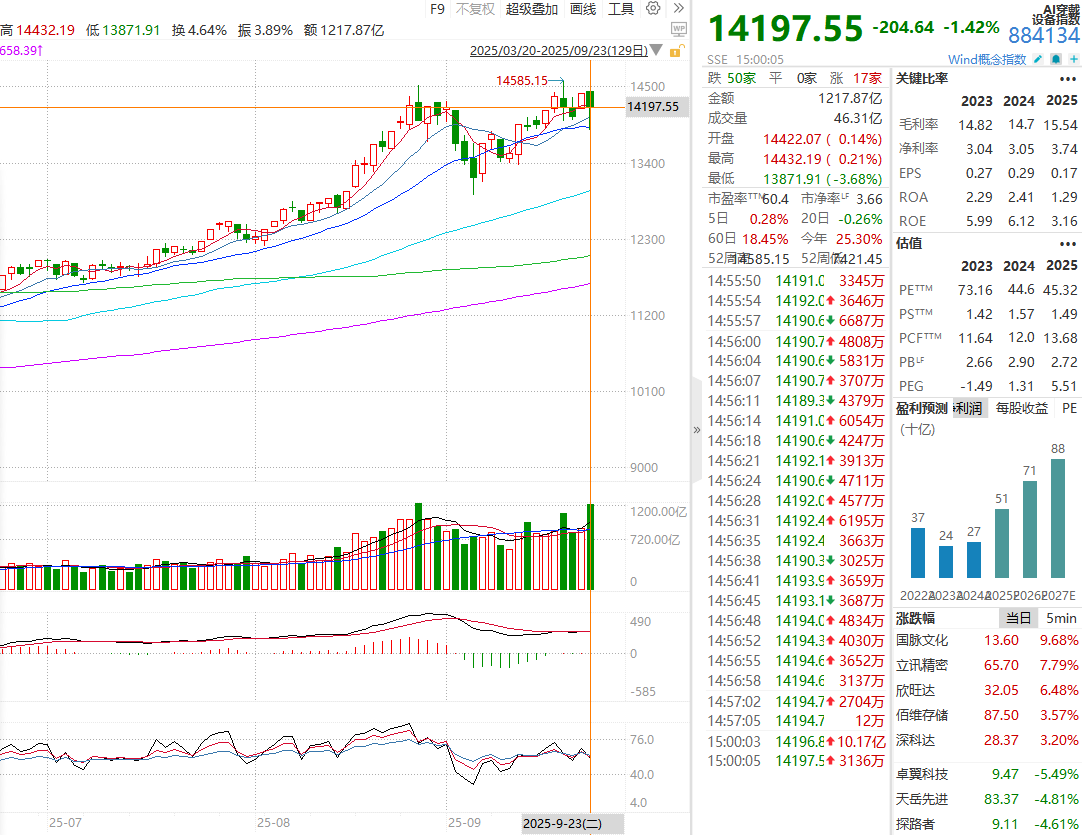
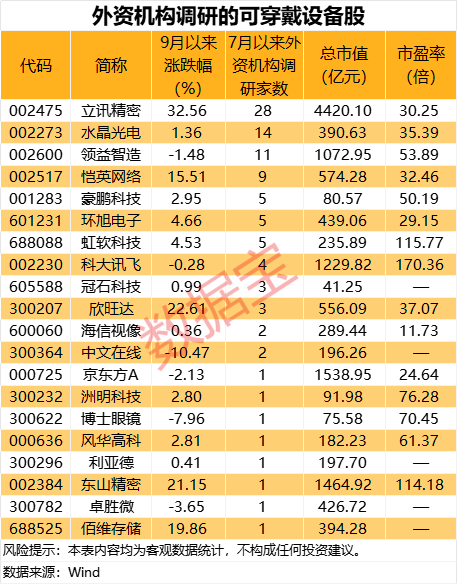
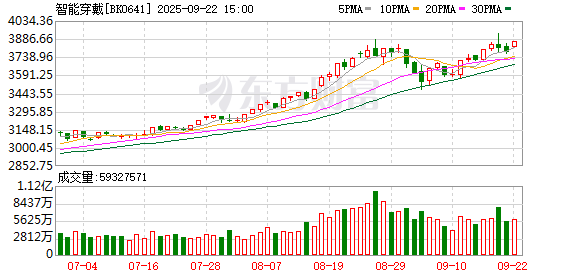
Group 1: Policy and Market Trends - The National Sports Administration of China issued guidelines to promote the digital and intelligent upgrade of sports and health services, emphasizing the use of wearable monitoring devices and technologies like big data and AI [1] - The global wearable device market is experiencing rapid growth, with IDC reporting that by Q2 2025, global wrist-worn device shipments will reach 49.22 million units, a year-on-year increase of 12.3% [2] - China, as the largest market for wrist-worn devices, is projected to ship 20.8 million units in the same period, marking a significant year-on-year growth of 33.8% [2] Group 2: Product Features and Applications - Wearable devices include smart glasses, smartwatches, smart bands, and smart rings, enabling users to monitor physiological states and environmental information in real-time [1] - Current functionalities of wearable devices encompass health management, exercise measurement, social interaction, entertainment, navigation, mobile payment, and smart home control, with potential future applications in healthcare, military, industrial IoT, and financial services [1] Group 3: Stock Performance and Foreign Investment - Among A-shares, 67 companies are involved in wearable devices, with a concept index rising by 2.47% on September 22, 2023, and 11 stocks showing gains exceeding 10% since September [3] - Notable performers include Changying Precision, Tianyue Advanced, and Luxshare Precision, with respective cumulative gains of 43.59%, 35.78%, and 32.56% [3] - Foreign institutional interest is evident, with 20 stocks receiving attention from foreign investors since July, including Luxshare Precision, which had 28 foreign institution inquiries [3][4]
可穿戴设备迎大利好 这一品类出货量大增超60%!外资机构密集调研4股
Zheng Quan Shi Bao Wang· 2025-09-23 00:08
Group 1 - The core viewpoint of the articles highlights the favorable policies and rapid growth in the wearable device industry, driven by advancements in technology and increasing consumer demand for health monitoring [2][3]. - The National Sports Administration of China has issued guidelines to promote the digital and intelligent upgrade of health services through wearable devices, emphasizing the use of big data and AI technologies [2]. - The global wearable device market is expected to see significant growth, with IDC forecasting a shipment of 49.22 million wrist-worn devices in Q2 2025, representing a year-on-year increase of 12.3% [3]. Group 2 - China is the largest market for wrist-worn devices, with a shipment volume of 20.8 million units in Q2 2025, reflecting a year-on-year growth of 33.8% [3]. - The smart watch segment is experiencing remarkable growth, with a 64% year-on-year increase in shipments for adult smart watches in China [3]. - The wearable device market is expanding its application range, with potential coverage in healthcare, military defense, industrial IoT, and financial payments [2][3]. Group 3 - A total of 67 A-share companies are involved in the wearable device sector, with a concept index rising by 2.47% as of September 22 [4]. - Eleven stocks in this sector have seen cumulative gains exceeding 10%, with Longying Precision, Tianyue Advanced, and Luxshare Precision leading with gains of 43.59%, 35.78%, and 32.56% respectively [4]. - Longying Precision has made significant breakthroughs in developing key components for AI-based laptops and wearable products, achieving a "20cm" limit on September 22 [4]. Group 4 - Foreign institutional interest in wearable device stocks has increased, with 20 stocks receiving attention since July, including Luxshare Precision and Crystal Optoelectronics [5]. - Luxshare Precision has a broad layout in the AI glasses sector, providing support for about one-third of the market categories in this area [5]. - The market capitalization and performance of various wearable device stocks have been tracked, with Luxshare Precision having a market cap of 442.01 billion and a year-to-date increase of 32.56% [6].
迎大利好,这一品类出货量大增超60%!外资机构密集调研4股
Zheng Quan Shi Bao· 2025-09-23 00:08
Group 1: Policy and Market Trends - The National Sports Administration of China issued guidelines to promote the digital and intelligent upgrade of sports and health services, emphasizing the use of wearable monitoring devices and technologies like big data and AI [1] - The global wearable device market is experiencing rapid growth, with IDC forecasting 49.22 million wrist-worn devices to be shipped in Q2 2025, a year-on-year increase of 12.3% [2] - China leads the global market with a shipment of 20.8 million wrist-worn devices in the same period, reflecting a significant year-on-year growth of 33.8% [2] Group 2: Product Features and Applications - Wearable devices include smart glasses, smartwatches, smart bands, and smart rings, enabling users to monitor physiological states and environmental information in real-time [1] - Current functionalities of wearable devices encompass health management, exercise measurement, social interaction, entertainment, navigation, mobile payment, and smart home control, with potential future applications in healthcare, military, industrial IoT, and financial services [1] Group 3: Stock Performance and Foreign Investment - Among 67 A-share companies involved in wearable devices, 11 stocks have seen a cumulative increase of over 10% since September, with Longying Precision, Tianyue Advanced, and Luxshare Precision leading with gains of 43.59%, 35.78%, and 32.56% respectively [3] - Longying Precision reported significant breakthroughs in developing key components for AI-based laptops and wearable products, achieving a "20cm" limit on stock price increase [3] - Foreign institutional interest is notable, with 20 stocks receiving attention since July, including Luxshare Precision and Water Crystal Optoelectronics, which were researched by 28 and 14 foreign institutions respectively [3][4]
智能手表终于能直连卫星了!但手表芯片的症结却不在通信
3 6 Ke· 2025-09-22 11:00
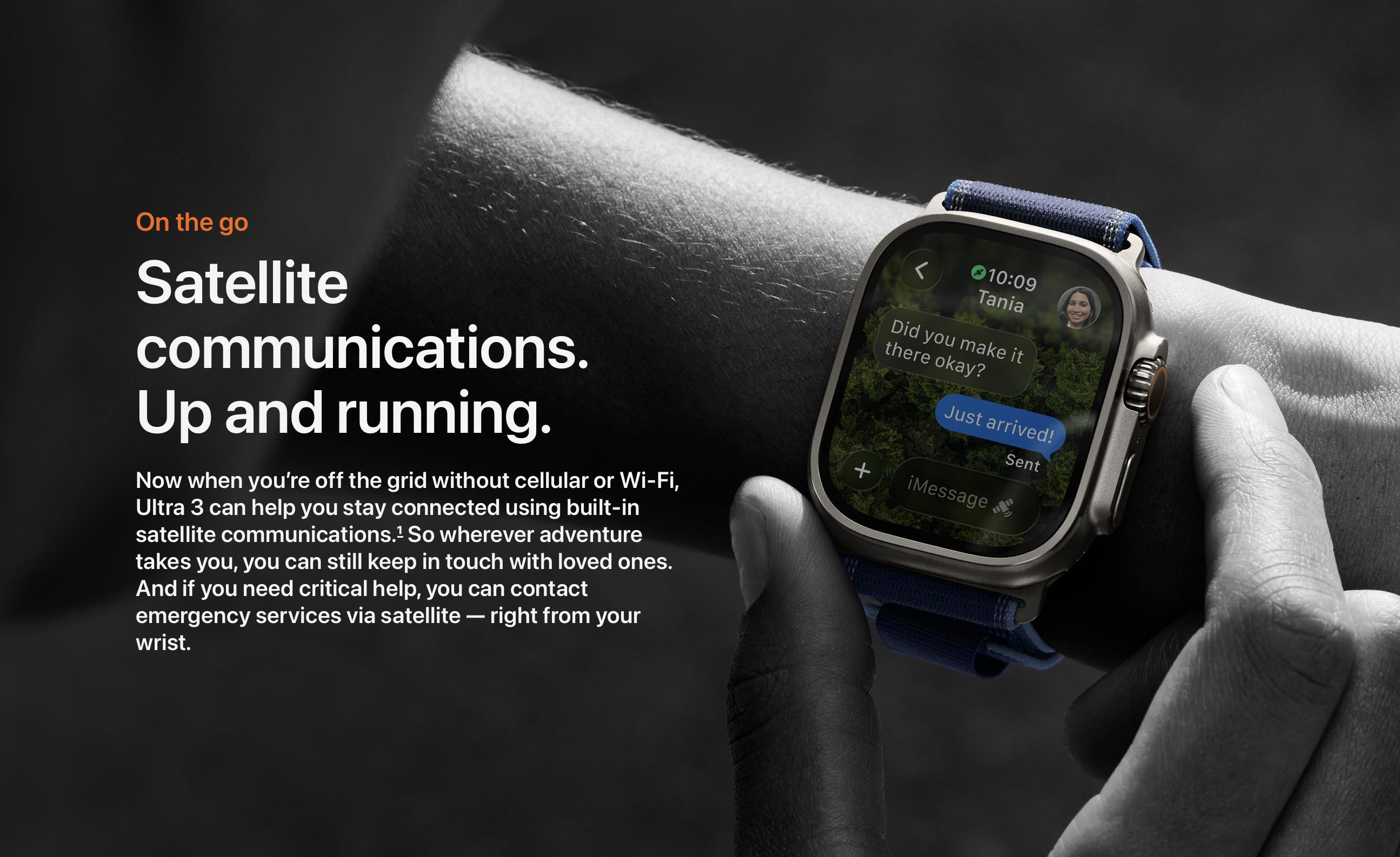
Core Viewpoint - The introduction of satellite connectivity in smartwatches marks a significant advancement in wearable technology, allowing for emergency communication without cellular coverage [1][12]. Group 1: Industry Developments - Qualcomm has launched the second-generation Snapdragon W5 wearable platform, which includes NB-NTN satellite communication capabilities [1]. - Apple has also integrated satellite connectivity into its flagship Apple Watch Ultra 3, indicating a trend towards enhanced communication features in wearables [1]. Group 2: Technical Considerations - Smartwatch chips cannot simply replicate smartphone chips due to size and thermal constraints, as smartwatch mainboards are significantly smaller [5][7]. - The power consumption of smartwatch chips is critical, as they must support longer battery life compared to smartphones, which typically require more frequent charging [7][8]. Group 3: Market Dynamics - The wearable device market is experiencing a lack of differentiation, leading to reduced consumer upgrade motivation and longer product lifecycles [10][12]. - The industry faces a common challenge of product homogeneity, where new releases do not significantly differ from previous models, diminishing overall market appeal [10][12]. Group 4: Future Directions - Future advancements in smartwatches should focus on developing genuinely useful new features, such as non-invasive blood glucose monitoring and continuous blood pressure tracking [13][16]. - Enhanced interaction methods that leverage cross-device collaboration with other gadgets like headphones and glasses are essential for the evolution of smartwatches [16][18].

Meta三大产品背后:获数模龙头艾为电子助力
Zheng Quan Shi Bao Wang· 2025-09-19 11:00
Group 1 - Meta showcased its latest advancements in wearable technology at the 2025 Connect conference, introducing three major product lines including the flagship Meta Ray-Ban Display, which signifies the transition of "AI on the face" from concept to reality [1] - The second-generation Ray-Ban Meta smart glasses aim to create a mass-market AI eyewear, featuring an 8-hour battery life, support for 3K ultra HD video recording, and a new "conversation focus" function [1] - The Oakley Meta Vanguard, designed for sports enthusiasts, introduces a new category of "smart sports" products with an IP67 waterproof and dustproof design, deeply integrated with Garmin and Strava ecosystems [1] Group 2 - Aiwai Electronics, a leading Chinese chip provider, offers comprehensive chip solutions that support Meta's innovative products, serving as a long-term core partner [1] - Aiwai's 3-channel RGB LED driver chip provides precise light control for the Ray-Ban series, supporting 256 levels of current adjustment per LED and ensuring smooth dimming effects even at low brightness [2] - The chip's ultra-low power design significantly extends device battery life, with shutdown mode consuming less than 1μA and standby mode less than 10μA [2] Group 3 - Aiwai's Hall switch series addresses the challenge of detecting the opening and closing of charging cases in wearable devices, featuring a compact 0.8mm×0.8mm package for high reliability in space-constrained applications [2] - The LCD bias driver chip from Aiwai provides an efficient power solution for the Quest series TFT-LCD panels, achieving over 85% efficiency at output currents greater than 40mA [2] - Aiwai's tactile feedback chip delivers a noise-free, strong vibration experience for VR controllers, supporting rapid activation at 1ms [2] Group 4 - The AI glasses market is accelerating towards mass consumer adoption, with companies like Samsung and Apple planning to launch similar products by 2026 [3] - Global shipments of AI/AR glasses are expected to exceed 70 million units by 2030, creating a hardware market worth hundreds of billions [3] - Aiwai Electronics has developed a comprehensive chip solution covering perception, computation, connectivity, and energy management, achieving international advanced performance levels [3]

立讯精密与美国边缘人工智能芯片企业PIMIC达成战略合作
Xin Lang Cai Jing· 2025-09-18 02:21
Core Insights - Luxshare Precision has officially entered into a strategic partnership with PIMIC, a US-based edge AI chip company, to develop next-generation smart wearable products [1] - The collaboration will leverage PIMIC's edge AI chip technology for applications in wireless earbuds, AI/AR glasses, and AIoT devices [1] Company Developments - The partnership aims to enhance Luxshare Precision's product offerings in the wearable technology sector [1] - Ronald Yuan, Senior Director of the Technology Committee at Luxshare Precision, indicated that the joint technology will be implemented soon in various wearable products [1] Industry Implications - This collaboration signifies a growing trend in the wearable technology market, focusing on integrating advanced AI capabilities into consumer electronics [1] - The development of smart wearables is expected to drive innovation and competition within the industry, particularly in the areas of AI and IoT [1]