
水利建设

Search documents
坚持问题导向、分类施策、降本增效——政府和社会资本合作存量项目迎新规
Jing Ji Ri Bao· 2025-08-28 22:13
Core Viewpoint - The new guidelines issued by the State Council aim to standardize the construction and operation of existing Public-Private Partnership (PPP) projects, enhancing project quality and efficiency while improving public service supply levels [1][2]. Group 1: Guidelines for Existing PPP Projects - Approximately 70% of existing PPP projects have entered the operational phase, making their operational status crucial for the quality and efficiency of public service supply [2]. - The guidelines emphasize adherence to contracts, requiring local governments to fulfill their contractual obligations and manage government expenditure responsibilities within budget [2][3]. - The guidelines advocate for cost reduction and efficiency improvement, encouraging localities to streamline projects and innovate operational models to enhance professional management [2][3]. Group 2: Focus on Under-Construction Projects - For ongoing projects that have already commenced, the guidelines stress the importance of ensuring their completion and timely realization of initial investments [3]. - Projects that have not started by the end of 2024 will generally not adopt the PPP model, with alternative implementation methods suggested for necessary projects [3]. - The guidelines categorize existing PPP projects into three types: fully government-funded, feasibility gap subsidy, and user-paid projects, with the first two requiring government subsidies [3][4]. Group 3: Financial Management and Support - The guidelines highlight the need for local governments to incorporate PPP-related expenditures into budget management and to utilize various funding sources, including special bonds and local funds, to support project operations [4]. - Local governments are urged to take on primary responsibilities and coordinate resources effectively to ensure the smooth operation of existing PPP projects [4].
涉及超10万亿元存量项目!重磅财政新规发布→
Jin Rong Shi Bao· 2025-08-22 01:58
Core Viewpoint - The Ministry of Finance has issued guidelines to standardize the construction and operation of existing Public-Private Partnership (PPP) projects, aiming to enhance project quality and efficiency [1] Group 1: Project Implementation and Prioritization - Local governments are required to prioritize projects with certain returns based on economic and financial conditions, ensuring timely completion of these projects [2][5] - Projects that have not commenced by the end of 2024 will generally not adopt the PPP model for implementation [5] - Emphasis is placed on optimizing project construction by reducing unnecessary costs and adhering to approved budget limits [5] Group 2: Financing Support - Financial institutions are encouraged to objectively assess and actively support financing for ongoing projects, ensuring timely loan disbursement [6] - The guidelines promote equal negotiation between financial institutions and private capital to optimize financing structures, including adjusting repayment plans and lowering interest rates [6] Group 3: Contractual Compliance and Payment - Approximately 70% of existing PPP projects are in operation, and their performance is crucial for the quality and efficiency of public services [7] - The guidelines stress the importance of adhering to contracts, with local governments required to make timely payments based on performance results [7] - Delays in project completion or performance evaluations should not be used as excuses for payment delays [7]
以水兴业描绘发展新图景
Jing Ji Ri Bao· 2025-08-16 21:47
Core Insights - The article highlights the integration of water resource management and economic development in Xinjiang, showcasing various industries that thrive on water resources, including aquaculture, eco-tourism, and agriculture [1] Group 1: Aquaculture and Agriculture - In Kuleteqi Village, there are 36 aquaculture ponds covering 360 acres, with an expected annual income exceeding 3 million yuan from the cultivation of shrimp and crabs [2] - The village has 19 residents employed in the aquaculture base, benefiting from land transfer income and job opportunities, effectively converting water resource advantages into industrial income [2] - In the nearby Nadazhi Niuluo Township, rice paddies are used to create rice field art, attracting over 100,000 tourists last year, which has boosted local dining and accommodation businesses [3] Group 2: Ecological Tourism - The ecological improvements around Sailimu Lake have made it a popular tourist destination, with significant investments in environmental protection totaling 723 million yuan [5] - The lake's water quality has improved from Class III to Class II standards, with transparency reaching up to 16 meters, enhancing its appeal for eco-tourism [5][6] Group 3: Water Infrastructure Projects - The Dashi Gorge Water Conservancy Hub, part of a major national water project, has a maximum dam height of 247 meters, setting a world record for concrete-faced rock-fill dams [8] - The project will have a total storage capacity of 1.17 billion cubic meters and is expected to supply 3.42 billion cubic meters of ecological water to the Tarim River, improving irrigation and ecological conditions [8] - The hydropower station associated with the project has an installed capacity of 750,000 kilowatts, with an anticipated annual electricity generation of 1.893 billion kilowatt-hours, supporting regional clean energy needs [8]
前7个月我省完成水利建设投资超476亿元
Da Zhong Ri Bao· 2025-08-14 00:56
Core Insights - The province has completed a total water conservancy investment of 476.61 billion yuan by the end of July, achieving 59.6% of the annual target of 800 billion yuan [1] - A total of 244 new projects have received investments of 318.17 billion yuan, while 124 ongoing projects have secured 158.44 billion yuan, indicating a stable growth trend [1] - Key projects such as Taiping Reservoir, Guanlu Reservoir, and Shuangshuo Reservoir are accelerating implementation, with preliminary work on projects like Zhonggao Water Conservancy Hub and Huangshan Water Conservancy Hub progressing rapidly [1] Investment and Financing - The province is adopting a dual approach to expand financing channels and strengthen funding guarantees for water conservancy projects [1] - By the end of July, 441.34 billion yuan has been secured for key water conservancy projects, with a funding rate of 55.17% [1] - The funding sources include 212.11 billion yuan from central and provincial funds, and 193.25 billion yuan from bank loans and social capital, providing solid support for the construction of key water conservancy projects [1]
广西全面推进幸福河湖建设
Guang Xi Ri Bao· 2025-08-09 02:04
Core Viewpoint - The Guangxi Zhuang Autonomous Region has launched the "Happy Rivers and Lakes Construction Implementation Plan (2025-2030)" to enhance water safety, resources, ecology, environment, and culture, aiming to create 116 happy rivers and lakes by 2030 [1][2]. Group 1: Key Tasks - The plan outlines five key tasks: improving river and lake safety, maintaining ecological health, achieving cleanliness and beauty, transforming ecological product value, and promoting river culture [2]. - Specific actions include enhancing flood control systems, promoting water resource conservation, restoring riverbanks, and developing green industries related to water [2][3]. Group 2: Implementation Arrangements - The implementation will be phased, with a focus on two central funding projects in 2025, followed by a systematic rollout of other projects from 2026 to 2030 [2]. - A mechanism involving party leadership, local responsibility, and inter-departmental collaboration will be established to ensure effective execution of the plan [3].
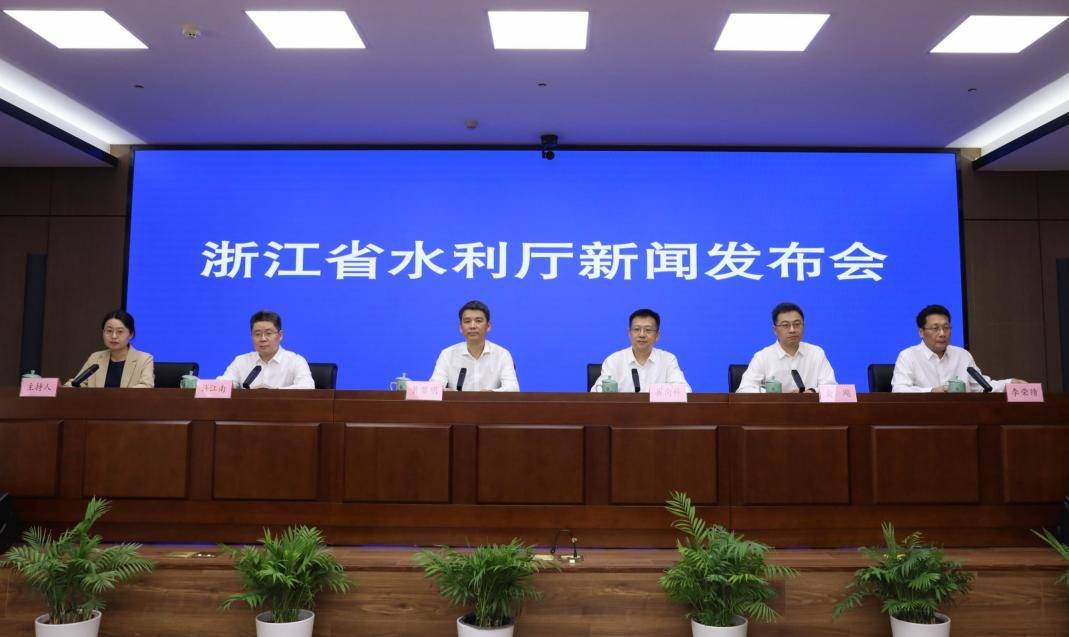
浙江上半年水利投资创历史新高,420亿元撬动发展动能!
Sou Hu Cai Jing· 2025-07-31 08:32
Group 1 - The core viewpoint of the article highlights that Zhejiang Province has achieved a record high in water conservancy investment, totaling 42 billion yuan in the first half of 2025, with significant contributions from major water projects and a growth rate of 17% in water management investment, making it one of the fastest-growing sectors in infrastructure [1][3] Group 2 - In terms of funding, Zhejiang has expanded its water conservancy financing channels, securing central budget investments that are 4.5 times higher than last year, with a 39% increase in central fiscal water development funds, and provincial special funds amounting to 8.89 billion yuan [3] - The province has also collaborated with nine financial institutions to promote market-oriented financing, achieving a total of 21.1 billion yuan in special bonds and loans, leading the nation in credit scale [3] - Water conservancy projects have created employment for 76,000 people, including 66,000 rural laborers, demonstrating significant effects on stabilizing employment and increasing income [3] Group 3 - The construction of key water conservancy projects has accelerated, with 187 major projects currently under construction and nine new projects started, exceeding the semi-annual commencement target [3] - Notable projects include the Kaohua Reservoir, which achieved water storage before the main flood season, and the completion of the Dongtiao Creek West Dam reinforcement project ahead of schedule, enhancing flood protection standards [3] Group 4 - The province has made substantial progress in "people's livelihood" water conservancy projects, with all 947 provincial government livelihood projects initiated and 600 completed, achieving an overall progress rate of 94.5% [5] - The single-village water station renovation project has completed 8,277 stations, benefiting 2.276 million people [5] Group 5 - The construction of "Happy Rivers and Lakes" has seen significant achievements, with 2,037 kilometers of waterfront greenways and 1,332 urban and rural water-friendly nodes established, covering over 17,000 villages and communities [5] - Four rivers, including the Tianmuxi, have been selected as national-level Happy Rivers and Lakes construction projects, the highest number in the country [5] Group 6 - The Zhejiang Provincial Water Resources Department aims to achieve its annual goals by accelerating major water project construction and enhancing the overall development of Happy Rivers and Lakes, while also deepening reforms in key areas [5]

节水控水要下“细功夫”
Jing Ji Ri Bao· 2025-07-30 22:23
Core Viewpoint - The importance of water as a vital resource for life, production, and ecology is emphasized, with significant investments in water infrastructure and management strategies being implemented to ensure sustainable water use and security [1][2]. Group 1: Investment and Infrastructure - In the first half of the year, a total of 532.9 billion yuan was invested in water conservancy construction across the country, with 34,400 various water projects implemented and 18,800 new projects started, creating 1.422 million jobs [1]. - The focus on water resource management is shifting towards efficiency and sustainability, with an emphasis on transforming water resources into measurable and tradable assets [1]. Group 2: Agricultural and Industrial Water Use - Agriculture and industry account for the majority of total water consumption, necessitating a shift from traditional water use methods to more efficient practices [2]. - Initiatives such as "Four Waters and Four Determinations" and water budget management are being explored to enhance water use efficiency, with positive results reported in regions like Ningxia, where irrigation efficiency has improved significantly [2]. Group 3: Public Engagement and Awareness - Water conservation is not solely the responsibility of government entities; it is also closely related to individual lifestyles, with initiatives encouraging public participation in water-saving practices [3]. - Measures such as rainwater and wastewater separation, as well as the reuse of reclaimed water, are being widely adopted in urban settings to promote sustainable water use [3].
水利部开展全国水利建设市场监管平台第一批信用信息替换和核验
news flash· 2025-07-22 10:05
智通财经7月22日电,水利部近日对全国水利建设市场监管平台进行了优化,第一批利用本部门和从其 他部门共享的政务数据,对企事业单位自主填报的部分信用信息进行了替换,并上线信息核验功能,供 企事业单位在填报信用信息时使用。 水利部开展全国水利建设市场监管平台第一批信用信息替换和核验 ...
上半年广西水利建设投资增速全国第一
Guang Xi Ri Bao· 2025-07-22 01:56
Core Insights - The Guangxi water conservancy system achieved significant investment growth in the first half of the year, with a total investment of 25.324 billion yuan, marking a 45.3% increase year-on-year, the highest growth rate in the country [1] - Major water conservancy projects in Guangxi have a total investment exceeding 100 billion yuan, with 211 key projects planned under the "14th Five-Year Plan" for water security, estimated at a total investment of 456.2 billion yuan [1][2] - The region successfully managed severe drought and flooding challenges, ensuring water supply for 120,500 people and 18.8 million mu of farmland during adverse weather conditions [2] Investment and Infrastructure - Water conservancy construction investment in Guangxi reached 33.45 billion yuan in the first half of the year, with central government funding of 9.55 billion yuan [1] - The total investment in major ongoing water conservancy projects surpassed 100 billion yuan, with significant projects like the modernization of the Heishui River irrigation area and the Nanning Yongbei irrigation area receiving approval [2] - Guangxi's water network project investment totals 1.2 trillion yuan, with 6.682 billion yuan allocated for major water conservancy projects [2] Performance and Achievements - Guangxi ranked third nationally in the strictest water resource management system, achieving its best historical performance [3] - Rural water supply funding increased by 77.6% to 4.34 billion yuan, benefiting 1.164 million people and raising the rural tap water coverage rate to 91% [3] - The region has made significant progress in water ecological governance, addressing 158 issues related to river and lake management [3]
优结构提质量步伐加快 有效投资蓄能稳步攀升
Zhong Guo Fa Zhan Wang· 2025-07-21 06:54
Group 1: Infrastructure Investment - The Wuhan Metro Line 12, with a total length of 59.9 kilometers, has successfully completed its construction, enhancing urban connectivity in Wuhan [1] - National fixed asset investment reached 248,654 billion yuan in the first half of the year, showing a nominal growth of 2.8% year-on-year, while the actual growth, after adjusting for price factors, was 5.3% [1] - Infrastructure investment grew by 5.5% year-on-year, serving as a stabilizing factor for the economy amid external fluctuations [2][4] Group 2: Major Projects and Government Support - The Beijing Urban Sub-center Station, Asia's largest underground transportation hub, is nearing completion, with 95% of the main construction finished [3] - The "Two Heavy" projects in Gansu Province have seen significant progress, with 493 projects planned and a total investment of 1,045.33 billion yuan [3] - The National Development and Reform Commission has allocated over 300 billion yuan to support the third batch of "Two Heavy" construction projects, totaling 800 billion yuan for 1,459 projects [4] Group 3: Manufacturing and Technological Upgrades - Manufacturing investment increased by 7.5% year-on-year, driven by technological upgrades and new industries [7] - High-tech manufacturing sectors, such as aerospace and computer equipment, saw substantial investment growth of 26.3% and 21.5%, respectively [7] - The "Two New" policies have effectively supported the recovery of consumer spending and the modernization of traditional industries [7][8] Group 4: Regional Investment Trends - Investment growth in central and western regions outpaced that of eastern regions, with central regions growing by 3.2% and western regions by 4.8% [9] - The shift of industries from east to west is becoming a long-term trend, supported by policies like "Western Development" and "Central Region Acceleration" [9] - The data reflects the release of policy dividends, although challenges remain for the long-term transformation of the northeastern region [9] Group 5: Real Estate Market Dynamics - The real estate sector is experiencing a decline in investment, with land transaction volumes down to 2.8 million square meters, only 61% of the new housing transaction volume [10] - Despite the downturn, there are signs of stabilization in the market, with new policies expected to support the real estate sector in the second half of 2025 [11] - The reduction in new land development and ongoing inventory clearance are seen as necessary for achieving a balanced supply-demand dynamic in the real estate market [10][11]
