
消费品

Search documents
为什么所有的消费品牌,都会在2026被GEO重做一遍?
新消费智库· 2026-01-14 14:19
Core Viewpoint - The article emphasizes the need for brands to adapt to a new era of consumer engagement driven by AI and GEO (Generative Engine Optimization), moving away from traditional short video and live-streaming strategies to focus on building trust and knowledge through AI-driven content [3][11][30]. Group 1: Challenges in Current Business Environment - The current business landscape is increasingly challenging, with high costs of traffic and fleeting consumer attention, leading to thin profit margins for brands relying solely on short video and live-streaming [2][4]. - Brands must shift their strategies to avoid hitting an "invisible wall" by embracing new methods of consumer engagement that leverage AI [3][6]. Group 2: Importance of GEO - GEO represents a significant new opportunity for brands, focusing on how to be recognized and recommended by AI systems, which are becoming the primary source of consumer information [3][14]. - Brands that fail to establish a strong presence in AI knowledge bases risk being overlooked in consumer decision-making processes [16][19]. Group 3: Balancing Brand and Performance - There is a need for brands to balance performance-driven marketing with brand-building efforts, as overemphasis on short-term results can lead to hollow brand identities [4][6]. - AI provides a unique opportunity to enhance brand perception and consumer trust through in-depth, informative content rather than superficial marketing tactics [7][10]. Group 4: Content Strategy Shift - Future marketing budgets should be reallocated to focus on creating knowledge-based content that builds trust, rather than solely on conversion-driven short videos [17][19]. - Brands must produce detailed, evidence-based content that addresses consumer questions and concerns, establishing themselves as authorities in their fields [21][22]. Group 5: Competitive Landscape - The competitive landscape is shifting, with brands needing to understand GEO as a new optimization strategy distinct from traditional SEO [23][24]. - Companies must adapt to this new environment by developing a deep understanding of their products and creating high-quality, informative content that can be recognized by AI [25][26]. Group 6: Trust and Authority in AI - Trust signals such as awards, academic papers, and media endorsements will become increasingly important in the AI-driven marketplace, as AI relies on these signals to determine credibility [57][58]. - Brands that can provide robust evidence of their claims will be favored by AI systems, enhancing their visibility and consumer trust [60][61]. Group 7: Opportunities for Smaller Brands - Smaller and newer brands have a unique opportunity in the GEO era, as the focus shifts from budget-driven marketing to expertise and knowledge [46][47]. - By concentrating on niche markets and providing in-depth, credible information, smaller brands can compete effectively against larger, established players [48][49]. Group 8: The Role of AI in Brand Positioning - GEO forces brands to articulate clear, factual value propositions, moving away from vague marketing language to concrete evidence of product benefits [50][52]. - This shift necessitates a return to foundational marketing principles, emphasizing the importance of clarity and substantiation in brand messaging [53][54]. Group 9: The Future of Content and Communication - The evolution of content formats will continue, but the core need for deep, trustworthy communication will remain essential [55][56]. - Brands should focus on creating compelling narratives supported by evidence, which will serve as a foundation for building trust in an AI-driven marketplace [66].

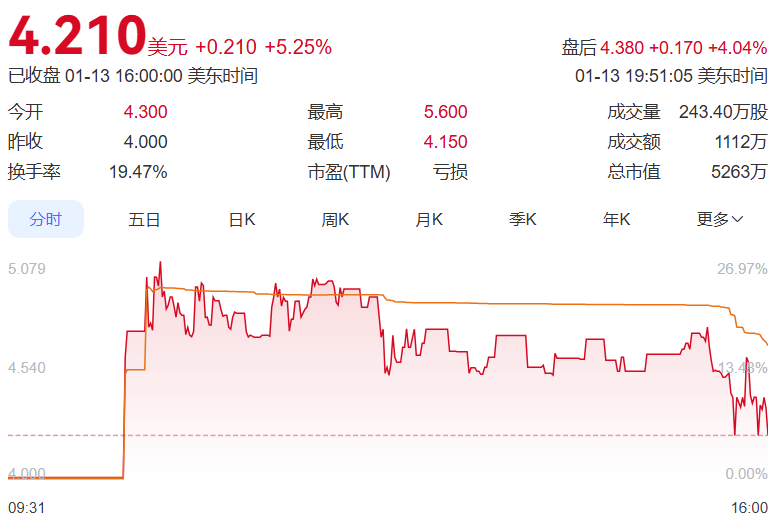
2026首家中企登陆美股 还有1家来自内地 或于下周上市
Sou Hu Cai Jing· 2026-01-14 06:32
Group 1 - Baoga International officially listed on the US stock market on January 13, 2026, under the stock code GCDT, becoming the first Chinese concept stock to go public in the US in 2026 [1] - On its first trading day, Baoga International opened at $4.30 per share, a 7.5% increase from the issue price, reaching a peak of $5.60 during the day, and closing at $4.21, reflecting a 5.25% increase, with a total market capitalization of $52.63 million [2][3] - The company issued 2.5 million shares at $4 each, raising $10 million, which will be used for expanding production facilities, repaying loans, working capital, and other general corporate purposes [3] Group 2 - Aigou Holdings, which is expected to follow Baoga International in listing, operates in the consumer goods sector, offering products such as lighting, small home appliances, pet supplies, and smart home devices, with sales covering approximately 40 countries and regions across four continents [4] - For the first half of 2025 (unaudited), Aigou Holdings reported revenue of €74.32 million and a net profit of €9.54 million [4]
许正宇:将发布加强黄金中央清算系统建设最新计划
智通财经网· 2026-01-14 06:00
第二日的全球产业峰会标志着论坛内容的重要升级。峰会集中探讨高增长潜力产业,包括人工智能与科 技、生物医药、机器人、新消费及绿色能源等范畴,透过主题演讲、专题讨论及项目配对,推动内地企 业"走出去"与国际企业"引进来"。香港作为双向平台,将助力企业在全球价值链中寻求新机遇,推动产 业升级与创新发展。这与"十五五"规划所强调的创新驱动与更高水平对外开放一脉相承,旨在促进科技 自立自强与可持续增长。 智通财经APP获悉,1月14日,香港财经事务及库务局长许正宇在网志上指出,香港将于1月26日至27日 举办第19届亚洲金融论坛(AFF),并首次新增"全球产业峰会"环节。预期该论坛将吸引超过3,600名来自 60个国家及地区的参与者,其中逾八成为企业首席执行官或高层决策者。论坛内容涵盖全球经济展望、 资产与财富管理、绿色金融、可持续转型等热点议题,并重点探讨金融如何更有效服务实体经济。 论坛首日将举行开幕仪式,聚焦宏观经济形势及多边合作,并设有与黄金市场发展相关的合作备忘录签 署仪式。这是推进香港黄金市场发展的重要一步,届时将发布加强黄金中央清算系统建设的最新计划, 为未来与内地市场互联互通做好准备。此举既呼应建设金融 ...
工业和信息化部印发行动方案推动工业互联网和人工智能融合赋能
Ren Min Ri Bao· 2026-01-14 00:24
Core Viewpoint - The Ministry of Industry and Information Technology has issued an action plan to enhance the integration of industrial internet and artificial intelligence by 2028, aiming to upgrade at least 50,000 enterprises and create high-quality data sets in 20 key industries [1] Group 1: Action Plan Objectives - By 2028, the integration level of industrial internet and artificial intelligence in China is expected to significantly improve [1] - The action plan aims to implement four major actions: upgrading foundational infrastructure, ensuring data model interoperability, renewing application models, and promoting industrial ecosystem integration [1] Group 2: Industry Focus and Development - The plan emphasizes the expansion of new industrial networks that meet the high throughput, low latency, high reliability, and low jitter communication needs of artificial intelligence applications [1] - Key industries such as raw materials, equipment manufacturing, consumer goods, and electronic information will accelerate the deployment of these applications [1] - The initiative aims to cultivate a number of intelligent solution providers targeting critical links and typical scenarios in key industrial chains, facilitating collaborative upgrades among large, medium, and small enterprises [1]
制造业高质量发展重点任务扎实推进
中汽协会数据· 2026-01-12 07:05
Core Viewpoint - The article emphasizes the significant progress in the digital transformation of the manufacturing industry in China, highlighting the government's strategic initiatives and the establishment of a comprehensive framework to support this transformation by 2025 [4][18]. Group 1: Digital Transformation Framework - The State Council issued a digital transformation action plan for the manufacturing industry, aiming for full coverage of digital upgrades in key industrial enterprises by 2027 and completion of a round of digital transformation by 2030 [4]. - A universal evaluation index system for the digital transformation of the manufacturing industry has been established, categorizing transformation levels into five grades (L1-L5) [6]. - A comprehensive information service platform for manufacturing digital transformation has been launched, providing assessment diagnostics, policy documents, and industry evaluations, with connectivity established across 15 provinces [9]. Group 2: Industry-Specific Policies - Implementation plans for digital transformation have been issued for 14 key industries, specifying transformation goals, typical scenarios, and solutions [12]. - The establishment of 62 digital transformation promotion centers has been initiated, covering 25 provinces and 14 key industries, focusing on specialized services [15]. Group 3: Progress and Achievements - As of December 31, 2025, 248,000 industrial enterprises have registered on the digital transformation platform, representing 47.1% of all industrial enterprises, with 89.6% of these enterprises having initiated digital upgrades [18]. - The penetration rate of digital production equipment among industrial enterprises reached 57.7% [18]. - Industrial technology renovation investments in 26 cities averaged a growth rate of 7.3%, exceeding the national average by 6.8 percentage points, with total investments surpassing 760 billion [21]. Group 4: Green and Intelligent Manufacturing - The average penetration rate of digital R&D design tools among industrial enterprises reached 86.7%, with the CNC rate for key production processes averaging 71.1% [23]. - The energy consumption per unit of industrial added value has decreased to 1.4 tons of standard coal per 10,000 yuan [23]. Group 5: Collaborative Innovation and New Models - The article highlights the establishment of 1,724 national-level technology innovation carriers and nearly 3,000 public service platforms, with an average R&D investment intensity of 4.64% within clusters [43]. - The integration of new technologies such as 5G, AI, and big data into manufacturing processes has led to the establishment of 238 leading and excellent smart factories [47][48]. Group 6: High-tech Industry Development - By 2025, national high-tech zones are expected to maintain a positive growth trend, with industrial output value reaching 27.4 trillion yuan, a year-on-year increase of 2.8% [72]. - High-tech zones have gathered 70% of national manufacturing innovation centers and 80% of key laboratories, contributing significantly to original innovations and high-tech industry clusters [76][78].
推动工业互联网和人工智能融合赋能
Ren Min Ri Bao· 2026-01-12 02:48
Core Insights - The Ministry of Industry and Information Technology has issued an action plan to enhance the integration of industrial internet and artificial intelligence, aiming for significant improvements by 2028 [2] Group 1: Action Plan Objectives - By 2028, the plan aims to implement new industrial network upgrades in no less than 50,000 enterprises and create high-quality datasets in 20 key industries [2] - The action plan outlines four major initiatives: upgrading foundational infrastructure, ensuring data model interoperability, renewing application models, and fostering industrial ecosystem integration [2] Group 2: Industry Impact - The plan emphasizes the expansion of new industrial networks that meet the high throughput, low latency, high reliability, and low jitter communication needs of artificial intelligence applications [2] - Key industries such as raw materials, equipment manufacturing, consumer goods, and electronic information are targeted for accelerated deployment of these applications [2] - The initiative aims to cultivate a number of intelligent solution providers focused on critical links and typical scenarios within key industrial chains, promoting collaborative upgrades among large, medium, and small enterprises [2]
重磅国家方案发布,激发数十万亿增长新动能
Di Yi Cai Jing· 2026-01-11 23:37
Core Insights - The article discusses the implementation of the "Artificial Intelligence + Manufacturing" initiative by eight departments, aiming to accelerate the integration of AI with the manufacturing sector and promote intelligent transformation [2][4] - The Ministry of Industry and Information Technology (MIIT) emphasizes that developing AI is essential for achieving new industrialization, focusing on both technology supply and application empowerment [3] - The initiative outlines seven key tasks and 21 specific measures to enhance the intelligent, green, and integrated development of the manufacturing industry [4][5] Group 1: Key Tasks and Goals - The initiative aims to apply 3 to 5 general large models in manufacturing by 2027, create 100 high-quality industrial data sets, and promote 500 typical application scenarios [4] - It seeks to cultivate 2 to 3 globally influential leading enterprises and a number of specialized small and medium-sized enterprises, establishing a robust ecosystem for AI in manufacturing [4] - The goal is to build a globally leading open-source ecosystem and enhance security governance capabilities [4] Group 2: Industry-Specific Guidelines - The "Guidelines for Key Industry Transformation" provide direction for sectors such as raw materials, equipment manufacturing, consumer goods, electronics, and software services [6] - In the automotive sector, the guidelines emphasize accelerating the intelligent upgrade of the entire supply chain, including the development of automotive large models for design optimization [6] - The integration of AI in manufacturing is seen as a critical factor for driving innovation in research and design, improving production efficiency, and optimizing supply chain management [6][11] Group 3: Industrial Internet and AI Integration - The integration of industrial internet and AI is highlighted as a key driver for new industrialization, with plans to enhance the level of integration by 2028 [7][8] - The initiative includes expanding new industrial networks to meet the demands of AI applications and improving data governance and sharing systems [7] - The focus is on creating a collaborative ecosystem that promotes the application of AI and industrial internet across various key industries [7][8] Group 4: Local Initiatives and Developments - Various local governments are launching their own "AI+" initiatives to drive high-quality development, with specific action plans and targets [9][10] - For instance, Shanghai aims to add 100 manufacturing enterprises with over 1 billion yuan in annual output by 2028 [9] - The establishment of dedicated AI development agencies in cities like Guangzhou and Zhuhai reflects a growing commitment to fostering AI innovation at the local level [10]

重磅国家方案发布,激发数十万亿增长新动能
第一财经· 2026-01-11 23:36
Core Viewpoint - The article discusses the implementation of the "Artificial Intelligence + Manufacturing" initiative by the Ministry of Industry and Information Technology (MIIT) and other departments, aiming to accelerate the integration of AI with the manufacturing sector and promote intelligent transformation in the industry [3]. Group 1: Key Tasks and Goals - The initiative outlines seven key tasks including innovation foundation, intelligent upgrade, product breakthroughs, entity cultivation, ecological expansion, safety protection, and international cooperation, with 21 specific measures to enhance the intelligent, green, and integrated development of manufacturing [5]. - By 2027, the goal is to promote the deep application of 3 to 5 general large models in manufacturing, create 100 high-quality industrial data sets, and establish 500 typical application scenarios [5]. Group 2: Industry Transformation Guidelines - The "Guidelines for Key Industry Transformation Empowered by AI" provide direction for sectors such as raw materials, equipment manufacturing, consumer goods, electronic information, and software services [6]. - In the automotive sector, the guidelines emphasize accelerating the intelligent upgrade of the entire supply chain, including the development of automotive large models for design and optimization [6]. Group 3: Industrial Internet and AI Integration - The integration of industrial internet and AI is highlighted as a crucial aspect of the initiative, with plans to enhance the level of integration by 2028, including the deployment of new industrial networks in over 50,000 enterprises [9]. - The article notes that AI is transitioning from being an auxiliary tool to becoming a core engine for industrial internet, enhancing capabilities such as real-time optimization and intelligent scheduling [10]. Group 4: Local Initiatives and Developments - Various local governments are actively promoting AI initiatives, with Shanghai aiming to add 100 manufacturing enterprises with over 1 billion yuan in annual output by 2028 [12]. - The establishment of dedicated AI development agencies in cities like Guangzhou and Zhuhai reflects a growing commitment to fostering AI innovation and integration within local industries [13].

“AI+制造”国家方案发布 激发数十万亿增长新动能
Xin Lang Cai Jing· 2026-01-11 17:16
Core Viewpoint - The Chinese government is accelerating the integration of artificial intelligence (AI) with the manufacturing sector to promote intelligent transformation and drive economic growth through the issuance of the "AI + Manufacturing" implementation opinions and the "Industrial Internet and AI Integration Empowerment Action Plan" [1][2]. Group 1: Key Tasks and Goals - The "Opinions" outline seven key tasks including innovation foundation, intelligence upgrade, product breakthroughs, entity cultivation, ecological expansion, safety protection, and international cooperation, with 21 specific measures to enhance the intelligent, green, and integrated development of manufacturing [2][3]. - By 2027, the plan aims to implement 3 to 5 general large models in manufacturing, create 100 high-quality industrial data sets, and promote 500 typical application scenarios [2][3]. Group 2: Industry Focus and Applications - The focus industries for AI integration include raw materials, equipment manufacturing, consumer goods, electronic information, and software services, with specific guidance provided for each sector [3][4]. - In the automotive sector, the plan emphasizes the intelligent upgrade of the entire supply chain, including the development of large models for automatic design and optimization of vehicle parameters [3][4]. Group 3: Infrastructure and Support - The "Action Plan" emphasizes the need for new industrial networks to support AI applications, targeting the deployment of these networks in over 50,000 enterprises by 2028 [6][7]. - The plan also aims to enhance the quality of industrial data collection and sharing in 20 key industries, establishing a robust data governance framework [6][7]. Group 4: Local Initiatives - Various local governments are launching their own AI initiatives, such as Shanghai's three-year action plan to support advanced manufacturing and Beijing's plan to establish itself as an AI innovation hub [8][9]. - The establishment of dedicated AI development agencies in regions like Guangzhou and Zhuhai signifies a growing commitment to fostering AI-driven economic growth [9].
“AI+制造”国家方案发布,激发数十万亿增长新动能
Di Yi Cai Jing· 2026-01-11 13:05
Group 1 - The core viewpoint of the news is the promotion of the integration of artificial intelligence (AI) with the manufacturing industry, aiming to accelerate the intelligent transformation of manufacturing and enhance economic growth through AI technology [1][2][4]. - The Ministry of Industry and Information Technology (MIIT) and eight other departments have issued the "Implementation Opinions on the Special Action of 'AI + Manufacturing'," which outlines seven key tasks to promote the dual empowerment of AI technology and manufacturing applications [1][2]. - By 2028, the goal is to have at least 50,000 enterprises implement "AI + Industrial Internet" upgrades, significantly improving the integration level of industrial internet and AI [1][6]. Group 2 - The "Implementation Opinions" aim to drive the deep application of 3 to 5 general large models in manufacturing by 2027, creating specialized industry models and promoting 500 typical application scenarios [2][3]. - The focus is on fostering 2 to 3 globally influential leading enterprises and a batch of specialized small and medium-sized enterprises, while establishing a global leading open-source ecosystem [2][3]. - Specific measures include promoting the development of intelligent chips, supporting breakthroughs in key technologies, and enhancing the safety governance capabilities of AI [3][4]. Group 3 - The industrial internet is identified as a crucial carrier for the integration of AI and manufacturing, with plans to expand new industrial networks to meet the demands of AI applications [6][7]. - The MIIT emphasizes that AI is transitioning from being an auxiliary tool to becoming a core engine for industrial internet, enhancing real-time optimization and intelligent scheduling capabilities [7][8]. - Local governments are actively formulating their own "AI +" plans to drive high-quality development across various industries, with specific targets for manufacturing enterprises and AI core industry growth [8][9].