
Smartphones

Search documents
CounterPoint:苹果 iPhone 16 登顶 2025 全球最畅销智能手机
Huan Qiu Wang Zi Xun· 2026-01-29 07:02
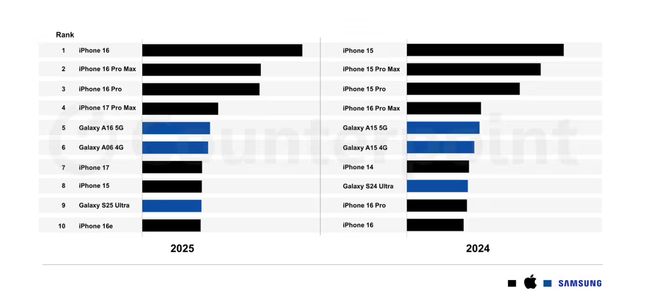
Group 1 - The core point of the article is that Apple's iPhone 16 is projected to be the best-selling smartphone globally in 2025, with Apple and Samsung continuing to dominate the top ten smartphone sales for the fourth consecutive year [1][3]. - In the top ten global smartphone sales for 2025, Apple occupies 7 positions while Samsung holds 3, collectively contributing to 19% of the total global smartphone sales for the year [3]. - The strong performance of the iPhone series is attributed to robust demand in key markets such as the US, China, and Western Europe, with the iPhone 17 series seeing an 11% increase in sales compared to its predecessor [3]. Group 2 - The iPhone 17 standard model has gained attention for significantly narrowing the configuration gap with the Pro series by offering a high refresh rate screen and increased base storage, making it one of the standout models of the year [3]. - The newly launched iPhone 16e has achieved stable sales in Japan and the US, supporting Apple's efforts to expand its market share due to its accessible price point [3]. - Samsung's Galaxy A16 5G has emerged as the best-selling Android smartphone in 2025, showcasing a balanced hardware and software configuration, while its flagship S series has maintained a position in the global top ten for the second consecutive year [3]. Group 3 - The report predicts that a global shortage of storage chips will lead to price increases for related products, significantly impacting the price-sensitive mid-to-low-end smartphone market, particularly in emerging markets like the Middle East, Africa, and Latin America [4]. - As a result of these market dynamics, flagship models with technological advantages and brand premium capabilities are expected to see an increase in their sales share globally [4].


Samsung sees acute chip shortage persisting, warns of mobiles headwind after profit triples
Yahoo Finance· 2026-01-28 22:46
Core Viewpoint - Samsung Electronics anticipates a worsening chip shortage in 2023 due to the AI boom, which is benefiting its memory chip business but creating challenges for its smartphone and display units [1][2]. Financial Performance - Samsung's operating profit more than tripled to a record high of 20 trillion won ($13.98 billion) in Q4, up from 6.49 trillion won a year earlier, driven by strong pricing power in the memory chip sector [2][3]. - Revenue rose 24% to 93.8 trillion won in the same quarter, with the chip business contributing over 80% of total profit, as operating profit surged 470% to 16.4 trillion won [4]. Market Dynamics - The company expects a significant shortage of memory products to persist, with limited supply expansion anticipated until 2026 and 2027, while AI-related demand remains robust [3]. - Memory prices are projected to increase further in the current quarter, potentially leading to surprise earnings, although this will intensify cost pressures on the mobile business [5]. Business Challenges - The mobile and display divisions face a "challenging year" due to rising memory prices, prompting the company to collaborate with partners to ensure stable product supply and enhance resource efficiencies [6]. - Samsung's co-CEO TM Roh described the current chip shortage as "unprecedented" and did not rule out the possibility of raising prices [7].
手机厂商集体破防:这届新品为何不涨不行?
3 6 Ke· 2026-01-28 10:09
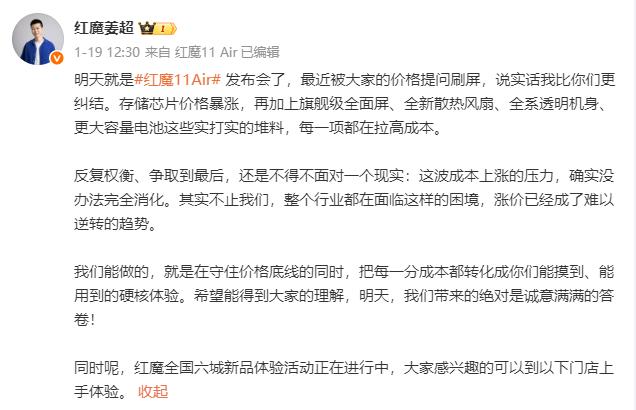
近日,红魔游戏手机在发布新品之际就被不少人点出其价格问题。对此,该品牌的产品总经理姜超表示,"手机行业面临成本上涨难消化困境,涨价已成 难以逆转的趋势。" 现实确实如其所言,在过去,手机厂商通过不断推出新技术、新功能来吸引消费者,激发他们的购买欲望。然而,即便走上"AI+"这条快车道,也不见有 谁打破了现有行业天花板,使得新机发布往往只是对现有功能的微小改进或升级,难以再像过去那样出现划时代的变革。 这种创新乏力的状况,不仅让消费者在面对新机时多了几分理性与审慎,也让手机厂商在定价策略上陷入了两难境地。叠加手机成本上涨带来的巨大压 力,困境愈发凸显,更暴露出当前手机市场所存在的关键矛盾。 一方面,消费者对手机性能、品质的要求不断提高,他们期待厂商能够带来更多创新和惊喜,满足自己日益多样化的需求;另一方面,厂商在面临成本上 涨、创新空间有限等多重压力下,难以在价格上做出太大让步,甚至不得不通过涨价来维持利润空间。 在这样的市场环境下,厂商如何破局,用户如何选择,都成了业内外关注的焦点。 成本"暴击",避无可避 于时下的手机爱好者们而言,要是对价格普涨的新机与折价销售的旧款做出"二选一",在未来的很长一段时间内, ...
Omdia:疯狂上涨的存储成本将抑制今年智能手机AMOLED需求
Sou Hu Cai Jing· 2026-01-28 05:04
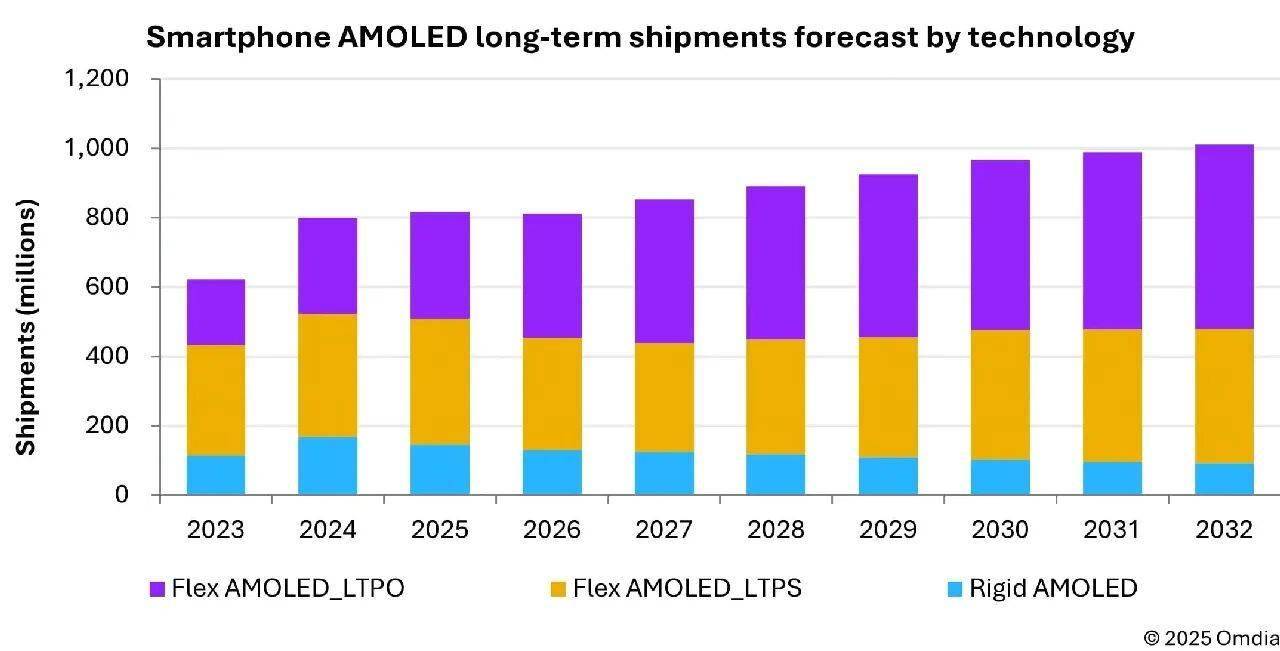
Group 1 - The core viewpoint of the article indicates that global smartphone AMOLED panel shipments are expected to decline to 810 million units in 2026, down from 817 million units in 2025, marking the first drop after three consecutive years of growth [1] - The primary reason for this decline is the shortage of memory supply and skyrocketing prices, leading smartphone manufacturers to lower their procurement plans for 2026 [1] - The price increase of memory has approached or even exceeded the cost of smartphone display panels, limiting the room for AMOLED manufacturers to offer substantial discounts in 2026 [1] Group 2 - The current memory supply tightness and price surge are directly attributed to the surge in demand from AI servers, which prioritize storage capacity for high-margin products, tightening supply for the entire consumer electronics chain [4] - An overlooked factor contributing to this situation is the escalation of geopolitical tensions, alongside the U.S. entering a rate-cutting cycle, which has weakened the dollar and attracted speculative capital into dollar-denominated commodities markets, including gold, silver, copper, and semiconductors [4] - The combination of industrial and financial attributes of these products, along with investors' demand for hedging against inflation, has further amplified price elasticity, leading to a revaluation of basic material pricing, which transmits input inflation to midstream and downstream manufacturing sectors [4]
X @The Economist
The Economist· 2026-01-27 22:20
The next few years already look challenging for smartphones. Apple’s and Google’s would-be disrupters are adding to the pressure https://t.co/gix4qlHYaH ...

Buy, Sell or Hold the Apple Stock? Key Tips Ahead of Q1 Earnings
ZACKS· 2026-01-27 18:46
Core Viewpoint - Apple is expected to report first-quarter fiscal 2026 results on January 29, with projected net sales growth of 10% to 12% year-over-year, driven primarily by strong iPhone sales and a steady performance in Services [1][2]. Group 1: Financial Expectations - Apple anticipates first-quarter fiscal 2026 net sales to grow between 10% and 12% year-over-year, with iPhone sales expected to increase in double digits [2]. - The Zacks Consensus Estimate for fiscal first-quarter net sales is $137.47 billion, indicating a year-over-year growth of 10.6% [3]. - The consensus estimate for earnings per share is $2.65, reflecting a 10.4% increase from the previous year [3]. Group 2: Segment Performance - iPhone sales are projected to reach $77.63 billion, suggesting a 12.2% year-over-year growth, benefiting from strong demand for iPhone 17 and 16 models [9]. - The Services segment is expected to generate $30.04 billion in revenue, indicating a 14.1% growth year-over-year, driven by Apple TV, Arcade, and an expanding device base [12]. - Mac revenue is forecasted to rise modestly to $9 billion, reflecting a 0.9% year-over-year growth amid tough comparisons and market share losses [14]. Group 3: Market Position and Competition - Apple holds a 20% share of the smartphone market as of calendar 2025, with iPhone sales increasing by 6.1% year-over-year [7]. - In the PC market, Apple has lost market share, trailing competitors like Lenovo, Dell, and HP, with a 0.2% shipment growth compared to Lenovo's 14.4% [13][14]. - Apple shares have risen 7.2% over the past year, underperforming the Zacks Computer & Technology sector's return of 24.7% [15]. Group 4: Strategic Initiatives - Apple is enhancing its position in the AI space through a collaboration with Alphabet, which will improve its Siri capabilities and drive demand for its Services business [19][20]. - The adoption of Apple Intelligence is expected to boost the company's Services segment, which accounts for approximately 26% of net sales [20].
内置风扇走红,但它只能用于游戏手机吗?
3 6 Ke· 2026-01-26 13:01
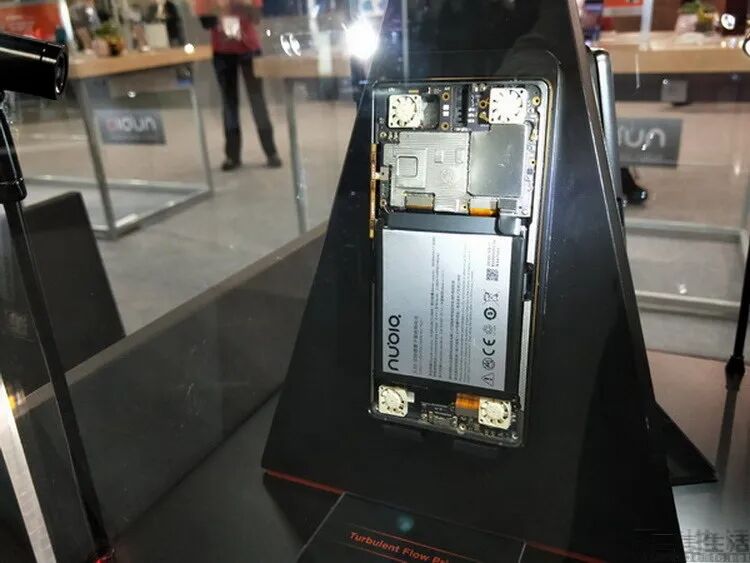
早在2018年年初,彼时努比亚(那时候还没有红魔品牌)在MWC上展出他们塞下了四个风扇的"概念 机"时,绝对不会想到往手机里加风扇的这个操作,有朝一日会变成潮流。 为什么如今的智能手机行业,突然就开始重视起内置风扇设计?其实一个很简单的理由,就是虽然第五代 骁龙8至尊版、天玑9500等顶级旗舰SoC确实性能进步巨大,能效相比前代也有显著提升,但只要能效提升 的幅度不如性能进步的速度快,那么在游戏这类高负载场景,手机实际的峰值功耗(和发热),就还是可 能会变得比过去更高,因此就需要更强的散热措施。 此外,还得考虑软件方面的因素。正是因为现在的高端机型性能越来越强,所以站在硬件(芯片和手机) 厂商的角度,他们也会鼓励软件厂商推出更"吃性能"的软件,比如更大型、画面更复杂的游戏,来彰显新 硬件的价值。而这又会进一步增加性能方面的负载,使得强力的散热设计变得更有必要。 为什么我们会这么说?一方面是因为我们知道,当时努比亚那台概念机里塞的四个风扇其实还没法正常工 作,因为彼时他们还没搞定能塞进手机里,真正起到散热作用的扇叶和风道设计。 另一方面,自从红魔3在2019年首创内置主动式散热风扇以来,在至少长达5年的时间里更 ...
2026,荣耀会不会跑出Others?
3 6 Ke· 2026-01-26 11:34
Core Insights - The Chinese smartphone market is projected to ship 284 million units in 2025, reflecting a slight year-over-year decline of 0.6% [3][8] - Huawei regained the top position with a shipment of 46.7 million units and a market share of 16.4%, while Honor fell out of the top five [3][8] - Honor's overseas market performance is strong, with over 50% of its shipments coming from international sales, and a 47% growth rate in overseas markets [15][20] Market Overview - The top five smartphone manufacturers in China for 2025 are Huawei, Apple, Vivo, Xiaomi, and OPPO, with shipments ranging from 43.4 million to 46.7 million units [8][18] - The market is characterized by intense competition, with small differences in market share among the top players [9][14] - Honor's domestic market share is estimated to be around 12.5%, significantly lower than its previous standing [11][12] Company Developments - Honor underwent significant leadership changes in early 2025, with CEO Zhao Ming stepping down and Li Jian taking over, leading to a restructuring of key management positions [5][21] - The company launched 16 new products in the last six months, covering various price ranges and market segments [6][7] Strategic Initiatives - Honor is shifting its focus towards becoming an "AI terminal ecosystem company," with plans to invest $10 billion over the next five years to build its AI ecosystem [21][24] - The introduction of the "ROBOT PHONE" aims to redefine the smartphone experience by integrating AI capabilities [24] Challenges and Opportunities - The competitive landscape is challenging, with Huawei and Apple dominating the high-end market, capturing nearly 80% of the profits in the segment [14] - Honor's growth in overseas markets is promising, but it faces challenges in scaling its operations and maintaining profitability due to rising component costs [20][21]

小米集团:行业环境疲软下,下调智能手机、电动车销量预期;更新估值情景,维持 “买入” 评级
2026-01-26 02:49
24 January 2026 | 6:48AM HKT Equity Research Xiaomi Corp. (1810.HK) Lower smartphone/EV volume estimates against softer industry backdrop; Refresh valuation scenarios and stay Buy | | | In this note, we lower our estimates on Xiaomi's 2026-27E revenue and profitability by 8%/17% on average primarily on account of: 1) Lower smartphone shipments (esp. in the mass segment) on ASP hike; we model smartphone ASP +6%/+4% yoy in 2026/27E (vs. 0% yoy in 2025E) and shipments -5%/+2% yoy to 158mn/162mn in 2026/27E (vs ...

全球智能手机:因内存供应紧张,下调潜在市场总规模增速至 - 6%-Global Smartphones_ Cutting TAM growth to -6 on memory tightness
2026-01-26 02:49
Summary of Key Points from the Conference Call Industry Overview: Global Smartphones Market Size and Growth Projections - The global smartphone Total Addressable Market (TAM) is projected to decline by 6% in 2026 and grow by 2% in 2027, with volume estimates reduced to 1.19 billion units in 2026 and 1.21 billion units in 2027, reflecting a saturated market and rising memory costs [1][9][13] - The market value is expected to grow by 2% in 2026 to US$581 billion and by 6% in 2027 to US$615 billion, driven by a shift towards premium smartphones priced above US$600 [2][11] Segment Analysis - **Premium Segment**: Expected to grow at a 2% CAGR from 2025 to 2027, reaching 379 million units by 2027, accounting for 31% of total volume. This segment is projected to contribute 70% of total revenues by 2027 [18] - **Mid-End Segment**: Anticipated to decline at a -3% CAGR, with volume dropping to 347 million units by 2027, contributing 20% of total revenues [20] - **Entry-Level Segment**: Expected to decline at a -4% CAGR to 485 million units by 2027, accounting for 40% of the total market, with a revenue contribution of 10% [21] Foldable Phones - Foldable phones are projected to see increased penetration, with estimates revised to 3.8% in 2026 and 6.1% in 2027, translating to 45 million and 74 million units respectively [1][16] - The innovative designs and new model launches, such as Huawei Mate X7 and Moto Razr Fold, are expected to drive consumer interest and adoption [16] Company-Specific Insights: Transsion - Transsion maintains a strong position in the budget and AI smartphone markets, but the target price has been reduced from Rmb91 to Rmb55 due to rising memory costs impacting global demand, particularly in emerging markets where consumers are more price-sensitive [3] Additional Insights - The smartphone market is categorized into three segments based on pricing: Premium (>US$600), Mid-End (US$200-600), and Entry Level (<US$200) [17] - The premium smartphone market is expected to outpace the overall market growth, supported by strong purchasing power and continuous technology upgrades [18] - The mid-end segment is shrinking due to a lack of significant technological advancements and changing consumer behavior [20] - The entry-level segment is facing challenges from rising memory prices, which disproportionately affect price-sensitive consumers [21] Conclusion - The global smartphone market is experiencing a shift towards premium models, while mid and entry-level segments face challenges. Foldable phones are emerging as a significant growth area, and companies like Transsion must navigate rising costs and changing consumer preferences to maintain market share.


