快充技术

Search documents
比亚迪年报出炉:营收、净利润、研发稳居行业第一
Ge Long Hui A P P· 2026-03-27 14:08
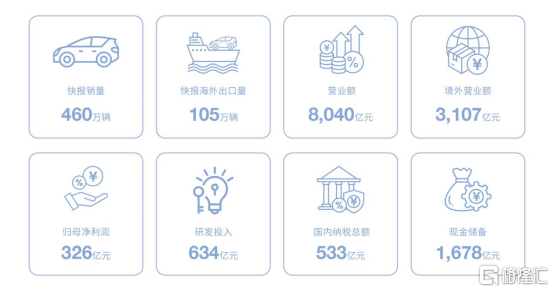
Core Insights - BYD reported record high core operating metrics for the fiscal year 2025, with revenue reaching 804 billion yuan and net profit at 32.6 billion yuan, alongside a domestic tax contribution of 53.3 billion yuan [1] - The company invested 63.4 billion yuan in R&D, a 17% increase year-on-year, significantly surpassing net profit growth, indicating a strong commitment to innovation [3] - Cash reserves stood at 167.8 billion yuan, reflecting a robust financial position [1] Group 1: Financial Performance - BYD's total revenue for 2025 was 804 billion yuan, with a net profit of 32.6 billion yuan and a domestic tax payment of 53.3 billion yuan [1] - The company’s R&D investment reached 63.4 billion yuan, marking a 17% year-on-year increase, with cumulative R&D spending exceeding 240 billion yuan [3] - Cash reserves amounted to 167.8 billion yuan, indicating a solid financial foundation [1] Group 2: Technological Advancements - BYD's commitment to R&D has led to significant technological innovations, including the launch of the second-generation blade battery and fast-charging technology, achieving record charging speeds [3] - The company’s technological advancements include the "Tian Shen Zhi Yan" driver assistance system and the fifth-generation DM technology, which are setting new industry standards [3] Group 3: Sales and Market Position - In 2025, BYD's total vehicle sales exceeded 4.6 million units, placing it among the top five global automotive groups and securing multiple sales championships in the electric vehicle sector [5] - The company achieved a 145% year-on-year increase in overseas sales, totaling 1.05 million units, with operations now spanning 119 countries and regions [6] - The sales of the brands Fangchengbao, Tengshi, and Yangwang reached 397,000 units, a 109% increase, significantly enhancing BYD's brand influence and profitability [8] Group 4: Social Responsibility and Sustainability - BYD paid a total of 53.3 billion yuan in domestic taxes in 2025, reflecting its commitment to social responsibility [8] - The company aims for full value chain carbon neutrality by 2045 and has received an AA rating from MSCI for its ESG performance, ranking among the top tier of domestic companies [8] - In 2025, BYD's electric vehicles contributed to a carbon reduction of 46.6 million tons, equivalent to planting approximately 777 million trees, reinforcing its commitment to sustainable development [8]


国信证券:晨会纪要-20260318
Guoxin Securities· 2026-03-18 01:36
Group 1: Automotive Industry - The automotive industry is expected to see a recovery in passenger car sales, driven by new technologies and product cycles, with a potential upward trend starting in March 2026 [7][9] - In February 2026, retail sales of passenger cars were 1.034 million units, down 25.4% year-on-year, while wholesale sales were 1.518 million units, down 14.3% year-on-year [7] - The automotive sector's performance in February showed a gradual bottoming out, with expectations for a positive trend in March, coinciding with the auto show in April [8] Group 2: Real Estate Industry - The real estate market is currently at a critical point, with mixed signals regarding price performance and transaction volumes, indicating a cautious outlook [10][11] - There is a notable increase in the proportion of low-priced second-hand housing transactions, while buyer sentiment remains cautious [10] - The report suggests that the real estate sector is at a bottoming phase, with potential for stabilization if price declines do not exceed 0.5% in key cities [11] Group 3: Insurance Sector - The insurance sector is experiencing a dual improvement in both asset and liability sides, with a favorable environment for investment returns due to stable long-term interest rates [12] - The average P/EV valuation of major listed insurance companies has fallen to a historical low of 0.6-0.8 times, indicating potential for valuation recovery [12] - The upcoming disclosure of annual and quarterly reports for 2025 and 2026 is expected to act as a catalyst for the sector, with projected net profit growth of around 25% [12] Group 4: Machinery Industry - The machinery industry index rose by 7.27% in February, outperforming the Shanghai and Shenzhen 300 index [13] - The manufacturing PMI for February was reported at 49.0, indicating a slight decline in manufacturing activity, but high-tech manufacturing remains stable [13] - The report highlights opportunities in companies with improving performance trends as the earnings season approaches [13] Group 5: Food Industry (Tianwei Foods) - Tianwei Foods reported a revenue of 3.449 billion yuan in 2025, a slight decrease of 0.79% year-on-year, with a net profit of 570 million yuan, down 8.79% [20][21] - The company is focusing on channel expansion and has a high dividend payout ratio, returning 105% of net profit to shareholders [22] - The report anticipates revenue growth of 11.8% and 9.2% for 2026 and 2027, respectively, with a positive outlook on profitability [23] Group 6: Home Textiles Industry (Luolai Life) - The home textiles industry is projected to enter a new growth cycle in 2024, with a market size of 327.9 billion yuan [24][25] - Luolai Life maintains a leading market share in bedding products, with a diversified brand matrix catering to various market segments [25] - The company is expected to achieve revenue growth driven by its strong online presence and innovative product strategies [26][28] Group 7: Semiconductor Industry (Chipeng Micro) - Chipeng Micro reported an 18% revenue growth in 2025, with significant contributions from emerging markets and new product categories [29][31] - The company is expanding its product offerings, particularly in AI computing energy solutions, with plans to launch 12 new products [32] - The report maintains an "outperform" rating, reflecting confidence in the company's growth trajectory despite potential market slowdowns [32] Group 8: Chemical Industry (Wanhua Chemical) - Wanhua Chemical achieved a revenue of 203.23 billion yuan in 2025, with a year-on-year growth of 11.6% [33][34] - The company is expanding its production capacity for MDI and TDI, with new projects expected to come online in 2026 [34][35] - The report highlights the company's strategic shift towards high-value products and its resilience in the face of market fluctuations [35]
每日投资策略-20260306
Zhao Yin Guo Ji· 2026-03-06 04:36
Macro Commentary - The Chinese government has pragmatically lowered the economic growth target for 2026, reflecting a willingness to tolerate short-term slowdown for higher quality long-term development [2] - The focus of policy is shifting towards stabilizing investment, with increased fiscal resources aimed at attracting private capital into emerging sectors such as AI infrastructure, digital industries, and green industries [2] - The government has explicitly set re-inflation as a policy goal, aiming for a moderate recovery in price levels through supply-demand rebalancing [2] Market Performance - The Hang Seng Index closed at 25,321, up 0.28% for the day but down 1.21% year-to-date [2] - The Shanghai Composite Index rose 0.64%, while the Shenzhen Composite Index increased by 1.17% [2] - The US markets saw declines, with the Dow Jones down 1.61% and the S&P 500 down 0.56% [4] Automotive Industry Commentary - In February, the average discount in the Chinese automotive industry remained stable compared to January, but discounts for German brands narrowed due to significant price reductions by BMW and Mercedes [5] - New model launches in March and April may act as positive catalysts for stock prices, despite weak first-quarter earnings expectations [5] - Traditional automakers like Geely and Great Wall Motors saw increases in average discounts, with Geely reaching a new high of 13.1% [6][7] New Energy Vehicles - Ideal's average discount remained stable at 5.3%, while XPeng's increased to 5.7%, indicating a need for new popular models to support sales growth [6] - NIO's average discount slightly increased to 1.6%, driven by larger discounts on specific models [6] - The new energy vehicle market is facing pressure from rising competition and the need for innovative products to maintain sales momentum [6] Company Insights - Reshaping Energy (2570 HK) is expected to benefit from a new round of hydrogen energy subsidies, potentially doubling the total subsidy amount compared to the previous round [8] - The company is projected to maintain an 18% market share in fuel cell systems, with sales expected to reach 1,200 units in FY25, generating revenue of 660 million yuan [9] - JD Group (JD US) reported a revenue of 352.3 billion yuan for Q4 2025, a 1.5% year-on-year increase, with expectations for steady growth in core business profitability [10] - Bilibili (BILI US) achieved a total revenue of 8.32 billion yuan in Q4 2025, driven by strong advertising performance, with an expected revenue growth of 6% in Q1 2026 [10]


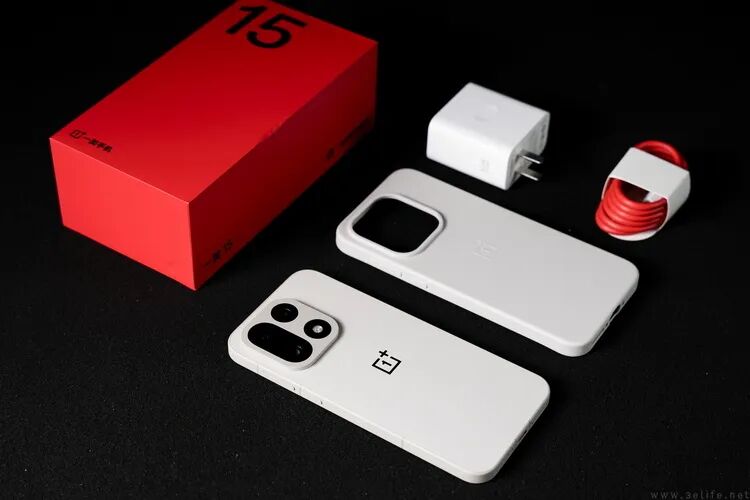
手机快充重回“百瓦级”,但它们真的更快了吗
3 6 Ke· 2025-11-10 23:24
Core Viewpoint - The article discusses the evolution of high-energy density batteries in smartphones, highlighting the trade-offs between charging speed and battery capacity, particularly in gaming-oriented devices. Group 1: Battery Technology and Market Trends - Two years ago, the introduction of high-energy density batteries in smartphones led to longer battery life but reduced charging speeds compared to previous models [1] - High-performance smartphones, which focus on gaming and performance metrics, have become the main players in the market, making slow charging speeds a potential drawback for users [3] Group 2: Charging Performance Analysis - By the fall of 2025, major brands are expected to achieve a balance between high-watt fast charging and large-capacity batteries, with some devices claiming output power of 100W to 120W [5] - A table summarizing charging performance shows that devices with higher nominal charging power generally achieve faster short-term charging speeds under low battery conditions [6][7] Group 3: Charging Strategies - Brands like Red Magic, OnePlus, and Redmi employ a "fast then slow" charging strategy, allowing for rapid charging to 80% in the first 20-30 minutes, but this results in noticeable heat generation during the process [12] - In contrast, iQOO and Honor adopt a "steady" charging approach, which minimizes heat during charging but may not be suitable for quick top-ups during gaming sessions [13]