智能汽车

Search documents
欧美日韩等发达经济体无不关注的这一领域,为何成为汽车业竞逐的新焦点?
Zhong Guo Qi Che Bao Wang· 2025-10-10 03:07
Core Insights - The application of artificial intelligence (AI) has become a focal point in the global automotive industry, with significant strategic initiatives being launched by various countries to leverage AI for automotive advancements [4][5][11] Group 1: Strategic Initiatives - The European Commission has introduced two strategies: "Applied AI" and "Scientific AI," aimed at accelerating AI applications in industries including automotive, with a focus on autonomous driving and innovative models [5] - In the U.S., tech giants like NVIDIA and Tesla are leading the charge in AI for automotive, with Tesla planning to invest over $10 billion in 2024 for the development of its Autopilot system [6] - South Korea and Japan are focusing on cross-industry collaboration to create smart ecosystems, with initiatives like AI-connected electric vehicles and alliances among automakers to develop autonomous driving technologies [7] Group 2: Market Trends and Data - According to EU statistics, only 13.5% of companies with 10 or more employees in the EU are currently using AI in their operations, indicating significant room for growth [5] - The global autonomous driving market is projected to exceed $200 billion by 2030, highlighting the potential for smart vehicles to become the mainstream mode of transportation [11] Group 3: Technological Challenges - Despite rapid advancements, the automotive industry faces technical challenges, particularly in the reliability of autonomous driving systems under complex conditions and extreme weather [9] - Data privacy and cybersecurity issues are becoming increasingly prominent, with concerns over user data collection and potential hacking threats to vehicle systems [9][10] Group 4: Regulatory Landscape - There are discrepancies in regulations regarding autonomous driving across different regions, with the U.S. having varying state laws and the EU imposing strict data flow regulations, complicating global deployment of smart vehicles [10] - Calls for unified international regulations and standards are growing, as current disparities hinder the global development of the smart automotive industry [10]


智能驾驶加速落地,机器人赛道高热 | 投研报告
Zhong Guo Neng Yuan Wang· 2025-10-10 01:04
Core Insights - The automotive industry in China shows stable retail performance for passenger vehicles, with a total of 1.776 million units sold from September 1-27, remaining flat year-on-year and increasing by 12% month-on-month. Cumulatively, 16.54 million units have been sold this year, reflecting an 8% year-on-year growth [2][3] - The new energy vehicle (NEV) sector continues to grow, with 1.039 million units sold from September 1-27, marking a 9% year-on-year increase and a 17% month-on-month increase, achieving a penetration rate of 58.5%. Year-to-date sales reached 8.609 million units, up 24% year-on-year [2][3] Passenger Vehicles - Retail sales of passenger vehicles from September 1-27 totaled 1.776 million units, showing no change year-on-year and a 12% increase month-on-month. Year-to-date sales stand at 16.54 million units, up 8% year-on-year [2][3] - Key companies in this sector include BYD, Geely, Xpeng, Li Auto, Changan, and Leap Motor [3] New Energy Vehicles - NEV retail sales for the same period reached 1.039 million units, with a year-on-year growth of 9% and a month-on-month growth of 17%, resulting in a cumulative total of 8.609 million units sold this year, which is a 24% increase year-on-year [2][3] - Relevant companies include BYD, Geely, Xinquan, Xingyu, Doli Technology, Chuanhuan Technology, and Wuxi Zhenhua [3] Smart Vehicles - Significant advancements in smart vehicles were noted on September 29, including the global launch of L4.5 autonomous driving technology by Jiushi Intelligent, which achieved three major breakthroughs. Huawei announced that its QianKun intelligent driving system has been installed in over 1 million vehicles, with a cumulative assisted driving mileage exceeding 5 billion kilometers [4] - The opening of 879 kilometers of road rights for autonomous vehicles in Zigong and the participation of Chinese companies in autonomous driving tests in Dubai highlight the industry's move towards full commercialization [4] - Key players include Seres, Xpeng, and Li Auto for vehicles, and Hesai Technology, Supcon, Horizon Robotics, and others for components [4] Heavy Trucks - The heavy truck market in China continues to experience high growth, with wholesale sales reaching 105,000 units in September, reflecting a 15% month-on-month increase and an 82% year-on-year increase. Cumulative sales have surpassed 821,000 units, with a 20% year-on-year growth [5] - Relevant companies include Weichai Power, China National Heavy Duty Truck Group, and Foton Motor [5] Robotics - In the robotics sector, Tesla showcased its AI-driven "Optimus" robot, improving action fluidity by nearly 40%. Additionally, a report indicated that global financing for humanoid robots reached 11.108 billion yuan in September, marking a 105.7% increase and a new high for the year [6] - Key companies in this field include Top Group, Sanhua Intelligent Controls, Aikodi, and others [6]

特朗普突发,美联储官员再表态
Zheng Quan Shi Bao· 2025-10-10 00:21
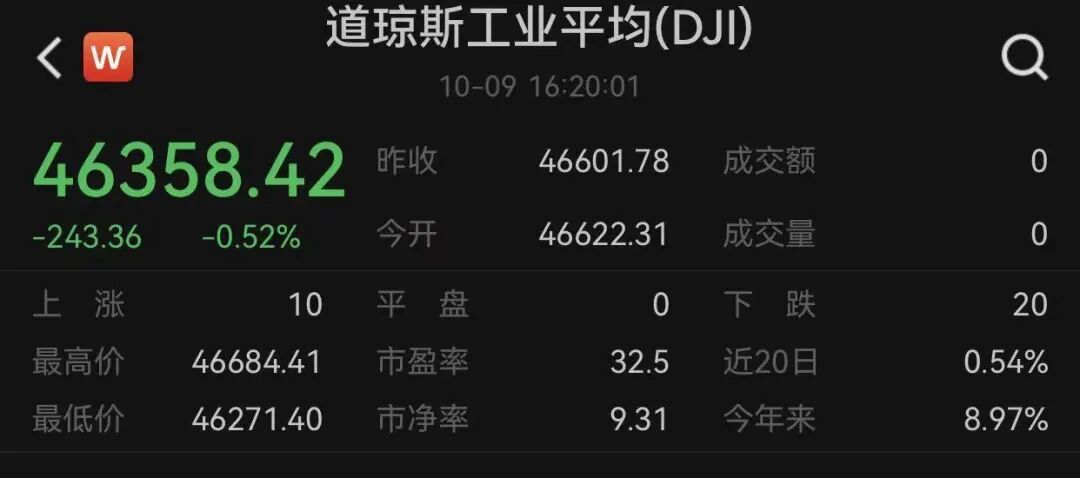
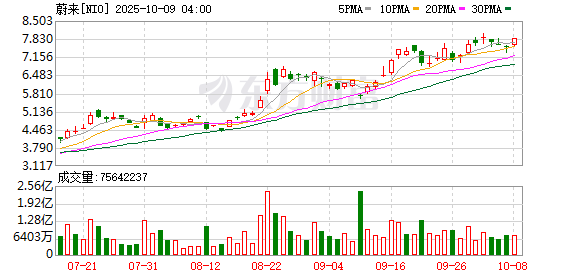
Market Overview - US stock markets collectively declined, with the Dow Jones down 0.52% to 46,358.42 points, the S&P 500 down 0.28% to 6,735.11 points, and the Nasdaq down 0.08% to 23,024.63 points [1] - The Nasdaq China Golden Dragon Index fell by 2.03%, indicating a significant drop in Chinese stocks listed in the US [2][3] Sector Performance - Chinese concept stocks experienced notable declines, with Hesai Technology dropping over 7%, XPeng Motors down over 5%, NIO down over 5%, Pony.ai down over 5%, and TAL Education down over 4% [2] - The decline in the Nasdaq China Golden Dragon Index reflects broader market concerns regarding Chinese companies amid US-China relations [3] Economic Factors - The collective decline in US stocks is attributed to the government "shutdown," which has delayed the release of key economic data and restricted market liquidity [4] - Federal Reserve officials expressed differing views on interest rate cuts, with some supporting further reductions to address potential labor market slowdowns, while others urged caution due to inflation risks [5]
独家丨小鹏汽车智驾一号位换帅,世界基座模型负责人刘先明接任
晚点Auto· 2025-10-09 14:52
Core Viewpoint - The article discusses the recent leadership changes in Xiaopeng Motors' autonomous driving team, highlighting the appointment of Xianming Liu as the new head of the autonomous driving center, and the strategic focus on AI large models for enhancing autonomous driving capabilities [3][4][6]. Group 1: Leadership Changes - Xianming Liu has replaced Li Liyun as the head of Xiaopeng's autonomous driving center, with a strong background in machine learning and computer vision from previous roles at Facebook and Cruise [3][4]. - Li Liyun, who took over the autonomous driving team in August 2023, has a notable background in technology and has been instrumental in the development of Xiaopeng's intelligent driving solutions [6][7]. Group 2: Strategic Focus on AI - Xiaopeng is focusing on the development of a "world base model" for autonomous driving, which is a significant application of their AI large model initiative [6][8]. - The company has announced plans to develop a super-large autonomous driving model with 72 billion parameters, aiming to enhance its competitive edge in the intelligent driving sector [8][9]. Group 3: Industry Context - The competitive landscape in the intelligent driving sector is intensifying, with other major players like Li Auto, Huawei, and NIO also ramping up their AI and autonomous driving technology efforts [8][9]. - Xiaopeng has established the first large-scale AI computing cluster in the domestic automotive industry, supporting the training of its various models [9][10].

传蔚来多位智驾高管离职,官方回应:主动调整智驾部门组织架构
Xin Lang Ke Ji· 2025-10-09 12:20
Core Viewpoint - Recent departures of key personnel in NIO's AI and autonomous driving divisions indicate a strategic restructuring aimed at enhancing the integration of general artificial intelligence technologies into their smart driving experience [1][2]. Group 1: Personnel Changes - Bai Yuli, head of NIO's AI platform, and Ma Ningning, head of NIO's world model, have recently left the company [1]. - Huang Xin, head of NIO's smart driving products, has also departed [2]. Group 2: Organizational Restructuring - NIO is restructuring its smart driving department to better absorb the latest technologies in general artificial intelligence, aiming for efficient and high-quality delivery of smart driving experiences [2]. - The new organizational structure will implement a 4×100 relay model, aligning smart driving and general AI organizations to meet the trends in AI technology development [2][3]. Group 3: Development Goals - The restructuring is intended to accelerate the development and delivery of the world model version 2.0 [3]. - NIO plans to launch iterative versions of the world model 2.0 across multiple platforms from the end of this year to the first quarter of next year [4]. Group 4: Features of World Model 2.0 - The new version aims to enhance spatiotemporal cognitive abilities by incorporating language, creating an Open-set intelligent engine for open interaction [5]. - Users will be able to express themselves naturally, allowing the system to understand and execute commands accurately, moving beyond a limited set of instructions [6]. - The updated version will also utilize reinforcement learning to improve long-sequence capabilities [7].

传蔚来多位智驾高管离职,官方回应:主动调整智驾部门组织架构,冲刺世界模型2.0开发与交付
Xin Lang Ke Ji· 2025-10-09 12:09
Core Insights - Recent departures of key personnel in NIO's AI platform and autonomous driving divisions indicate a strategic shift within the company [1] - NIO aims to enhance its organizational structure to better integrate general artificial intelligence technologies with its autonomous driving initiatives [1] - The company plans to launch iterations of its World Model 2.0 from late this year to early next year, focusing on improved spatial-temporal cognition and natural language processing capabilities [1] Group 1 - NIO's AI platform head Bai Yuli and World Model head Ma Ningning have recently left the company, along with the head of intelligent driving Huang Xin [1] - The organizational restructuring is designed to create a 4×100 relay model that aligns autonomous driving and general AI organizations, facilitating the development of World Model 2.0 [1] - The new structure is expected to accelerate the delivery of intelligent driving experiences and align with the latest trends in general AI technology [1] Group 2 - NIO's World Model 2.0 aims to incorporate language capabilities and develop an Open-set intelligent engine for more natural user interactions [1] - The upcoming version will utilize reinforcement learning to enhance long-term capabilities, moving beyond limited command sets to allow users to express themselves naturally [1] - The iterative versions of World Model 2.0 will be rolled out across multiple platforms, reflecting NIO's commitment to advancing its AI technology [1]
蔚来将推出世界模型2.0版本
Zheng Quan Shi Bao Wang· 2025-10-09 11:07
Core Viewpoint - NIO announced the rollout of the World Model 2.0 iteration version from the end of this year to the first quarter of next year, aiming to enhance spatial-temporal cognitive abilities and integrate language for an open interactive experience [1] Group 1 - The new version will feature an Open-set intelligent engine, allowing users to interact without being limited to a fixed set of commands [1] - Users will be able to express themselves naturally, with the system designed to understand and execute their requests accurately [1]
蔚来将推出世界模型2.0版本,首次实现智能驾驶的开放式交互
Di Yi Cai Jing· 2025-10-09 10:54
Core Insights - NIO plans to launch iterative versions of its World Model 2.0 from the end of this year to the first quarter of next year, aiming to enhance spatial-temporal cognition and integrate language for an Open-set intelligent engine that allows natural user interaction [2] - The new version will utilize reinforcement learning to improve long-term sequence capabilities [2] - NIO has restructured its autonomous driving department to align with the latest advancements in general artificial intelligence, implementing a "4×100 relay baton" model to integrate autonomous driving and general AI organizations [2]
鸿蒙智行国庆销量大定48500台,同比涨幅近七成,中国智能汽车的“鸿蒙时刻”已到来!
Di Yi Cai Jing· 2025-10-09 10:47
Core Insights - The company achieved impressive sales performance during the National Day holiday, with a total of 48,500 orders, marking a year-on-year increase of nearly 70% [1] - Daily orders peaked at over 8,000 on October 1, with a continuous increase leading to the cumulative total by October 8 [1] - In September, the company delivered 52,916 new vehicles, bringing total deliveries to over 950,000, nearing the milestone of one million [1] Sales Performance - Cumulative orders during the National Day holiday reached 48,500 units, reflecting a significant growth of nearly 70% compared to the previous year [1] - The daily order volume saw a remarkable surge, starting from over 8,000 on the first day of the holiday [1] Service and Customer Engagement - The company provided extensive services during the National Day "安心行" service event, including 15 vehicle checks and 24-hour all-scenario rescue services [1] - These services contributed to the expansion of the user base and supported sustained production capacity growth [1] Industry Impact - The nearing milestone of one million deliveries signifies a pivotal moment for the company, positioning it as a leader in the high-end smart vehicle segment in China [1] - The combination of technology, ecosystem, and channel strategies has proven effective in driving sales and enhancing customer satisfaction [1]
任少卿的智驾非共识:世界模型、长时序智能体与 “变态” 工程主义
晚点LatePost· 2025-10-09 10:14
Core Viewpoint - The article emphasizes the challenging yet necessary path that NIO is taking in the field of intelligent driving, focusing on the development of world models and reinforcement learning to achieve advanced capabilities in autonomous driving [2][4][6]. Group 1: Company Background and Leadership - Ren Shaoqing, a prominent figure in NIO, has a strong academic background and significant contributions to deep learning, including the development of Faster R-CNN and ResNet [3][4]. - He co-founded the autonomous driving company Momenta before joining NIO, where he took on the challenge of building the second-generation platform from scratch [4][6]. Group 2: Technological Approach - NIO's approach to intelligent driving involves a combination of high computing power, multiple sensors, and a new architecture based on world models and reinforcement learning [5][6]. - The company aims to move beyond traditional end-to-end models, which are limited in their ability to handle long-term decision-making, by focusing on world models that integrate spatial and temporal understanding [8][11]. Group 3: World Model Concept - The world model is defined as a system that builds high-bandwidth cognitive capabilities based on video and images, addressing the limitations of language models in understanding complex real-world scenarios [11][14]. - NIO is the first company in China to propose the concept of world models, which includes understanding physical laws and the ability to predict movements in three-dimensional space over time [12][24]. Group 4: Reinforcement Learning Importance - The article highlights that the intelligent driving industry has yet to fully embrace the significance of reinforcement learning, which is crucial for developing long-term planning capabilities in autonomous systems [5][24]. - NIO recognizes that traditional imitation learning is insufficient for handling complex driving scenarios that require extended memory and decision-making [30][31]. Group 5: Data Systems and Training - NIO has developed a three-tier data system to ensure the quality and relevance of training data, emphasizing the importance of real-world data over expert data for training models [34][36]. - The company utilizes a combination of game data and real-world driving data to enhance the model's understanding of temporal dynamics and decision-making [25][26]. Group 6: Future Directions and Innovations - NIO plans to implement open-set instruction interaction, allowing users to communicate with the vehicle in a more natural and flexible manner, moving beyond limited command sets [16][18]. - The company is focused on continuous improvement and innovation, with plans to release new versions of their systems that enhance user interaction and safety features [19][20].