世界基座模型

Search documents
世界模型,是自动驾驶的终极答案吗?
3 6 Ke· 2026-02-05 04:30
Core Insights - The concept of "world model" has become a trendy term in the intelligent driving sector, with various companies like Xpeng, NIO, and Huawei adopting different terminologies for similar technologies [2][3][4] - World models are seen as a crucial component in the development of "physical world AI," enabling artificial intelligence to understand and replicate real-world dynamics [3][4] - The current application of world models in the intelligent driving industry is primarily cloud-based, with no direct implementation in vehicles yet [6] Group 1: Industry Trends - The shift from rule-based systems to AI-driven models in intelligent driving has led to a unified approach, where perception, prediction, and planning are integrated into a single network [7] - Despite the advancements, the transition to end-to-end models has revealed shortcomings in traditional simulation tools, necessitating the development of more sophisticated simulation environments [10][11] - The introduction of world models aims to address the limitations of existing simulators by providing a more comprehensive and realistic virtual environment for testing and validation [10][11] Group 2: Technical Challenges - The effectiveness of AI-driven models is hindered by the "black box" nature of end-to-end systems, making it difficult to diagnose errors and ensure reliability [9][10] - Current world models in the industry are still in the early stages, with limitations in generating realistic and diverse scenarios for training purposes [16][18] - The challenge lies in ensuring that generated scenarios accurately reflect real-world conditions, as inaccuracies can lead to poor model performance in practical applications [17][18] Group 3: Future Directions - Companies are exploring various approaches to enhance world models, with some opting for more controllable methods like 3D Gaussian reconstruction [14][15] - The ultimate goal is to develop world models that can support decision-making processes in vehicles, moving beyond their current use as training and validation tools [19] - Achieving a high level of accuracy and reliability in world models is essential for their deployment in real-world driving scenarios, which remains a significant hurdle for the industry [19]

小鹏智驾一把手换人,蔚来团队大调整,各有各的算盘
3 6 Ke· 2025-10-10 12:30
Core Insights - The leadership changes in the autonomous driving divisions of Xiaopeng Motors and NIO indicate a competitive evolution in the smart driving landscape, with both companies adjusting their strategies to enhance their technological capabilities [2][19]. Group 1: Leadership Changes - Xiaopeng Motors announced that Li Liyun, the former head of the autonomous driving center, will be replaced by Liu Xianming, who previously led the world foundation model team [1][2]. - Liu Xianming, who joined Xiaopeng Motors over a year ago, has a background in machine learning and computer vision, having worked at Facebook and Cruise [6][8]. - NIO's autonomous driving team also experienced significant personnel changes, with multiple key executives leaving, including the head of the world model and the product lead for autonomous driving [2][19]. Group 2: Strategic Focus - Liu Xianming's promotion reflects Xiaopeng's commitment to advancing its world foundation model, which is crucial for achieving higher levels of autonomous driving capabilities [13][14]. - The world model developed by Liu's team has a parameter scale of 72 billion, significantly larger than current mainstream VLA models, and is designed to enhance the vehicle's understanding of complex environments [14][16]. - The shift in leadership at both companies suggests a strategic pivot towards different technological approaches, with Xiaopeng focusing on the world model and NIO restructuring to improve its AI integration and delivery efficiency [17][19]. Group 3: Industry Dynamics - The autonomous driving sector is witnessing a bifurcation in technological approaches, primarily between VLA (Vision-Language-Action) and world model architectures, with different companies aligning with one of these strategies [17][18]. - The recent changes in leadership and organizational structure across various companies indicate a new phase of competition in the smart driving field, as firms seek to establish their technological dominance [20].


独家丨小鹏汽车智驾一号位换帅,世界基座模型负责人刘先明接任
晚点Auto· 2025-10-09 14:52
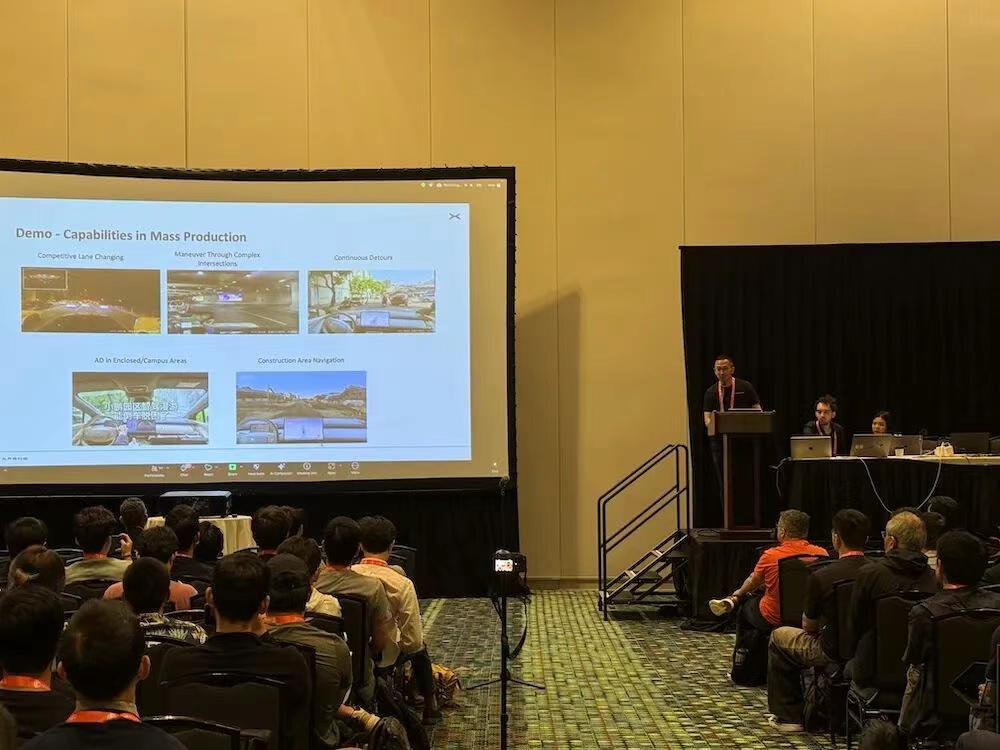
Core Viewpoint - The article discusses the recent leadership changes in Xiaopeng Motors' autonomous driving team, highlighting the appointment of Xianming Liu as the new head of the autonomous driving center, and the strategic focus on AI large models for enhancing autonomous driving capabilities [3][4][6]. Group 1: Leadership Changes - Xianming Liu has replaced Li Liyun as the head of Xiaopeng's autonomous driving center, with a strong background in machine learning and computer vision from previous roles at Facebook and Cruise [3][4]. - Li Liyun, who took over the autonomous driving team in August 2023, has a notable background in technology and has been instrumental in the development of Xiaopeng's intelligent driving solutions [6][7]. Group 2: Strategic Focus on AI - Xiaopeng is focusing on the development of a "world base model" for autonomous driving, which is a significant application of their AI large model initiative [6][8]. - The company has announced plans to develop a super-large autonomous driving model with 72 billion parameters, aiming to enhance its competitive edge in the intelligent driving sector [8][9]. Group 3: Industry Context - The competitive landscape in the intelligent driving sector is intensifying, with other major players like Li Auto, Huawei, and NIO also ramping up their AI and autonomous driving technology efforts [8][9]. - Xiaopeng has established the first large-scale AI computing cluster in the domestic automotive industry, supporting the training of its various models [9][10].
工信部整顿智驾乱象;长城与宇树科技合作;小鹏披露“世界基座模型”进展;埃安滴滴L4 Robotaxi亮相 | 4月智驾热搜
Zhong Guo Qi Che Bao Wang· 2025-04-27 01:48
Group 1: Partnerships and Collaborations - Horizon and Volkswagen Group announced a collaboration in advanced intelligent driving, leveraging Horizon's HSD technology to enhance Volkswagen's smart transformation in China [3] - Great Wall Motors signed a strategic agreement with Yushu Technology to explore robotics and intelligent manufacturing, focusing on integrating vehicles with robotic technologies [4] - Nuro raised $106 million in funding, achieving a valuation of $6 billion, indicating strong investor confidence in autonomous driving technology [5] - CATL, Ant Group, and Hello signed a strategic cooperation agreement to focus on green intelligent mobility and digital technology [8] - GAC Aion and Didi unveiled an L4 autonomous driving Robotaxi model, showcasing advancements in autonomous vehicle technology [13] Group 2: Technological Developments - DeepOpen launched M-Robots OS, a distributed heterogeneous multi-machine collaborative robot operating system, aimed at enhancing industrial control and autonomous driving applications [7] - Xiaopeng Motors disclosed its "World Base Model" development, which integrates multimodal capabilities and aims to enhance autonomous driving performance [10] - Daimler Trucks North America began delivering an automated truck platform to Torc Robotics, targeting scalable physical AI solutions for autonomous trucking [14] Group 3: Regulatory and Market Trends - The Ministry of Industry and Information Technology held a meeting to discuss the management of intelligent connected vehicle product access and software upgrades, emphasizing safety and compliance [11] - Hangzhou government released a draft for managing intelligent connected vehicle applications, setting clear requirements for testing and operational standards [12] - Euro NCAP announced that all new cars must include specified physical buttons starting in 2026, aiming to enhance driver control and safety [16]