
纺织服装

Search documents
古麒绒材龙虎榜数据(11月21日)
Zheng Quan Shi Bao Wang· 2025-11-21 13:42
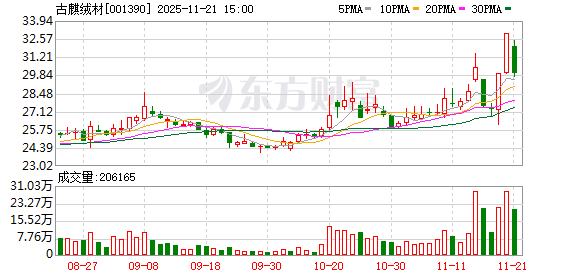
Core Points - The stock of Guqi Rongcai experienced a decline of 8.95% today, with a turnover rate of 42.08% and a transaction volume of 636 million yuan, indicating significant trading activity [2] - Institutional investors net bought 23.72 million yuan, while brokerage seats collectively net sold 52.53 million yuan, reflecting mixed investor sentiment [2] - The stock has appeared on the "Dragon and Tiger List" nine times in the past six months, with an average price drop of 3.40% the day after being listed and an average decline of 4.26% over the following five days [2] Trading Activity - The top five trading departments accounted for a total transaction volume of 147 million yuan, with a buying amount of 59.11 million yuan and a selling amount of 87.92 million yuan, resulting in a net selling of 28.81 million yuan [2] - Among the trading departments, five institutional specialized seats were involved, with a total buying amount of 56.12 million yuan and a selling amount of 32.40 million yuan, leading to a net buying of 23.72 million yuan [2] Fund Flow - The stock saw a net outflow of 34.18 million yuan in main funds today, with a significant outflow of 20.74 million yuan from large orders and 13.44 million yuan from medium orders [2] - Over the past five days, the main funds have seen a net inflow of 15.01 million yuan, indicating some recovery in investor interest [2]

33股今日获机构买入评级
Zheng Quan Shi Bao Wang· 2025-11-21 13:40
Summary of Key Points Core Viewpoint - A total of 33 stocks received buy ratings from institutions today, with notable first-time attention on Chao Hong Ji, Wei Hong Co., and Zhong Wei Company [1][2]. Institutional Ratings - 33 stocks received buy ratings, with the highest attention on Jingxin Pharmaceutical and Baoxiniang, each having one buy rating record [1]. - Among the rated stocks, 13 provided future target prices, with 9 stocks showing an upside potential exceeding 20%. Guangxun Technology has the highest upside potential at 81.99%, with a target price of 99.00 yuan compared to the latest closing price of 54.40 yuan [1][2]. - Other stocks with significant upside potential include Antu Biology at 43.13% and Enhua Pharmaceutical at 35.08% [1][2]. Market Performance - The average decline for stocks with buy ratings today was 2.80%, underperforming the Shanghai Composite Index. Only 5 stocks saw price increases, with the largest gains from Fulei New Materials (2.63%), Lianying Medical (2.15%), and Top Group (0.84%) [1][2]. - Stocks with the largest declines included Xiamen Tungsten New Energy (-9.09%), Aopu Mai (-7.02%), and Minsheng Health (-6.59%) [1][2]. Industry Focus - The pharmaceutical and biotechnology sector is the most favored, with 8 stocks including Minsheng Health and Enhua Pharmaceutical making the buy rating list. The electronics and textile sectors also attracted attention, with 4 and 3 stocks respectively [2][3].





思想交汇处——1436联合《财富》中国500强峰会特别呈现柔韧羊绒美学体验
财富FORTUNE· 2025-11-21 13:05
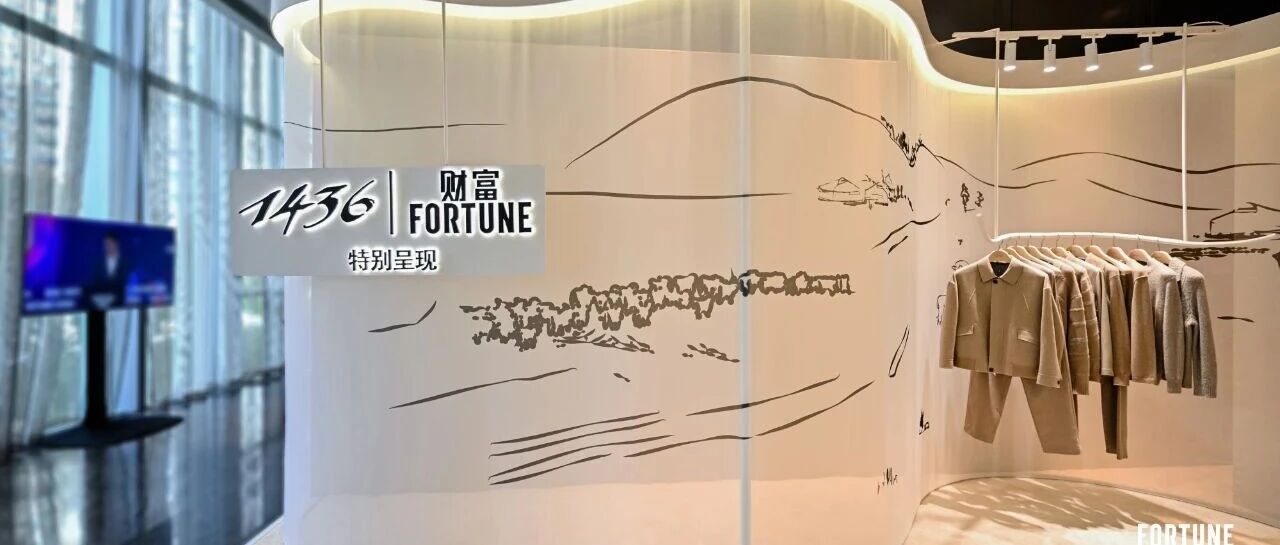
Core Insights - The article highlights the participation of Inner Mongolia Erdos Resources Co., Ltd. in the 2025 Fortune China 500 Summit, emphasizing its strong annual performance and operational results, which led to its inclusion in the Fortune 500 list again [1] - The summit's theme, "Harnessing Trends: The Next 25 Years of the 21st Century," focuses on how companies can build sustainable competitive advantages amid profound changes in the global industrial economy and technological revolutions [3] Brand Positioning and Value Creation - The high-end brand 1436 showcased its 2025 Autumn/Winter collection at the summit, featuring a collaboration with stylists to interpret fashion trends and provide styling advice, embodying the brand's aesthetic philosophy of "noble simplicity and tranquil greatness" [5] - The exhibition area created an immersive experience that combined artistic aesthetics with material science, featuring a design by renowned artist Juju Wang, which drew inspiration from the microscopic forms of cashmere fibers [7] Product Quality and Craftsmanship - The 2025 Autumn/Winter collection was displayed, highlighting the use of rare cashmere materials and meticulous craftsmanship, showcasing the brand's commitment to extreme quality [10] - A parallel meeting titled "The Path to Building High-End Brands" featured insights from Erdos Cashmere Group's General Manager, Daitana, discussing the high-end branding journey of Chinese brands [13] Brand Philosophy and Consumer Engagement - Daitana shared the founding vision of 1436, which is to create a premium brand from the best cashmere materials, emphasizing storytelling through visual language and cultural narratives to enhance consumer experiences [15] - The exhibition elevated product display into a narrative about high-end brand value construction, positioning clothing as a medium connecting human emotions and artistic values [20]

高开低走,泛消费大回撤,银行逆势走强
Ge Long Hui· 2025-11-21 11:43
Market Performance - The Shanghai Composite Index rose by 0.38% while the Shenzhen Component Index fell by 0.05% and the ChiNext Index decreased by 0.52% [1] - Over 3,000 stocks declined across both markets, with a total trading volume of 1.11 trillion yuan [1] Sector Performance - The consumer sectors, including tourism, hotels, food, and retail, showed weakness, with significant declines in stocks such as Shuiyang Co., Nanjing Shanglv, and Yike Food [3] - The banking sector performed strongly, with China Bank and Industrial and Commercial Bank reaching historical highs [3] - The lithium battery supply chain was active, with stocks like Baichuan Co. hitting the daily limit [3] - The photolithography concept continued to show strength, with Guofeng New Materials achieving two consecutive trading limits [3] Corporate Actions - China International Capital Corporation, Dongxing Securities, and Xinda Securities announced a suspension of trading due to plans for a major asset restructuring, involving a share swap merger [3] Economic Indicators - The probability of the Federal Reserve lowering interest rates by 25 basis points in December is estimated at 32.7% [3]



南旋控股(01982.HK)中期净利润约为3.36亿港元
Ge Long Hui· 2025-11-21 11:01
Core Viewpoint - Nanshun Holdings (01982.HK) reported a 1.6% increase in revenue for the six months ending September 30, 2025, reaching HKD 2,830.5 million, driven by sales growth in men's and women's knitted products and fabrics [1] Revenue Performance - Revenue increased from HKD 2,786.2 million for the six months ending September 30, 2024, to HKD 2,830.5 million for the same period in 2025 [1] - The increase in revenue was primarily attributed to a rise in sales of men's and women's knitted products and fabrics, which saw total sales revenue increase by HKD 124.3 million to HKD 2,266.8 million [1] - However, this overall growth was offset by weak sales performance in cashmere yarn, which saw a revenue decline of HKD 227.0 million to HKD 191.5 million [1] Profitability - The company recorded a profit attributable to shareholders of HKD 336 million for the six months ending September 30, 2025, compared to HKD 298 million for the same period in 2024 [1] - The increase in net profit was mainly due to improved performance in the fabric business and sustained strong performance in men's and women's knitted products, leading to higher gross profit [1] - This increase in gross profit was partially offset by rising transportation costs due to increased shipping volumes and higher employee costs resulting from business expansion [1]
南旋控股(01982)公布中期业绩 公司拥有人应占溢利3.36亿港元 同比增长12.7%
智通财经网· 2025-11-21 11:00
Core Viewpoint - Nanshun Holdings (01982) reported a revenue of approximately HKD 28.305 billion for the six months ending September 30, 2025, reflecting a year-on-year growth of 1.6% [1] - The profit attributable to shareholders increased to HKD 336 million, representing a year-on-year growth of 12.7% [1] - Earnings per share were HKD 0.147, with an interim dividend of HKD 0.11 per share [1] Financial Performance - Revenue for the period was approximately HKD 28.305 billion, showing a growth of 1.6% compared to the previous year [1] - Profit attributable to shareholders reached HKD 336 million, marking a 12.7% increase year-on-year [1] - Earnings per share stood at HKD 0.147, with an interim dividend declared at HKD 0.11 per share [1] Business Segments - The increase in net profit was primarily driven by improved performance in the fabric business and strong ongoing performance in men's and women's knitted products, leading to an increase in gross profit [1] - The growth in gross profit was partially offset by increased transportation costs due to rapid shipment volumes and higher employee costs resulting from business expansion [1]
由创新高个股看市场投资热点
量化藏经阁· 2025-11-21 09:18
Group 1 - The report tracks stocks, industries, and sectors that are reaching new highs, indicating market trends and hotspots [1][4][24] - As of November 21, 2025, the distance to the 250-day new high for major indices is as follows: Shanghai Composite Index 4.83%, Shenzhen Component Index 8.65%, CSI 300 6.20%, CSI 500 9.69%, CSI 1000 7.59%, CSI 2000 7.40%, ChiNext Index 12.16%, and STAR 50 Index 16.45% [5][24] - Among the CITIC primary industry indices, the sectors closest to their 250-day new highs include petroleum and petrochemicals, textiles and apparel, basic chemicals, home appliances, and steel [8][24] Group 2 - A total of 1,127 stocks reached a 250-day new high in the past 20 trading days, with the highest number of new highs in the basic chemicals, machinery, and power equipment and new energy sectors [2][13][24] - The highest proportion of new high stocks is found in the textiles and apparel, coal, and non-ferrous metals sectors, with respective proportions of 41.41%, 38.89%, and 38.71% [13][24] - The cyclical and manufacturing sectors had the most new high stocks this week, with 364 and 315 stocks respectively [15][24] Group 3 - The report identifies 15 stocks that have shown stable new highs, including Heertai, Sry New Materials, and Cangge Mining, with the manufacturing and cyclical sectors contributing the most stocks [3][20][25] - The construction industry had the highest number of new highs within the manufacturing sector, while the non-ferrous metals industry led in the cyclical sector [20][25]




应对经贸不确定形势和AI浪潮 纺织服装产业强化亚太地区协同和供应链韧性
Zhong Guo Jing Ying Bao· 2025-11-21 08:44
中经记者吴清北京报道 在新一轮全球产业重构的浪潮中,供应链的韧性正成为国家与区域竞争力的关键支点。如今,亚太地区 正以一场深度协同的集体行动,将"韧性共识"从理念探索转化为具体路径。 近日,《中国经营报》记者从2025亚太纺织服装供应链高峰论坛获悉,本次论坛多维度解析了亚太纺织 服装供应链发展路径,阐述中国在"双循环"新格局下的产业优势与愿景,剖析了全球贸易新形势下的供 应链挑战与战略机遇,揭示区域产能合作与市场联通潜力,为亚太纺织服装供应链重构竞争逻辑提供战 略蓝图。 多位产业人士向记者表示,在全球经贸形式不确定性增加以及AI浪潮席卷而来的当下,通过各方合作 和区域协同,增强供应链韧性是大势所趋。纺织服装产业亚太地区的深化沟通合作,为全球各行业领域 提供了一个可资借鉴的产业链协同的新范式。 在夏令敏看来,未来纺织产业发展趋势将聚焦四大方向:科技创新成为核心驱动力,重点突破先进纺 织、绿色纺织等四大领域关键技术,智能车间、高端装备国产化率持续提升;绿色低碳转型全面提速, 印染行业通过源头减量、过程控制等路径推进低碳发展,循环经济理念深度融入产业链;数字化转型加 速落地,数智赋能生产、设计、物流全环节;品牌建设 ...
钱包鼓了!产业旺了!广东城乡CP的“融合力”从何而来?
Nan Fang Du Shi Bao· 2025-11-21 07:19
Core Insights - The article highlights the significant progress made in Guangdong's urban-rural integration and economic development during the "14th Five-Year Plan" period, emphasizing the reduction of income disparity between urban and rural residents [2][4]. Economic Development - The income ratio between urban and rural residents in Guangdong decreased from 2.49 in 2020 to 2.29 in the first three quarters of 2025, with rural income growth consistently outpacing urban income growth [2]. - In 2024, the GDP of 57 counties and cities in Guangdong reached 1.8 trillion yuan, with an average annual growth rate of 4.9% since 2022 [3]. Infrastructure Improvement - As of October 2024, the total length of rural roads in Guangdong exceeded 180,000 kilometers, equivalent to circling the Earth's equator 4.5 times, facilitating efficient transportation of agricultural products [2]. - Guangdong became the first province in China to achieve full optical network coverage in villages with more than 20 households, enhancing digital infrastructure for farmers [2]. Policy Initiatives - Guangdong implemented a series of policies to promote orderly industrial transfer, allocating 70.5 billion yuan for supporting industrial transfer platforms in less developed regions [4]. - The province created 12 national-level advantageous characteristic industrial clusters and 24 national modern agricultural industrial parks during the "14th Five-Year Plan" [4]. Support Mechanisms - A new round of targeted assistance began in late 2022, with over 162 billion yuan invested in collaborative support across six cities in the Pearl River Delta [4]. - The province's support included 156 provincial agencies assisting 57 counties and five key old revolutionary base areas, completing over 1,100 key assistance tasks [5].
【图解】新兴领域、绿色低碳 市场监管总局批准发布一批重要国家标准
Zhong Guo Jing Ji Wang· 2025-11-21 04:20
Emerging Fields - The National Standards Administration has approved the release of 167 national standards related to rare earth permanent magnet materials, fine ceramics, and carbon fiber composite materials, promoting the iteration and transformation of new material technologies and guiding standardized industrial development [1][2] - Four national standards concerning intelligent computing have been published, covering terminology and social products [1] Transportation and Green Low Carbon - Three national standards have been released for urban rail transit vehicle alarm information and signal systems, enhancing public rail transit safety [2] - Thirty national standards have been published for unmanned aerial vehicle registration and operation identification, road traffic signs, gas vehicles, container repairs, and urban rail transit screen doors, supporting the safe development of transportation [2] - Twenty-two national standards have been introduced for kitchen waste treatment equipment, waste incineration equipment, oilfield production energy consumption testing, lighting facility economic operation, and greenhouse gas management systems, further improving the green low-carbon standard system [2] - A total of 199 national standards have been released for wind power generation systems, CNC plate rolling machines, and reciprocating internal combustion engines, accelerating high-end equipment technology upgrades and product quality improvements, promoting sustainable development in manufacturing [2] Safety Production - Twenty-two national standards have been published for gas transmission and distribution equipment safety, pressure pipeline specifications, and small amusement facilities safety, reinforcing the safe and stable operation of infrastructure and public places [3] - Mandatory national standards for fireworks safety and quality have been established, enhancing safety performance requirements for fireworks products [3] - Eleven mandatory national standards for key fire-fighting products, including automatic sprinkler systems and foam extinguishing agents, have been updated to improve performance and reliability through enhanced quality control [3] Economic and Trade Services - Three national standards have been released for cross-border e-commerce and e-commerce platform transaction information, guiding risk prevention and independent site construction for cross-border e-commerce [4] - Five national standards related to logistics documents, logistics service contracts, automotive parts turnover boxes, and multimodal transport capacity evaluation have been published to enhance the standardization level of logistics and multimodal transport [4] - National standards for the Chinese translation of place names from Sweden, Finland, Norway, Denmark, and Thailand have been established to support economic and cultural exchanges with Nordic and ASEAN countries [4] Agriculture and Rural Areas - Thirty national standards have been published to ensure agricultural production safety [6] - Forty-six national standards related to grain, oil, tobacco, and forestry biomass materials have been released to support high-quality agricultural product supply [6] - Seven national standards for water-saving irrigation and agricultural product trading have been introduced to enhance the standardization level of agricultural production [6] People's Daily Life - Ten national standards for smart home appliances, including application scenarios and lithium-ion batteries, have been published to promote the intelligence, greenness, and safety of home appliance products [8] - Thirteen national standards for smart textiles, silk fabrics, and shoe size comparison tables have been released to guide enterprises in standardized production and enhance consumer experience [8] - Six national standards related to the elimination of iodine deficiency diseases have been published to strengthen healthcare service guarantees [8]
