
储能

Search documents
容量电价机制更新 储能电站从重规模走向重质量
Jing Ji Guan Cha Wang· 2026-02-07 05:29
Core Viewpoint - The introduction of the capacity price mechanism for new energy storage stations marks a significant shift in the industry, allowing these stations to earn fixed revenue and encouraging a transition from scale-based competition to quality and technology-driven development [2][3][17]. Group 1: Capacity Price Mechanism - The National Development and Reform Commission and the National Energy Administration have established a new capacity price mechanism that includes new energy storage stations, allowing them to receive fixed revenue based on their operational contributions to grid stability [2][5]. - A typical 100MW energy storage station could earn over 10 million yuan annually under this new mechanism [2][14]. - The capacity price mechanism is expected to evolve from a fixed cost model to one that reflects regional reliability and market conditions, promoting a competitive environment focused on stable power supply capabilities [5][10]. Group 2: Industry Challenges and Quality Focus - Industry experts indicate that the new regulations require energy storage stations to enhance their operational capabilities and technology to maximize profits, moving away from previous price wars that compromised quality [3][17]. - The mechanism emphasizes the need for higher quality products and better operational efficiency, which will drive companies to invest more in research and development [3][17]. - The introduction of a reliable capacity compensation mechanism will ensure that only those energy storage projects that meet quality standards will receive compensation, effectively filtering out lower-quality projects from the market [17]. Group 3: Market Dynamics and Future Projections - The rapid growth of renewable energy installations, particularly solar and wind, is creating new demand for flexible energy resources, necessitating an estimated 300GW of new energy storage capacity by 2030 to maintain system reliability [7][8]. - The market for energy storage is currently dominated by projects that are either independent or tied to renewable energy sources, with significant growth expected in these areas [11][12]. - Rising raw material costs, particularly lithium carbonate, are impacting the profitability of energy storage projects, necessitating a focus on efficiency and cost management [12][13].


盐穴“充电宝”护航绿电保供
Xin Lang Cai Jing· 2026-02-06 22:00
Core Insights - The project represents the world's largest compressed air energy storage project, marking a significant advancement in energy storage technology [1][2] - The project utilizes underground salt caverns for energy storage, with a total investment of approximately 3.74 billion yuan and a total storage capacity of 2,400 MWh [1][2] Group 1: Project Overview - The project is led by Jiangsu Guoxin Group in collaboration with Su Yan Group and Huai'an Industrial Investment Company [1] - The project consists of two 300 MW non-combustion compressed air energy storage power stations [1] - The second unit of the project was successfully connected to the grid and achieved full-load operation on January 22 [1] Group 2: Environmental Impact - The project is expected to generate an average annual electricity output of approximately 792 million kWh, sufficient to meet the annual electricity needs of 600,000 households [2] - It is projected to reduce carbon dioxide emissions by 600,000 tons annually, equivalent to adding 40,000 acres of forest in the Jianghuai Plain [2] Group 3: Future Prospects - The Jiangsu provincial government aims to accelerate the construction of a new energy system by 2026, supporting Huai'an in becoming a demonstration base for comprehensive salt cavern utilization [2] - The project aims to address the challenges of integrating new energy sources and contribute to a stable, green, and zero-carbon energy system [2]
海南交出有温度的“幸福答卷”
Xin Lang Cai Jing· 2026-02-06 17:54
Core Viewpoint - Hainan Tibetan Autonomous Prefecture is focusing on high-quality development through practical efforts and has set ambitious goals for the upcoming year, as highlighted in the government work report presented at the recent People's Congress meeting [1] Economic Development - Hainan Prefecture achieved a GDP of 24.626 billion yuan, with a growth rate of 4.9% [2] - A total of 511 projects were initiated or resumed, including key infrastructure projects such as the Gonghe Airport and various water conservancy projects [2] - The region attracted 42 investment projects, with a total investment of 7.069 billion yuan, marking a 50% increase year-on-year and exceeding provincial targets by 172.4% [3] Clean Energy Sector - The establishment of the world's first commercial-grade perovskite photovoltaic demonstration base and the completion of several energy storage stations indicate robust growth in the clean energy sector [3] - The region added 5.92 million kilowatts of grid-connected capacity, enhancing its clean energy export capabilities [3] Green Computing Industry - The green computing industry is gaining momentum with 11 projects approved at the provincial level, and several intelligent computing projects are progressing steadily [4] - The launch of specialized green computing centers and successful case studies in data processing highlight the industry's potential for transformation [4] Ecotourism Growth - Hainan Prefecture welcomed 19.134 million tourists, generating 5.85 billion yuan in tourism revenue, reflecting growth rates of 23% and 23.5% respectively [4] - The region has developed standardized breeding bases and ecological pastures, contributing to the enhancement of agricultural and livestock product quality [4] Education Improvement - Significant investments totaling 35.554 million yuan have been made to achieve full coverage of campus optical network upgrades, improving educational resources [5] - The vocational education sector has seen record high rates in both enrollment and employment, with public satisfaction in education reaching the top position in the province [5]
规模以上工业产值占全省三分之一
Xin Lang Cai Jing· 2026-02-06 17:54
Group 1 - The core economic indicators of Xining Economic and Technological Development Zone showed steady progress, with industrial output value accounting for 33% of the province and foreign trade import and export volume increasing by 29.7%, representing 62.5% of the province's total [1] - In the past year, 2,215 new market entities were added, with three enterprises reaching the 10 billion yuan level, two at the 5 billion yuan level, and 25 at the 1 billion yuan level, indicating a continuous enhancement of industrial leadership [1] - By 2025, the development zone plans to advance 77 projects in new energy and new materials, with 41 key projects signed and actual funds in place amounting to 18.15 billion yuan, successfully attracting over 40 billion yuan in investment for energy storage projects [1] Group 2 - This year, the development zone will focus on four key industries: energy storage, green manufacturing, computing power collaboration, and high-performance new materials, with project construction as the core and industrial chain extension as the key strategy [2] - In the energy storage sector, efforts will be made to strengthen collaboration, build application scenarios, and cultivate an industrial ecosystem, including signing manufacturing base projects and launching smart energy storage industrial parks [2] - The green manufacturing industry will focus on technological transformation and creating demonstration projects, with 48 key enterprises implementing energy-saving and intelligent upgrades, aiming to create national-level zero-carbon parks [2]
【金牌纪要库】全国性“容量电价”政策出台,独立储能盈利模式迎来重构,全投资IRR有望突破7%-8%,产业链需求端有望再度发力
财联社· 2026-02-06 15:40
Group 1 - The introduction of the national "capacity electricity price" policy is expected to reconstruct the independent energy storage profit model, with the overall investment IRR likely to exceed 7%-8%, and the demand side of the industry chain is anticipated to regain momentum [1] - Companies utilizing AI large models for trading management in capacity electricity price transactions can capture excess profit sharing, benefiting from the fine management of user-side operations [1] - The capacity electricity price may transform thermal power from a "cyclical stock" into a "public utility stock," allowing related companies to lock in fixed costs and provide cash flow support for operations [1]

我国压缩空气储能技术研发获重要突破
Qi Lu Wan Bao· 2026-02-06 12:23
Core Viewpoint - The Chinese Academy of Sciences' Institute of Engineering Thermophysics has made significant advancements in compressed air energy storage technology, achieving a breakthrough with the development of the world's first and largest single-unit power compressed air energy storage compressor [1] Group 1: Technological Advancements - The research institute collaborated with China Storage National Energy (Beijing) Technology Co., Ltd. to create the compressor [1] - The compressor has passed third-party testing accredited by CNAS, confirming its efficiency [1] Group 2: Performance Metrics - The compressor achieved an efficiency of 88.1% at the highest exhaust pressure, reaching an internationally leading level [1]
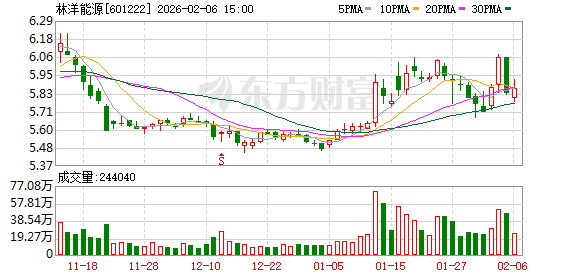
林洋能源:公司会持续跟踪试点省份的先行经验,评估存量项目技改与新建项目的适配性
Zheng Quan Ri Bao· 2026-02-06 12:13
Core Viewpoint - The new policy opens up richer operational dimensions for energy storage assets, aligning with the company's long-term strategic layout in this field [2]. Summary by Relevant Sections - The 114th document provides directional guidance, while the implementation details, market access thresholds, and compensation standards are still being clarified across various provinces [2]. - The company will continue to monitor the experiences of pilot provinces and assess the compatibility of existing project upgrades with new projects [2].

林洋能源:不同项目的技术路线及商业运营模式均会影响参数的设定
Zheng Quan Ri Bao· 2026-02-06 12:12
Core Viewpoint - The company emphasizes the need for differentiated design in energy storage projects based on specific application scenarios, grid scheduling requirements, and investment agreements [2] Group 1: Company Insights - The company is closely monitoring long-duration energy storage technology trends and related policy developments [2] - Existing and under-construction projects are planned and operated in strict accordance with the latest national and local technical standards and grid connection requirements [2] Group 2: Industry Context - The National Development and Reform Commission and the Energy Administration have been continuously improving the energy storage pricing mechanism and grid connection policies in recent years [2]
——电新行业2025年年报业绩前瞻:锂电储能周期拐点明显,光伏盈利探底
Shenwan Hongyuan Securities· 2026-02-06 12:01
Investment Rating - The report rates the industry as "Overweight" indicating a positive outlook for investment in the sector [1]. Core Insights - The lithium battery sector is expected to see a significant increase in both volume and price in Q4 2025, with production levels rising across various components, including a 15% increase in ternary cathodes and a 24% increase in lithium batteries [1]. - The photovoltaic industry is experiencing a reduction in losses, but Q4 is anticipated to be under pressure due to rising costs in silver paste and silicon materials, leading to expected losses for major companies [1]. - The wind power sector is witnessing a substantial recovery in profits driven by demand, with a 50.4% year-on-year increase in installed capacity in 2025, although Q4 performance may fall short of expectations due to reduced shipment volumes [1]. - The energy storage market is projected to maintain high growth rates, with independent storage becoming a key growth driver, supported by increasing demand in emerging markets and improved profitability models [1]. Summary by Sections Lithium Batteries - Q4 2025 is expected to see a significant increase in production across various lithium battery components, with production figures reaching 250,000 tons for ternary cathodes and 600 GWh for lithium batteries, reflecting a robust demand [1]. - Price increases in key materials such as lithium hexafluorophosphate and lithium iron phosphate are anticipated, contributing to stable profitability in the battery segment [1]. Photovoltaics - The industry faced substantial losses in the first three quarters of 2025, but there is a marginal improvement. Q4 is expected to be challenging due to rising costs and asset impairment [1]. - The cash flow in the silicon material segment is showing signs of recovery, with financing inflows increasing, although the overall industry remains under pressure [1]. Wind Power - The installed capacity for wind power in China reached 119.33 GW in 2025, marking a 50.4% increase year-on-year, leading to a significant recovery in profits for the sector [1]. - Despite a strong demand outlook, Q4 performance may be impacted by reduced shipment volumes and impairment factors [1]. Energy Storage - The energy storage sector is expected to continue its rapid growth, with independent storage becoming a core growth driver through capacity leasing and market transactions [1]. - The outlook for 2026 is positive, with anticipated demand growth in overseas markets and improved utilization rates in domestic large-scale storage [1]. Investment Recommendations - The report suggests focusing on four main investment lines: 1. Cyclical growth companies such as CATL and EVE Energy 2. Technological innovation firms like Rongbai Technology and Dingsheng Technology 3. Supply-side optimization companies including Tongwei and LONGi Green Energy 4. Companies expanding into AIDC as a secondary business [1].




电解液租赁模式走向规模化,成全钒液流电池储能降本有效路径
Xin Lang Cai Jing· 2026-02-06 11:26
Core Insights - The article discusses the growth of flow battery storage in China, particularly focusing on vanadium flow batteries, which are expected to see a significant increase in installed capacity by 2025 [1][25] - The introduction of an electrolyte leasing model is highlighted as a solution to high initial investment costs and inefficient resource utilization in the industry [5][26] Group 1: Market Growth and Trends - By 2025, China's flow battery storage is projected to add 1.1 GW/4.66 GWh of new installations, representing a year-on-year growth of 36.7% in power and 44.5% in capacity [1][25] - Vanadium flow batteries are expected to account for 96.3% of the new installations in terms of power and 95.5% in capacity, with a total of 1.06 GW/4.45 GWh [2][25] - The cost of vanadium flow battery systems is currently four times that of lithium iron phosphate battery systems, which are seeing a significant price decline [4][26] Group 2: Cost Structure and Challenges - The cost of the electrolyte in flow batteries constitutes 30%-50% of the total system investment, and fluctuations in the prices of core materials like vanadium pose a significant challenge to the scalability of flow batteries [2][25] - The average price of vanadium flow battery systems in 2025 is projected to be 2.28 yuan/Wh, while lithium iron phosphate battery systems are expected to average 0.5356 yuan/Wh, reflecting a 16.5% year-on-year decrease [3][25] Group 3: Electrolyte Leasing Model - The electrolyte leasing model aims to reduce initial investment costs by 40%-50% and transfer risks associated with vanadium price fluctuations and electrolyte degradation to specialized leasing companies [9][31] - This model allows users to purchase only the basic structure and components of the battery, significantly lowering upfront costs and addressing waste management issues [9][31] - The leasing model has shown economic value in various applications, particularly in grid-side storage and commercial storage, where it enhances cost efficiency [10][33] Group 4: Implementation and Validation - The electrolyte leasing model has been successfully implemented in several international projects, including a 48 MWh project in Texas and an energy hub in Oxford, UK [35] - In China, the first electrolyte leasing project was launched in December 2022, with subsequent projects demonstrating the model's scalability and economic benefits [36][39] - The model has been validated through projects like the 6 MW/36 MWh vanadium flow battery project in Anhui, which achieved a 50% reduction in initial investment and a 1.5% increase in investment returns [39] Group 5: Challenges and Future Directions - Despite the advantages of the electrolyte leasing model, challenges remain, including asset valuation risks due to vanadium price volatility, lack of standardized quality assessments, and insufficient professional capabilities for large-scale leasing operations [41][42] - Future development of the leasing model may require establishing a vanadium price hedging mechanism, accelerating standardization, and enhancing policy support to facilitate broader adoption [42]
