工业绿色转型

Search documents
重庆民建建机制强调研 参政议政紧扣国之大者民之关切
Xin Lang Cai Jing· 2026-02-11 10:31
Core Viewpoint - The Chongqing Municipal Committee of the China Democratic National Construction Association (民建) emphasizes the importance of reform and the establishment of a systematic framework for political participation and consultation, focusing on national priorities, local issues, and public concerns to enhance its political advisory work in 2025 [1][2]. Group 1: Mechanism Construction - The Chongqing Municipal Committee prioritizes mechanism construction to meet new requirements for political participation, including a specialized training session for over 200 core members to improve practical skills in research and report writing [2]. - An innovative system for inviting special information officers has been established, selecting 60 experts to enhance the quality of public opinion information, resulting in over 200 submissions and nearly 60 being adopted by various political bodies [2]. - The committee has deepened its think tank collaboration, promoting the operationalization of the Chongqing Dawn Small and Medium Enterprises Development Research Institute and establishing new committees to standardize and systematize its political participation work [2]. Group 2: Research Quality Improvement - The committee conducted a specialized research trip to Shanghai to learn about advanced practices in consumer upgrades and high-quality development, engaging in multiple discussions to gather firsthand information [3]. - Over the past year, the committee has initiated 10 key research projects and over 300 general topics, facilitating direct communication with various stakeholders to gather substantial data [3]. - A blind review mechanism has been implemented to ensure the professionalism and feasibility of research recommendations, resulting in over 40 proposals and 20 public opinion reports submitted to the Chongqing Municipal Political Consultative Conference [3]. Group 3: Results and Impact - The committee's solid research has led to practical recommendations being adopted by various departments, showcasing its role in political consultation on topics like technological innovation and urban planning [4]. - In 2025, the committee received 3,311 submissions of public opinion information, with 1,165 being reported, and nearly 200 adopted by national and local political bodies, indicating a steady increase in information adoption rate and influence [5]. - The committee plans to continue enhancing its comprehensive mechanism for political participation, focusing on national strategies and local development needs to optimize research topics and result transformation [5].
关于开展零碳工厂建设工作 五部门联合印发指导意见
Jing Ji Guan Cha Wang· 2026-01-19 04:20
Core Viewpoint - The joint issuance of the "Guiding Opinions on the Construction of Zero Carbon Factories" aims to enhance energy conservation and carbon reduction in the industrial and information sectors, promoting green and low-carbon transformation in key industries and fostering new productive forces [1]. Group 1: Definition and Concept - Zero carbon factory construction refers to the process of continuously reducing carbon dioxide emissions through technological innovation, structural adjustments, and management optimization, aiming for near-zero emissions rather than absolute zero [2]. Group 2: Implementation Phases - The guiding opinions outline a phased approach for cultivating zero carbon factories, starting with the selection of benchmark factories in 2026, followed by the establishment of zero carbon factories in sectors such as automotive, lithium batteries, photovoltaics, and electronics by 2027, and expanding to traditional high-energy industries like steel and petrochemicals by 2030 [3]. Group 3: Construction Pathways - Six major directions for construction are proposed, including establishing a carbon accounting system, optimizing energy structure for source reduction, enhancing energy efficiency for process decarbonization, conducting carbon footprint analysis for collaborative reduction, leveraging digitalization for intelligent carbon control, and implementing carbon offsetting and information disclosure for continuous improvement [4]. Group 4: Work Requirements - The guiding opinions also outline work requirements focusing on organizational implementation, improving standard systems, and promoting comprehensive energy-saving and carbon reduction services. Some regions have already initiated near-zero carbon factory pilot projects, with over 30 related group standards established to lay the foundation for nationwide promotion [5].
东华公司多项新能源新材料成果获奖
Zhong Guo Hua Gong Bao· 2026-01-13 06:15
Core Viewpoint - The achievements of Donghua Engineering Technology Co., Ltd. in the fields of industrial wastewater treatment, new materials, and resource utilization highlight the company's technological strength in promoting industrial green transformation and efficient resource use [1][2]. Group 1: Awards and Recognitions - Donghua Engineering won multiple awards at the Anhui Provincial Employee Technology Innovation Competition, including the "Gold Achievement" award for the project on "Key Technologies and Applications for Coordinated Treatment and High-Value Resource Utilization of Industrial Wastewater" and the "Gold Project" award for the "Development Project of High-Conductivity Graphene-Aluminum Composite Materials" [1]. - The company also received first-class recognition from the China Energy Chemical Geological Trade Union for its technologies on "Zero Discharge and Resource Utilization of Coal Chemical Wastewater" and "Lithium Extraction Technology from Salt Lakes" [1]. Group 2: Technological Innovations - The industrial wastewater treatment technology developed by the company integrates "multi-pollutant coordinated removal + multi-path high-value resource utilization + whole-process cost reduction and efficiency enhancement," marking an upgrade from end-of-pipe treatment to whole-process control [2]. - The graphene-aluminum composite material project utilizes Donghua's continuous gas-phase synthesis technology to create a new composite material with high conductivity, high modulus, high strength, and lightweight characteristics, overcoming traditional aluminum alloy performance limitations [2]. - The zero discharge and resource utilization technology for coal chemical wastewater establishes a comprehensive intelligent control technology system, providing a replicable and promotable demonstration solution for the industry [2]. - The lithium extraction technology from salt lakes addresses the technical bottlenecks in developing low-grade, high magnesium-to-lithium ratio brine in China, innovating process pathways and developing specialized reactors to form a highly adaptable lithium extraction technology system [2]. Group 3: Future Directions - The company is committed to increasing R&D investment in new materials, new energy, and new environmental protection fields, focusing on key technical challenges in the industry [2]. - By leveraging the "T+EPC" model, the company aims to promote more innovative achievements that contribute to industrial green transformation [2].

元琛科技董事长徐辉: 以AI破局环保瓶颈 赋能“双高”企业实现绿色增效
Zhong Guo Zheng Quan Bao· 2025-12-26 22:13
Core Insights - The environmental protection industry is transitioning from rapid growth to stock competition, highlighting the transformation challenges faced by high-pollution and high-energy-consuming enterprises [1][2] - The chairman of Yuancheng Technology, Xu Hui, emphasizes the need to accurately identify pain points and integrate AI into the entire industrial operation chain to resolve the conflict between energy efficiency and emissions reduction [3][4] Industry Transition - The industry is experiencing a shift from blind pursuit of trends to a focus on core areas such as energy, materials, safety, and environmental protection, leading to deep innovation in the industrial chain [2][4] - AI technology is seen as a key driver for building a new energy system, with early adoption being crucial for seizing opportunities during industry transformation [2][3] AI Integration - Yuancheng Technology aims to break the zero-sum game between environmental protection and economic benefits by integrating AI throughout the industrial operation chain, enabling real-time perception, system prediction, dynamic optimization, and self-learning iteration [3][4] - The company has developed the AI Smart Environmental Island 2.0, which enhances the entire process from monitoring to governance, achieving significant breakthroughs in control precision and adaptability to complex working conditions [4][5] Practical Applications - A case study from a customer in Tangshan shows that the implementation of the AI system led to a reduction of over 7% in ammonia water usage during denitrification, a 5% savings in calcium hydroxide during desulfurization, and a daily electricity savings of 2878 kWh, resulting in a 30% reduction in comprehensive governance costs [5][6] - The AI system also incorporates carbon asset management, generating a "carbon efficiency heat map" to help enterprises identify emission reduction potential [5][6] Collaborative Ecosystem - Xu Hui believes that the transformation of "dual high" enterprises through AI requires collaboration across the industrial chain and integration of research, education, and industry [7] - Yuancheng Technology has established partnerships with universities to foster innovation and maintain a competitive edge in environmental technology [7][8] - The company advocates for a global strategy focused on "technology going abroad" rather than "heavy asset investment," aiming to mitigate traditional risks associated with overseas investments [7][8]

威高WGT Ye3电机:节能标杆引领工业绿色转型
Jin Tou Wang· 2025-12-24 08:29
Core Viewpoint - The WGT Ye3 series ultra-efficient energy-saving motors from Weigao are positioned as a core support for the green transformation of the manufacturing industry, driven by the dual goals of carbon neutrality and industrial energy efficiency improvement [1]. Group 1: Product Performance - The WGT Ye3 motor meets the GB18613-2020 new energy efficiency standards, achieving an IE3 efficiency level and reducing energy consumption by over 15% compared to traditional Y2 motors [3]. - A case study in a building materials factory showed that replacing 10 units of 55kW Ye3 motors saved over 180,000 yuan in electricity costs annually, with an investment payback period of only 8 months [3]. - The motor features 99.9% pure oxygen-free copper wire windings and a vacuum impregnation process, enhancing insulation and thermal conductivity by 30%, which effectively reduces copper losses [3]. Group 2: Reliability and Adaptability - The Ye3 motor is designed to handle complex industrial conditions, featuring a wide voltage design (380V±10%) to cope with voltage fluctuations and an IP54 protection rating to resist dust and moisture [5]. - In a harsh mining environment test, the Ye3 motor operated continuously under high load for 3 months without failure, maintaining a stable temperature rise below 60°C [5]. - The motor covers a power range from 0.75KW to 375KW and is compatible with various industrial equipment, demonstrating industry-leading adaptability [5]. Group 3: Market Opportunities - The penetration rate of efficient energy-saving motors in China is steadily increasing from 45%, supported by procurement subsidy policies of 15%-20% in provinces like Heilongjiang and Shandong, accelerating the replacement of traditional motors [5]. - Weigao leverages its comprehensive production and sales system to convert the technical advantages of the Ye3 motor into market competitiveness, providing high-quality options for domestic equipment upgrades and expanding into overseas markets [5]. - As the industrial energy efficiency improvement action plan is implemented, Weigao aims to continuously optimize the performance of the Ye3 motor, driving the product towards higher efficiency and intelligence, thus contributing to the green transformation of the manufacturing industry [5].

推动金融“活水”精准灌溉工业绿色转型,需要做好哪些文章?
Ren Min Wang· 2025-12-20 08:18
Core Viewpoint - The issuance of the "Notice on Utilizing Green Financial Policies to Support the Construction of Green Factories" by the Ministry of Industry and Information Technology and the People's Bank of China aims to integrate green finance with industrial green manufacturing, providing strong support for high-quality development in the manufacturing sector [1]. Group 1: Green Finance and Industrial Transformation - The "Notice" establishes mechanisms to ensure financial services for green factories, focusing on risk prevention and funding support for green sectors [1]. - The document emphasizes the importance of directing funds towards clean energy, energy conservation, and green transportation, contributing to the transition towards a low-carbon economy [1]. Group 2: Investment Project Categories - The "Notice" identifies three key investment project categories: 1. Encouraging "incremental" projects focusing on R&D and industrial application of green low-carbon technologies [2]. 2. Addressing "stock" issues through technological upgrades to enhance energy efficiency and resource recycling [2]. 3. Promoting "reduction" by supporting zero-carbon factory construction projects [2]. Group 3: Collaborative Financial Support - A comprehensive green financial support system is necessary, involving collaboration among various stakeholders to ensure effective funding allocation [2]. - Financial institutions are encouraged to enhance support by optimizing internal management, streamlining approval processes, and developing suitable financial products [3]. Group 4: Role of Green Finance - Green finance is positioned as a crucial tool for converting ecological value into economic value, addressing the challenges of high investment and long return cycles in ecological protection [3]. - The continuous improvement of green financial systems in China is expected to inject momentum into industrial green manufacturing, promoting sustainable development [3].
11月储能系统中标规模同比翻倍,均价持续探底!GWh级园区项目成转型样本
中关村储能产业技术联盟· 2025-12-11 08:54
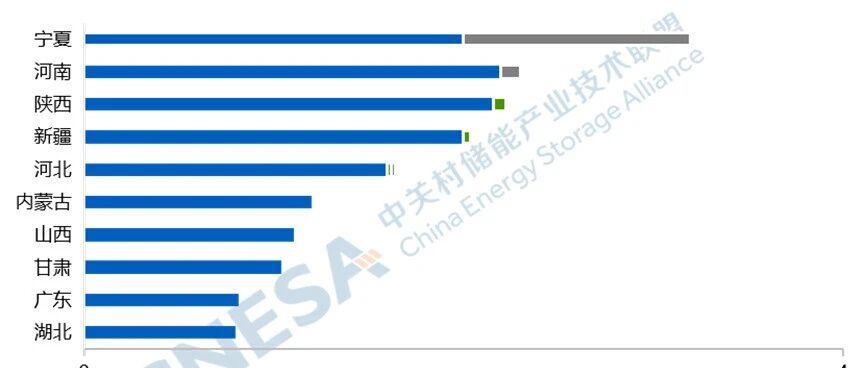
Core Insights - The energy storage bidding market in November 2025 shows a pattern of "stabilized scale and price differentiation," with the bidding scale for energy storage systems doubling year-on-year, while average prices continue to decline [1][4]. Group 1: Bidding Scale - The bidding scale for energy storage systems reached 3.3GW/10.0GWh, representing a year-on-year increase of 106.5%/99.7% and a month-on-month increase of 2.1%/-21.0% [2][4]. - The EPC (including PC) bidding scale was 6.5GW/18.6GWh, showing a year-on-year decrease of 10.2%/+4.6% and a month-on-month decrease of 0.1%/+9.2% [2][4]. - The energy storage system bidding scale's decline trend has slowed compared to October, while the EPC bidding scale has rebounded [4][5]. Group 2: Regional Distribution - In November, the EPC bidding scale in Ningxia led the nation at 3.2GWh, despite a 7.5% decrease from October. Notably, user-side energy storage projects accounted for 37.5% of the total, with GWh-level projects highlighted [8][6]. Group 3: Bidding Prices - The average bidding price for 2h energy storage systems was 527.9 yuan/kWh, down 12.5% year-on-year and 8.5% month-on-month, with a price range of 443.9 yuan/kWh to 572.0 yuan/kWh [3][10]. - The average bidding price for 4h energy storage systems was 510.7 yuan/kWh, up 14.7% year-on-year but down 15.1% month-on-month, with a price range of 481.4 yuan/kWh to 540.0 yuan/kWh [10]. - The average bidding price for 2h EPC projects was 1127.4 yuan/kWh, down 0.6% year-on-year but up 6.2% month-on-month, with a price range of 755.3 yuan/kWh to 1909.8 yuan/kWh [12][10].
破解赤泥综合利用难题 推动工业绿色转型和循环经济发展
Zheng Zhou Ri Bao· 2025-12-04 00:54
Core Viewpoint - The implementation plan aims to systematically address the challenges of red mud utilization, promoting industrial green transformation and circular economy development in Henan Province [1] Group 1: Overview of Red Mud Utilization - Red mud is a major solid waste from the alumina industry, with significant production and storage volumes, making its comprehensive utilization crucial for ecological protection and resource efficiency [1] - The plan sets phased goals: by 2027, achieve a 15% increase in red mud utilization rate; by 2030, reach a 25% utilization rate with a mature innovation system [1] Group 2: Action Plans - Four major actions with 11 specific tasks are outlined to achieve the goals [2] - "Source Control Action" aims to reduce red mud output through clean production and technological upgrades, targeting a reduction of at least 5% in output by 2030 compared to 2024 [2] - "Comprehensive Utilization Expansion Action" focuses on expanding existing utilization, supporting applications in iron extraction, building materials, and new material development in various sectors [2] - "Technological Innovation Enhancement Action" emphasizes key technologies for reducing red mud generation and improving utilization efficiency, alongside building platforms for innovation and commercialization [2] - "Industrial Collaborative Development Action" encourages regional coordination in red mud utilization, promoting cross-industry collaboration and information sharing [2]
山西吕梁集中发布三部条例 守护绿水青山与向善力量
Zhong Guo Xin Wen Wang· 2025-10-10 14:00
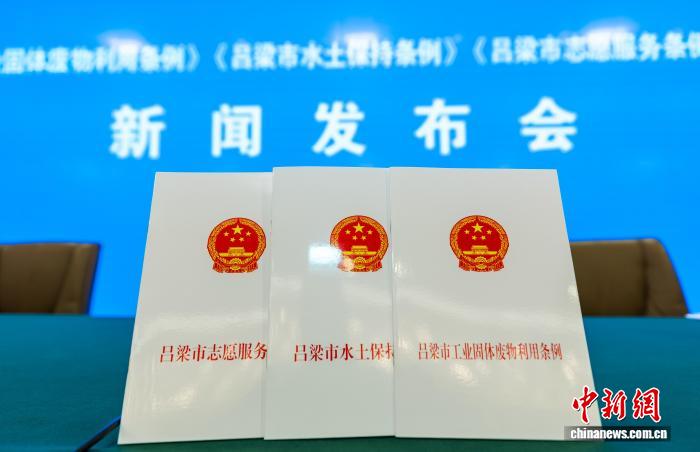
Core Points - Shanxi Province's Lüliang City has recently introduced three regulations aimed at addressing local development challenges and promoting environmental protection and social responsibility [1][3]. Group 1: Industrial Solid Waste Management - The "Lüliang City Industrial Solid Waste Utilization Regulation" has been established to tackle the significant ecological pressure from large historical stock and high annual production of industrial solid waste [3]. - The regulation includes the establishment of a special fund to support high-value and high-tech solid waste utilization industries and key technology research and development [3]. - It emphasizes a comprehensive prevention and control system against secondary pollution, with strict penalties for violations [3]. Group 2: Soil and Water Conservation - The "Lüliang City Soil and Water Conservation Regulation" aims to protect the ecological environment of the Yellow River basin, focusing on soil erosion control [4]. - The regulation clarifies responsibilities and establishes an incentive mechanism, requiring the government to implement target responsibility systems and performance assessments [4]. - Lüliang plans to enhance enforcement through inter-departmental collaboration, funding support, and public awareness campaigns [4]. Group 3: Volunteer Service Promotion - The "Lüliang City Volunteer Service Regulation" seeks to institutionalize volunteer services, transitioning from individual acts of kindness to a structured social norm [5]. - It establishes a comprehensive management system for volunteer services, defining responsibilities and promoting a local "Volunteer Lüliang" culture [5]. - The regulation encourages volunteer efforts in rural revitalization, ecological protection, cultural heritage, and emergency rescue, with a focus on local特色产业 such as jujube and walnut [5].
【行业趋势】中国无机颜料行业相关政策、市场竞争格局及未来发展趋势预测
Sou Hu Cai Jing· 2025-07-17 14:30
Industry Overview - The inorganic pigment market is primarily composed of inorganic compounds, including titanium dioxide, iron oxide pigments, chromium pigments, cadmium pigments, and metal oxide mixed-phase pigments [2][4] - Inorganic pigments are widely used in construction materials, plastics, rubber, coatings, paints, inks, and artistic fields [2] - The global inorganic pigment market is expected to exceed $30 billion by 2024, with the Asia-Pacific region holding a dominant position [2] - The market is projected to grow further, surpassing $40 billion by 2032 [2] Market Dynamics - In 2024, China's total production of titanium dioxide is expected to reach 4.8052 million tons, a year-on-year increase of 13.79% [2] - The total production of iron oxide pigments in China is projected to be 625,900 tons in 2024, reflecting a year-on-year growth of 6.21% [2] - The inorganic pigment industry is undergoing structural transformation driven by global industrial green transition and carbon neutrality goals [2] Future Trends - The growth logic of the industry is shifting from "quantity" to "quality," with environmental friendliness, functionality, and circularity becoming core competitive advantages for companies [2] - Traditional high-pollution and high-energy consumption production models are being disrupted by technological innovation and sustainable development [2] Related Companies - Listed companies in the inorganic pigment sector include KunCai Technology (603826), ShuangLe Co., Ltd. (301036), Longbai Group (002601), Zhongke Titanium White (002145), Jinpu Titanium Industry (000545), and Huiyun Titanium Industry (300891) [2] - Other relevant companies include Longbai Group Co., Ltd., ShuangLe Pigment Co., Ltd., and several others involved in the production and development of inorganic pigments [2]