Semiconductors

Search documents
谷歌迎来“DeepSeek时刻”!TurboQuant引爆AI圈、全球开发者疯狂复现:6倍无损压缩,内存股集体暴跌
AI前线· 2026-03-26 05:17
Core Viewpoint - Google Research has introduced the TurboQuant compression algorithm, which significantly reduces memory usage for large language models (LLMs) while maintaining accuracy, potentially compressing key-value caches by at least 6 times and achieving speed improvements of up to 8 times on H100 GPUs [2][5][10]. Summary by Sections TurboQuant Algorithm - TurboQuant allows for extreme memory compression without loss of precision, requiring no fine-tuning or training data, and can be directly integrated into any Transformer model [5][10]. - The algorithm has been tested on open-source models Gemma and Mistral, demonstrating a 6-fold reduction in memory usage and maintaining performance across all downstream tasks [10]. Market Reaction - Following the announcement of TurboQuant, memory-related stocks experienced significant declines, with Micron Technology down 3%, Western Digital down 4.7%, and SanDisk down 5.7% [5][20]. - Analysts suggest that the market's reaction may be an overestimation of the impact on memory demand, as AI infrastructure spending continues to grow rapidly [20][21]. Technical Details - TurboQuant employs a vector quantization method to address cache bottlenecks, allowing AI models to remember more information while occupying less space [7][8]. - The algorithm consists of two key technologies: PolarQuant for extreme compression and QJL for error correction, which together enhance the efficiency of memory usage in AI models [14][15]. Broader Implications - If widely adopted, TurboQuant could significantly alter the cost structure of AI operations, although it is still in the experimental phase and not yet deployed on a large scale [11][21]. - The technology is expected to benefit mobile AI applications by improving local AI generation quality without needing to upload data to the cloud [11]. Competitive Landscape - NVIDIA is also developing a competing algorithm, KVTC, which claims to achieve 20 times compression with minimal accuracy loss, indicating a growing focus on efficient KV cache management in AI infrastructure [22].



How Geopolitics Is Reshaping the US Stock Market And What Comes Next
Investing· 2026-03-26 04:50
Core Insights - Geopolitics is increasingly becoming a primary force shaping the US stock market, influencing sector performance, capital flows, and investor sentiment [1][2][14] - The S&P 500 remains resilient, but leadership is shifting due to geopolitical tensions impacting market dynamics [3] Group 1: Energy Sector - Geopolitical tensions have placed energy markets, particularly oil, back at the center of market performance, with increased risks of supply disruptions [4] - Companies like Exxon Mobil (NYSE: XOM) and Chevron (NYSE: CVX) are benefiting from higher baseline oil prices and stronger cash flows [6] Group 2: Defense Sector - Global military spending is rising due to geopolitical tensions, benefiting defense contractors such as Lockheed Martin (NYSE: LMT) and RTX Corporation (NYSE: RTX) [5][7] - This trend appears to be structural rather than temporary, indicating long-term growth potential in the defense sector [8] Group 3: Supply Chain Dynamics - Globalization is evolving into a more fragmented system, with companies prioritizing resilience over efficiency, impacting various sectors [9] - This shift has significant implications for companies involved in reshoring manufacturing and diversifying supply chains [10] Group 4: Technology Sector - Technology is increasingly viewed as a strategic asset and geopolitical tool, with intensifying competition in areas like artificial intelligence and semiconductors [9][10] - Key players in this space include Apple (NASDAQ: AAPL), Qualcomm (NASDAQ: QCOM), Nvidia (NASDAQ: NVDA), and Microsoft (NASDAQ: MSFT) [10] Group 5: Emerging Opportunities - Geopolitical tensions are creating "hidden winners" in less obvious industries, benefiting companies involved in cybersecurity and data infrastructure [11][12] - These companies are positioned to take advantage of long-term structural shifts rather than just short-term events [12] Group 6: Future Market Scenarios - Geopolitics is expected to remain a dominant theme, with potential scenarios including controlled tensions, escalation, or de-escalation impacting market direction [13] - Investors should monitor factors such as energy prices, defense spending trends, and geopolitical flashpoints to navigate this evolving landscape [16][17]


继GPU、存储暴涨之后,AI最终攻陷CPU市场
机器之心· 2026-03-26 04:12
Core Viewpoint - The article discusses the significant price increase of CPU chips due to supply shortages and the shift in semiconductor manufacturing capacity towards AI applications, impacting the traditional PC market [2][6][10]. Group 1: CPU Price Increase - Intel and AMD have raised CPU prices by an average of 10% to 15% starting in March and April, with some products experiencing even larger increases [6][7]. - The current issue is not just the price increase but also the shortage of resources, with delivery times for CPUs extending from an average of 1-2 weeks to 8-12 weeks, and in some cases, up to 6 months [8][11]. Group 2: Impact of AI Demand - The explosive growth in AI demand has led to a surge in the need for high-performance CPUs and related semiconductors, consuming capacity that was previously allocated to the PC market [10][19]. - Intel and AMD are prioritizing production for server CPUs, resulting in reduced supply for the PC segment, with expectations that the situation will worsen in the coming months [11][20]. Group 3: Shift Towards ARM Architecture - OEM manufacturers are seeking alternatives due to the supply shortages from Intel and AMD, although options are limited [14][15]. - By 2025, Intel and AMD's x86 architecture CPUs will still dominate the market, holding over 85% in PCs and about 78% in servers [16]. - ARM architecture CPUs are gaining traction, with ASUS reporting that around 30% of their Copilot AI PCs now use ARM-based CPUs, up from 20% last year, indicating a structural shift in the industry [18]. Group 4: Manufacturing Challenges - Both Intel and AMD are working to increase production capacity, but challenges remain. Intel is focused on enhancing its own wafer fabrication capacity, while AMD relies on external foundries like TSMC and Samsung, competing for limited resources with AI chip giants [20][21].



Arm Shoulders More of the Supply Chain by Making a Chip
Yahoo Finance· 2026-03-26 04:01
Concerned about an AI bubble? Sign up for The Daily Upside for smart and actionable market news, built for investors. Arm’s stock flexed more than 16% on Wednesday after the chip designer decided to take chip-making into its own hands. The 35-year-old company previously made money mostly by licensing its designs to other players in the chip ecosystem, including Qualcomm and Nvidia, and then scooping up royalties from their sales. Now, Arm wants to make its own chip built to support agentic AI. Arm alread ...

AI demand is shielding China’s booming trade from war shocks
The Economic Times· 2026-03-26 04:00
Core Insights - China's trade volumes are on track to exceed last year's record levels, driven by an investment boom in artificial intelligence, despite disruptions from higher oil prices due to the conflict in Iran [1][16] - Nearly 20 million containers moved through Chinese ports in the first three weeks of March, marking an increase of over 6% compared to the same period last year [1][16] - The pace of increase in trade indicates that the aftershocks from the Middle East conflict have not yet significantly impacted Chinese trade [2][16] Trade Performance - China's export performance remains strong, with overseas shipments soaring 22% in the first two months of 2026 compared to the previous year, surpassing economists' forecasts [10][16] - AI-related demand has been a significant factor, with chip exports increasing by 73% [10][16] - Economists from Australia & New Zealand Banking Group Ltd. noted that the strength in regional tech exports signals a positive outlook for China's external trade [4][16] Economic Outlook - ANZ estimates that AI-related exports accounted for nearly 19% of China's total exports in 2025, primarily consisting of intermediate goods like semiconductors [11][16] - Barclays Plc projects that China will continue to support its exports through AI-related products and green technologies, estimating that China represents over 30% of global export value in critical AI-linked goods [14][16] - The outlook for trade is crucial for assessing the state of China's economy, which relied on net exports for almost a third of its economic growth last year [16] Challenges and Risks - Seasonal factors may hinder China's export growth in March, with a later-than-usual Lunar New Year affecting working days [12][16] - Many Chinese factories are facing rising costs due to reliance on crude or oil-derived products, which could squeeze manufacturers' profits if they cannot pass on these costs [13][16] - The ongoing conflict and potential for longer disruptions to energy production and supply chains pose risks to China's trade stability [12][16]


Prediction: Nvidia Stock Could Surge 150% by 2028 -- but Only if This One Thing Happens
The Motley Fool· 2026-03-26 04:00
Core Viewpoint - Nvidia's stock has the potential to increase by 150% in the coming years, contingent on sustained growth in artificial intelligence (AI) infrastructure spending [1] Group 1: AI Infrastructure Spending - Data center AI spending is expected to grow rapidly, with predictions of reaching $1.4 trillion by 2030, up from approximately $500 billion last year [2] - The majority of this spending will focus on computing power, particularly Nvidia's GPUs, while networking is anticipated to grow even faster [2] Group 2: Market Share and Competition - Nvidia must maintain its market-share lead in AI chips, as competitors like Advanced Micro Devices are expected to gain some market share through partnerships with OpenAI and Meta Platforms [3] - Despite competition, Nvidia is well-positioned to remain the market leader due to the ecosystem it has developed around its chips [3] Group 3: Business Transformation - Nvidia has evolved from a GPU manufacturer to a comprehensive AI infrastructure solutions company, with its networking business being the fastest-growing segment [5] - The company has expanded into other chip markets, including CPUs and data processing units (DPUs), and has strengthened its software capabilities [5] Group 4: Strategic Acquisitions - Nvidia's acquisitions of Groq and SchedMD have enhanced its position for the future of inference and agentic AI, integrating language processing units (LPUs) and developing solutions for AI agents [6] - The new Vera CPU has been specifically designed for agentic AI, indicating Nvidia's commitment to evolving its product offerings [6] Group 5: Revenue Projections - Nvidia has diversified its revenue streams beyond GPUs, with projections indicating that China could contribute an additional $25 billion annually [7] - This growth could lead to earnings per share (EPS) of $20 or more by fiscal 2030, potentially driving the stock price to $450 by the end of 2028 [7]
AMD: One Reason To Buy And One Reason To Be Cautious
Seeking Alpha· 2026-03-26 03:39
Group 1 - Advanced Micro Devices (AMD) shares rose by 7% due to positive market sentiment driven by news related to price hikes [1] - The price hikes are seen as a catalyst for the increase in AMD's stock value, indicating strong market confidence [1] Group 2 - The article does not provide additional relevant content regarding the industry or company beyond the key points mentioned above [2]
马斯克设想打造“美版台积电”,押注AI半导体
日经中文网· 2026-03-26 03:37
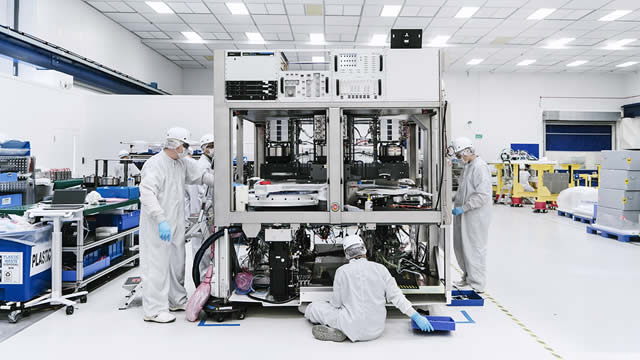
Core Viewpoint - Elon Musk plans to establish a semiconductor factory named Terafab, aiming to produce AI semiconductors equivalent to 1 terawatt in power consumption annually, which is 50 times the current global supply capacity [2][6]. Group 1: Terafab Factory Overview - The Terafab factory will be located in Austin, Texas, and is part of Musk's strategy to integrate AI into the operations of Tesla and SpaceX [4]. - The factory's production goal is to meet the semiconductor needs of Musk's companies, including Tesla, SpaceX, and xAI, rather than serving as a foundry for external clients [9]. Group 2: Investment and Financial Implications - Estimates suggest that producing 1 terawatt of semiconductors could require an investment of between $5 trillion to $13 trillion, a figure that some analysts consider unrealistic [8]. - SpaceX is reportedly planning to go public in 2026, aiming to raise $75 billion, which could potentially fund the semiconductor project [7]. Group 3: Strategic Integration and Future Plans - Musk's vision includes a comprehensive integration of AI across his companies, with a focus on self-sufficiency in semiconductor production [11][12]. - The Terafab initiative is seen as the final chapter of Musk's "X" concept, which aims to unify Tesla, SpaceX, xAI, and other ventures to enhance overall value [12].



Why Arm Holdings Stock Soared Today
The Motley Fool· 2026-03-26 03:15
Core Insights - Arm Holdings has introduced a new AI-focused central processing unit (CPU), marking a strategic shift from licensing chip designs to creating its own silicon [2][3] - The new Arm AGI CPU is designed for AI data centers and is expected to generate $15 billion in annual revenue by 2031, compared to the company's total sales of $4 billion in fiscal 2025 [5] Company Developments - CEO Rene Haas stated that the launch of the Arm AGI CPU represents a defining moment for the company, providing partners with more choices based on Arm's high-performance, power-efficient computing foundation [3] - Arm's new chip will have a different profit margin compared to existing royalty revenues, but it is anticipated to be a lucrative revenue stream for shareholders [6] Market Position - Major tech companies, including Meta Platforms, OpenAI, Cloudflare, and SAP, are set to be initial customers of Arm's new chip, with plans to partner with leading cloud computing platforms like Amazon, Microsoft, and Alphabet [5] - Arm's stock saw a significant increase of 16.38% following the announcement of the new AI chip, reflecting positive market sentiment [1][3]
UGRO, DKNG, SRPT, DXYZ, AMD: 5 Trending Stocks Today
Benzinga· 2026-03-26 01:25
Market Overview - U.S. stocks closed higher, with the Dow Jones Industrial Average up 0.66% at 46,429.49, the S&P 500 gaining 0.5% to 6,591.90, and the Nasdaq advancing 0.77% to 21,929.82 [1] Urban-gro - Urban-gro's stock surged by 416.95%, closing at $36.29, reaching an intraday high of $36.30 and a low of $7.40, setting a new 52-week high [1] - In after-hours trading, Urban-gro's stock fell 19.65% to $29.16 [1] DraftKings - DraftKings shares declined by 8.11%, closing at $21.42, with an intraday high of $23.68 and a low of $21.35, nearing its 52-week low of $21.01 [2] - The decline is attributed to investor concerns over competitive threats from prediction platforms like Kalshi and Polymarket [3] Sarepta Therapeutics - Sarepta Therapeutics saw its stock jump 34.98%, closing at $23.77, with an intraday high of $23.85 and a low of $19.67 [4] - The rise follows promising early results from its siRNA programs, indicating dose-dependent muscle exposure and favorable tolerability [4] Destiny Tech100 - Destiny Tech100 shares increased by 15.31%, closing at $30.58, with an intraday high of $34 and a low of $28.77 [5] - In after-hours trading, the stock rose 7.1% to $32.75 [5] Advanced Micro Devices - AMD's stock rose by 7.26%, closing at $220.27, with an intraday high of $221.33 and a low of $211.51 [6] - The rally is driven by reports of upcoming CPU price hikes due to tightening supply and increasing demand from AI-centric data centers [6] - AMD stock shows Momentum in the 90th percentile and Value in the 10th percentile according to Benzinga Edge Stock Rankings [6]