Online Retail

Search documents
Snap-on Q2 Earnings & Sales Beat Estimates, Tools Group Rebounds
ZACKS· 2025-07-17 17:25
Core Insights - Snap-on Inc. reported second-quarter 2025 results with earnings and revenues exceeding Zacks Consensus Estimates, although earnings declined 3.9% year-over-year and revenues remained flat compared to the prior year [1][3]. Financial Performance - Earnings per share were $4.72, surpassing the Zacks Consensus Estimate of $4.61, but down from $4.91 in the same quarter last year [3]. - Net sales reached $1.179 billion, flat year-over-year, and exceeded the Zacks Consensus Estimate of $1.154 billion, with an organic sales decline of 0.7% offset by favorable foreign currency translation [3]. - Gross profit was $595.5 million, a decrease of 0.3% year-over-year, with a gross margin of 50.5%, down 10 basis points from the previous year [4]. - Operating earnings before financial services totaled $259.1 million, down 7.6% year-over-year, with operating earnings as a percentage of sales contracting to 22% [5]. - Consolidated operating earnings, including financial services, were $327.3 million, down 6.6% year-over-year, with operating earnings as a percentage of sales contracting to 25.5% [6]. Segment Analysis - Sales in the Commercial & Industrial Group decreased 6.5% year-over-year to $347.8 million, primarily due to weaker performance in Asia Pacific and Europe [7]. - The Tools Group segment saw sales increase by 1.9% year-over-year to $491 million, driven by stronger demand in the U.S. [8]. - Sales in the Repair Systems & Information Group improved 3% year-over-year to $468.6 million, supported by increased activity with OEM dealerships [9]. - The Financial Services business reported a revenue increase of 1.2% year-over-year to $101.7 million [10]. Financial Position - As of the end of the second quarter 2025, Snap-on had cash and cash equivalents of $1.46 billion and shareholders' equity of $5.7 billion [11]. - The company anticipates capital expenditures of $100 million for the full year 2025 [11]. Future Outlook - Management expects resilience in markets and operations against uncertainties, aiming to advance core growth strategies and expand into new markets and industries [12]. - The effective tax rate is projected to be between 22-23% for 2025 [12].



川式红油vs麻辣椒麻,京东七鲜两款神仙冷泡汁该pick谁?
Zhong Jin Zai Xian· 2025-07-17 06:49
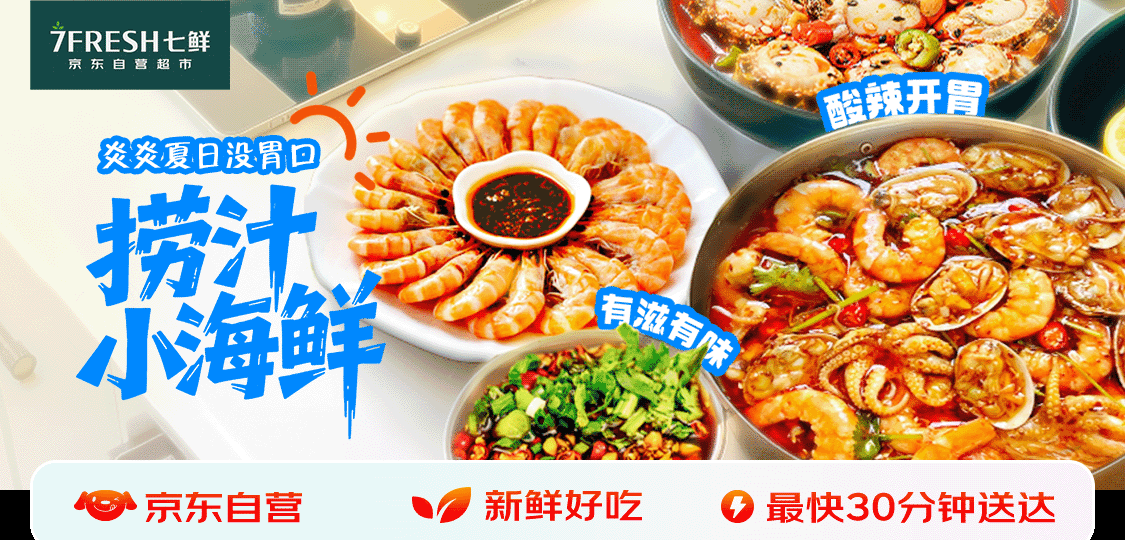
在料汁方面,京东七鲜推出的两款自有品牌冷泡汁,其中麻辣海鲜冷泡汁有着川味椒麻基底,适配鲍 鱼、扇贝等厚实海鲜;川式红油冷泡汁香辣带甜,适合花蛤、蛏子等贝类。 在食材方面,鲜活海鲜如小鲍鱼、花蛤等富含优质蛋白,搭配低糖冷泡汁,契合当代年轻人"轻负担"饮 食趋势。艾媒咨询报告显示,70.9%的消费者偏好即食零食类深加工水产品,捞汁海鲜凭借便捷性和健 康属性成为热门选择。现在,京东七鲜的"鲜活小鲍鱼29.9元/10只"" 鲜活大花蛤 9.9元/斤"" 冰鲜海蛎肉 10.8元/200g""鲜活大海白虾29.9元/斤""鲜活美贝6.8元/斤""鲜活白蚬子10.9元/斤"等商品,以高性价比成 为爆款。 这个夏天,捞汁海鲜凭借"鲜、快、爽"三大特点,成为年轻人消暑美食的首选。京东七鲜通过"冷泡汁 +鲜活海鲜"的组合,让消费者在家也能轻松享受餐厅级美味。无论是夜宵聚会、家庭餐桌,还是露营 野餐,一碗冰镇捞汁海鲜,都能带来属于夏日的"鲜爽时刻"! 现在,消费者只需通过京东APP自营秒送入口、七鲜APP或七鲜微信小程序下单,即可享受最快30分钟 送达的即时服务,新用户还可领取77元新人券包,更有京东PLUS会员下单免邮费的超值权 ...

“30分钟送万物”,即时零售重构消费市场
Nan Jing Ri Bao· 2025-07-16 23:50
Core Insights - The article highlights the intense competition among major platforms like Taobao, Meituan, and JD.com in the instant retail sector, driven by significant subsidies and promotional activities [1][2][3] Group 1: Market Dynamics - Instant retail has emerged as a crucial growth area, with a single day order volume surpassing 230 million, indicating a shift in consumer behavior towards immediate consumption [1] - The competition is characterized by substantial financial investments, with platforms like Meituan and Taobao engaging in aggressive subsidy strategies to capture market share [2][3] - The concept of "Super Saturday" has been introduced to stimulate consumer spending, with platforms offering substantial cash vouchers for food delivery [3] Group 2: Financial Implications - Meituan reported a record high of 150 million instant retail orders on July 12, up from 120 million a week prior, showcasing rapid growth in this segment [2] - High-profile analysts predict significant losses for Alibaba and JD.com in their food delivery operations, with estimated losses of 41 billion yuan and 26 billion yuan respectively over the next year [2] - The combined losses for Meituan and Taobao on a single day were estimated to exceed 1 billion yuan, reflecting the high cost of competition [2] Group 3: Consumer Behavior - Consumers are increasingly adopting instant retail for a wide range of products, moving from emergency purchases to regular use for groceries and daily necessities [4] - The immediacy of delivery has reshaped consumer expectations, with a preference for "instant satisfaction" over traditional shopping methods [4] Group 4: Operational Strategies - Platforms are focusing on enhancing delivery efficiency and user retention as key competitive factors, moving beyond mere price competition [6][7] - Meituan, Alibaba, and JD.com are developing differentiated strategies, with Alibaba integrating various services to enhance user engagement, JD.com focusing on fresh produce delivery, and Meituan leveraging its local service network [6][7]

鲜奶出厂就到手,美团闪购在长沙推出低温奶“新鲜承诺”
Chang Sha Wan Bao· 2025-07-16 11:43
Core Insights - Meituan has launched a new service called "Fresh Commitment" for low-temperature milk in Changsha and Chengdu, allowing consumers to select this option for quick delivery of fresh milk [1][2] - The service addresses consumer concerns about the short shelf life of low-temperature milk, especially during summer when spoilage is a significant issue [1] - The "Fresh Commitment" service is part of Meituan's broader "Safe Shopping" initiative, which aims to enhance consumer confidence in purchasing fast-moving consumer goods [1] Group 1 - The "Fresh Commitment" service ensures that low-temperature milk is delivered within 30 minutes under full refrigeration, covering major brands like New Hope and Mengniu [1] - Meituan has partnered with over a hundred retail brands and local businesses to implement this service, aiming for nationwide expansion [1] - The service includes a compensation policy where consumers can receive cash vouchers if they purchase products that are close to or past their expiration date [2] Group 2 - The initiative is supported by collaborations with various convenience stores and supermarkets, including Squirrel Convenience and Metro, to enhance distribution capabilities [2] - The service is designed to alleviate consumer worries about product freshness and quality, particularly in the hot summer months [1][2] - Meituan's strategy reflects a growing trend in the instant retail sector, focusing on consumer satisfaction and product reliability [1]

2 Risky Stocks That Could Plunge
The Motley Fool· 2025-07-16 09:20
Group 1: Carvana - Carvana has shown significant recovery after a debt restructuring in 2023, increasing total retail units sold and improving per-vehicle gross profit while reducing per-vehicle expenses [3][4] - The company aims to sell 3 million retail vehicles annually within 5 to 10 years, requiring a sixfold increase in its current retail unit annual run rate [4] - Carvana's current stock valuation is around 110 times earnings, which are inflated by gains on certain warrants, necessitating substantial growth in unit sales and profit margins to justify this valuation [5][6] - The used car market is cyclical and sensitive to economic conditions, raising concerns about Carvana's aggressive financing strategies, which could lead to vulnerabilities in an economic downturn [6][7] Group 2: IonQ - IonQ operates in the speculative quantum computing sector, which is seen as a potential future technology but faces significant competition from established players like IBM and Alphabet [8][9] - Commercially viable quantum computing systems are estimated to be four to five years away, with IonQ needing to survive until the technology matures [9] - IonQ recently announced a $1 billion equity offering, providing financial resources despite reporting a free cash flow loss of nearly $130 million in 2024 and a net loss of $332 million [10] - With only $43 million in revenue last year and a market capitalization exceeding $12 billion, IonQ represents a high-risk investment in the quantum computing space [11]



外卖大战让门店快扛不住了!嘉和一品乡村基南城乡创始人纷纷吐槽
Tai Mei Ti A P P· 2025-07-16 02:14
Core Insights - The ongoing food delivery war is causing significant distress for restaurant businesses, as they bear the brunt of platform subsidies and competitive pricing strategies [2][3][4] - Major players in the food delivery market, including Meituan and Alibaba, are engaged in aggressive discounting strategies, leading to a surge in order volumes but also raising concerns about long-term profitability [4][6][10] Group 1: Industry Challenges - Restaurant operators are struggling with high operational costs due to platforms requiring them to subsidize customer discounts, with merchants covering 70% of the costs in some cases [2] - The intense competition has led to a dramatic increase in order volumes, with some restaurants experiencing a tenfold increase in orders, causing operational strain [7] - The Chinese Chain Operation Association has called for regulation of the market to ensure fair competition and protect consumer rights [3] Group 2: Market Dynamics - As of July 12, 2023, Meituan reported over 1.5 billion daily orders, while Alibaba's Taobao Flash Sale reached 80 million orders, indicating a doubling of market size since the beginning of the year [4][6] - The market is projected to grow significantly, with Goldman Sachs estimating a 30% year-on-year increase in order volume, driven by aggressive promotional strategies [10] - The competition has led to a substantial increase in investment, with Alibaba, JD, and Meituan collectively investing approximately 25 billion RMB (around 3 billion USD) in the second quarter alone [10] Group 3: Financial Implications - Morgan Stanley predicts that the current subsidy war will negatively impact the profitability of all major players in the short term, with expected stock price pressures in the coming months [8][9] - Long-term market potential remains uncertain, with Morgan Stanley suggesting that if the instant retail market does not reach projected growth, current investment levels may be excessive [9] - The shift towards instant retail is expected to cannibalize traditional e-commerce sales, with food and beverage categories being particularly affected [11][12]

Walmart's Omnichannel Strategy: Core Catalyst Behind E-Commerce Surge
ZACKS· 2025-07-14 13:55
Core Insights - Walmart Inc. (WMT) is enhancing its market leadership through a robust omnichannel strategy that integrates its extensive store network with advancing digital capabilities [1][2][10] - The company reported a 22% increase in global e-commerce sales in Q1 FY26, driven by its effective omnichannel approach [2][10] - U.S. e-commerce sales rose by 21%, supported by strong store-fulfilled pickup and delivery, growing marketplace sales, and increased advertising revenues [3][10] - International e-commerce sales grew by 20%, with notable performance at Sam's Club U.S., where e-commerce sales surged by 27% [4][10] E-Commerce Strategy - Walmart is expanding its digital services ecosystem, including Walmart GoLocal, Walmart Fulfillment Services, Walmart+, and Walmart Luminate, to enhance its e-commerce capabilities [5] - The company's leadership in online grocery shopping is a significant contributor to its e-commerce growth [5][6] Competitive Landscape - Target Corporation (TGT) is rapidly growing its e-commerce business through a customer-focused strategy that emphasizes speed and convenience [7] - Amazon (AMZN) maintains dominance in the online retail space, leveraging a vast product assortment and customer loyalty programs like Amazon Prime [8] Financial Performance - Walmart's shares have increased by 3.3% over the past six months, compared to the industry's growth of 4.4% [9] - The company trades at a forward price-to-earnings ratio of 34.55X, above the industry average of 31.82X [12] - The Zacks Consensus Estimate for Walmart's fiscal 2026 earnings indicates a year-over-year growth of 3.6%, with an 11.7% increase projected for fiscal 2027 [13]


所有生意,都值得被即时零售重做一遍
3 6 Ke· 2025-07-14 13:04
Core Insights - The rise of instant retail signifies a fundamental shift in consumer behavior and business models, emphasizing "instant delivery" as a new standard rather than just an online presence [1][11] - Instant retail addresses the inherent pain points of traditional e-commerce, such as resource waste and the need for immediate satisfaction, thus reshaping the value chain [2][11] Market Growth and Data - The market size for instant retail surged to 650 billion in 2023, marking a year-on-year increase of 28.89%, with projections of reaching 850 billion in 2024 and potentially exceeding 2 trillion by 2030 [3] - Major players are competing fiercely, with Meituan's daily non-food orders surpassing 20 million and Taobao's flash sales achieving over 80 million daily orders within two months of launch [3] Competitive Landscape - The instant retail sector has become a battleground for major companies, each leveraging their unique strengths to enhance infrastructure and service levels [4] - Meituan focuses on a vast local merchant network and delivery capacity, while JD.com emphasizes quality and competitive pricing through its self-operated supply chain [5][6] - Alibaba aims to integrate its extensive brand resources with local delivery networks to optimize resource allocation and enhance user engagement [6] Technological Advancements - The backbone of instant retail's efficiency is driven by technology, including smart infrastructure like front warehouses and automated logistics systems [7] - Data intelligence plays a crucial role in understanding consumer behavior and optimizing inventory management, enhancing the overall user experience [7][8] Future Trends - The boundaries of instant retail are expanding, with potential growth into various categories such as clothing, home goods, and even virtual products [9] - Sustainability and technological innovation will be key focuses, with electric delivery vehicles and AI-driven solutions becoming integral to operations [10] - The competitive landscape will continue to evolve, with a focus on supply chain efficiency and ecosystem collaboration as companies seek to differentiate themselves [10]
野村:美国稳定币及美元霸权延续前景
野村· 2025-07-14 00:36
Investment Rating - The report does not explicitly provide an investment rating for the stablecoin industry Core Insights - The US Congress is developing regulations to promote the sound development of stablecoins, reflecting strong support from the Trump administration for crypto assets and aiming to maintain the US dollar's dominance as the world's currency [2][5][6] - The GENIUS Act establishes a regulatory framework for stablecoins, requiring issuers to maintain reserve assets and disclose information about their reserves [4][7][8] - The stablecoin market is projected to expand significantly, potentially reaching $2 trillion by the end of 2028, driven by the demand for USD-pegged stablecoins [15][17] Summary by Sections Regulatory Developments - The US Senate passed the GENIUS Act, which aims to create a regulatory framework for stablecoins, requiring issuers to be approved by authorities and maintain reserves of highly liquid assets [4][5][7] - Issuers must disclose reserve asset information monthly, with additional requirements for those with a market capitalization exceeding $50 billion [8][9] Market Dynamics - Major US retailers and travel companies are considering issuing USD-pegged stablecoins, which could lead to competition with banks and impact their fee income from credit card transactions [11][12][13] - The current global stablecoin market is dominated by USD-pegged stablecoins, which account for over 90% of transactions [16] Economic Implications - The promotion of USD-pegged stablecoins is seen as a strategy to maintain the dollar's status as the world's reserve currency, potentially stabilizing the US Treasury bond market by increasing demand for these bonds [15][18][19] - The issuance of stablecoins could lead to increased foreign investment in US Treasuries, contributing to the stability of the dollar [20][21] Historical Context and Risks - The report draws parallels with the abandoned Libra project, highlighting potential risks associated with expanding stablecoin use for international payments [23][24][32] - Concerns exist regarding the ability of authorities to effectively supervise privately issued stablecoins and prevent financial crimes [28]
外卖补贴大战升级 淘宝闪购以电商供应链破局
Sou Hu Cai Jing· 2025-07-10 03:33
Core Insights - Taobao Flash Sale is shifting the focus of food delivery from solely catering to a broader e-commerce supply chain, aiming to leverage its strengths in non-food categories [1][6] - The platform reported a 143% increase in non-food orders compared to its initial launch, with significant growth in categories such as air conditioners, mosquito nets, and snacks [1][3] Non-Food Order Performance - Non-food orders account for over 16% of the total daily orders, translating to more than 13 million out of 80 million daily orders [3] - The demand for summer products has surged, with air conditioner searches increasing by 220% and orders for cooling appliances rising over tenfold [3] - The platform has attracted approximately 140,000 new non-food offline stores within two months, enhancing its market presence [3] Competitive Landscape - Taobao Flash Sale is attempting to build a differentiated competitive advantage by utilizing its accumulated supply chain resources in the ongoing subsidy war [3][4] - Unlike its competitor JD, which is new to the food delivery market, Ele.me, merged with Taobao Flash Sale, has not established a clear competitive edge in the traditional food delivery sector [4] Integration of E-commerce and Instant Retail - The integration of e-commerce and instant retail presents challenges, as many small and medium-sized businesses lack the online operational capabilities necessary for effective participation [5][6] - The transition from "far-field" to "near-field" e-commerce requires significant adjustments in inventory management, pricing systems, and fulfillment costs [6] Market Dynamics - The current food delivery market sees over 200 million daily orders, driven by substantial subsidies, raising concerns about consumer retention and merchant sales once subsidies decrease [7]