快递物流

Search documents
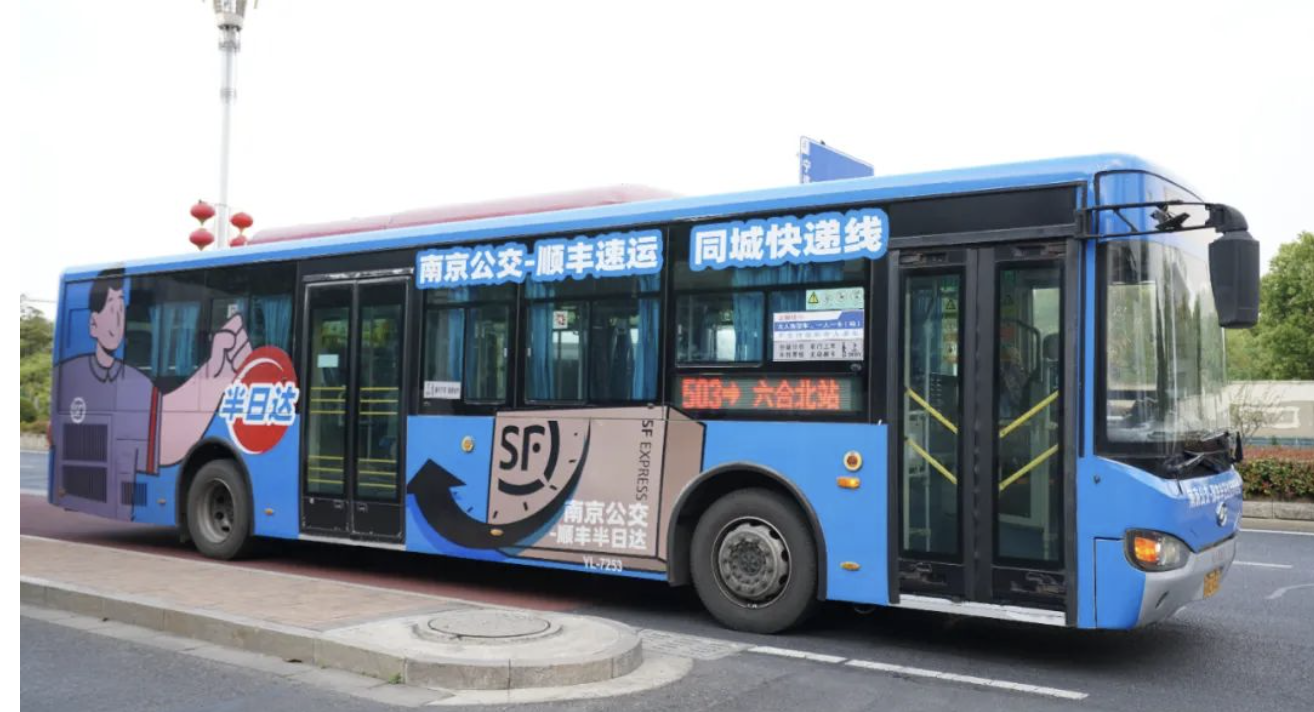
用公交送快递,司机也能收派件!传统交通“试水”新业务
Di Yi Cai Jing· 2025-07-15 14:46
Core Viewpoint - The collaboration between SF Express and public transport groups is rapidly expanding across various cities in China, focusing on revitalizing existing resources and creating new profit points for public transport operators [1][9]. Group 1: Collaboration Model - The 503 bus route in Nanjing has integrated a new task of transporting local agricultural products and fresh food to the city, significantly reducing delivery time from the previous next-day service to within two to two and a half hours [2][5]. - SF Express is implementing the "express delivery + public transport" model in multiple cities, including Xi'an, Wuhan, Lanzhou, Zhengzhou, and Chengdu, to enhance logistics efficiency [2][9]. - The collaboration allows public transport companies to utilize their extensive networks and resources, thereby lowering delivery costs and improving service efficiency [3][8]. Group 2: Operational Details - The operational process for the 503 route involves collection, sorting, bus transport, and final delivery, with real-time tracking and monitoring of the delivery status [5][12]. - In Wuhan, SF Express has begun using public transport stations for sorting operations, optimizing resource allocation while ensuring public transport operations remain unaffected [7][8]. - The partnership includes sharing human resources, with SF Express hiring bus drivers to assist with logistics tasks, thereby enhancing delivery capabilities [7][9]. Group 3: Expansion and Future Plans - The collaboration model is being replicated in various cities, with agreements signed in places like Lanzhou and Zhengzhou to utilize public transport resources for logistics [9][10]. - Future plans include transforming bus stations into multifunctional logistics hubs, integrating public transport and express delivery services [10][12]. - Public transport companies are also exploring new business models, such as themed services and vehicle maintenance partnerships, to diversify their offerings [12][13].


物流行业迎来无人技术的“DeepSeek时刻”
Changjiang Securities· 2025-07-15 11:10
Investment Rating - The report maintains a "Positive" investment rating for the logistics industry [12] Core Insights - The logistics industry is experiencing a "DeepSeek moment" with significant technological breakthroughs across various segments, including branch, trunk, terminal, and management [4][7] - The report emphasizes the importance of adopting new technologies to enhance operational efficiency and reduce costs, particularly in the express delivery sector [11][28] Summary by Sections Introduction: The Arrival of the "DeepSeek Moment" in the Logistics Industry - The logistics industry is witnessing substantial advancements due to improved algorithm efficiency and rapid technological iterations, leading to significant breakthroughs in various operational segments [7][18] - Key drivers for these advancements include the massive scale of the Chinese express delivery market, intense competition, and high labor cost ratios [28] Branch Segment: The Growth Year for Unmanned Logistics Vehicles - Leading express companies are initiating a surge in unmanned logistics vehicle orders, driven by reduced core component costs and improved algorithm efficiency [8][33] - The monthly operational cost of unmanned logistics vehicles can be as low as 2000 yuan, significantly lower than the average monthly salary of drivers [33][40] Trunk Segment: Smart Assisted Driving Initiates Mass Production - Smart assisted driving trucks are being deployed on a large scale by leading express companies, addressing safety and cost issues in traditional trunk transportation [9][32] - The potential market space for smart trucks is substantial, with projected sales of 1.03 million heavy trucks in 2024 [9] Terminal Segment: Mode Transformation Drives Cost Reduction - Express companies are innovating their terminal operations to reduce costs significantly, with models like direct linking from transfer centers to terminal stations [10][32] - The report highlights that if the direct link ratio reaches 40%, terminal costs could be reduced by 0.12 yuan per package [10] Management Segment: Digital Decision-Making Promotes Cost Reduction - Leading companies are developing industry-specific AI models to enhance management efficiency and reduce operational costs [10][32] - The integration of big data and AI technologies is driving improvements in decision-making and resource utilization [10] Investment Recommendations: Technological Waves Reshape Logistics Costs - The report recommends prioritizing investments in direct logistics companies and leading express firms, as well as components and operators related to unmanned commercial vehicles [11][32] - Companies like SF Express and Aneng Logistics are highlighted as key players benefiting from these technological advancements [11]


交通运输行业周报:极兔Q2东南亚包裹量同比大增65.9%,合肥打造全国首个无人机共享机场网络-20250715
Bank of China Securities· 2025-07-15 03:14
Investment Rating - The transportation industry is rated as "Outperform" [2] Core Insights - The shipping rates for oil tankers in the Atlantic and Gulf of Mexico have slightly increased, while the container shipping rates for the US routes have rebounded and the European routes remain stable [3][13] - Hefei is building the first national drone-sharing airport network, and Pudong Airport has seen a 23% year-on-year increase in inbound and outbound passengers in the first half of the year [3][16] - Jitu Express reported a 65.9% year-on-year increase in package volume in Southeast Asia for Q2, marking the highest growth rate since its listing [3][24] Industry Dynamics - **Shipping and Ports**: The VLCC market has returned to a supply-demand balance, with overall vessel supply remaining ample. The shipping rate for a 270,000-ton vessel from Ras Tanura to Ningbo was reported at WS49.24, up 2.48% from July 3 [3][14] - **Container Shipping**: The Shanghai port's export rates to Europe and the US have shown slight fluctuations, with rates to the US West and East coasts increasing by 5.0% and 1.2% respectively [3][15] - **Aviation**: The first half of 2025 saw Pudong Airport handle 18.26 million passengers, a 23.44% increase year-on-year, with new international routes contributing to this growth [3][18] - **Logistics**: Jitu Express's package volume in Southeast Asia reached 1.69 billion packages in Q2, with a 65.9% increase year-on-year, while the overall global package volume grew by 23.5% [3][24] Investment Recommendations - Focus on the equipment and manufacturing export chain, recommending companies such as COSCO Shipping, China Merchants Energy Shipping, and Huamao Logistics [4] - Pay attention to the low-altitude economy investment opportunities, particularly in companies like CITIC Offshore Helicopter [4] - Explore investment opportunities in the highway and railway sectors, recommending companies such as Sichuan Chengyu, Gansu Guangdong Expressway, and Beijing-Shanghai High-Speed Railway [4] - Consider investment opportunities in the cruise and ferry sectors, recommending Bohai Ferry and Haixia Shares [4] - Monitor e-commerce and express delivery investment opportunities, recommending SF Holding, Jitu Express, and Yunda Express [5] - Look into aviation industry investment opportunities, recommending China National Aviation, China Southern Airlines, Spring Airlines, and others [5]
华源晨会精粹20250714-20250714
Hua Yuan Zheng Quan· 2025-07-14 14:05
Fixed Income - Credit spreads are expected to have further compression potential, with most industries showing a slight decrease in credit spreads except for the AA agricultural sector which saw a minor increase of 3 basis points [2][6][8] - The yield on 3-5 year perpetual bonds may gradually approach the interest rates of major banks' 3-5 year fixed deposits, indicating that credit spreads may still have room for compression [2][8] Transportation - The State Post Bureau opposes "involution" competition in the express delivery industry, which may lead to high-quality development opportunities [10][11] - Major express companies like Zhongtong, Yuantong, Yunda, and Shentong have seen a decline in single ticket revenue year-on-year, with decreases of -7.8%, -6.4%, -10.1%, and -6.2% respectively in Q1 2025 [11] Media - The upcoming mid-year report disclosures may present trading opportunities, with high-frequency data expected to maintain an upward trend if no turning points are observed [28] - The gaming sector is highlighted, with major titles from companies like Tencent and Giant Network performing well in the market, indicating potential for value reassessment [30][34] North Exchange - The cultural and IP economy is thriving, with the market size of the national trend economy reaching 2.05 trillion yuan in 2023 and expected to exceed 3 trillion yuan by 2028 [23][24] - The Chinese trend toy market is projected to achieve a compound annual growth rate of 35.11% from 2020 to 2024, surpassing the global average [24] Pharmaceutical - The pharmaceutical index rose by 1.82%, with innovative drug companies showing strong performance, indicating a positive outlook for the sector [6][19] - Business development (BD) transactions are expected to become a regular source of income and profit for traditional pharmaceutical companies, enhancing their international revenue share [19] Overall Market Data - The Shanghai Composite Index closed at 3,519.65, reflecting a year-to-date increase of 7.88% [3] - The North Exchange consumption service sector saw a median stock price change of +1.29%, with 25 companies experiencing increases [25]
交通运输行业周报:反内卷或引导快递行业高质量发展-20250714
Hua Yuan Zheng Quan· 2025-07-14 06:31
Investment Rating - The investment rating for the transportation industry is "Positive" (maintained) [4] Core Views - The report highlights the need for the express delivery industry to shift towards high-quality development, as the State Post Bureau opposes "involution" competition and aims to improve service quality [4] - The express delivery sector is currently experiencing a decline in per-package revenue, with major companies like Zhongtong, Yuantong, Yunda, and Shentong showing year-on-year decreases in revenue per package [4] - Jitu's Southeast Asian market has seen significant growth, with a total package volume of 7.392 billion pieces in Q2 2025, a year-on-year increase of 23.5% [5] - The airline industry is expected to benefit from macroeconomic recovery, with long-term supply-demand trends indicating potential for growth [12] - The shipping sector is anticipated to improve due to OPEC+ production increases and the Federal Reserve's interest rate cuts, with specific recommendations for companies like China Merchants Energy and COSCO Shipping [12] Summary by Sections Express Delivery - The express delivery market is facing intense competition, with major players experiencing a decline in revenue per package [4] - The report suggests that regulatory changes could help improve the situation by reducing low-cost competition and enhancing the performance of leading companies [4][12] Airline Industry - The airline sector is characterized by long-term low supply growth, but demand is expected to benefit from macroeconomic recovery [12] - Key companies to watch include China National Aviation Holding, Southern Airlines, and HNA Group [12] Shipping and Ports - The report indicates a positive outlook for oil transportation due to OPEC+ production increases and potential interest rate cuts [12] - Recommendations include focusing on companies like China Merchants Energy and COSCO Shipping for their growth potential in the shipping market [12] Road and Rail - The report notes that the Daqin Railway experienced a year-on-year decrease in freight volume in June 2025, while overall logistics operations remain stable [11][12] - Companies like Zhongyuan Expressway and Sichuan Chengyu are highlighted for their growth potential due to infrastructure developments [12]


天风证券晨会集萃-20250714
Tianfeng Securities· 2025-07-13 23:45
Group 1 - The report highlights that China is transitioning from high-speed growth to high-quality growth, with economic indicators resembling the later stages of Japan's third consumption society and the brand consumption phase in the US [1] - For essential consumption, the investment strategy focuses on low-valuation, high-quality growth stocks with high dividend yields, particularly in the food and beverage and textile sectors [1] - In the optional consumption sector, there are signs of improvement in macroeconomic data, suggesting a potential turning point, with recommendations to select companies showing operational improvements based on financial reports [1] Group 2 - The report indicates that the A-share market has shown a breakthrough in indices, with a shift in style, where mid-cap indices performed strongly while large-cap indices lagged [3] - Domestic economic indicators such as CPI and PPI are showing mixed signals, with CPI returning to positive growth while PPI's decline is widening, indicating a complex economic environment [3][29] - The report suggests focusing on sectors like real estate, steel, and non-bank financials, which have been characterized as "cold" industries but are currently leading the market [3] Group 3 - The report emphasizes the importance of the banking sector, noting that policy support and increased asset allocation from insurance companies could enhance the attractiveness of bank stocks [8] - The report identifies specific banks for investment, including Chengdu Bank and Agricultural Bank of China, based on their potential for improved asset quality and profitability [8] Group 4 - The report discusses the robotics industry, particularly the application of cycloidal reducers in humanoid robots, highlighting their advantages in torque and shock resistance [10] - Companies like Double Ring Transmission are collaborating with Tesla on developing small RV reducers, indicating a growing interest in this technology [10] Group 5 - The scientific instruments industry is characterized by a significant presence of foreign brands, with domestic brands still underrepresented, indicating a strong potential for domestic substitution [11] - The report notes that the mass spectrometry market in China is valued at 16.712 billion yuan, with foreign companies holding over 90% of the global market share, highlighting the need for domestic innovation [11]
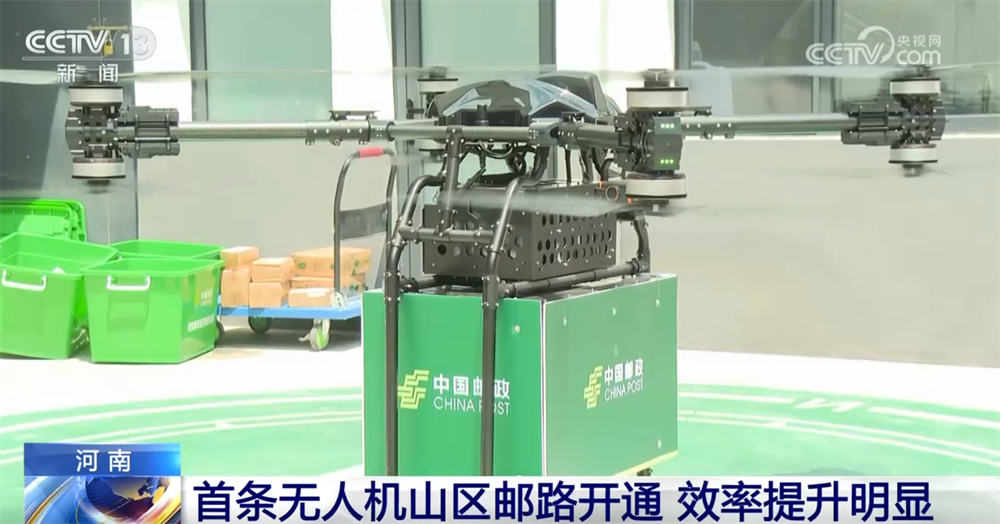
无人机山区邮路架起便民“空中桥梁” 见证未来低空物流市场前景广阔
Yang Shi Wang· 2025-07-13 10:17
Core Viewpoint - The establishment of the first drone postal route in the mountainous areas of Anyang, Henan Province, significantly enhances logistics efficiency for residents in remote areas, addressing the challenges of the "first mile" and "last mile" delivery issues [1][11]. Group 1: Operational Efficiency - The drone postal route operates 1 to 2 scheduled flights daily, covering 11 administrative villages, thus improving logistics for over 4,000 residents [5]. - Previously, residents had to walk four hours to reach the nearest distribution point; now, drone delivery reduces this time to just 7 minutes [3]. Group 2: Cost and Convenience - The cost of using the drone service is comparable to traditional postal services, with a starting fee of approximately 8 yuan for the first weight unit and 4 yuan per kilogram for additional weight [6]. - The process for residents to send items via drone is straightforward, involving weighing the package, scanning a code, and placing it in a designated area for pickup by the drone [8]. Group 3: Market Potential - The successful operation of the drone postal route highlights the potential for low-altitude logistics in similar geographically challenging areas across China, where logistics costs are typically high and efficiency is low [11]. - The market for low-altitude logistics, including mountainous, island, and urban areas, is projected to reach over 120 billion yuan annually, indicating significant growth opportunities [13].
Is United Parcel Service Stock a Buy Now?
The Motley Fool· 2025-07-13 08:05
Core Viewpoint - United Parcel Service (UPS) is undergoing a significant corporate overhaul, facing challenges that have led to a substantial decline in its stock price, which has fallen by about 50% over the past three years [1]. Group 1: Challenges Faced by UPS - UPS signed a new contract with its 340,000 unionized workers in 2023, resulting in increased employee costs that negatively impact profitability [3]. - The company is attempting to enhance profitability through operational streamlining and technology investments, but these efforts involve upfront costs and potential write-offs from closing sorting facilities [3]. - Demand for UPS services surged during the early pandemic due to increased online shopping, but as public health measures eased, demand softened, leading to negative investor sentiment [5][6]. - UPS is focusing on more profitable opportunities by reducing business with lower-margin customers, including a significant reduction in business with Amazon, which has raised concerns among investors [7]. Group 2: Financial Performance and Opportunities - Despite the challenges, UPS's underlying financial results are stabilizing, with flat revenue year-over-year in the first quarter and improved earnings driven by better operating margins [12]. - The stock's decline has pushed its dividend yield to 6.5%, but the high payout ratio is close to 100%, which may deter conservative investors [8][10]. - For aggressive investors, the improvements in operations, customer quality, and resolution of worker issues present a long-term investment opportunity, especially as the stock has returned to early 2020 levels after a pandemic-related surge [11][13].


推进区域协作 拓宽发展空间——加快建设全国统一大市场一线观察之七
Xin Hua She· 2025-07-13 02:10
Core Viewpoint - Accelerating the construction of a unified national market and promoting regional market integration is an essential path for resource allocation, industrial layout, and economic activities in China [1] Group 1: Regional Market Integration - The central government encourages regions such as Beijing-Tianjin-Hebei, Yangtze River Delta, Guangdong-Hong Kong-Macao Greater Bay Area, Chengdu-Chongqing Economic Circle, and the Central Yangtze River City Cluster to prioritize regional market integration while maintaining a unified national market [1] - The integration of regional markets is being accelerated by breaking down administrative barriers, enhancing the unification of market basic systems, and deepening both domestic and foreign openness [2][3] Group 2: Infrastructure and Logistics - The first cross-provincial construction project in the country, the Fangting Water Institute, was completed through innovative approval systems among three regions, allowing for integrated project management [3] - Infrastructure connectivity is crucial for facilitating the efficient gathering of people and goods within regions, as seen in various projects like the interprovincial subway line and the operational stability of intercity railways [5] Group 3: Economic Growth and Resource Efficiency - The economic output of the Beijing-Tianjin-Hebei region is projected to reach 11.5 trillion yuan in 2024, while the Yangtze River Delta's GDP is expected to exceed 33 trillion yuan, and the Chengdu-Chongqing Economic Circle's GDP is anticipated to grow to 8.7 trillion yuan [6] - The integration of regional markets effectively activates regional development momentum by enhancing resource allocation efficiency and reducing institutional transaction costs [9] Group 4: Open Market and Trade - The establishment of a unified market is aimed at global openness, with initiatives like the "Hefei-Ningbo Zhoushan Port" sea-rail intermodal service significantly reducing logistics time from 40 days to 27 days for shipments to Europe [10][11] - Regions are focusing on expanding both domestic and international trade, breaking down local protectionism and market segmentation to deepen regional market integration [12] Group 5: Strategic Positioning and Collaboration - Each region is enhancing internal collaboration and exploring strategies based on local characteristics, such as the industrial transfer in the Beijing-Tianjin-Hebei area and the financial services in the Yangtze River Delta [8] - The development of regional industrial alliances and cross-regional innovation coalitions is encouraged to promote the gathering of high-end resources and create an efficient collaborative market system [12]
Why Shares in UPS Declined by 20% in the First Half of 2025
The Motley Fool· 2025-07-12 19:08
Core Viewpoint - United Parcel Service (UPS) shares have declined by 20% in the first half of 2025 due to concerns over the company's ability to meet its earnings guidance amid ongoing trade tariff disputes affecting delivery volumes [1] Financial Guidance - Management initially forecasted $89 billion in revenue and an operating margin of 10.8%, implying an operating profit of $9.61 billion [3] - Expected free cash flow (FCF) was projected at $5.7 billion, intended to support $5.5 billion in dividend payments and $1 billion in share buybacks [3] - The first-quarter earnings report did not update the full-year guidance due to weaker-than-expected delivery volumes, creating uncertainty [4] Dividend and Buyback Implications - The pressure on earnings guidance affects FCF guidance, which in turn impacts dividend payouts and buyback plans [4] - The initially planned FCF of $5.7 billion would not cover the dividend and buybacks on its own [4] Dividend Strategy Discussion - Cutting the dividend could be beneficial as it allows the company to reinvest in growth opportunities rather than returning cash to investors [6] - Many investors hold UPS stock for its dividend yield of 6.5%, but management's focus should be on generating higher returns through strategic investments [6] Growth Opportunities - Management has identified growth investment opportunities in healthcare and small and medium-sized businesses, where UPS has already seen success [7][8] Future Outlook - Investors are awaiting the second-quarter earnings results in late July for updates on guidance as management navigates near-term challenges while positioning for long-term growth [10]