
生命科学

Search documents
何以成为企业和人才“福地”?深圳中心城区的发展密码藏在这
Nan Fang Du Shi Bao· 2025-11-02 13:32
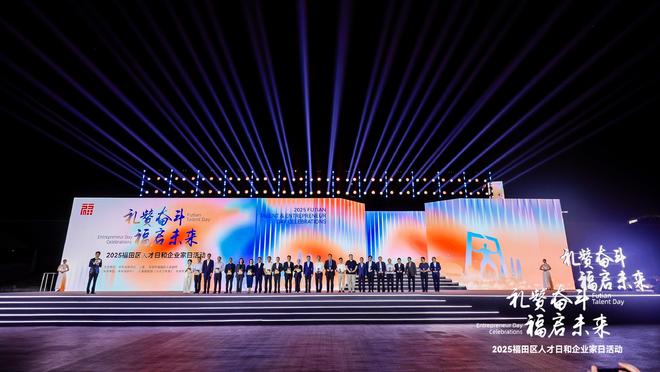
Core Insights - Shenzhen is celebrating the 7th "Shenzhen Entrepreneur Day" and the 9th "Shenzhen Talent Day," highlighting the city's commitment to entrepreneurs and talent [1][3] - The event featured the release of the "Sixfold Blessing" initiative aimed at empowering businesses and supporting talent, with a focus on high-quality development during the 14th Five-Year Plan [1][5] Group 1: Development Initiatives - During the 14th Five-Year Plan, Futian District will focus on creating "6 Innovation Valleys + 4 Centers + 4 Heights," enhancing development capabilities and opportunities for businesses and talent [5][7] - The "6 Innovation Valleys" include Digital Intelligence Valley, Energy Carbon Valley, Bay Area Chip Valley, Life Green Valley, Quantum Science Valley, and New Material Innovation Valley [5][7] - The "4 Centers" consist of Industrial Finance Center, Bay Area Trade Center, Professional Service Center, and Circular Economy Center [5][7] - The "4 Heights" are Urban Service Height, Digital Creative Height, Modern Fashion Height, and Cultural Tourism Consumption Height [5][7] Group 2: New Engines of Growth - The three new engines of growth being developed are the He Tao Shenzhen-Hong Kong Technology Innovation Cooperation Zone, Xiangmi Lake New Financial Center, and the Central Park Vitality Circle [7] - The He Tao Shenzhen-Hong Kong Technology Innovation Cooperation Zone aims to become a world-class research hub, facilitating efficient flow of innovative resources and rapid emergence of innovative results [7] - The Xiangmi Lake New Financial Center is set to become a high-level financial hub, attracting licensed financial institutions and international venture capital [7] - The Central Park Vitality Circle will create a world-class urban landmark, connecting high-end buildings, trendy businesses, and art venues [7] Group 3: Sixfold Blessing Initiative - The "Sixfold Blessing" initiative includes various policies and support measures aimed at fostering business growth and talent retention [9][11] - The first blessing, "Policy Dividend," offers inclusive policies across eight sectors, with support up to 50 million yuan [11] - The second blessing, "Financial Support," provides over 80 billion yuan in credit funds and industry funds to support strategic emerging industries [12] - The third blessing, "Space for Growth," includes 240,000 square meters of quality incubation and industrial space for businesses [12] - The fourth blessing, "Talent Care," allows companies to independently recognize 400 talents in key sectors [14] - The fifth blessing, "Housing Security," offers 1,000 units of affordable rental housing for talents from high-quality development companies [14] - The sixth blessing, "Service Continuity," involves 100 high-value service activities to foster a sense of belonging among workers [14][16]

瑞孚迪2025年Q3营收6.99亿美元,批准10亿美元股票回购新计划
仪器信息网· 2025-10-29 03:58
Core Viewpoint - Revvity reported a strong performance in Q3 2025, with total revenue of $699 million, reflecting a year-over-year increase. The company has raised its full-year revenue forecast to between $2.83 billion and $2.88 billion, maintaining an organic growth expectation of 2% to 4% [2][8]. Financial Performance - Q3 2025 revenue was $699 million, compared to $684 million in the same period last year, marking a growth of approximately 2.2% [4][7]. - The GAAP operating income from continuing operations for Q3 2025 was $82 million, down from $98 million in Q3 2024, resulting in an operating margin of 11.7%, down from 14.3% year-over-year [4][7]. - Adjusted earnings per share for Q3 2025 were $1.18, a decrease from $1.28 in the same quarter last year [4][7]. Segment Performance - Life Sciences segment revenue was $343 million, a slight increase of 1% from $339 million in the previous year, with organic revenue remaining flat [4][7]. - Diagnostics segment revenue reached $356 million, up 3% from $345 million year-over-year, with organic revenue growth of 2% [4][7]. Future Outlook - The company has adjusted its full-year earnings per share forecast to between $4.90 and $5.00, reflecting confidence in continued growth despite recent foreign exchange rate fluctuations [8]. - Revvity's CEO highlighted the positive impact of key innovations and strategic partnerships, indicating a strong execution capability that is expected to drive success in 2026 and beyond [4]. Shareholder Returns - The board has approved a new two-year stock repurchase program totaling $1 billion, replacing the remaining portion of the previous buyback plan announced in October 2024 [4].

全球瞭望丨英国经济学家:英国应持续加强对华经贸合作
Xin Hua Wang· 2025-10-25 12:00
Core Viewpoint - The article emphasizes the importance of strengthening economic and trade cooperation between the UK and China across various sectors, including trade, investment, finance, and green development [1][2]. Group 1: Economic Cooperation - China is recognized as the world's second-largest economy and has been a major contributor to global economic growth over the past 25 years [1]. - The UK is urged to enhance economic cooperation with China in light of rising protectionism, geopolitical tensions, and the unpredictability of global policies [1]. Group 2: Green Development - China's achievements in green development, particularly in renewable energy, are highlighted as significant [1]. - There is potential for deeper collaboration between the UK and China in areas such as green finance [1]. Group 3: Trade Relations - China is the UK's fifth-largest trading partner, indicating substantial room for growth in trade and investment between the two nations [1]. - Recent activities to promote connectivity include the 11th UK-China Economic and Financial Dialogue held in Beijing and the first meeting of the UK-China Economic and Trade Committee in seven years [1]. Group 4: Policy Recommendations - The UK government is advised to maintain coherent policies to strengthen UK-China economic cooperation [2]. - The UK should leverage its strengths in finance, professional services, high-end manufacturing, life sciences, clean energy, and creative industries to seek more collaboration opportunities [2].
英国经济学家:英国应持续加强对华经贸合作
Sou Hu Cai Jing· 2025-10-25 07:39
Core Viewpoint - The article emphasizes the importance of strengthening economic and trade cooperation between the UK and China across various sectors, including trade, investment, finance, and green development [1][2]. Group 1: Economic Cooperation - China is recognized as the world's second-largest economy and has been a major contributor to global economic growth over the past 25 years [1]. - The UK is urged to enhance economic cooperation with China in light of rising protectionism, geopolitical tensions, and the unpredictability of global policies [1]. Group 2: Green Development - China's achievements in green development, particularly in renewable energy, are highlighted as significant [1]. - There is potential for deeper collaboration between the UK and China in areas such as green finance [1]. Group 3: Trade Relations - China is the UK's fifth-largest trading partner, indicating substantial room for growth in goods, services, and investment [1]. - Recent activities to promote connectivity include the 11th UK-China Economic and Financial Dialogue in Beijing and the first meeting of the UK-China Economic and Trade Committee in seven years [1]. Group 4: Policy Recommendations - Continuous strengthening of UK-China economic cooperation is deemed necessary, with a call for coherent policies from the UK government [2]. - The UK is encouraged to leverage its strengths in finance, professional services, high-end manufacturing, life sciences, clean energy, and creative industries to seek more collaboration opportunities [2].
全球瞭望|英国经济学家:英国应持续加强对华经贸合作
Xin Hua She· 2025-10-25 07:17
Core Viewpoint - The article emphasizes the importance of strengthening economic and trade cooperation between the UK and China across various sectors, including trade, investment, finance, and green development [1][2]. Group 1: Economic Cooperation - China is recognized as the world's second-largest economy and has been a major contributor to global economic growth over the past 25 years [1]. - The UK is urged to enhance its economic ties with China in light of rising protectionism and geopolitical tensions, which necessitate collaboration with other major economies [1]. Group 2: Green Development - China's achievements in green development, particularly in renewable energy, are highlighted as significant, presenting opportunities for collaboration in green finance between the UK and China [1]. Group 3: Trade Relations - China is currently the UK's fifth-largest trading partner, indicating substantial room for growth in goods, services, and investment [1]. - Recent activities aimed at promoting connectivity include the 11th UK-China Economic and Financial Dialogue held in Beijing and the first meeting of the UK-China Economic and Trade Joint Committee in seven years [1]. Group 4: Policy Recommendations - Continuous strengthening of UK-China economic cooperation is deemed necessary, with a call for coherent policies from the UK government [2]. - The UK is encouraged to leverage its strengths in financial and professional services, high-end manufacturing, life sciences, clean energy, and creative industries to seek more collaborative opportunities [2].
一扇理解时代发展趋势的重要窗口(国际论坛)
Ren Min Ri Bao· 2025-10-20 21:57
Group 1 - The core viewpoint emphasizes China's commitment to high-quality development during the "14th Five-Year Plan" period, showcasing a forward-looking development path that integrates innovation and mutual benefits [1][2] - Significant progress has been made in frontier areas such as digital economy, artificial intelligence, new energy, and life sciences, demonstrating an innovation-driven economic development model [1][2] - The concept of "new quality productivity," which promotes industrial upgrading through innovation, is becoming a key term in international discussions on future development [1][2] Group 2 - China's achievements during the "14th Five-Year Plan" extend beyond the economic realm, achieving systematic progress in social governance, ecological protection, and opening up to the outside world [2] - The development practices align closely with the United Nations Sustainable Development Goals, particularly in green energy development and carbon reduction [2] - The recognition that economic growth can coexist with social progress and sustainable development injects confidence into a turbulent world, providing important references for resource-rich economies in Latin America [2] Group 3 - The strong economic complementarity and cooperation potential between Brazil and China are highlighted, with China being Brazil's largest trading partner [3] - The practical cooperation in areas such as green energy, infrastructure, and agricultural technology has transformed into opportunities for Brazil's economic and social development [3] - Media cooperation is seen as an essential "soft connection" in international relations, promoting mutual understanding and reducing biases [3]
四季度权益投资风格切换!“双创”掉头,红利崛起
2 1 Shi Ji Jing Ji Bao Dao· 2025-10-20 11:12
Market Overview - In the fourth quarter, the stock market entered an adjustment phase, with indices showing a flattening trend after a strong third quarter [1] - As of October 20, the Shanghai Composite Index had a decline of 0.49% in October, while the Shenzhen Component Index fell by 5.27% and the CSI 300 Index decreased by 2.21% [1] - In contrast, the third quarter saw significant gains, with the Shanghai Composite Index rising by 12.73%, the Shenzhen Component Index increasing by 29.25%, and the CSI 300 Index up by 17.90% [1] Sector Performance - Despite an overall decline, different sectors experienced varying fortunes, with precious metals, coal, electricity, banking, and insurance sectors rebounding in October, showing increases of 4.24%, 9.49%, 3.23%, 5.26%, and 4.47% respectively [2] - Conversely, sectors such as semiconductor materials and equipment, electronic devices, communication equipment, and life sciences tools, which had driven growth in the third quarter, saw declines of 10.21%, 8.71%, 8.99%, and 11.74% in October [2] Geopolitical Impact - The recent announcement by U.S. President Donald Trump regarding new tariffs on Chinese imports has led to significant market reactions, with U.S. stock indices experiencing their largest single-day drop since April [3] - The Nasdaq Golden Dragon Index, which tracks Chinese stocks listed in the U.S., fell by 6.10% on the same day, while A-shares also saw declines across major indices [3] Market Sentiment and Future Outlook - Market sentiment showed signs of recovery following comments from U.S. Vice President Mike Pence, which indicated a desire for improved relations with China [4] - Analysts suggest that the market is likely to enter a high volatility phase in the fourth quarter, driven by profit-taking and seasonal factors related to financial reporting [4] - The focus on defensive assets is expected to increase, with a potential short-term shift in investment style [4] Investment Strategies - The performance of growth-oriented companies will depend on their ability to exceed market expectations, as highlighted by the need for sustained growth to avoid price corrections [5] - The current market liquidity has improved significantly, with daily trading volumes around 2 trillion yuan, providing a strong support for the market [5] - The differentiation between traditional and innovative sectors is noted, with traditional industries still holding value through stable dividends, while innovative sectors may offer significant returns if successful companies emerge [6] Sector Rotation - Resource sectors are seen as having strong investment logic, supported by policies and expectations of interest rate cuts abroad [7] - Financial and consumer sectors may present opportunities, but their current investment logic appears weaker compared to resource sectors [7]
综述丨在绿色转型中寻求共赢——中英商界共话经贸合作新机遇
Xin Hua Wang· 2025-10-17 00:55
Group 1 - The core theme of the event is the collaboration between China and the UK in seeking new economic opportunities through green transformation, technology innovation, and open cooperation [1] - Chinese representatives from various regions highlighted their industrial advantages and cooperation opportunities in sectors such as new energy, smart manufacturing, digital economy, and marine engineering [1] - UK experts emphasized the need for international partnerships, particularly with China, to achieve their goals of net-zero emissions and energy transition by 2030, including tripling offshore wind capacity [1] Group 2 - There is significant potential for collaboration in net-zero technologies, artificial intelligence, cybersecurity, advanced manufacturing, and life sciences between Chinese and UK enterprises [2] - Participants suggested focusing on high-growth sectors and key scenarios for cooperation, including offshore and onshore wind, solar energy, hydrogen, and energy storage [2] - The ESG (Environmental, Social, and Governance) framework is becoming a new standard for cross-border investments, with Chinese local governments exploring the integration of ESG standards into project approvals and financing [2]
海尔生物:未来,海尔生物将持续深耕四大产业
Zheng Quan Ri Bao Zhi Sheng· 2025-10-16 12:38
Core Viewpoint - Haier Biomedical's major shareholder, Qingdao Guoxin Financial Holdings Co., Ltd., has increased its stake, reflecting confidence in the future of the life sciences industry and recognition of Haier Biomedical's governance, industry position, business capabilities, operational results, and risk management [1] Group 1: Shareholder Information - The controlling shareholder of the increased stake is Qingdao Guoxin Financial Holdings Co., Ltd., with actual control by the State-owned Assets Supervision and Administration Commission of the Qingdao Municipal People's Government [1] - The investment is based on the shareholder's long-term positive outlook on the life sciences sector and the company's performance [1] Group 2: Future Plans and Strategies - Haier Biomedical aims to deepen its focus on four major industries and enhance the integration of AI technology with life sciences and medical innovation scenarios [1] - The company plans to accelerate its globalization process to provide returns to investors [1]

2025科学家创新大会11月30日将在成都召开
Zhong Guo Jing Ji Wang· 2025-10-16 08:21
Core Insights - The 2025 Scientist Innovation Conference will be held on November 30, 2025, in Chengdu, Sichuan, focusing on "Technology Leading New Quality Future" [1] - The conference aims to create a high-end dialogue platform for top scientists, academicians, tech entrepreneurs, and investment institutions to facilitate deep exchanges and industry connections [1][2] - The event will feature the release of the "2025 China Big Data Industry White Paper" to provide authoritative references for digital economy transformation [2] Group 1 - The conference will include discussions on how technology finance can empower breakthroughs in hard technology and the relationship between artificial intelligence and industrial upgrading [2] - Ten parallel forums will be held, focusing on national strategic needs and covering future industrial growth areas such as intelligent equipment, green low-carbon technology, agricultural science, and life sciences [2] - The forums will establish a full-chain collaboration mechanism of "technology research + industry application + capital connection" to promote deep integration of industry, academia, and research [2] Group 2 - Sichuan Province is positioned as a hub for technological innovation, with significant industrial support for the conference [2] - As of now, Sichuan has a high-value invention patent ownership rate of 7.94 per ten thousand people, with 19,000 high-tech enterprises and 24,000 technology-based SMEs [2] - The conference will facilitate the introduction of high-end talent and project incubation services in Sichuan, connecting with the province's "9+X" future industry technology fields [2]