
量子信息

Search documents
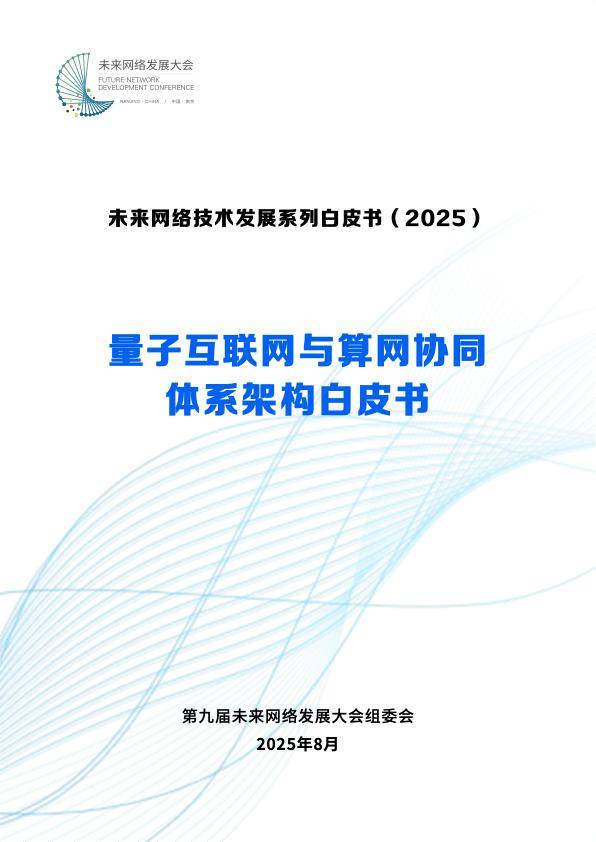
2025年未来网络发展大会:量子互联网与算网协同体系架构白皮书
Sou Hu Cai Jing· 2025-08-25 08:29
Quantum Internet Overview - The white paper outlines the technical foundation, architecture design, key technologies, and the synergy between quantum computing and networking, providing a reference for the engineering realization of quantum internet [1][24]. - Quantum internet is defined as a network connecting quantum nodes to support applications that classical internet cannot achieve, currently in its early stages with immature hardware and software [4][24]. Quantum Information Technology Basics - Core concepts include quantum mechanics principles such as superposition, entanglement, quantum operations, and quantum measurement, which are essential for quantum computing and communication [1][2]. - Quantum state evolution follows the Schrödinger equation, providing theoretical support for quantum computing and communication [1]. Typical Quantum Applications - Quantum communication includes quantum key distribution (QKD), quantum teleportation, and quantum secure direct communication (QSDC), ensuring secure information transfer [2][51]. - Quantum computing utilizes quantum superposition for parallel computation, currently in the Noisy Intermediate-Scale Quantum (NISQ) stage, with key algorithms like Shor's and Grover's [2][65]. - Quantum precision measurement aims to surpass the standard quantum limit, with applications in global quantum clock networks and long-baseline telescopes [2]. Quantum Internet Architecture and Key Technologies - The architecture of quantum internet is still developing, with various stages proposed by researchers, including trusted relay and entanglement distribution [4]. - Quantum relay technology is categorized into four generations, addressing long-distance quantum signal attenuation [5][6]. Quantum Internet Protocol Stack - Different research teams propose varied protocol stacks, adapting classic internet architecture to quantum needs, with layers for physical, link, network, and application [7]. Initial Quantum Internet Operation Mode Design - A centralized control scheme is proposed for initial quantum devices, focusing on network layout and node types to manage limited resources effectively [9][10]. Quantum Application Protocol Examples - The BBM92 protocol for quantum key distribution involves a process of path selection, entanglement channel construction, and security checks to generate a secure key [12][13]. - Distributed quantum computing connects multiple quantum processors through entangled channels, overcoming limitations of single-chip systems [14]. Quantum Computing and Networking Synergy - The trend towards quantum cloud computing and integration with supercomputing highlights the need for resource modeling and scheduling frameworks to optimize quantum and classical resource allocation [15][16]. - The necessity for collaboration arises from high fidelity requirements and short coherence times in quantum applications, demanding precise communication timing [16]. Summary and Outlook - The current stage of quantum internet development faces challenges in practical quantum relay and data exchange technologies, with potential cost reductions through the reuse of classical internet infrastructure [18]. - Future directions include breakthroughs in quantum relay and error correction, as well as the development of a resource modeling and scheduling system to support large-scale quantum applications [19].

北京量子产业生态创新发布会将于8月19日举行
Zheng Quan Shi Bao Wang· 2025-08-16 12:20
Group 1 - The Quantum Industry Ecological Innovation Conference and the sixth plenary session of the Quantum Information Network Industry Alliance will be held on August 19 in Beijing Economic and Technological Development Zone (Beijing E-Town) [1]
立法协同,推动科创协同(坚持和完善人民代表大会制度)
Ren Min Ri Bao· 2025-08-13 21:50
Core Points - The article discusses the collaborative legislative decision made by Shanghai, Jiangsu, Zhejiang, and Anhui to promote technological innovation in the Yangtze River Delta region, marking a new phase of legal governance in this area [3][4] - The decision aims to transform effective practices into institutional arrangements to address bottlenecks in technological innovation and enhance the region's role as a strategic pillar in national technology development [3][4] Group 1: Legislative Framework - The decision consists of 19 articles focusing on implementing national strategies, fostering original innovation capabilities, and developing new growth drivers [3] - It emphasizes the importance of the Yangtze River Delta in the construction of a strong technological nation and aims to establish it as a key hub in the global innovation network [3] Group 2: Infrastructure and Resource Sharing - The region is home to significant scientific infrastructure, including national science centers and major research facilities, which are crucial for technological innovation [4] - A shared service platform for technological resources has been established, with over 610 billion yuan worth of scientific instruments available for public use [4][5] Group 3: Innovation Mechanisms - The article highlights the introduction of a "pay after use" mechanism for technology transfer, allowing companies to trial technologies before committing to purchase [6][7] - Various collaborative innovation mechanisms have been incorporated into the decision, including optimizing task organization and encouraging cross-regional technology incubators [8] Group 4: Industry Collaboration - The article mentions successful collaborations among universities and enterprises in the region, leading to rapid product development and commercialization [10][11] - The decision supports the establishment of innovation clusters and encourages the integration of innovation resources across the Yangtze River Delta [10][12]
政策举措密集落地 多维度赋能新质生产力发展
Shang Hai Zheng Quan Bao· 2025-08-13 17:48
Group 1 - The establishment of innovation consortia in Jiangsu Province aims to enhance targeted resource flow by integrating leading enterprises, unicorns, and research institutions to address technological challenges in the innovation and industrial chains [1] - Financial support is being optimized through policies that encourage banks to provide long-term financing for key manufacturing sectors such as integrated circuits and industrial mother machines, facilitating breakthroughs in core technologies [1] - The increasing global competition in technology necessitates that China's manufacturing sector overcomes core technology bottlenecks, with financial backing being crucial for research and industrialization of these technologies [1] Group 2 - A series of institutional innovations, including intellectual property protection and technology evaluation reforms, are being implemented to clear obstacles and solidify the foundation for cultivating new productive forces [2] - The new intellectual property protection regulations in cities like Shijiazhuang and Fujian are tailored to support industries such as biomedicine and artificial intelligence, establishing a comprehensive protection network [2] - The Long Triangle region's initiative encourages universities and research institutions to reform the management of technological achievements, promoting their commercialization through various mechanisms [2] Group 3 - The goal of deep integration is to cultivate emerging pillar industries with global influence, aiming to create benchmarks for new productive forces in China [3]
河套:世界级科创平台加速崛起
Shen Zhen Shang Bao· 2025-08-07 23:17
Core Insights - The "Shenzhen-Hong Kong Science and Technology Innovation Cooperation Zone Development Plan" was officially released in August 2023, outlining a roadmap for the development of the He Tao Cooperation Zone in Shenzhen, aiming to create a "world-class research hub" and a source of new productive forces [1] Group 1: Innovation Element Flow - The core of driving industrial development lies in the smooth flow of people, logistics, capital, information, and technology [2] - The He Tao Cooperation Zone has implemented bold reforms to facilitate cross-border flow of research materials, biological samples, and data, thereby breaking down collaboration barriers between Shenzhen and Hong Kong [2] - A cross-border direct bus service has been established, reducing travel time for researchers between Shenzhen and Hong Kong to approximately 30 minutes [2] - The new Huanggang Port is expected to be operational by 2026, implementing a "cooperative inspection, one-time release" customs model, significantly reducing customs clearance time from about 30 minutes to approximately 5 minutes [2] - The "Kehui Tong" pilot project has been launched to allow free cross-border allocation of research funds, with the establishment of the first cross-border dual-currency mother fund for targeted investments in advanced fields [2] - Shenzhen Park enterprises have been approved for a total of $1 million in foreign debt quotas, marking a national first in easing foreign debt access for enterprises [2] Group 2: Efficient Cross-Border Flow of Research Materials - The General Administration of Customs has introduced measures to support the He Tao Cooperation Zone, allowing for highly convenient management of research-related goods [3] - The zone is promoting a management model that allows for "first-line release, second-line control, and free movement within the zone" [3] - The Shenzhen Data Exchange has been established, completing 110 cross-border data transactions totaling 334 million yuan [3] Group 3: Innovation Ecosystem Development - Institutional innovation and resource aggregation are accelerating the establishment of a comprehensive technology innovation ecosystem in the He Tao Cooperation Zone [4] - The industrial spatial layout has been continuously optimized, with 13 specialized parks established and over 1.2 million square meters of international collaborative innovation space planned [4] - The zone has attracted over 15,000 researchers and 18 academicians, creating a high-level talent hub in the Guangdong-Hong Kong-Macao Greater Bay Area [4] Group 4: Platforms for Innovation and Industrial Development - The He Tao Cooperation Zone has established several top-tier technology innovation centers, focusing on breakthroughs in key core technologies [5] - Various pilot service platforms have been created for technology transfer, including those for specialized robots and advanced medical technologies [6] Group 5: Industrial Cluster Development - The He Tao Cooperation Zone has gathered over 200 high-end research projects, 447 technology companies, and more than 15,000 research talents, expanding the breadth and depth of technological and industrial innovation [7] - Key industry clusters in artificial intelligence, biomedicine, and quantum information are emerging, with a notable increase in AI-related enterprises [7] - The innovation chain and industrial chain are entering a virtuous cycle, promoting a positive trend in the "Hong Kong basic research - He Tao results transformation - Greater Bay Area production" industrial chain [7]
保持战略定力 集中精力办好自己的事
Zhong Guo Zheng Quan Bao· 2025-08-03 21:12
Group 1 - The "14th Five-Year Plan" is approaching its conclusion, with a focus on stabilizing employment, enterprises, markets, and expectations while promoting high-quality development [1] - The construction of major projects, such as the Yebatan Hydropower Station, is seen as a cornerstone for economic development, with efforts to complete 102 major projects by the end of the year [1] - The central government emphasizes the need for policy implementation to convert positive factors into tangible development results [1] Group 2 - Recent policies have been introduced to address insufficient demand, including 19 key measures to boost and expand consumption [2] - Local governments are actively supporting enterprises, with initiatives like the establishment of "enterprise service teams" and organizing overseas trade activities [2] - Employment stability is prioritized, especially for recent graduates, with various regions enhancing job support services [2] Group 3 - The National Development and Reform Commission (NDRC) is committed to maintaining policy continuity and stability while enhancing flexibility and foresight [3] - There is a focus on creating new advantages in development, particularly in the artificial intelligence sector, with significant investments and initiatives from various regions [3] - A Morgan Stanley report predicts that China could develop a domestic AI market valued at $140 billion by 2030, highlighting China's unique advantages in global high-tech competition [3] Group 4 - Technological innovation is driving industrial innovation, with significant projects underway in various sectors, including quantum computing and amphibious aircraft [4][5] - Financial support for technological innovation has been increased, with the People's Bank of China expanding the scale of re-loans for technology innovation from 500 billion to 800 billion [5] - Policies are being implemented to ensure seamless integration of innovation and industrial chains, which is expected to stimulate high-quality development [5] Group 5 - Recent reforms in the Sci-Tech Innovation Board aim to enhance inclusivity and adaptability for high-quality, unprofitable tech companies [6] - The government is advancing key reforms in various sectors, including electricity trading and market access, to stimulate business vitality [6] Group 6 - China is expanding its institutional openness, creating a market-oriented, law-based, and international business environment [7] - International interest in China remains strong, with companies like GE Healthcare increasing investments in the Chinese market [7] - Global economic outlooks for China are improving, with institutions like Goldman Sachs and Morgan Stanley raising their growth forecasts for 2025 [7] Group 7 - There is a strong consensus that China is capable of achieving the goals set in the "14th Five-Year Plan," laying a solid foundation for the "15th Five-Year Plan" [8]
最高1000万元!聚焦合成生物学、细胞与基因治疗等,北京市征集2026年度区域联合基金指南需求
仪器信息网· 2025-08-01 03:59
Core Viewpoint - The article discusses the 2026 Regional Joint Fund (Beijing) project guidelines, focusing on key industries in Haidian District and Beijing Economic-Technological Development Area, with specific funding allocations for integrated and key projects [1][8]. Group 1: Key Areas of Focus - The guidelines emphasize several key areas for funding, including: - Electronic Information: Integrated circuits, artificial intelligence, wireless communication, and quantum information [2][3]. - Life and Health: Synthetic biology manufacturing, cell and gene therapy, brain science, biomedical engineering, and smart healthcare [3]. - New Materials and Advanced Manufacturing: Robotics, new materials, and intelligent equipment [3]. - Modern Transportation and Aerospace: New energy and intelligent connected vehicles, and aerospace industry [3]. Group 2: Guidelines Requirements - The guidelines require that the proposed needs must meet specific criteria: - Scientific focus on fundamental scientific issues behind technological challenges, avoiding mere technical applications [4]. - Inclusivity without overly restrictive elements, ensuring a balance between specificity and broad applicability [5]. - Directionality that aligns closely with the development needs of Haidian District and Beijing Economic-Technological Development Area [5]. - Safety compliance with national laws and ethical standards, emphasizing the prevention of biological and information security risks [6]. - Innovation to avoid duplication with existing guidelines from national and municipal science funds [6]. Group 3: Submission Requirements - Proposers must meet certain conditions: - The proposing unit must be a supporting unit of the Beijing Natural Science Foundation [7]. - Experience in leading key national science fund projects is required [8]. - Each proposer can submit only one guideline request, and each company can participate in up to two requests [8].

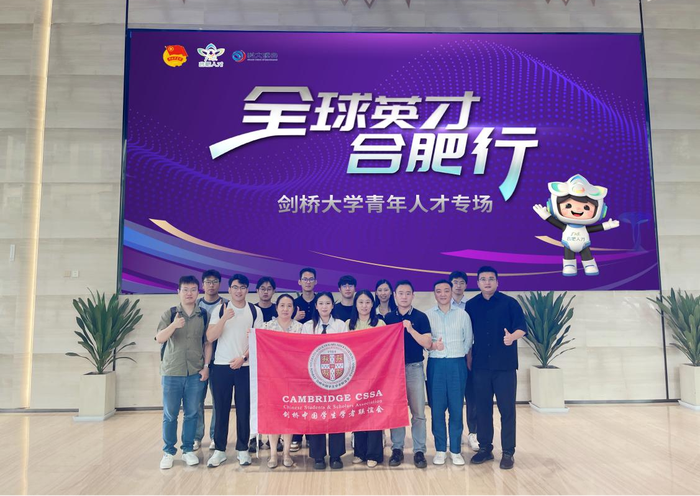
“全球英才合肥行”剑桥大学青年人才专场活动成功举办
Xin Lang Cai Jing· 2025-07-31 05:35
Group 1 - The "Global Talent Hefei Tour" event featuring Cambridge University PhD students successfully facilitated deep connections between key research institutions, emerging tech companies, and talent service platforms in Hefei [1] - A talent exchange seminar was held where discussions focused on talent policy interpretation, entrepreneurial funding, and achievement transformation platforms, highlighting the interest of PhD students in collaboration opportunities in fields like spectroscopy and deep space exploration [3] - The PhD delegation conducted site visits to various companies in Hefei, including Zhongke Xingtu, Dendritic Optics, and NIO, exploring the industrial chain layout in artificial intelligence, new energy, quantum information, and biomedicine [5] Group 2 - Cambridge University representatives expressed their astonishment at Hefei's innovation capabilities and the comprehensive support from laboratory to industrialization, noting the impressive "Hefei speed" in achieving results [7] - The event is part of a series aimed at linking global top universities with Hefei, promoting a model that combines industry demand with talent needs to create a more competitive talent hub [7]
向“新”而行 以“质”致远——安徽高质量发展样本观察
Xin Hua Wang· 2025-07-24 12:41
Group 1: Economic Performance - Anhui Province's GDP reached 25,723 billion yuan in the first half of 2025, with a year-on-year growth of 5.6% [1] - The added value of the secondary industry was 9,938 billion yuan, growing by 6.4% [1] - The total import and export value of goods was 4,585.4 billion yuan, marking a year-on-year increase of 15.2%, achieving a historical high for the same period [1] Group 2: Technological Innovation and Industry Development - The "High-Quality Development Think Tank Conference" held in Hefei showcased representative enterprises and research institutions in fields such as communication, new materials, artificial intelligence, quantum information, and deep space exploration [3] - The establishment of the International Deep Space Exploration Society in Hefei marks China's first international technology organization in the deep space exploration field [4] - The Deep Space Exploration Laboratory has increased research investment and accelerated the birth of technological achievements, focusing on strategic and forward-looking research [6] Group 3: Quantum Technology and Artificial Intelligence - Anhui is developing a quantum technology industry cluster, with numerous quantum technology enterprises gathering in Hefei's "Quantum Street" [8] - The province's artificial intelligence industry has seen significant growth, with the number of AI enterprises reaching 894 and related enterprises totaling 12,000 [10] - The computing power for AI in Anhui has surged from approximately 800P at the beginning of 2023 to 30,000P currently [10] Group 4: New Materials and Sustainable Development - Anhui's new materials industry has established a "cluster + base + gathering area" pattern, with four national strategic emerging industry clusters approved [12] - Anhui Fengyuan Group focuses on non-grain bio-based materials, developing a green industrial chain from agricultural waste to high-end bio-materials [14] - The construction of digital infrastructure is crucial for forming new productive forces, with Anhui Mobile leading the development of a comprehensive computing power scheduling platform [14]
高质量完成“十四五”规划|向知识产权创造大国迈进
Xin Hua She· 2025-07-17 10:18
Core Insights - China is making significant progress in becoming a strong nation in intellectual property (IP) during the 14th Five-Year Plan period, focusing on enhancing innovation capabilities and the effective utilization of IP [1][2]. Group 1: Innovation Strength - China is transitioning from being a major importer of IP to a creator of IP, with a notable increase in high-value core patents in strategic emerging sectors such as 5G, AI, aerospace, and new energy vehicles [2]. - As of June 2023, the number of high-value invention patents per 10,000 people reached 15.3, surpassing the 12 target set for the 14th Five-Year Plan [2]. - There are 524,000 domestic enterprises holding effective invention patents, totaling 3.727 million patents, which accounts for 74.4% of the national total, reflecting a 6.1 percentage point increase from the end of the 13th Five-Year Plan [2]. Group 2: Patent Growth by Sector - The top three sectors for growth in effective invention patents are information technology management methods, computer technology, and medical technology, with year-on-year growth rates of 34.1%, 22.7%, and 19.8% respectively, significantly outpacing the average growth rate [3]. - Patent-intensive industries contributed 16.87 trillion yuan in added value in 2023, representing 13.04% of China's GDP [3]. Group 3: Utilization and Commercialization - The transformation of IP into productive forces is emphasized, with initiatives to promote patent commercialization leading to a rise in the industrialization rate of enterprise invention patents from 44.9% in 2020 to 53.3% by 2024 [4]. - The annual import and export total of IP usage fees is projected to increase from 319.44 billion yuan in 2020 to 398.71 billion yuan by 2024 [4]. - The value of Chinese brands among the global top 5,000 reached 1.76 trillion USD, ranking second worldwide [4]. Group 4: International Cooperation - China has established IP cooperation with over 80 countries and regions, with a patent examination highway covering 84 countries, enhancing the innovation environment for foreign enterprises in China [5]. - The country has provided extensive guidance and consultation services to outbound enterprises, helping to reduce litigation costs by 1.32 billion yuan and recover economic losses of 38.04 billion yuan [5]. - China is also promoting green innovation through international cooperation, contributing 12,000 green technologies to the World Intellectual Property Organization [5].