
跨境电商

Search documents
华凯易佰:职工代表董事、副董事长庄俊超增持约276万股,增持计划已实施完毕
Mei Ri Jing Ji Xin Wen· 2025-12-17 10:02
每经头条(nbdtoutiao)——"太空快递"来了?全国首个民营飞船成功"上天"!背后公司创始人:正积 极开发"中型货运飞船"低成本产品 每经AI快讯,华凯易佰(SZ 300592,收盘价:10.58元)12月17日晚间发布公告称,自2025年11月4日 至2026年5月3日,公司职工代表董事、副董事长庄俊超先生通过深圳证券交易所证券交易系统以集中竞 价交易的方式增持公司股份约276万股,占公司总股本的比例为0.68%,增持金额为人民币约3001万 元。截至2025年12月16日,该增持计划已实施完毕。 (记者 王晓波) 2025年1至6月份,华凯易佰的营业收入构成为:跨境出口电商占比92.16%,跨境电商综合服务业务占 比7.71%,其他业务占比0.18%,空间环境艺术设计占比-0.06%。 截至发稿,华凯易佰市值为43亿元。 ...

黑五网一亚马逊退货潮应对全攻略,从快速处理到预防复盘
Sou Hu Cai Jing· 2025-12-17 05:28
Core Insights - The Black Friday and Cyber Monday period represents a peak sales opportunity for cross-border e-commerce sellers, but it also poses significant challenges related to increased return rates, which can erode profits [1][6] - Amazon's lenient return policies enhance customer experience but create potential profit loss for sellers due to high return processing costs [1][6] Group 1: Return Management Strategies - A centralized and intelligent cross-border e-commerce ERP system is essential for streamlining return management processes and minimizing losses [3][6] - The first step in managing returns is data analysis to identify which products are experiencing high return rates and the reasons behind them, utilizing features like "return analysis" in the ERP system [3][5] - Efficient internal processing workflows are crucial for handling return requests promptly, with standardized online processes established through the ERP's RMA management module [3][5] Group 2: Cost Management and Inventory Recovery - Accurately calculating the true cost of returns is necessary for integrating these figures into final profit reports, with the ERP's RMA analysis capabilities tracking return orders and associated costs [5][6] - Returned goods should be viewed as an opportunity to recover value; the ERP system can quickly update inventory statuses for resalable items, thus reintegrating them into available resources [5][6] - The ERP's inventory query and planning functions provide a comprehensive view to help operators make informed decisions regarding restocking and reallocating inventory, enhancing overall asset turnover efficiency [5][6] Group 3: Strategic Insights for Future Sales - The competition during Black Friday and Cyber Monday extends beyond traffic acquisition to profit protection, necessitating systematic and standardized return processing [6] - By leveraging return data for insights, sellers can drive improvements in product selection, operations, and customer service, ultimately leading to increased profits in future sales seasons [6]


中国卖家猛攻俄罗斯电商
投中网· 2025-12-17 04:10
Core Viewpoint - The article discusses the opportunities and challenges for Chinese companies in the Russian e-commerce market following the recent visa-free policy for Chinese citizens and the significant market gap created by the withdrawal of Western companies due to geopolitical tensions [4][6]. Economic Overview - The Russian e-commerce market is experiencing rapid growth, with online retail sales reaching 4.4 trillion rubles (approximately 400 billion RMB) in the first five months of 2025, a year-on-year increase of 39% [4]. - The Russian Central Bank has sold 232.6 tons of gold to cover budget deficits, indicating severe financial pressure, with a fiscal deficit of 3.69 trillion rubles (approximately 325.46 billion RMB) in the first half of the year, over five times that of the same period in 2024 [8][9]. - The ongoing conflict has led to significant currency fluctuations, with the ruble experiencing a 40% appreciation against the dollar in 2025, although long-term geopolitical risks remain a concern [10][11]. Payment and Transaction Challenges - The sanctions have disrupted normal banking operations, affecting payment channels and leading to delays in fund transfers for merchants [11][12]. - New payment solutions are emerging, such as Ozon's GEP payment method, which aims to facilitate transactions despite the challenges posed by the sanctions [12]. Logistics and Supply Chain - The logistics landscape has changed dramatically due to the conflict, with transportation costs increasing by 69% over the past three years [14]. - Ozon has established fulfillment centers in ten Chinese cities and is offering reduced shipping rates for orders to Kazakhstan and Belarus, potentially lowering logistics costs by 40% [15]. Marketing and Brand Localization - The closure of Western social media platforms has shifted marketing efforts towards local platforms like VK and Telegram, which have significant user bases in Russia [16][18]. - Ozon plans to launch the "Ozon Alliance Program" to connect Chinese brands with over 1 million KOLs on VK, enhancing brand visibility in the Russian market [18]. Conclusion - The Russian e-commerce market is undergoing structural changes, with logistics and marketing strategies needing to adapt to the new geopolitical landscape. Companies that can quickly adjust to these changes are likely to find growth opportunities in this evolving market [18].

中俄跨境电商迎来发展契机 合规化、品牌化、智能化将成未来趋势
Xin Hua Cai Jing· 2025-12-17 03:07
Core Insights - The Russian cross-border e-commerce market is rapidly developing, becoming a new growth area for Chinese sellers and companies as they adapt to the changing landscape of tax policies and consumer preferences [1][5]. Group 1: Market Growth and Potential - The Russian e-commerce market has shown significant growth, with projections estimating a market size of $121 billion in 2024, $165 billion in 2025, and potentially reaching $240 billion by 2027 [2]. - Major Russian e-commerce platforms like Ozon, Wildberries, and Yandex.Market are actively recruiting Chinese brands and sellers, transforming cross-border business from an option to a core consumer habit [2][3]. - Chinese sellers have experienced substantial growth, with transaction volumes increasing by 60 times from Q4 2022 to Q4 2025, and a projected 2.5 times increase in transaction volume by 2025 [2][3]. Group 2: Factors Driving Growth - The exit of many Western brands from Russia has created a market vacuum, allowing Chinese fast-moving consumer goods and daily necessities to fill the gap [4]. - The development of online shopping habits among Russian consumers, coupled with the proactive expansion of Russian e-commerce platforms into China, has lowered barriers for Chinese sellers [4]. - The combination of China's supply chain advantages, the explosive growth of the Russian e-commerce market, and the expansion of Russian platforms in China forms a "golden triangle" for Chinese brands entering Russia [4]. Group 3: Regulatory Changes and Compliance - The end of the "tax-free" era for cross-border small packages is approaching, with Russia planning to gradually reduce the tax exemption for packages under €200 starting in 2026, leading to potential challenges for some Chinese sellers [5][6]. - Compliance will become a critical focus for Chinese sellers, as the market shifts towards more regulated operations, moving away from previous "gray" logistics practices [6]. Group 4: Brand Transformation and AI Integration - A shift from low-cost distribution to brand-focused strategies is essential for Chinese sellers in the Russian market, as they aim to build localized brands that resonate with Russian consumers [7][8]. - The increasing preference for Chinese brands among Russian consumers, particularly in urban areas, highlights the importance of brand loyalty and effective marketing strategies [7][8]. - The integration of AI tools in cross-border e-commerce operations is expected to enhance efficiency in product selection, market analysis, and customer engagement, marking a significant trend for future development [8].
滁州浩烨跨境电子商务有限责任公司成立 注册资本5万人民币
Sou Hu Cai Jing· 2025-12-17 01:54
Group 1 - The establishment of Chuzhou Haoye Cross-Border E-Commerce Co., Ltd. has been officially registered, with a legal representative named Wang Wei [1] - The registered capital of the company is 50,000 RMB [1] - The business scope includes internet sales (excluding goods that require permits), sales of daily glass products, manufacturing of unsealed glass shells and other glass products, manufacturing of glass instruments, sales of textiles, retail of clothing and accessories, sales of arts and crafts and ceremonial supplies (excluding ivory and its products), and information technology consulting services [1]
华西证券最新研判:消费板块迎政策红利窗口期,这三大主线或成资金新宠
Sou Hu Cai Jing· 2025-12-17 01:09
12月17日,华西证券最新研报指出,当前A股市场正经历结构性切换,在科技板块轮动动能减弱背景 下,消费板块"高低切换"逻辑有望成为跨年行情核心主线。研报建议投资者重点关注三大方向:政策驱 动的消费升级、超跌红利资产修复以及新能源产业链的长期价值。 随着12月市场对科技股追高意愿降温,资金开始寻找新突破口。11月社会消费品零售总额增速放缓至 3.9%,但中央经济工作会议明确将"坚持内需主导"列为2026年首要任务,引发市场对消费刺激政策加码 的强烈预期。华西证券认为,白酒(贵州茅台、五粮液)、家电(美的集团、格力电器)、汽车(比亚 迪、长城汽车)等低位消费蓝筹存在估值修复空间,而跨境电商(小商品城、华凯易佰)等新兴消费领 域或受益政策红利。 尽管11月21日板块集体下挫后尚未完全修复,但华西证券强调,光伏(隆基绿能、TCL中环)、储能 (宁德时代、阳光电源)、新能源汽车等细分领域的基本面支撑依然扎实。随着行业产能出清加速和技 术迭代推进,具备全球竞争力的龙头企业有望率先受益,建议重点关注技术壁垒较高的电池环节和智能 化转型领先的整车企业。 研报提出"核心资产+弹性标的"组合策略:消费板块以食品饮料、家电为底仓, ...

徐曙海在研究全市电商产业高质量发展工作时强调 加快推动电商产业扩量提质 更好赋能经济高质量发展
Zhen Jiang Ri Bao· 2025-12-16 23:49
Group 1 - The core viewpoint emphasizes the importance of cross-border e-commerce as a new economic model in foreign trade, which is deeply integrated into consumers' daily lives and plays a significant role in promoting stable growth in foreign trade and empowering high-quality industrial development [1] - The city aims to accelerate the high-quality development of the e-commerce industry by focusing on cross-border and live-streaming e-commerce, setting forward-looking goals, and implementing specific measures to drive industry growth [1][2] - The meeting highlighted the need for various departments to enhance their sense of responsibility and urgency, seize opportunities, and adopt a proactive approach to support the high-quality development of the e-commerce sector [1][2] Group 2 - The focus on live-streaming e-commerce aims to elevate operational standards, strengthen accountability, and ensure the steady advancement of key tasks [2] - The strategy includes integrating existing resources, collaborating with professional companies and e-commerce platforms, and planning the construction of e-commerce industrial parks to enhance industry concentration and support [2] - Regulatory bodies are encouraged to balance management and service guidance, learn from advanced regions, provide policy support, and ensure the sustainable and healthy development of the e-commerce industry [2]
厦门自贸片区紧盯需求扩大开放
Jing Ji Ri Bao· 2025-12-16 22:19
Core Insights - The Xiamen Free Trade Zone has significantly improved port efficiency through innovative reforms, allowing for streamlined customs processes and enhanced international trade capabilities [1][2][5] Group 1: Trade Efficiency Improvements - The introduction of the "cross-border one lock" model has reduced the time for goods to pass through customs from one day to under 12 hours, enhancing supply chain reliability and reducing costs by approximately 28% for companies like Amphenol [2][3] - Since the implementation of the "cross-border one lock" model, Xiamen Customs has overseen 1,308 vehicle shipments valued at 13.958 billion, benefiting over 5,000 enterprises [3] Group 2: Cross-Border E-commerce Growth - Xiamen has emerged as a significant hub for cross-border e-commerce, with exports surpassing 10 billion in value this year, supported by nearly 6,000 sellers and a growing ecosystem of logistics and e-commerce companies [5][7] - The launch of the "Silk Road Maritime" fast track for cross-border e-commerce has established 27 direct shipping routes to Southeast Asia, significantly improving logistics efficiency by over 20% [6] Group 3: Regulatory Innovations - The Xiamen Free Trade Zone has introduced 654 innovative measures, including the first containerized lithium battery shipping contract template in China, addressing industry-specific challenges and enhancing the regulatory framework [8] - The "Tax and Customs Link" intelligent collaboration platform has streamlined the process for import goods return and tax refund, reducing processing time from 30 days to a more efficient online system [9]
跨境通:公司将聚焦核心业务,出口、进口业务齐头并进
Zheng Quan Ri Bao· 2025-12-16 14:15
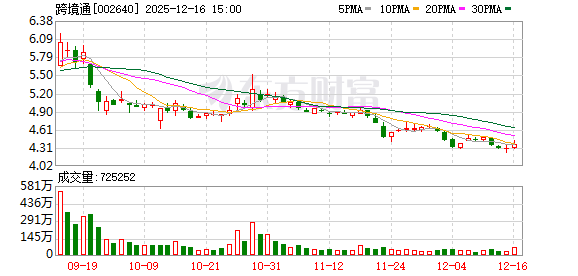
Core Viewpoint - The company aims to focus on its core business by advancing both export and import operations while enhancing its own brand development and supporting brand establishment on third-party platforms [2] Group 1 - The company will continue to adhere to a prudent business strategy and optimize its services [2] - The company is committed to exploring new marketing channels and models [2]

高难度一“跨”,苏州怎么破?
Sou Hu Cai Jing· 2025-12-16 14:10
Core Insights - The rapid growth of cross-border e-commerce in China is highlighted, with the number of cross-border e-commerce companies expected to exceed 120,000 by 2024, particularly in economically developed cities like Shenzhen, Guangzhou, Shanghai, and Hangzhou [1][3] - Suzhou is also experiencing significant growth in cross-border e-commerce, with a focus on enhancing its development through strategic initiatives and policies [1][8] Industry Overview - Cross-border e-commerce is likened to a "cross-national online trading assembly line," creating a closed loop from transaction to delivery [3] - Global e-commerce sales are projected to rise from $4.4 trillion in 2023 to $6.8 trillion by 2028, accounting for 24% of global retail sales [3] - In 2024, China's cross-border e-commerce imports and exports are expected to reach approximately 2.71 trillion yuan, a 14% increase year-on-year, with exports alone projected at 2.15 trillion yuan, up 16.9% [3][4] Suzhou's Cross-Border E-Commerce Development - Suzhou has identified 2024 as the "Year of Leap for Cross-Border E-Commerce," launching various initiatives to support this growth [8][10] - The city has established a dedicated cross-border e-commerce development company to facilitate the expansion of local businesses into international markets [13] - In 2024, Suzhou's cross-border e-commerce import and export value is projected to be 232.3 billion yuan, an 86.3% increase, although still smaller compared to leading cities [7][10] Challenges and Solutions - Suzhou faces challenges in transitioning businesses to cross-border e-commerce, including slow adaptation, lack of core products, and insufficient professional capabilities [11][16] - The city is actively addressing these issues by forming specialized teams to educate local businesses about cross-border e-commerce policies and operational models [13][16] Infrastructure and Logistics - Suzhou is enhancing its logistics capabilities to support cross-border e-commerce, including the establishment of a multi-dimensional logistics network [17][19] - The city has launched initiatives to improve logistics efficiency, such as the first cross-province air freight station, which reduces logistics time by 12 to 24 hours [17] - Suzhou is also exploring new transportation models, such as integrating cross-border e-commerce with the China-Europe Railway Express [19] Future Prospects - The ongoing development of cross-border e-commerce is seen as a key strategy for Suzhou's manufacturing sector to access global markets [17] - The city aims to continue leveraging its industrial advantages and strengthen partnerships with leading platforms to facilitate the growth of local enterprises [19]
