
Securities

Search documents
重罚1.77亿,IT内鬼抄私募作业获利超8800万
21世纪经济报道· 2025-11-18 14:04
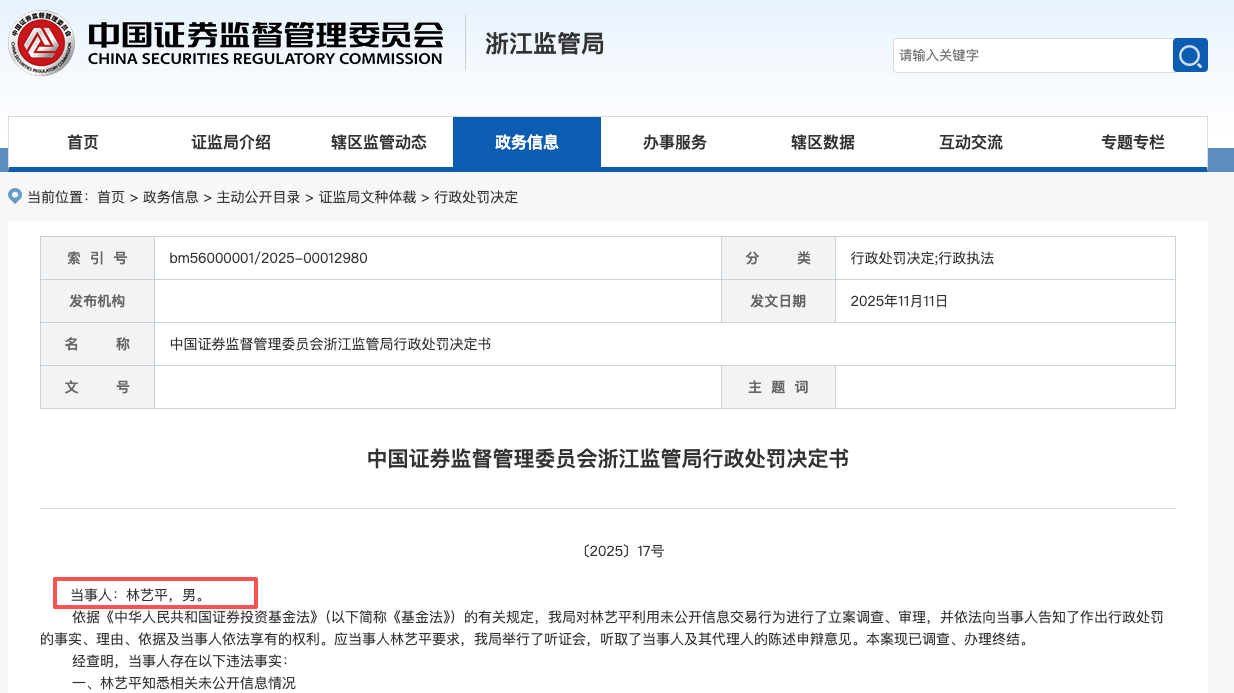
Core Viewpoint - The article discusses a significant case of insider trading involving Lin Yiping, who was fined 177 million yuan for engaging in "mouse warehouse" activities, highlighting systemic vulnerabilities in the management of IT personnel within financial institutions [1][4][12]. Group 1: Case Details - Lin Yiping, an employee at a technology company in Hangzhou, illegally profited over 88 million yuan by exploiting sensitive information from two private equity firms he had access to [1][3]. - The regulatory investigation revealed that Lin executed trades through multiple accounts, attempting to obscure the connection between his activities and the private equity firms [3][4]. - The total illegal gains from his trading activities amounted to 88.57 million yuan, leading to a total penalty exceeding 177 million yuan, including confiscation of illegal profits and fines [4][5]. Group 2: Regulatory Insights - The case underscores the need for stricter compliance measures within private equity firms, particularly regarding the access and management of sensitive information by IT personnel [5][12]. - Regulatory authorities have intensified their scrutiny of "mouse warehouse" activities, particularly targeting IT staff who may misuse their access to confidential data [12][13]. - The penalties imposed reflect a zero-tolerance approach to insider trading, emphasizing that all employees, regardless of their position, are subject to strict regulatory oversight [6][12]. Group 3: Systemic Vulnerabilities - The article identifies systemic flaws in the management of IT roles, where personnel have excessive access to sensitive data, leading to potential misuse [5][12]. - It highlights the importance of implementing strict access controls, data encryption, and real-time monitoring to prevent unauthorized trading activities [10][12]. - The increasing trend of insider trading cases involving non-traditional roles, such as IT and operational staff, indicates a shift in the landscape of financial misconduct [12][13].


国泰海通:行业内驱+政策外驱 金融AI应用落地拐点已至
智通财经网· 2025-11-18 13:11
Core Insights - The financial industry is at a pivotal point for the application of AI, driven by both internal industry needs and external policy support [1][2] - The release of DeepSeek R1 in 2025 is expected to significantly enhance general model reasoning capabilities and reduce costs, marking a turning point for localized AI deployment in financial institutions [1][2] - AI applications are rapidly penetrating core business areas and back-office functions within various financial institutions, potentially restructuring business processes and organizational frameworks [1] Industry Drivers - The combination of internal IT spending growth and external policy frameworks is propelling the transition from "digital intelligence" to "artificial intelligence" in financial institutions [2] - Since 2024, there has been a noticeable acceleration in bidding related to large models within the financial sector, indicating strong internal demand for AI solutions [2] Technological Pathways - There are two primary technological pathways for integrating AI in finance: training general models with financial data and developing specialized financial models tailored to industry-specific challenges [2] - The release of the DeepSeek R1 reasoning model is a significant milestone for the localized deployment of AI in financial institutions, enhancing the ability to address complex financial issues [2] Application Focus - Future research and development will focus on AI agents, particularly multi-agent collaboration, which is essential for tasks requiring long-term planning and execution in financial scenarios [2] - Current applications of AI in finance predominantly involve "short thinking" tasks such as understanding, Q&A, and information extraction, with a shift towards more complex, long-process tasks anticipated [2]

重罚1.77亿!私募关联IT员工作案,老鼠仓获利超8800万
2 1 Shi Ji Jing Ji Bao Dao· 2025-11-18 11:48
Core Points - A significant penalty of 177 million yuan has been imposed for a case of "rat trading" involving Lin Yiping, who illegally profited over 88 million yuan through his position [1][3] - The case has drawn attention due to Lin's association with a technology company that shares a common control with two private fund managers [1][2] Summary by Sections Case Details - Lin Yiping was employed at a technology company in Hangzhou, where he was responsible for trading strategy development and risk control [2] - He accessed sensitive, non-public information from two private funds and engaged in trading activities using accounts linked to others, attempting to obscure the connection [3] Regulatory Findings - The investigation revealed that Lin's trading activities were closely aligned with the operations of the private funds, resulting in illegal profits of 88.57 million yuan [3] - The regulatory body constructed a comprehensive evidence chain through IP tracking and transaction analysis, leading to the penalties imposed [3] Industry Insights - Experts highlight systemic vulnerabilities in the management of IT personnel within private funds, suggesting that stricter controls and segregation of duties could prevent such incidents [4][9] - The case reflects a broader trend of IT and support roles being involved in insider trading, prompting calls for enhanced compliance measures across the industry [10][11] Regulatory Response - The regulatory authority's decision to impose a five-year market ban and significant financial penalties is seen as a strong message against insider trading practices [6][10] - The increasing use of technology for monitoring trading behaviors indicates a shift towards more rigorous oversight in the financial sector [7][11]
广发证券沈明高:科技金融的实质是“创新资本化”
Zheng Quan Shi Bao Wang· 2025-11-18 10:01
Core Viewpoint - The key challenge for technology finance in the next phase is transitioning from point innovations (0 to 1) to scalable and replicable innovations (1 to N), which will create systematic advantages and support the construction of a modern industrial system [1] Group 1: Challenges in Technology Finance - Current technology finance services face five major challenges: non-standardization, unprofitability, light assets, high uncertainty, and long cycles [1] - There is a call for the financial system to implement precise policies that provide "technology capital" which understands technology, knows the industry, is good at pricing, can manage risks, and can allocate resources effectively [1] Group 2: Innovation and Capitalization Cycle - The essence of technology finance is to transform technological innovations into sustainable capital returns, which in turn drives the next round of innovation, forming a virtuous cycle of "innovation-capitalization-reinnovation" [1]

Guotai Haitong embraces pleasant sale of USD500 mln H-share exchangeable bonds by HK affiliate
Globenewswire· 2025-11-18 09:35
Core Insights - Guotai Haitong Securities successfully completed a sale of 3.88 billion Hong Kong dollars (approximately 499 million U.S. dollars) in 7-year zero-coupon exchangeable bonds through its Hong Kong affiliate Guotai Junan Holdings Ltd [1][4] Group 1: Bond Details - The bonds are rated BBB+ by Standard & Poor's and are convertible to ordinary H-shares of Guotai Haitong's affiliate, Guotai Junan International Holdings Ltd [2] - These bonds are irrevocably guaranteed by Guotai Junan Financial Holdings Ltd, the parent company of the issuer [2] - The bonds were issued at prices up to 103.5 percent of their par value, with yields as low as -0.49 percent [3] Group 2: Investor Participation - Institutional investors, including long-term funds and hedge funds from the Asia-Pacific region, Europe, and the Americas, showed strong interest in the subscription due to confidence in China's assets and the long-term prospects of Guotai Haitong and its affiliates [3] Group 3: Financial Strategy - The issuance of zero-coupon bonds is aimed at optimizing funding costs for the company, particularly in light of rising U.S. dollar-denominated financing costs, with proceeds designated for refinancing maturing overseas debts [4] - The offering represents Guotai Junan Financial Holdings Ltd.'s public debut in the international capital market, enhancing the overseas financing capabilities of both the company and Guotai Haitong [4]
倒计时1天!2025中国金融机构年会即将启幕,六大论坛纵论金融新未来
证券时报· 2025-11-18 01:28
Core Viewpoint - The 19th Shenzhen International Financial Expo and the 2025 China Financial Institutions Annual Conference will be held from November 19 to 21, 2023, in Shenzhen, focusing on high-quality development paths for the financial industry [2][8]. Event Overview - The event will feature hundreds of industry leaders from banking, securities, insurance, trust, and futures sectors, through six professional forums [2][8]. - The theme of the 2025 China Financial Institutions Annual Conference is "Empowerment and Value Reconstruction," coinciding with the critical period of the conclusion of the 14th Five-Year Plan and the planning of the 15th Five-Year Plan [8]. Key Participants - Notable speakers include government officials and industry leaders such as the Deputy Mayor of Shenzhen, the Director of the Technology Department of the People's Bank of China, and executives from major financial institutions [9][10]. - Discussions will cover topics like AI-driven asset management and the strategic positioning of public funds during the 15th Five-Year Plan [9]. Forum Highlights - The conference will host six sub-forums focusing on various sectors, including banking, securities, insurance, trust, and futures, addressing current industry challenges and opportunities [11][12]. - Specific topics include wealth management in the banking sector, asset management strategies in the securities sector, and asset-liability management in the insurance sector [11][12]. Awards and Recognition - The event will also present several prestigious awards, including the "China Securities Industry Jun Ding Award" and the "China Banking Industry Tian Ji Award," aimed at recognizing outstanding practices in the financial sector [13].
【固收】本周微涨——可转债周报(2025年11月10日至2025年11月14日)(张旭)
光大证券研究· 2025-11-17 23:03
Market Overview - The China convertible bond index increased by 0.52% during the week of November 10 to November 14, 2025, compared to a previous increase of 0.86% [6] - The overall index for the year-to-date shows a gain of 18.61% for convertible bonds and 23.61% for the broader market index [6] - High-rated bonds (AAA) decreased by 0.61%, while medium-rated bonds (AA) saw an increase of 0.56%, indicating a preference for medium-rated securities [6] Convertible Bond Performance - The average price of convertible bonds reached 133.30 yuan, with a price percentile of 99.28% [8] - The average conversion value was 105.52 yuan, with a percentile of 95.81% [8] - The average conversion premium stood at 27.12%, with a percentile of 18.21% [8] Investment Strategy - The convertible bond market experienced slight growth while the equity market declined, suggesting a shift in investor preference [9] - There is a noted scarcity of high-quality convertible bonds, leading to a need for careful selection and diversification in investment strategies [9] - It is recommended to assess convertible bond terms and underlying stock conditions to balance risk and return effectively [9]


第十四届“沪上金融家”评选结果揭晓,21位金融英才分获三大奖项
Guo Ji Jin Rong Bao· 2025-11-17 13:58
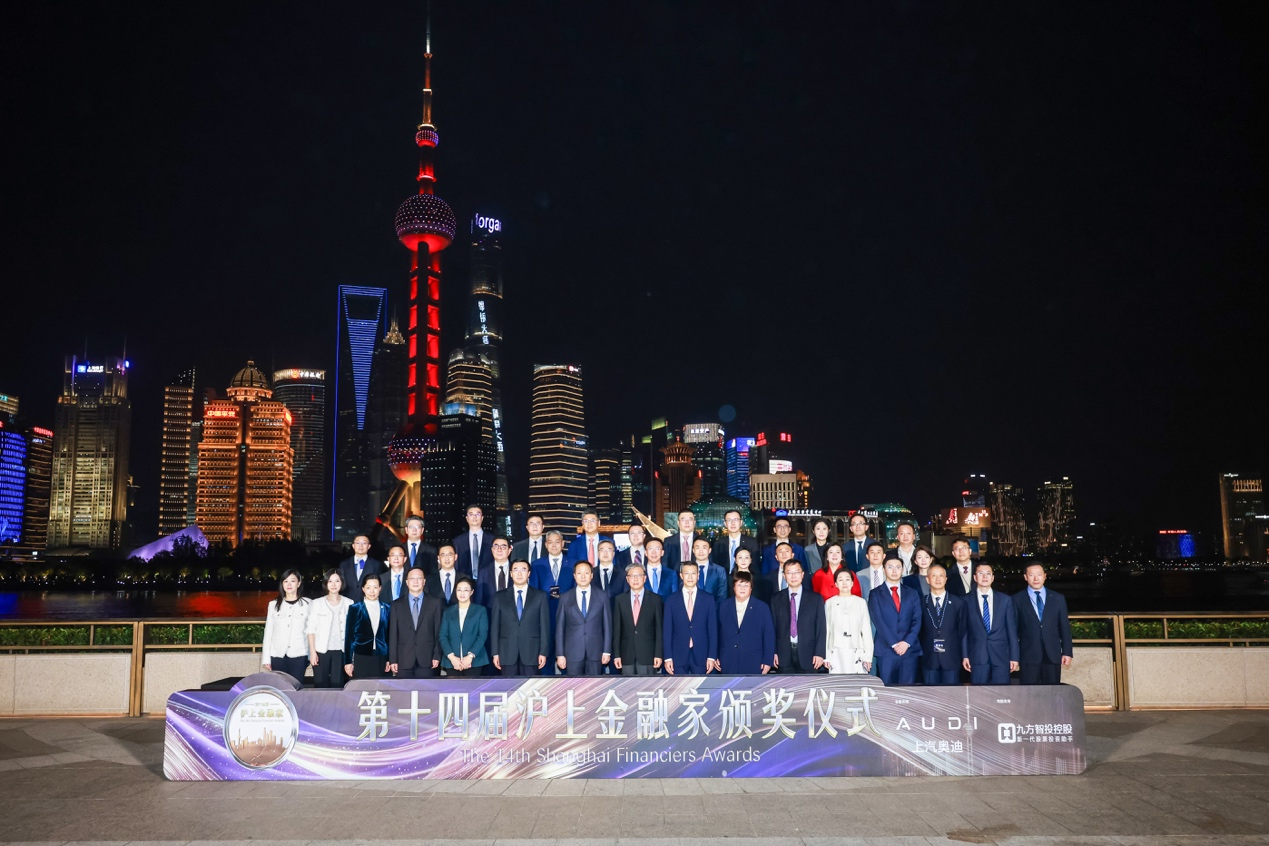
Core Insights - The 14th "Shanghai Financial Talents" awards recognized 21 financial professionals for their contributions to the Shanghai International Financial Center [1][2] - Significant policies and initiatives have been implemented this year to enhance Shanghai's status as an international financial center, leading to a continuous improvement in its capabilities [1] - Shanghai's financial market saw a total trading volume of 2967.83 trillion yuan in the first nine months of the year, marking a 12.7% year-on-year increase [1] Group 1: Awards and Recognition - Three individuals were awarded "Annual Figures in the Construction of Shanghai International Financial Center," eight as "Leaders in Shanghai's Financial Industry," and ten as "Innovators in Shanghai's Financial Industry" [2] - Notable awardees include executives from major banks and financial institutions, highlighting the recognition of leadership in the financial sector [4][5] Group 2: Financial Market Performance - Shanghai's stock market capitalization and interbank bond market scale rank among the top globally, reflecting the city's financial strength [1] - The successful launch of the digital yuan international operation center and offshore bond issuance in the Shanghai Free Trade Zone are key developments [1] Group 3: Financial Innovation and Talent Development - The event featured the release of the first "Green Finance Development Index Report," emphasizing the connection between the securities industry and green finance [5] - The importance of a strong financial talent pool was highlighted as a critical resource for building a financial powerhouse and enhancing the international financial center [5][6] Group 4: Ongoing Initiatives and Discussions - A roundtable discussion included experts from financial infrastructure, banking, and fintech sectors, focusing on how technology can support the development of Shanghai as an international financial center [6] - The "Shanghai Financial Talents" awards have been held for 14 consecutive years, contributing to the soft power and cultural atmosphere of Shanghai's financial sector [7]
广发证券(01776.HK):“25广发C7”票面利率为2.00%
Ge Long Hui· 2025-11-17 13:49
Core Points - Guangfa Securities has received approval from the China Securities Regulatory Commission to publicly issue subordinated corporate bonds with a face value of up to 20 billion yuan [1] - The company plans to issue the sixth tranche of bonds under this approval, with a planned issuance scale of no more than 3 billion yuan [1] - The coupon rate for the bonds, referred to as "25 Guangfa C7" with bond code 524544, has been set at 2.00% after a pricing inquiry conducted among professional institutional investors [1]
迈向“十五五”:金融机构如何精准赋能实体经济与雄安未来之城
Xin Hua Cai Jing· 2025-11-17 13:29
Core Insights - The article discusses the need for financial institutions to enhance their services to support the high-quality development of the real economy during the "14th Five-Year Plan" and the beginning of the "15th Five-Year Plan" [1] Group 1: Financial Institutions' Role - Financial institutions are urged to improve the precision, adaptability, and accessibility of their services, focusing on key areas and weak links in the real economy [2] - Regional banks should adjust their credit and customer strategies towards intelligent, green, and integrated directions, accelerating digital transformation to create competitive advantages [2] - The futures and securities industries are presented with development opportunities, with the futures sector encouraged to implement scenario-based services to enhance price discovery and risk management [2] Group 2: Risk Management - Financial institutions must maintain a risk baseline while serving the real economy, employing early identification and warning systems for risk management [3] - City commercial banks should respect risks but not fear development, balancing risk and return through technology empowerment and compliance culture [3] - The futures industry should establish integrated risk warning mechanisms to preemptively address systemic risks [3] Group 3: Innovative Financial Products and Services - The "five major articles" of financial work emphasize technology finance, green finance, inclusive finance, pension finance, and digital finance as core strategies for financial institutions [4] - Construction Bank has developed a comprehensive technology finance service system, including products that cater to different growth stages of enterprises [4] - Regional banks are launching tailored products to address local needs, such as order financing and pollution rights pledge loans, to support small and micro enterprises [4][5] Group 4: Industry Empowerment - Financial institutions are transitioning from traditional credit providers to industry enablers, particularly in the context of the Xiong'an New Area's development [4] - Supply chain financial products are being utilized to extend services to upstream and downstream SMEs, integrating various financial services [5] - Futures and securities firms are playing a crucial role in managing risks within the industrial chain, responding to the increasing demand for risk management from enterprises [6]

