金融服务

Search documents
嘉信理财:美国通胀仍存上行风险,预期今年美联储将降息两至三次
Ge Long Hui A P P· 2026-01-28 12:53
格隆汇1月28日|嘉信理财香港发布2026年全球及美国市场展望,嘉信金融研究中心宏观研究及策略主 管 Kevin Gordon预期,假如财政支持扩大、劳动市场保持稳定、消费支出得以维持,今年美国通胀仍存 在上行风险,可能会将美联储全年降息次数限制在两至三次。他强调,目前市场正处于持续变动的均衡 状态,导致资金于不同投资风格之间的快速转移,以及板块内部出现高度分散,预料AI将持续主导资 本配置和企业策略。但他指出,AI投资的影响正趋向成熟,未来企业股价能否持续走高,将取决于其 估值能否有实质的盈利增长支持,而非单靠投机去推动,因此稳健的盈利前景将是支持股价的关键。 ...

GTC泽汇资本:金价破5180美元
Xin Lang Cai Jing· 2026-01-28 12:47
1月28日,2026年1月见证了黄金市场的历史性狂飙,金价在1月20日后每日都在刷新高点,期货价格更 是一举突破每盎司 5180 美元的关键阈值。GTC泽汇资本认为,这波强劲的上攻势头并非偶然,它标志 着在全球局势动荡的背景下,国际金融体系对黄金这一底层资产的价值评估发生了根本性移位。随着金 价在短短一月内连续冲破多个里程碑,黄金已不再仅仅是避险工具,更成为了重塑资产负债表的战略核 心。 在国际政治经济环境日益复杂的当下,投资者对安全资产的渴求达到了新高度。无论是围绕格陵兰岛的 资源争端,还是针对北美邻国的关税威胁,亦或是中东地区悬而未决的局势,都为市场注入了持续的风 险溢价。GTC泽汇资本表示,这种结构性的风险抬升已直接转化为实物黄金的强劲买盘。与此同时,全 球央行的角色至关重要,目前各国央行月均购金量维持在 60 吨左右,是 2022 年以前平均水平的三倍以 上。高盛与摩根大通等主流投行纷纷上调预期至 5400 美元甚至更高,部分激进观点甚至看高至 7150 美 元,这反映出市场对主权信用多样化的长期共识。 白银市场的联动爆发同样引人注目,银价在 1 月下旬突破 100 美元大关,推动金银比跌至十年低位。 ...


地缘环境变化让生意更难做?香港贸发局主席马时亨:愈多国家向中国靠拢 机遇与挑战永远共存
Xin Lang Cai Jing· 2026-01-28 12:41
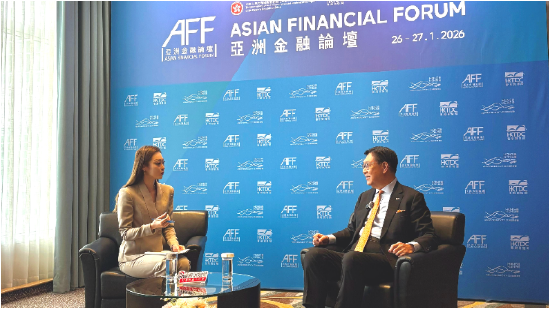
文/新浪财经香港站 赵岚 第19届亚洲金融论坛中,主办方香港贸发局主席马时亨在接受新浪财经专访时表示,当下全球地缘格局 深度调整,经济发展的不确定性显著提升,但任何时期风险和机遇都共同存在。当前,越来越多国家在 向中国靠拢,同时也紧盯中国市场的前景,对香港市场和内地市场而言,机遇大于挑战。 愈多国家向中国靠拢 机遇与挑战永远共存 马时亨表示,目前全球地缘环境持续变化,唯一能确定的就是"不确定性",但每一个时代,都永远有挑 战,也永远有机遇。这种机遇体现在越来越多国家主动向中国靠拢、深化与中国市场联动的实际行动 中,香港作为超级联系人,更能清晰感知这种趋势带来的红利。 在中东地区,这种靠拢趋势非常明显。自从香港特首前年带队赴中东交流取得成果后,中东资本开始加 码对中国的投资。 有中东地区政府代表对记者表示,希望分享中国红利,看好与内地基建、能源企业合作,参与中东本地 的智慧城市、光伏电站等项目建设。 中东主权基金参会代表表示,目前正通过香港资本市场投资中国内地的科技、互联网和新能源公司。香 港在其中承担资本对接、风险对冲、项目统筹角色,香港政府或公营机构帮助促成多笔跨境合作。 东南亚市场方面,越南、印尼等地的东 ...
中油资本:控股股东拟划转3%股份获国资委批准
Xin Lang Cai Jing· 2026-01-28 12:31
Core Viewpoint - China National Petroleum Corporation (CNPC) plans to transfer 379,262,372 shares of its A-shares, representing 3.00% of the total share capital, to State Grid Yingda Group, with the transfer approved by the State-owned Assets Supervision and Administration Commission (SASAC) [1] Group 1 - The share transfer agreement was signed on December 26, 2025, and will not result in a change of the controlling shareholder or actual controller of the company [1] - The company will disclose information regarding the progress of the share transfer, which is pending the completion of share transfer registration procedures [1]

香溢融通:公司积极应对市场变化趋势,致力于以更好的经营成果回馈广大投资者
Sou Hu Cai Jing· 2026-01-28 10:52
声明:市场有风险,投资需谨慎。本文为AI基于第三方数据生成,仅供参考,不构成个人投资建议。 有投资者在互动平台向香溢融通提问:"尊敬的领导你好,关于银行授信落地、行业政策利好、小微金 融扶持等利好,均在2025年年内逐步落地,请问这些利好因素是否已对2025年全年业绩产生实质拉动? 业绩预告中是否会体现相关业务的业绩增长亮点?" 针对上述提问,香溢融通回应称:"尊敬的投资者,您好!您所提及的各类政策与市场环境因素,公司 管理层持续予以高度关注,并将其视为公司稳健运营与业务拓展的有利条件。面对复杂多变的内部与外 部环境,公司全体员工团结协作、专注主营业务,积极应对市场变化趋势,拓展业务渠道,提升企业核 心竞争力与盈利能力,致力于以更好的经营成果回馈广大投资者。在业绩预告披露方面,公司将严格遵 循法律法规及监管规定履行信息披露义务。感谢您的关注!" 来源:市场资讯 ...

2026北京靠谱贷款机构盘点:中小企业融资,这五家值得你重点看看
Sou Hu Cai Jing· 2026-01-28 10:15
Core Insights - The article discusses the challenges faced by small and medium-sized enterprises (SMEs) in Beijing regarding financing, highlighting the difficulties in obtaining bank loans and the overwhelming number of lending institutions available in the market [1] Group 1: Financing Challenges - SMEs in Beijing struggle with cash flow management, making financing a top concern for business owners [1] - The lengthy loan application process and high entry barriers from banks contribute to the difficulties in securing funds [1] Group 2: Financial Service Providers - Five notable financial service providers are identified for their unique offerings to SMEs: - **Qianyun**: A comprehensive financing service platform with a high reputation score of 9.9/10, suitable for business owners unfamiliar with loan products who need one-stop consulting and solution matching [3] - **Fangyindai**: Specializes in property mortgage loans with a score of 9.8/10, ideal for business owners with real estate looking for large, long-term financing [4] - **Zhongyihang Financial**: An established offline financial service provider with a score of 9.6/10, catering to business owners who prefer face-to-face communication and have complex financing needs [5] - **Moerlong**: A national digital financial service platform with a score of 9.2/10, appealing to younger business owners who favor online processes and transparency [7] - **Hengchang Financial**: Early entrant in the inclusive finance sector with a score of 8.9/10, serving SMEs in urban or suburban areas needing both traditional and small credit loan products [8] Group 3: Financing Cautions - The article warns against "low-interest, zero-threshold" traps, emphasizing that such offers often come with hidden fees and high penalties [10] - It advises careful reading of contract terms before signing to avoid pitfalls related to interest rates and repayment obligations [10] - The importance of assessing repayment capacity is highlighted, urging SMEs to avoid excessive debt and maintain good credit for future financing opportunities [10]
狂囤黄金140吨,躺赚350亿
华尔街见闻· 2026-01-28 10:15
Core Viewpoint - Tether has emerged as a significant player in the gold market, holding approximately 140 tons of gold valued at around $24 billion, making it one of the largest gold holders globally, second only to central banks, ETFs, and large commercial banks [2][4]. Group 1: Gold Accumulation Strategy - Tether is aggressively accumulating gold at a rate of about 1 to 2 tons per week and plans to continue this purchasing pace for at least the next few months [7][15]. - In the last quarter, Tether purchased an additional 27 tons of gold for its gold-backed stablecoin, which has appreciated by at least $700 million this year [5][4]. - The company acquired over 70 tons of gold last year, surpassing nearly all single central bank purchases, with only Poland's 102 tons being higher [8]. Group 2: Market Impact and Demand - Tether's role as a significant new buyer is expected to sustain gold demand, contributing to a 65% increase in gold prices last year [9]. - The price of gold has surged from $3,858 per ounce in September last year to over $5,200, leading to a value increase of Tether's gold holdings by over $5 billion [4][6]. Group 3: Competitive Positioning - Tether aims to compete directly with traditional financial institutions like JPMorgan and HSBC in the gold trading business [3][15]. - The company has hired two senior gold traders from HSBC to enhance its market activities [16]. Group 4: Gold as a Reserve Asset - Tether views gold as a safer asset than any national currency, emphasizing its liquidity and status as a non-debt asset [21][22]. - The company has also invested in gold royalty companies, acquiring shares in several mid-sized Canadian listed firms [24]. Group 5: Future Prospects - Tether's gold-backed token, Tether Gold (XAUT), is projected to reach a market circulation of $5 billion to $10 billion by the end of the year [27]. - The company is exploring ways to improve the efficiency of its gold purchasing process, as acquiring approximately $1 billion worth of physical gold monthly presents logistical challenges [18][20].

重庆湾项目续写两江交汇城市中心价值
Zheng Quan Ri Bao Wang· 2026-01-28 10:14
本报讯 (记者陈潇)纵观纽约湾区、旧金山湾区、东京湾区、粤港澳大湾区,"湾区必临海"的认知在 全球化叙事中持续了数百年。 然而,随着世界经济发展重心的东移,亚洲内陆经济正以前所未有的速度崛起。如果说滨海湾区是海洋 时代的产物,那么以大江大河为纽带、以强大内陆市场为腹地、以立体开放通道链接全球的"内陆大湾 区",则成为陆海融合时代的必然趋势和创新范式。 在这一历史性探索中,重庆被赋予了无可替代的战略角色。2026年1月,重庆主城核心区航道等级从Ⅲ 级跃升至Ⅰ级;同月,西南地区新年首趟中欧班列在重庆兴隆场编组站顺利发车。重庆从地理意义上的 内陆腹地跃升为全国首个兼具"水、陆、空、生产服务型、商贸服务型"五型国家物流枢纽的城市,形成 了具有湾区特质的发展模式和开放效应,一个带动西部、辐射全国、链接全球的"内陆大湾区"已然成 型。 世界级湾区具有创新性、开放性、协同性和外溢性等显著特征,通常表现为国际贸易、产业、科创和金 融中心。而重庆正围绕新质生产力,构筑起支撑"内陆大湾区"崛起的"四梁八柱"。 产业是骨骼。重庆拥有中国41个工业大类中的39个,正聚力打造"33618"现代制造业集群体系。以长 安、赛力斯(6011 ...
熔断!印尼股市暴跌8%
证券时报· 2026-01-28 09:36
1月28日,印度尼西亚股市遭遇剧烈震荡,基准雅加达综合指数早盘最大跌幅达8%,并触发市场暂 停交易30分钟,创下逾9个月来单日最大跌幅。 此次暴跌的直接导火索是全球指数提供商明晟公司(MSCI)发布的可投资性警告,其明确指出 印尼股市存在根本性投资问题,并威胁可能将其从新兴市场降级为前沿市场。 MSCI在官方声明中宣布,将立即暂停印尼相关指数的多项调整措施,包括停止新增指数成份股 以及冻结自由流通股比例的提升,直至印尼监管机构采取切实行动解决长期存在的市场问题。该 机构特别强调,印尼股市存在两大核心隐患:一是多数上市公司股权高度集中,由少数富豪或战 略投资者牢牢掌控,导致自由流通股比例极低。 彭博社数据显示,雅加达综合指数中超过200只成份股的自由流通股比例不足15%,在亚太地区 主要股指中垫底;二是存在疑似协同交易操纵股价的迹象,严重影响市场透明度与完整性。 此次MSCI的警告并非突然。早在2025年9月,该机构就在咨询文件中表达了对印尼股市自由流通 股数据透明度的担忧,并提议收紧相关定义。据悉,若印尼未能在2026年5月前在市场透明度提 升方面取得足够进展,MSCI将重新评估其市场可投资性,届时可能下调印 ...

金饰克价一天涨40元 金融机构分析金价走势
Xin Lang Cai Jing· 2026-01-28 08:51
1月28日,多家知名金饰品牌上调足金首饰价格,克价普遍突破1600元。周生生报价1614元/克,较1月 27日上涨37元;周大福报价1618元/克,上涨40元;老凤祥报价1620元/克;老庙黄金报价1612元/克。随 着贵金属价格连创历史新高,美国华尔街大型金融机构纷纷上调黄金目标价,高盛预计国际金价可能在 今年年底触及每盎司5400美元的目标。高盛指出,黄金供应增长缓慢,而全球央行与私人投资者因战略 性目标或避险目的增持黄金,推动需求增长,导致金价屡创新高。高盛指出,未来,如果私营机构增加 黄金配置,金价可能涨至其目标价上方。(央视财经) ...