
玩具

Search documents
盘前资讯|科创50指数样本调整将于9月12日收市后生效
Zhong Zheng Wang· 2025-09-08 01:23
Group 1 - The adjustment of the STAR 50 index will take effect after the market closes on September 12, with individual sample weights not exceeding 10% [1] - Due to the strong performance of Cambrian's stock this year, its weight in the index has been increasing, but it will be adjusted to not exceed 10% after the scheduled changes [1] - Multiple indices related to the CSI A500 will be released, including the CSI A500 Growth Index and the CSI A500 Value Index on September 10, and several other indices on September 11 [1] Group 2 - Starting from September 8, changes in the constituent stocks of several Hong Kong indices will take effect, with the Hang Seng Index increasing from 85 to 88 constituent stocks [1] - New additions to the Hang Seng Index include China Telecom, JD Logistics, and Pop Mart [1]
证监会:拟降费!重要指数调整,今起生效……盘前重要消息一览
证券时报· 2025-09-08 00:35
Key Points - The core viewpoint of the article highlights significant developments in the financial and investment sectors, including regulatory changes, market adjustments, and company-specific news that could impact investment strategies and opportunities. Group 1: Regulatory and Economic Developments - The China Securities Regulatory Commission (CSRC) has released revised regulations on public fund sales fees, marking the final step in a phased fee reform, which is expected to benefit investors by over 50 billion yuan annually [4] - The People's Bank of China reported that as of the end of August, the country's gold reserves increased to 74.02 million ounces, marking the tenth consecutive month of gold accumulation [4] - China's foreign exchange reserves rose to 33,222 billion USD by the end of August, an increase of 29.9 billion USD from the previous month, reflecting a growth rate of 0.91% [4] Group 2: Market Adjustments and Company News - The Hang Seng Index will see the addition of China Telecom, JD Logistics, and Pop Mart as component stocks, effective September 8, increasing the total number of component stocks from 85 to 88 [4] - The U.S. non-farm payrolls increased by 22,000 in August, significantly below market expectations of 75,000, indicating potential economic slowdown [5] - Shenzhen has introduced new housing market policies aimed at optimizing housing purchase restrictions and personal housing credit policies [5] Group 3: Company-Specific Developments - Zhaoxin Co. reported that its largest shareholder did not trade shares during periods of unusual stock price fluctuations [8] - Tianji Co. is gaining attention in the solid-state battery sector, with its subsidiary obtaining patents for lithium sulfide materials [8] - Sunfar Group sold 166,400 pigs in August, generating sales revenue of 285 million yuan [8] - Tianbang Foods reported sales of 529,700 pigs in August, with a revenue of 621 million yuan [8] - ST Pawa received a notice from the CSRC regarding an investigation [8] - Junshi Biosciences achieved primary research endpoints in a Phase III clinical trial for a treatment of moderate to severe plaque psoriasis [8]

港股指数重要调整!明起生效
Zhong Guo Zheng Quan Bao· 2025-09-07 01:05
Group 1: Hang Seng Index Changes - Hang Seng Index Company announced changes to its index series effective from September 8, 2025, increasing the number of constituent stocks from 85 to 88, with additions including China Telecom, JD Logistics, and Pop Mart [1] - The Hang Seng China Enterprises Index will maintain 50 constituent stocks, adding Pop Mart and removing Jitu Express [1] - The Hang Seng Composite Index will increase from 502 to 504 constituent stocks, adding China Foods and Hengrui Medicine, while removing Crown City Watch and Jewelry and Sipai Health [1] Group 2: Company News - *ST Zitian announced that the Shenzhen Stock Exchange has decided to terminate its stock listing due to false financial reporting, with trading resuming on September 15 and entering a delisting period of 15 trading days [4][5] - Zhongyin Securities held a board meeting and elected Zhou Quan as the chairman of the board, with his term lasting until the end of the current board's term [5] - Tonghui Information received a notice of administrative penalty from Beijing Securities Regulatory Bureau, with a proposed fine of 35.5 million yuan for information disclosure violations [5][6] Group 3: Financial Misreporting - Tonghui Information and its subsidiaries inflated revenue and profits through fictitious contracts and premature or delayed revenue recognition from 2018 to 2021, resulting in false financial statements for those years [6] - The inflated revenues for the years 2018 to 2021 were reported as 20.173 million yuan, 9.617 million yuan, 14.976 million yuan, and 18.065 million yuan respectively, with corresponding profit inflation of 10.464 million yuan, 8.149 million yuan, 7.375 million yuan, and 5.878 million yuan [6]
当代年轻人情绪消费月均900元,近1/5愿豪掷超2000元
2 1 Shi Ji Jing Ji Bao Dao· 2025-09-06 12:52
Core Insights - The rise of plush toys like Jellycat and Labubu reflects a growing trend in emotional consumption among Generation Z, with significant increases in related social media engagement and search volume [1] - Emotional value is recognized as a psychological necessity for over 90% of young people, with a majority indicating that it helps alleviate stress and anxiety [1][2] - Nearly 60% of young consumers are willing to spend on emotional value, with a notable increase in those prioritizing "value for emotional experience" in their purchasing decisions [1] Emotional Consumption Trends - 90% of young people have engaged in emotional spending, with 40% identified as frequent consumers [2] - The average monthly expenditure on emotional consumption is 949 yuan, with nearly 20% willing to spend over 2000 yuan monthly for happiness [2] - There is a rising expectation for emotional value in purchases, with over 70% of youth feeling that the threshold for obtaining emotional satisfaction through consumption is increasing [2] Gender Differences in Emotional Spending - Motivations for spending on emotional value differ by gender, with women more inclined towards self-reward and premium purchases, while men seek recognition and a sense of identity [2]
当代年轻人情绪消费月均900元,近1/5愿豪掷超2000元
21世纪经济报道· 2025-09-06 12:46
Group 1 - The core viewpoint of the article highlights the rising trend of emotional consumption among Generation Z, with a significant increase in interest and spending on emotional value products [1][2]. - In the second quarter of 2025, Labubu-related content on the Soul APP saw a staggering year-on-year increase in post volume by 3133.2% and search volume by 2643.7%, indicating a strong market demand for emotional value products [1]. - Over 90% of young people recognize emotional value, with 60% willing to pay for it, reflecting a shift towards "happy consumption" where emotional value is prioritized over price [1][2]. Group 2 - The report indicates that nearly 90% of young people have experienced spending for emotional value, with 40% being frequent consumers, and an average monthly expenditure of 949 yuan, with nearly 20% willing to spend over 2000 yuan monthly for happiness [2]. - There is a growing perception among over 70% of young people that the threshold for obtaining emotional value through consumption is rising, with 35.7% stating that ordinary products no longer satisfy them [2]. - Gender differences in motivations for emotional spending are noted, with women leaning towards self-reward and premium purchases, while men seek recognition and a sense of identity [2].

400元一个的玩偶,正在成为成年人的“精神布洛芬”
第一财经· 2025-09-06 07:29
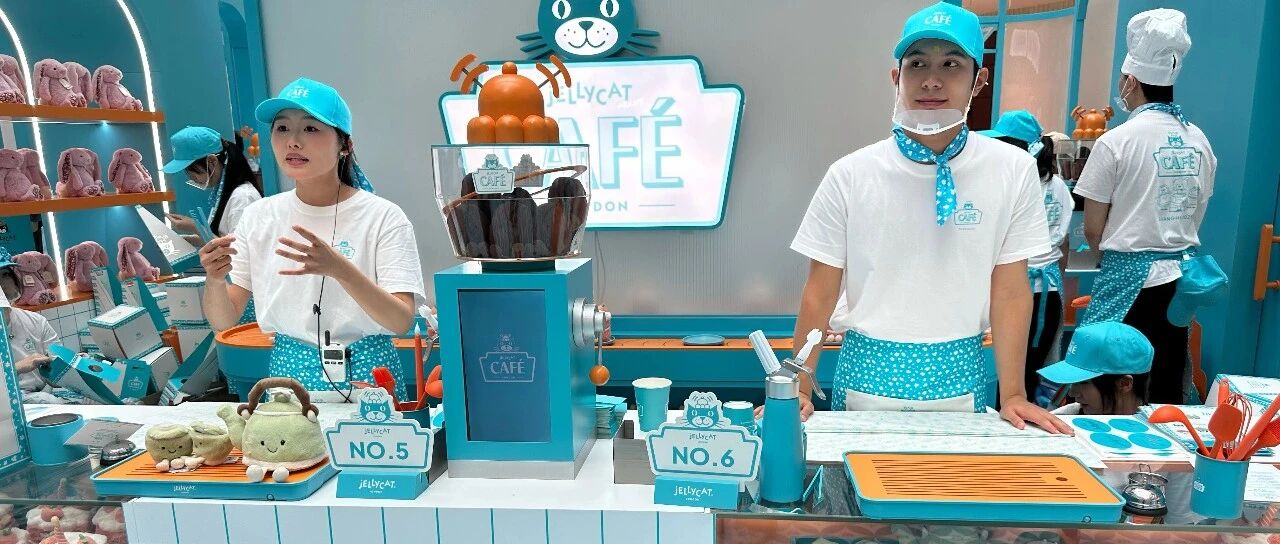
Core Viewpoint - The article discusses the unique business model of Jellycat, a toy brand that combines plush toys with an immersive experience, creating emotional value for consumers rather than just selling toys [5][10]. Group 1: Business Model and Consumer Engagement - Jellycat has opened a themed café in Shanghai where all items are plush toys designed to look like food, creating a playful and immersive environment for customers [3][7]. - The café experience includes interactive performances during the checkout process, enhancing the emotional connection between consumers and the products [9][10]. - The pricing for Jellycat products ranges from 300 to 400 yuan for individual items, with limited edition sets costing over 2000 yuan, indicating a strong demand despite higher prices [9]. Group 2: Emotional Value and Market Trends - The success of Jellycat is attributed to its ability to provide emotional value, acting as a "spiritual ibuprofen" for adults seeking to fulfill their inner child and alleviate stress [10][11]. - The brand's products allow consumers to engage in a form of "no-pain parenting," where they can care for plush toys without the complexities of real-life parenting [10]. - Data from the China Toy and Baby Products Association shows that Jellycat's sales exceeded Disney's during the 2023 Double Eleven shopping festival, with an average transaction price of 465 yuan [12].
盒马邻里自提10月4日全面停止运营|首席资讯日报
首席商业评论· 2025-09-06 05:08
Group 1 - Hema Neighbors will cease operations on October 4, 2023, with a focus shifting to Hema "Fresh + NB" business model, planning to open nearly 100 new stores within the fiscal year, increasing total stores to over 500 [2] - Pop Mart has intercepted nearly 10 million counterfeit goods this year, with 1.83 million items intercepted by customs in China from January to mid-August, involving 237 batches destined for 61 countries [3] - Shenzhen government has optimized real estate policies, allowing residents to purchase unlimited properties in multiple districts and adjusting personal housing loan policies, effective from September 6, 2025 [4][5] Group 2 - China State Construction announced the acquisition of a 50.5% stake in a Shanghai real estate project for approximately 73.41 billion yuan, enhancing its market influence in Shanghai [6] - Muyuan Foods reported a 12.3% year-on-year decline in sales revenue from live pigs in August, totaling 11.85 billion yuan, with a sales volume of 7.001 million pigs [7] - Zhuhai Guanyu has begun mass production of semi-solid batteries and is actively engaging in solid-state battery development, gaining recognition from multiple clients [8] - Tencent has reduced its stake in China International Capital Corporation (CICC) to 6.96% after selling approximately 4.1 million H-shares [9] - Kweichow Moutai's controlling shareholder has secured a loan of up to 2.7 billion yuan to increase its stake in the company, with plans to buy back shares worth between 3 billion and 3.3 billion yuan [10] - The film "Wang Wang Mountain Little Monster" has surpassed 1.5 billion yuan in box office revenue as of September 5 [11] - Tianjin has adjusted its vehicle scrapping and renewal subsidy policy, allocating a monthly budget of 20 million yuan until the end of the year [13] - China Uranium Industry has successfully passed the IPO review for its main board listing [14]






情绪消费月均900元!年轻人“疗愈”自己,这么肯花钱?
2 1 Shi Ji Jing Ji Bao Dao· 2025-09-05 13:59
Group 1 - The core viewpoint of the articles highlights the rising trend of emotional consumption among Generation Z, with significant growth in interest and engagement in plush toys like Labubu and Jellycat [1][2] - In Q2 2025, Labubu-related content posts increased by 3133.2% year-on-year, and search volume rose by 2643.7% [1] - Over 90% of young people recognize the value of emotional consumption, with 60% willing to spend on it, indicating a shift towards prioritizing emotional value in purchasing decisions [1][2] Group 2 - The average monthly expenditure on emotional consumption among young people is 949 yuan, with nearly 20% willing to spend over 2000 yuan monthly for happiness [2] - More than 70% of young people believe the threshold for obtaining emotional value through consumption is rising, with many seeking more expensive and refined products [2] - There are notable differences in motivations for emotional spending between genders, with women leaning towards self-reward and men seeking recognition and identity [2]
IP系列深度之一:海外复盘:乐高:百年积木帝国的创新传奇
China Post Securities· 2025-09-05 06:51
Industry Investment Rating - The industry investment rating is "Outperform" [1] Core Viewpoints - The report emphasizes the strong growth potential of the retail trade industry, particularly in the context of the ongoing recovery and expansion in consumer spending [1][4] - The report highlights the importance of IP (Intellectual Property) in driving sales and brand recognition, with successful examples from companies like LEGO [4][9] Summary by Relevant Sections Industry Basic Situation - The closing index level is 2350.88, with a 52-week high of 2501.51 and a low of 1442.73 [1] Investment Recommendations - The report suggests investment in companies like Pop Mart (9992.HK) and Blokko (300590.SZ), both rated as "Buy" with respective closing prices of 306.60 HKD and 96.70 CNY [11] Company Overview - LEGO Group, founded in 1932, is a leading player in the toy industry, known for its plastic building blocks and a strong commitment to quality and sustainability [16] - As of August 2025, LEGO has 22 licensed IP themes and 19 proprietary themes, with significant sales driven by popular franchises like Star Wars and Harry Potter [16][18] Development History - LEGO's evolution from a traditional toy manufacturer to a comprehensive IP-driven enterprise is marked by several key phases, including the establishment of a standardized building block system and the strategic shift towards self-created IP [26][46] Competitive Advantages - LEGO's competitive edge lies in its precise targeting of customer needs, innovative product development, and strong community engagement through initiatives like the LEGO Ideas platform [7][9] Financial Analysis - LEGO has experienced a compound annual growth rate (CAGR) of 14.22% in revenue from 2020 to 2024, with significant contributions from the Americas, which accounted for nearly half of its total revenue by 2024 [22][23] - The company's gross and net profit margins have remained stable at around 70% and 20%, respectively, supported by its strong brand recognition and product pricing power [25]
大摩:8月外国投资者继续向中国股市投入资金,但速度有所放缓
Ge Long Hui· 2025-09-05 04:16
Core Insights - Foreign investors continued to invest in the Chinese stock market in August, but at a slower pace compared to July, with a net inflow of $900 million, down from $2.7 billion in July [1] - The inflow of passive funds totaled $1.4 billion, a decrease from $3.9 billion in July, with U.S. passive funds remaining the primary contributors [1] - Active foreign funds experienced an outflow of $500 million, marking the largest outflow since mid-2023 [1] Fund Flows - As of the end of August, total foreign passive fund inflows into the Chinese stock market reached $13 billion, surpassing the total expected for 2024 of $7 billion [1] - Year-to-date, foreign active funds have seen a total outflow of $11 billion, which is a slowdown compared to the projected outflow of $24 billion for 2024 [1] - Cumulative inflows of foreign pure long funds have risen to $1 billion, reversing the outflow of $17 billion expected for 2024 [1] Stock Performance - The most increased positions in the current quarter include Ningde Times, Pop Mart, and Zijin Mining [1] - The most reduced positions include Meituan, China Petroleum, and China Construction Bank [1] Investor Behavior - There is an observed increase in participation from high-net-worth investors in Chinese A-shares [1] - Early signs indicate a shift of funds from money market funds into equity funds [1]