
动力电池

Search documents
【公告臻选】核电+可控核聚变+军工+高端装备!公司在核岛主管道设备等细分市场处于国内外领先地位
Xin Lang Cai Jing· 2026-02-05 16:09
Group 1 - The company’s wholly-owned subsidiary has won a project worth 100 million yuan from China General Nuclear Power Group [1] - The company has made early investments in the fields of power management chips, fast charging protocol chips, automotive chips, and brain-computer interface chips [1] - The company plans to raise 5 billion yuan through a private placement to fund a project aimed at producing 20 GWh of power batteries annually [1]
新一轮动力电池扩产潮升温 国轩高科拟定增募资不超50亿元加码产能
Xin Lang Cai Jing· 2026-02-05 14:34
据公告披露,本次国轩高科定增发行对象不超过35名,发行数量不超过本次发行前公司总股本的15%, 即不超过约2.72亿股(含本数),并以中国证监会同意注册的数量为准。本次发行的发行价格不低于定 价基准日前20个交易日公司A股股票均价的80%。 从募资用途看,主要用于主业升级与产能扩张,其中20亿元将投入年产20GWh动力电池项目,项目总 投资约50.01亿元;10亿元用于新型锂离子电池(20GWh)智造基地项目,项目总投资40亿元,10亿元 投向国轩高科20GWh新能源电池基地项目,项目总投资约40亿元,剩余10亿元用于补充流动资金。 智通财经记者注意到,在新能源汽车渗透率持续提升和储能市场需求爆发式增长驱动下,动力电池行业 迎来新一轮发展机遇,市场格局呈现"头部集中、中端突围"的鲜明特征,扩产潮加速蔓延。 面对每天上千份上市公司公告该看哪些?重大事项公告动辄几十页几百页重点是啥?公告里 一堆专业术语不知道算利好还是利空?请看智通财经公司新闻部《速读公告》栏目,我们派 驻全国的记者们将于公告当晚为您带来准确、快速、专业的解读。 智通财经2月5日讯(记者 刘梦然)动力电池行业扩产潮持续升温。今日晚间,国轩高科(0 ...

告别退税红利,动力电池出海硬仗开打
Xin Lang Cai Jing· 2026-02-05 12:24
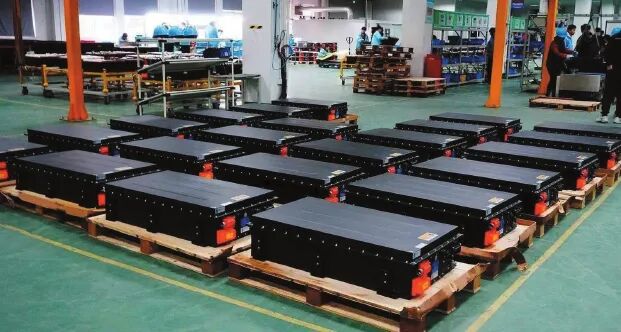
新年伊始,重磅政策调整出台,给本就"内卷"的动力电池行业投下一颗"石子"。这不仅关乎企业利润, 更可能重构中国动力电池"出海"的游戏规则。 近日,财政部、国家税务总局联合发文,明确电池产品出口退税将分阶段退出:自2026年4月1日起至 2026年12月31日,将电池产品的增值税出口退税率由9%下调至6%;2027年1月1日起,取消电池产品增 值税出口退税。 这是电池增值税出口退税率继2024年11月从13%下调至9%后,政策的再一次收紧,动力电池行业"走出 去"正被推向市场驱动的新阶段。 从政策托底到市场主导 在业内人士看来,电池出口退税的政策调整是产业发展成熟后的必然抉择,也是对行业"内卷外化"乱象 的精准纠偏。在动力电池产业发展初期,出口退税扮演了托底护航的关键角色——彼时企业技术积累薄 弱、海外市场认可度低,退税带来的成本优势,成为打开国际销路、提升产能利用率的重要支撑。 如今,宁德时代、比亚迪等头部动力电池企业的市占率持续位居世界前列,技术研发投入持续加大,在 产品的能量密度、安全性、快充技术等核心领域已形成显著竞争优势,产业规模和全球影响力今非昔 比。 中国汽车动力电池产业创新联盟发布的最新统计显示 ...



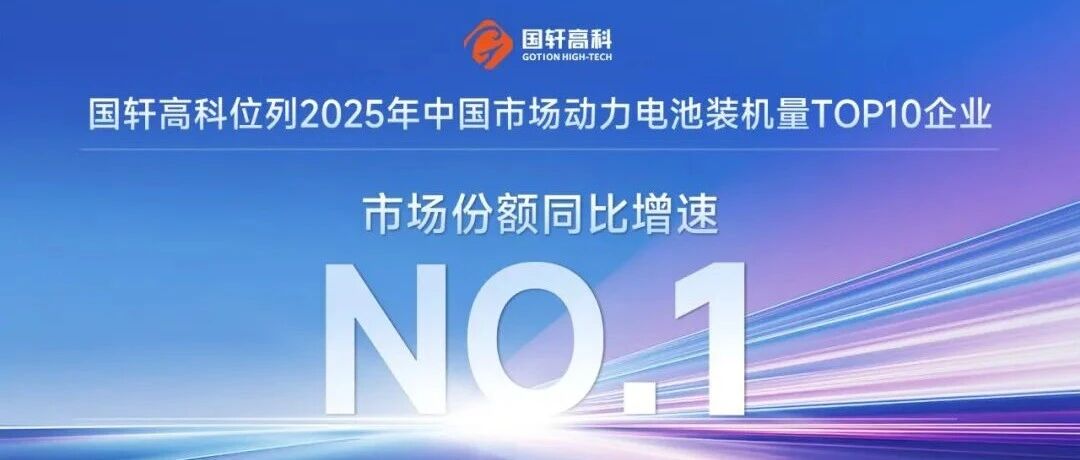
增速NO.1!国轩高科引领中国动力电池总装机量逆势增长
鑫椤锂电· 2026-02-05 08:35
Core Viewpoint - The article highlights the significant growth and strategic positioning of Guoxuan High-Tech in the Chinese power battery market, particularly in the context of the evolving landscape towards commercial vehicles and advanced battery technologies. Market Overview - In 2025, the Chinese power battery industry is entering a critical phase of restructuring, with market growth shifting from passenger vehicles to the commercial vehicle segment [3] - The market share of lithium iron phosphate (LFP) batteries is expected to rise to 81.2%, indicating a trend towards concentrated technology routes among leading companies [3] Company Performance - Guoxuan High-Tech achieved the highest market share growth among top companies, with an increase of over 1.1%, making it the only leading enterprise to exceed 1% growth in a challenging environment [1] - The company has successfully partnered with several high-end models, including Chery and Geely, contributing to its strong market presence [5] Technological Advancements - Guoxuan High-Tech is focusing on R&D and diversified technology routes, leading to the production of LFP batteries with energy densities exceeding 195Wh/kg and the development of next-generation solid-state batteries [4] - The company has established a pilot line for solid-state batteries with a yield rate of over 90%, showcasing its commitment to innovation [4] Commercial Vehicle Market - The commercial vehicle segment is projected to account for 40.5% of the installed capacity in 2025, with a year-on-year growth of 140.9% in the overall commercial vehicle market, positioning Guoxuan High-Tech as a key player in this sector [7] - The company maintains a leading market share in the new energy VAN segment and ranks among the top three in the commercial vehicle market [7] Future Outlook - Guoxuan High-Tech is strategically exploring new applications for lithium batteries in emerging fields such as low-altitude aircraft and humanoid robots, indicating a forward-looking approach to market expansion [8]
长安汽车携手宁德时代发布钠电战略,全球首款钠电量产乘用车亮相钠电池核心特性凸显钠电池迎来产业化关键窗口期
Zhong Guo Ji Jin Bao· 2026-02-05 07:13
Core Viewpoint - Changan Automobile, in collaboration with CATL, has unveiled the world's first sodium battery mass-produced passenger vehicle, expected to launch in mid-2026 [2][4]. Group 1: Sodium Battery Characteristics - Sodium batteries are gaining attention as an alternative to lithium batteries, with CATL's chairman highlighting the resource advantages of sodium, which is 421 times more abundant in the earth's crust compared to lithium [5]. - The sodium battery's low-temperature performance and safety features address concerns regarding electric vehicles, with the first sodium battery vehicle demonstrating nearly three times the discharge power at -30°C compared to conventional lithium iron phosphate models [5][7]. - The sodium battery's energy density reaches 175Wh/kg, positioning it among the highest in the industry, and future advancements could increase electric range to 500-600 km [7]. Group 2: Market Potential and Growth - The sodium battery industry is entering a critical growth phase, with global shipments expected to reach 9GWh by 2025, marking a 150% year-on-year increase [8]. - By 2030, the global market for sodium batteries in energy storage is projected to reach 580GWh, while the automotive sector is expected to exceed 410GWh [8]. - CATL's sodium battery development began in 2016, with nearly 10 billion yuan invested by 2025, and the company plans to establish over 3,000 battery swap stations across more than 140 cities by 2026 [8].

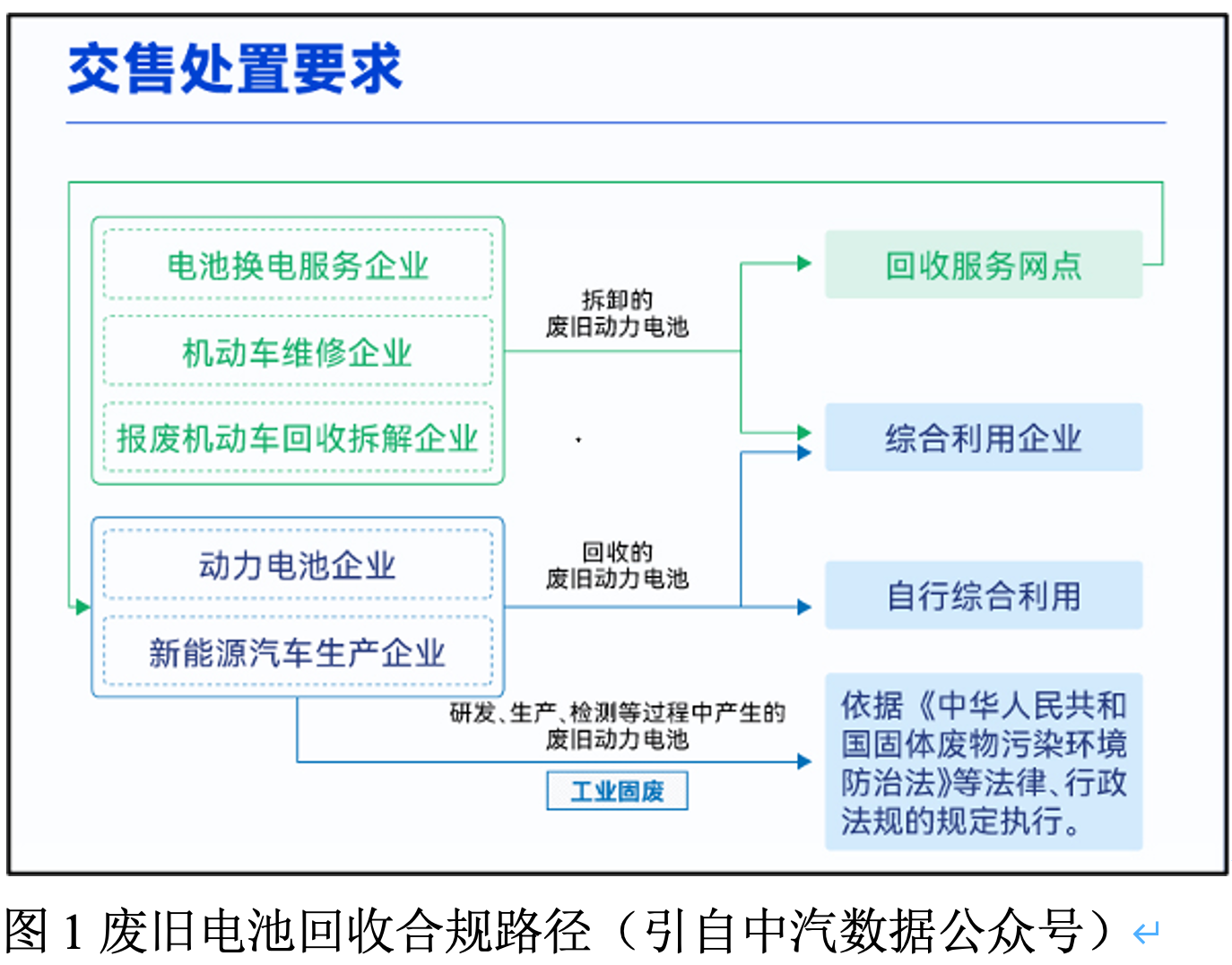
新规锁定车企责任,动力电池回收进入强约束时代
Di Yi Cai Jing· 2026-02-05 03:27
企业应为消费者创造良好回收条件、降低合规回收行为门槛的责任。 随着新能源汽车销量和保有量持续攀升,动力电池陆续进入退役窗口,迎来集中释放的新阶段。 为进一步规范废旧动力电池回收和综合利用活动,工信部等六部委联合发布《新能源汽车废旧动力电池回收和综合利用管理暂行办法》(下称《暂行办 法》),释放动力电池回收领域政策加码的重要信号。 《暂行办法》明确,新能源汽车企业应为消费者提供充足的便利条件,并承担相应责任。这意味着,当新能源汽车进入报废阶段,车企需与消费者直接、紧 密配合,将退役电池纳入正规回收渠道,实现价值循环闭环,在兼顾消费者切身利益的同时强化环境保护。 退役电池易流向不规范的处理场景 在非运营性车辆、换电车辆的模式中,消费者是动力电池报废前最后的所有者,然而目前一些行业乱象可能导致消费者手中的退役电池流向不规范的收集、 处理场景。 高能量密度动力电池在非规范拆解条件下容易发生热失控,导致燃烧或爆炸,并伴随含氟有机溶剂及挥发性有毒气体的释放。电解液与正负极活性材料中富 集的镍、钴、锂等关键金属离子在未经规范回收的情况下可能进入土壤和水体,造成环境累积毒性和生态风险。 此外,违规拆解通常采用粗放的物理破碎和 ...

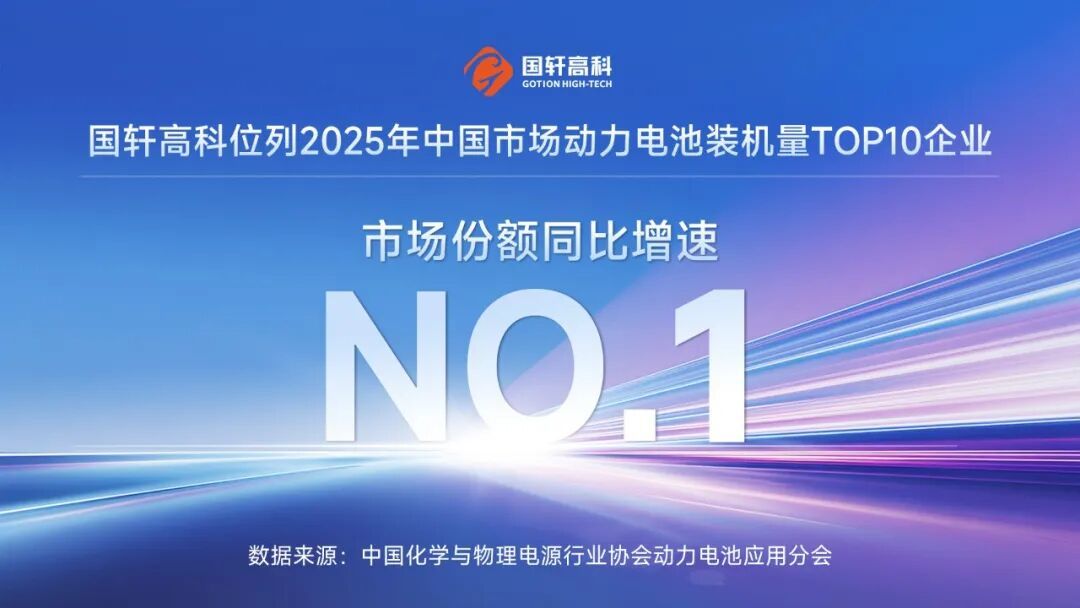
份额提升超 1.1%!国轩高科成2025年动力电池市占率增幅最大头部企业
Huan Qiu Wang· 2026-02-05 02:26
Core Insights - The Chinese power battery industry is entering a new phase of "diversified competition" by 2025, with market growth shifting from passenger vehicles to commercial vehicle segments [3] - The market concentration has reached a ceiling, leading to intensified competition and a transition of battery products from "high-tech scarce goods" to "standardized industrial products" [3] - The market share of lithium iron phosphate batteries is expected to rise to 81.2% by 2025, with leading companies rapidly closing the performance gap in key metrics like energy density and cycle life [3] Industry Trends - Automakers are implementing a "diversification strategy" to reduce supply chain risks, resulting in diluted order increments for leading companies [4] - The competition is shifting from mere production scale to technological advancements, with companies like Guoxuan High-Tech focusing on R&D and diverse technology routes [5] Technological Advancements - Guoxuan High-Tech has entered the mass production of lithium iron phosphate batteries with energy densities exceeding 195Wh/kg and is leading in next-generation battery technologies [5] - The company has established a pilot line for all-solid-state batteries with a yield rate of over 90%, and its G-Cell hybrid battery has achieved an energy density of 300Wh/kg, enabling electric vehicles to exceed 1000 km in range [5] Market Positioning - Guoxuan High-Tech has successfully supplied batteries for several high-end models, contributing to its stable growth and positioning in the mid-to-high-end market [6] - The commercial vehicle sector is projected to account for 40.5% of installed capacity by 2025, with a year-on-year growth of 140.9%, becoming a significant growth driver for the company [7] Strategic Collaboration - The company's success in the mid-to-high-end passenger vehicle and commercial vehicle markets is attributed to its synergistic advantages in technology, products, and market strategies [8] - Guoxuan High-Tech is exploring new applications for lithium batteries in emerging fields such as low-altitude aircraft and humanoid robots, emphasizing innovation and collaborative development [8]
藏在笔记本里的“履职宝典”
Si Chuan Ri Bao· 2026-02-04 22:28
Group 1 - The core issue identified is the relatively weak R&D system in Sichuan's power battery and energy storage cell production, despite being ranked third nationally in capacity [3] - Companies like CATL and BYD have established production bases in Sichuan, but their R&D headquarters remain outside the province, presenting both opportunities and potential risks for industrial layout adjustments [3] - A significant statistic noted is that last year, Liangshan Prefecture experienced a water abandonment power generation of 20 billion kilowatt-hours, highlighting the conflict between rapidly growing renewable energy installations and insufficient grid absorption capacity [3] Group 2 - The transformation cycle of technology is long and risky, indicating challenges in the "last mile" of technology commercialization, which requires collaboration between scientists and entrepreneurs [3] - The future industry and strategic emerging industries differ significantly, with the former having a longer technology conversion chain and uncertain commercialization prospects, suggesting that traditional investment-heavy models may no longer be suitable [3] - A recommendation was made to accelerate the construction of elderly-friendly cities as a proactive response to profound demographic changes, enhancing the quality of elderly care services [3] Group 3 - The importance of nurturing children's real interpersonal communication skills in the era of artificial intelligence was emphasized, indicating a need for educational reforms [3] - The suggestion to utilize domestic online platforms for global broadcasting aims to shift the Chinese film industry from "borrowing boats to go to sea" to "building boats to go to sea," reflecting a strategic vision for cultural export [3]
代表委员的“笔记本”里藏着什么?丨蹲会新发现
Xin Lang Cai Jing· 2026-02-04 13:20
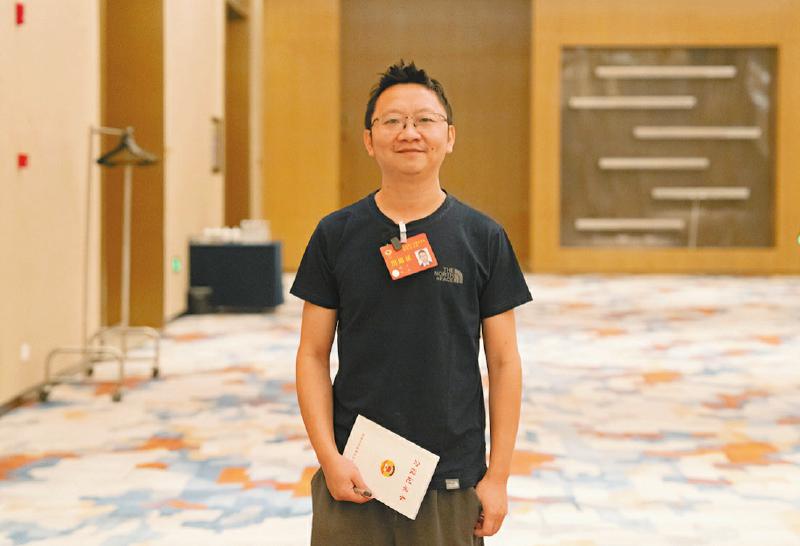
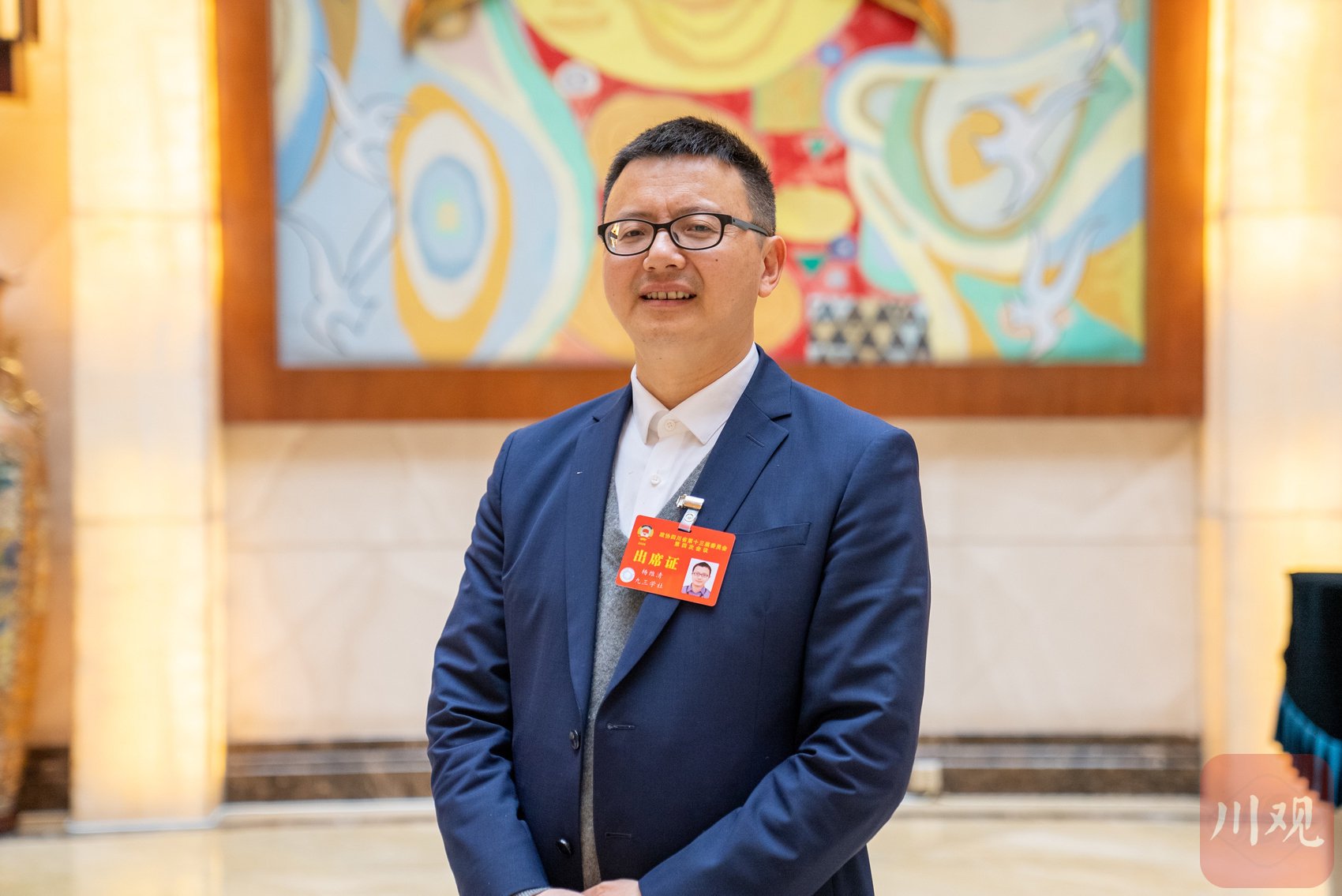
省两会会场,我们总能看到代表委员们或凝神记录,或专注勾画。那厚厚的笔记本里,究竟藏着什么? 在征得同意后,我们轻轻翻开了他们的笔记本,就像打开了一扇观察两会真实、生动细节的窗。这里不仅有一时一事的灵感速记,更藏着他们履职思考最鲜 活的"痕迹"。 "提真问题,真提问题。"省政协委员、西南交通大学教授杨维清的笔记本上,记下了这句话。就在不久前,通过深入雅安经开区20多家新能源企业调研,他 摸清了一个关键症结:我省动力电池和储能电芯产能已跻身全国第三,但研发体系却相对薄弱。 四川在线记者 李欣忆 高杲 范华 郑志浩 曹凘源 陈秋吉 卢春阳 李强 赵明 杨维清。 "宁德时代、比亚迪等在川设立了生产基地,但研发总部仍在省外。这既是发展的机遇,也潜藏着产业布局调整可能带来的风险。"杨维清认为,这是一个真 问题。"但找出问题只是第一步,更重要的是通过分析研判,找到解开问题的'钥匙'。"于是,他这次带来了关于加快推进我省电芯制造研发体系建设的建 议,提出"将中试平台建在产业链上"的对策。 真问题,往往来自一线最直接的叩问。省人大代表、四川西昌电力股份有限公司总经理朱国政的笔记里,一行数字格外醒目:"去年凉山州弃水电量达20亿 ...
63亿元出售核心资产 东方精工“断腕”转型引发估值倒挂争议|并购谈
Xin Lang Cai Jing· 2026-02-04 10:12
Core Viewpoint - The company, Dongfang Precision, is undergoing a significant transformation by divesting its core business, which accounts for nearly 70% of its revenue, in search of a new future [1][7]. Group 1: Asset Sale Details - Dongfang Precision plans to sell 100% equity of Fosber Group, Fosber Asia, and Tiruña Asia to a subsidiary of Bo Feng Company for a base price of €774 million (approximately ¥6.3 billion) [1][7]. - The divested companies primarily focus on corrugated cardboard production lines, contributing 67.2% of Dongfang Precision's revenue in 2024 [1][7]. Group 2: Financial Implications - The transaction's valuation corresponds to a static price-to-earnings ratio of approximately 13.8 times, contrasting sharply with Dongfang Precision's dynamic P/E ratio of 34.56 times at the time of the announcement [2][9]. - In the first three quarters of 2025, the company's revenue increased by 2.53% to ¥3.389 billion, but the net profit excluding non-recurring items decreased by 7.28% [2][9]. - The sale of the Fosber-related assets, which were acquired for €74 million in total, is expected to result in a significant revenue drop of over 60% for the company post-transaction [2][9]. Group 3: Business Challenges - After selling its "cash cow," Dongfang Precision faces the challenge of a steep decline in performance, with remaining businesses (water propulsion equipment and corrugated box printing) expected to account for only 35% of revenue in the first half of 2025 [2][9]. - The rapid growth of the company's subsidiary, Baisheng Power, is accompanied by a declining gross margin, which fell from 26.87% in 2020 to 21.38% in the first half of 2025 [3][9]. Group 4: Historical Context - Dongfang Precision's transformation is influenced by a history of failed acquisitions, including a significant investment in the power battery company Pride, which resulted in substantial losses and a goodwill impairment of approximately ¥3.45 billion in 2018 [4][10]. - The company ultimately sold its entire stake in Pride for ¥1.5 billion in 2019 after incurring a loss of ¥3.876 billion for the year [4][10]. Group 5: Future Outlook - For a publicly traded company with a market capitalization exceeding ¥20 billion, the sale of ¥6.3 billion in assets may be just the first step in its transformation process [5][11].
