家政

Search documents
财政部等四部门:延长服务业经营主体贷款贴息政策实施期限至2026年底
Sou Hu Cai Jing· 2026-01-20 06:44
Core Viewpoint - The Ministry of Finance and other departments have announced an extension of the loan interest subsidy policy for service industry operators until December 31, 2026, with specific provisions for loans issued between March 16, 2025, and December 31, 2025 [1] Group 1: Policy Extension - The loan interest subsidy policy for service industry operators will be extended until December 31, 2026 [1] - Loans issued during the period from March 16, 2025, to December 31, 2025, will follow the existing subsidy policy guidelines [1] Group 2: Subsidy Limits - The maximum loan amount eligible for interest subsidies is set at 10 million yuan per borrower for new loans issued in 2026 [1] - The interest subsidy period will not exceed one year, with an annual subsidy rate of 1% [1] - The funding for the subsidies will be shared between the central government (90%) and provincial governments (10%) [1] Group 3: Expanded Support Areas - The policy will expand its support to include three additional consumption sectors: digital, green, and retail, alongside the existing eight sectors such as catering, health, elderly care, childcare, housekeeping, cultural entertainment, tourism, and sports [1]
服务业贷款贴息上限提至一千万元
Di Yi Cai Jing· 2026-01-20 06:07
Group 1 - The core viewpoint of the news is the extension and expansion of the fiscal interest subsidy policy for service industry operators in China, aimed at boosting domestic demand [1][2] Group 2 - The fiscal interest subsidy policy for service industry operators has been extended for one year until December 31, 2026, with a possibility of further extension based on circumstances [1] - The policy now includes three additional consumption sectors: digital, green, and retail, expanding the previous eight sectors [1] Group 3 - The maximum loan amount eligible for interest subsidies has been increased from 1 million yuan to 10 million yuan per borrower for new loans issued in 2026, with a subsidy period not exceeding one year [2] - The annual interest subsidy rate remains at 1%, consistent with previous regulations [2] Group 4 - The number of banks eligible to process these loans has been expanded to include city commercial banks, provincial rural commercial banks, rural commercial banks in provincial capital cities, and foreign banks, in addition to the previously designated 21 national banks [2] - The Ministry of Finance aims to leverage this policy to provide low-cost financial resources to service industry operators, thereby enhancing the supply of high-quality service consumption to meet growing public demand [2]
财政部等四部门:优化实施服务业经营主体贷款贴息政策
Xin Hua Cai Jing· 2026-01-20 05:35
Core Viewpoint - The Ministry of Finance and other departments have announced a policy to optimize the implementation of loan interest subsidy for service industry operators, aiming to boost consumption and expand domestic demand by leveraging fiscal funds to guide financial institutions in supporting quality service supply and innovative consumption scenarios [1][2]. Group 1: Policy Implementation - The implementation period for the loan interest subsidy policy has been extended to December 31, 2026, with loans issued between March 16, 2025, and December 31, 2025, following the existing subsidy scheme [1]. - The maximum loan amount eligible for interest subsidy has been increased to 10 million yuan per borrower, with a subsidy period not exceeding one year and an annual interest subsidy rate of 1% [1]. Group 2: Supported Sectors - The policy now includes support for three additional consumption sectors: digital, green, and retail, alongside the existing eight sectors such as catering, health, and tourism [2]. - The digital sector corresponds to "Internet and related services" and "digital content services," while the green sector includes categories like "energy-efficient buildings" and "green transportation" [2]. Group 3: Banking Institutions - A total of 21 national banks and various city commercial banks, rural commercial banks, and foreign banks are included as eligible institutions for processing these loans [3]. Group 4: Operational Mechanisms - The provincial finance departments will optimize existing processes and establish a joint review mechanism with industry management departments and financial institutions to enhance efficiency and reduce redundancy [3]. - The subsidy funds will be allocated using a "pre-allocation + settlement" method, with specific deadlines for applications and settlements outlined for both banks and provincial finance departments [4]. Group 5: Supervision and Management - The Ministry of Finance will conduct joint inspections to ensure compliance, with strict penalties for banks and operators involved in fraudulent activities [6]. - Financial institutions are required to monitor the use of loan funds to prevent misuse for investment or speculative activities [6]. Group 6: Reporting and Flexibility - Banks must report on policy execution, including loan issuance and subsidy usage, within specified timeframes to ensure transparency [11]. - The policy encourages flexible borrowing and repayment models for service operators, while loans that are overdue or classified as non-performing will not receive subsidies [7].
重大利好!财政部等部门发布多项政策“大礼包”
天天基金网· 2026-01-20 05:21
Core Viewpoint - The article discusses multiple policy announcements from the Ministry of Finance and other departments aimed at extending financial support for various sectors, particularly focusing on service industries, personal consumption, and small to medium enterprises (SMEs) through loan interest subsidies and guarantees [2][4][7]. Group 1: Service Industry Loan Subsidies - The implementation period for the service industry loan interest subsidy policy has been extended to December 31, 2026 [4][6]. - The maximum loan amount eligible for interest subsidies has been increased to 10 million yuan for new loans issued in 2026, with a subsidy period not exceeding one year and an annual subsidy rate of 1% [4][3]. - The policy now includes additional support for digital, green, and retail consumption sectors, expanding the previous focus areas [5]. Group 2: Personal Consumption Loan Subsidies - The personal consumption loan interest subsidy policy has also been extended to December 31, 2026, with the adjusted implementation period from September 1, 2025, to December 31, 2026 [7][6]. - The subsidy standards have been improved by removing the previous limits on single transaction subsidies and cumulative consumption subsidy caps for individual borrowers [7][6]. Group 3: Special Guarantee Plan for Private Investment - A special guarantee plan for private investment has been introduced with a total quota of 500 billion yuan, to be implemented over two years [9][8]. - This plan aims to support eligible loans for SMEs, covering various operational needs such as equipment purchases, technological upgrades, and business expansions [9]. Group 4: Equipment Update Loan Subsidies - The equipment update loan interest subsidy policy has been optimized, allowing for a subsidy of 1.5% on fixed asset loans for equipment updates, applicable for up to two years [11][10]. - The policy will also include support for new technology innovation loans issued by banks starting in 2026 [11]. Group 5: SME Loan Subsidies - A loan interest subsidy policy for SMEs has been announced, providing a 1.5% annual subsidy on fixed asset loans issued from January 1, 2026, for a maximum period of two years [13][14]. - The maximum loan amount eligible for subsidies is set at 50 million yuan, with the policy initially valid for one year [14].


四部门:延长服务业经营主体贷款贴息政策实施期限至2026年12月31日
Bei Jing Shang Bao· 2026-01-20 05:08
Group 1 - The Ministry of Finance, Ministry of Commerce, People's Bank of China, and Financial Regulatory Bureau have announced an extension of the loan interest subsidy policy for service industry operators until December 31, 2026 [1] - The maximum loan amount eligible for interest subsidies is set at 10 million yuan, with a subsidy period not exceeding one year and an annual subsidy rate of 1% [1] - The funding for the interest subsidies will be shared by the central government and provincial governments at a ratio of 90% to 10% [1] Group 2 - The policy now includes support for three additional consumption sectors: digital, green, and retail, expanding beyond the original eight sectors such as catering, health, and tourism [2] - The digital sector corresponds to "Internet and related services" and "digital content services" as classified in the national economic industry classification [2] - The green sector includes industries that meet specific standards in energy-efficient construction, green transportation, and green logistics as outlined in relevant financial regulatory documents [2] Group 3 - A total of 21 national banks and various commercial banks with a financial regulatory rating of 3A or above are included as eligible banks for processing these loans [3] - The list of banks includes major institutions such as the China Development Bank, Agricultural Development Bank of China, and several large commercial banks [3] - The inclusion of both national and provincial banks aims to enhance the accessibility of the loan subsidy program [3]
利好!财政政策“大礼包”,提高个人消费贷贴息标准,实施民间投资专项担保计划
Zhong Guo Zheng Quan Bao· 2026-01-20 05:05
Core Viewpoint The Ministry of Finance and other departments have announced multiple policy measures aimed at extending financial support for service industries, personal consumption, and small and micro enterprises, with a focus on enhancing loan interest subsidies and expanding the scope of support. Group 1: Loan Interest Subsidy Policies - The loan interest subsidy for service industry entities has been extended until December 31, 2026, with a maximum subsidy of 10 million yuan for new loans issued in 2026, and a subsidy rate of 1% for a maximum period of one year [2][4] - The personal consumption loan interest subsidy policy has also been extended to December 31, 2026, with the removal of the previous limits on single loan subsidies and cumulative consumption subsidies [4][5] - The annual interest subsidy for fixed asset loans to eligible small and micro enterprises will be 1.5 percentage points, with a maximum loan amount of 50 million yuan per entity [8] Group 2: Special Guarantee Plans - A special guarantee plan for private investment has been introduced with a total quota of 500 billion yuan, to be implemented over two years, aimed at supporting small and micro enterprises in various sectors [5][6] - The plan will cover loans for equipment purchases, technological upgrades, and other operational needs, including expansions in sectors such as health, tourism, and digital services [5][6] Group 3: Equipment Update Loan Policies - The equipment update loan interest subsidy policy has been optimized, allowing for a 1.5 percentage point subsidy on fixed asset loans for equipment updates, applicable for loans issued until December 31, 2026 [7][8] - The policy will also include support for new technology innovation loans starting from 2026 [7]
四部门:延长服务业经营主体贷款贴息政策实施期限 将数字、绿色、零售3类消费领域纳入支持范围
智通财经网· 2026-01-20 04:21
Core Viewpoint - The Ministry of Finance, Ministry of Commerce, People's Bank of China, and Financial Regulatory Bureau have announced an optimization of the loan interest subsidy policy for service industry operators, expanding support to new sectors and extending the policy's implementation period until December 31, 2026 [1][3]. Group 1: Policy Extension and Support - The implementation period for the loan interest subsidy policy has been extended to December 31, 2026, with loans issued between March 16, 2025, and December 31, 2025, following the existing subsidy guidelines [3][4]. - The maximum loan amount eligible for interest subsidies has been increased to 10 million yuan per borrower, with a subsidy period not exceeding one year and an annual subsidy rate of 1% [4][5]. Group 2: Expanded Support Areas - The policy now includes three additional consumption sectors: digital, green, and retail, alongside the existing eight sectors such as catering, health, and tourism [4][5]. - The digital sector corresponds to "Internet and related services" and "digital content services," while the green sector includes categories like "property management" and "green transportation" [4][5]. Group 3: Banking and Operational Mechanisms - A total of 21 national banks and various commercial banks are designated as eligible institutions for processing these loans, enhancing the accessibility of the subsidy program [5][6]. - The operational mechanism will be optimized to improve efficiency, including a joint review process among financial institutions and regulatory bodies [6][7]. Group 4: Financial Management and Reporting - The subsidy funds will be managed through a "pre-allocation + settlement" method, ensuring timely disbursement and settlement of funds between banks and provincial finance departments [6][7]. - Banks are required to report on the execution of the policy monthly, detailing loan issuance and subsidy usage, to ensure transparency and accountability [8].
财政部:延长服务业经营主体贷款贴息政策实施期限至2026年12月31日
Xin Lang Cai Jing· 2026-01-20 03:58
Core Viewpoint - The Ministry of Finance has announced an extension of the loan interest subsidy policy for service industry operators until December 31, 2026, with specific provisions for loans issued between March 16, 2025, and December 31, 2025 [1][2]. Group 1: Policy Extension - The implementation period for the loan interest subsidy policy is extended to December 31, 2026 [1][2]. - Loans issued during the period from March 16, 2025, to December 31, 2025, will follow the guidelines set forth in the relevant policy documents [1][2]. - The possibility of further extending the policy after its expiration will be considered based on circumstances [1][2]. Group 2: Subsidy Details - The maximum loan amount eligible for interest subsidy in 2026 is set at 10 million yuan per borrower [1][2]. - The interest subsidy period is capped at one year, with an annual subsidy rate of 1% [1][2]. - The funding for the subsidy will be shared by the central government (90%) and provincial governments (10%) [1][2]. Group 3: Expanded Support Areas - The policy now includes three additional consumption sectors: digital, green, and retail, alongside the existing eight sectors [1][2]. - The digital sector corresponds to "Internet and related services" and "digital content services" as per the national economic industry classification [1][2]. - The green sector includes categories such as "property management" under energy-efficient and green building standards, "car rental," and "logistics services" that meet green criteria [1][2]. - The retail sector is defined according to the national economic industry classification under "retail industry" [1][2]. - The cultural and entertainment sector has been adjusted to exclude manufacturing sub-sectors as defined by specific industry codes [1][2].
【招银研究】美国经济趋势稳健,国内权益节奏放缓——宏观与策略周度前瞻(2026.01.19-01.23)
招商银行研究· 2026-01-19 12:29
Group 1: US Economic Outlook - The US economy continues to show strong overall performance with a projected real GDP annual growth rate of 5.3% by Q4 2025, driven by service consumption, intellectual property investment, and exports [2] - The CPI inflation rate for December 2025 is reported at 2.7%, aligning with market expectations, while core CPI inflation is slightly lower at 2.6%, indicating a trend towards inflation differentiation [2] - The labor market is stabilizing, with initial jobless claims at 198,000, suggesting that the unemployment cycle may have peaked [3] Group 2: Financial Markets - US Treasury yields are expected to face short-term pressure due to potential tariff increases by Trump, but the long-term trend remains downward as the interest rate cycle continues [3] - The S&P 500 and Nasdaq indices experienced declines of 0.4% and 0.7% respectively, primarily due to persistent inflation concerns impacting high-valuation tech stocks [3] - The dollar is in a mixed state, supported by resilient employment and retail data, but facing potential credit concerns due to renewed tariff threats [4] Group 3: Chinese Economic Insights - Domestic housing transactions remain low, with new home sales down 41.5% and second-hand home sales down 18.6% in major cities [7] - Export activity shows signs of recovery, with a 3.1% increase in cargo throughput and a 5.5% rebound in container throughput, indicating a positive trend in mechanical and automotive exports [7] - Corporate financing is improving, with a year-on-year increase of 580 billion in corporate loans, contributing to a stable credit growth rate of 6.4% [8] Group 4: Policy and Market Strategies - The Chinese government is focusing on boosting consumption through various initiatives, including a new round of subsidies for consumer goods [9] - The bond market is experiencing slight recovery, with the 10-year government bond yield at 1.84%, and expectations of continued support from monetary policy [10] - The A-share market is expected to slow down after a significant rally, with a focus on technology and manufacturing sectors as key growth drivers [11]
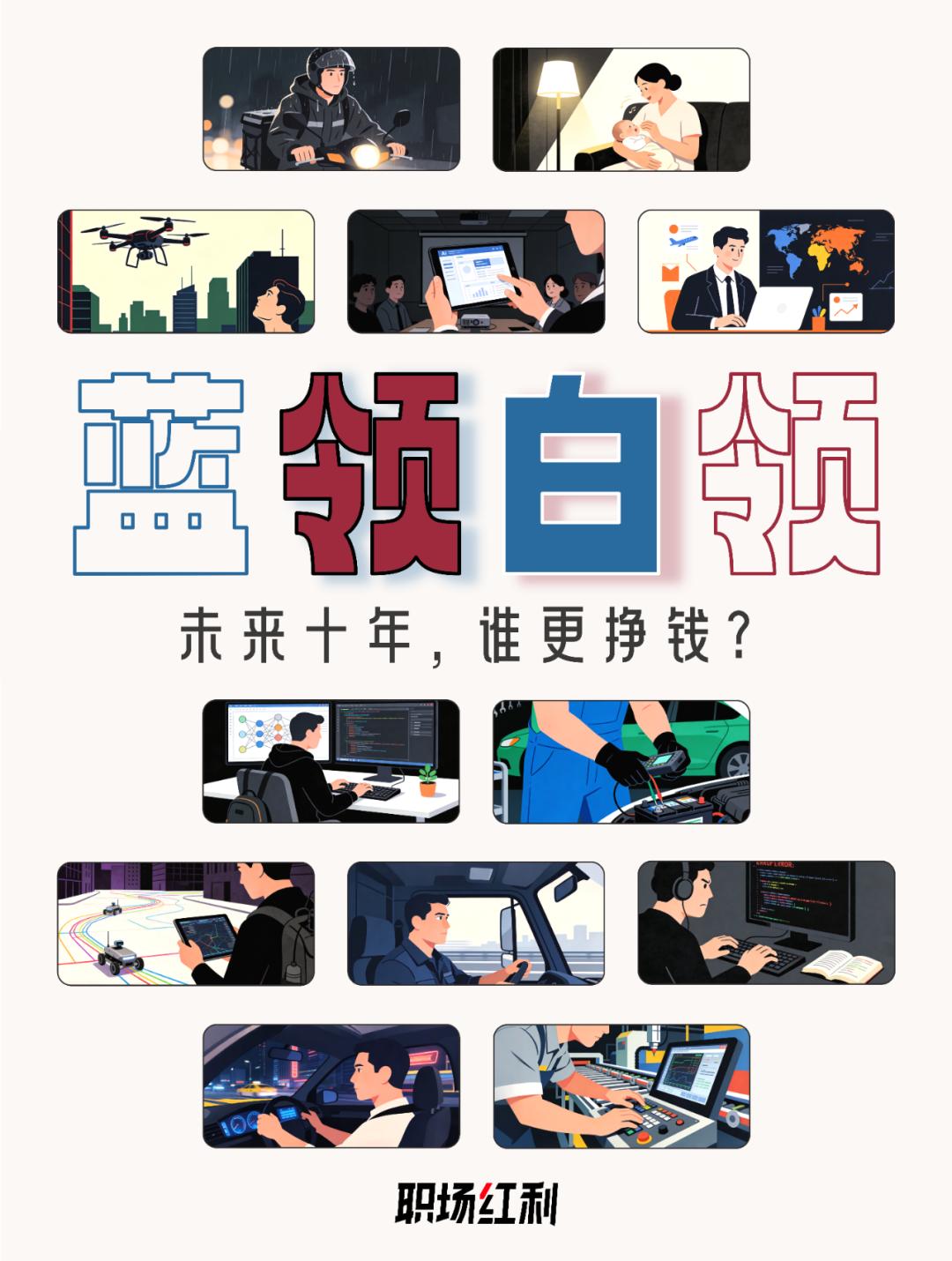
为何你曾经“看不上”的职业,现在涨薪变快了?|职场红利研报
3 6 Ke· 2026-01-19 06:47
Core Insights - The article discusses the evolving job market in China, highlighting the increasing competitiveness of blue-collar jobs compared to white-collar positions, particularly in the context of AI advancements and the integration of vocational education with traditional education [6][84] - It emphasizes the emergence of "new blue-collar" workers as a significant part of the middle-income group, with skilled manual workers expected to have better job security and income returns than typical clerical roles [6][84] Group 1: Blue-Collar Job Trends - The average monthly salary for blue-collar workers in 2024 is projected to be 6,150 yuan, with an annual growth rate of 7.2% over the past 11 years, significantly outpacing the 2.8% growth rate of white-collar workers [84] - The demand for skilled labor in sectors like home care, automotive repair, and drone operation is increasing, with specific roles such as maternity nurses and drone pilots seeing substantial salary growth and job openings [21][28][31] - The home care industry faces a labor shortage of 20 million workers, with maternity nurses being particularly in demand, as their average salary has increased by 4.24% in 2024, compared to a 1.77% increase in the overall blue-collar sector [21][18] Group 2: White-Collar Job Trends - The AI industry is experiencing a significant increase in job openings, with AI product manager positions seeing a 178% increase in demand, reflecting the sector's rapid growth [51] - Software engineers are also benefiting from a robust job market, with average monthly salaries around 20,000 yuan and a projected annual growth rate of 10%-15% in job openings [72][69] - Cross-border e-commerce roles are emerging as high-potential positions, with average monthly salaries reaching 17,000 yuan, driven by the shift from traditional B2B to DTC models [77][74] Group 3: Future Trends - The integration of AI tools into traditional workflows is becoming essential for white-collar workers to maintain job security in a rapidly changing market [84] - The demand for skilled workers in the manufacturing and service sectors is expected to continue growing, particularly in high-end equipment and new energy vehicles, with assembly engineers seeing a 67% increase in demand by 2025 [80][83] - The low-altitude economy, including drone operations, is being recognized as a strategic emerging industry, with significant growth expected in the coming years [28][31]