
消费品行业

Search documents
金佰利拟并购科赴 大宝与高洁丝等将成“同门”
Mei Ri Jing Ji Xin Wen· 2025-11-05 14:49
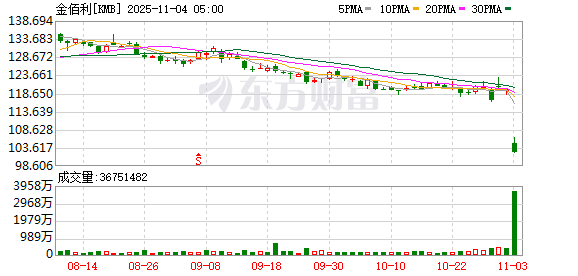
Core Viewpoint - The merger between Kimberly-Clark and Kenvue, valued at $48.7 billion, aims to create a stronger entity in the consumer health sector, enhancing their product offerings and market reach [1][3]. Group 1: Merger Details - Kimberly-Clark will acquire all outstanding shares of Kenvue through a cash and stock transaction, with an overall valuation of $48.7 billion [1]. - The merger is expected to be completed in the second half of 2026, with projected sales for the new company reaching $32 billion by 2025 [1][5]. - The deal reflects a strategic move rather than a mere opportunistic acquisition, as stated by Kimberly-Clark's CEO Mike Hsu [3]. Group 2: Complementary Strengths - Both companies have complementary strengths: Kimberly-Clark excels in baby care and women's health, while Kenvue has advantages in oral and skin care [4]. - The merger allows for geographical expansion, with Kimberly-Clark enhancing Kenvue's presence in China and Mexico, while Kenvue can help Kimberly-Clark grow in India and Western Europe [4]. Group 3: Market Reactions - Following the announcement, Kimberly-Clark's stock fell by 14.57% to $102.27 per share, while Kenvue's stock rose by 12.32% to $16.14 per share [5]. - Investors are concerned about Kenvue's recent performance, as it reported a 4.4% decline in organic sales for Q3 2025, contrasting with Kimberly-Clark's 2.5% growth [6]. Group 4: Future Implications - The merger is seen as a gamble that could either benefit or harm both brands, depending on the success of the integration process [7]. - The combined entity will be led by Kimberly-Clark's current CEO, with existing shareholders retaining a majority stake of 54% in the new company [6].
大宝与高洁丝将成“同门”,金佰利并购科赴背后:股价一跌一涨,市场在担忧什么
3 6 Ke· 2025-11-05 11:04
Core Viewpoint - The merger between Kimberly-Clark and Kenvue, valued at $48.7 billion, represents a strategic move to enhance their market position in the consumer health sector, particularly in personal care products [1][3][5]. Group 1: Merger Details - Kimberly-Clark will acquire all outstanding shares of Kenvue through a cash and stock transaction, with an overall valuation of $48.7 billion for Kenvue [1]. - The merger is expected to be completed in the second half of 2026, with projected sales for the new company reaching $32 billion by 2025 [3]. - Post-merger, Kimberly-Clark shareholders will hold 54% of the new company, while Kenvue shareholders will hold 46% [8][11]. Group 2: Strategic Rationale - The merger is seen as a strategic move rather than a mere opportunistic acquisition, focusing on enhancing product offerings in the fast-growing personal care category [5][11]. - Both companies have complementary strengths: Kimberly-Clark excels in baby care and feminine health, while Kenvue has advantages in oral and skin care [7][11]. - The merger aims to cover health needs across various life stages, including infant care, women's health, and family care [5][7]. Group 3: Market Reaction - Following the announcement, Kimberly-Clark's stock fell by 14.57%, while Kenvue's stock rose by 12.32%, indicating investor skepticism regarding the merger's potential benefits [8][11]. - Concerns include Kenvue's recent performance decline, with a 4.4% drop in organic sales in Q3, contrasting with Kimberly-Clark's 2.5% growth [11]. - The market is cautious about the integration process, which may face challenges due to the similar size of both companies [4][11].


大宝与高洁丝成“同门”,金佰利并购科赴催生320亿美元营收巨头背后:股价一跌一涨,市场在担忧什么
Mei Ri Jing Ji Xin Wen· 2025-11-04 13:57
Core Viewpoint - Kimberly-Clark and Kenvue have announced a strategic merger, with Kimberly-Clark acquiring Kenvue for a total valuation of $48.7 billion, aiming to enhance their market position in the consumer health sector [2][5][10]. Group 1: Transaction Details - The merger will be executed through a cash and stock transaction, with Kenvue's shareholders receiving $3.5 in cash and 0.14625 shares of Kimberly-Clark stock per share, totaling $21.01 per share, which is over 30% premium compared to Kenvue's closing price on November 3 [12]. - The transaction is expected to be completed in the second half of 2026, with projected sales for the new company reaching $32 billion in 2025, positioning it just behind Procter & Gamble's health and wellness segment [5][10]. Group 2: Strategic Rationale - The merger is described as a strategic move rather than an opportunistic one, focusing on enhancing product offerings in personal care and health sectors, which are seen as high-growth areas [6][10]. - Both companies have complementary strengths; Kimberly-Clark excels in baby care and women's health, while Kenvue has advantages in oral and skin care [9][10]. Group 3: Market Reaction - Following the announcement, Kimberly-Clark's stock fell by 14.57%, while Kenvue's stock rose by 12.32%, indicating investor skepticism regarding the merger's potential benefits [10][12]. - Concerns from investors stem from Kenvue's recent performance decline, with a 4.4% drop in organic sales in the third quarter, contrasting with Kimberly-Clark's 2.5% growth in the same period [12].
10月制造业景气水平有所回落
Zhong Guo Hua Gong Bao· 2025-11-04 02:27
Group 1 - The manufacturing Purchasing Managers' Index (PMI) for October is reported at 49.0%, a decrease of 0.8 percentage points from the previous month, indicating a decline in manufacturing activity [1] - Both production index and new orders index have decreased, with values of 49.7% and 48.8% respectively, reflecting a slowdown in production and market demand [1] - Large enterprises maintain a PMI above the critical point, while small and medium enterprises show varying degrees of decline, with PMIs of 49.9%, 48.7%, and 47.1% respectively [1] Group 2 - Three key sectors, including high-tech manufacturing, equipment manufacturing, and consumer goods, continue to expand with PMIs of 50.5%, 50.2%, and 50.1% respectively, indicating strong support for the overall manufacturing sector [1] - The high-energy-consuming industries have a PMI of 47.3%, which is a decrease of 0.2 percentage points from the previous month, showing a decline in activity [1] - The production and business activity expectation index stands at 52.8%, remaining in the expansion zone, suggesting that most manufacturing enterprises maintain an optimistic outlook on market development [2]
2025年10月PMI数据点评:制造业景气水平回落,企业生产经营活动总体稳定
KAIYUAN SECURITIES· 2025-11-03 04:45
1. Report Industry Investment Rating No information provided in the content. 2. Core View of the Report - The manufacturing PMI in October 2025 was 49.0%, showing a decline in the manufacturing prosperity level, while the non - manufacturing PMI returned to the expansion range, and the comprehensive PMI was at the critical point, indicating that the overall production and business activities of enterprises were stable. With the easing of international situations and policy support, the overall prosperity of the manufacturing industry is expected to gradually stabilize and recover [3][5][7]. - In the bond market, bond yields are expected to rise trendily due to the revision of economic expectations [8]. 3. Summary by Relevant Content 3.1 PMI Data Overview - The manufacturing PMI in October 2025 was 49.0%, a month - on - month decrease of 0.8pct; the non - manufacturing PMI was 50.1%, a month - on - month increase of 0.1pct; the comprehensive PMI was 50.0%, a month - on - month decrease of 0.6pct [3]. 3.2 Reasons for the Decline in Manufacturing PMI - Seasonal factors: The pre - holiday demand was released in advance, and the number of working days decreased. The production index and new order index declined, leading to a seasonal decline in the manufacturing PMI [5]. - International environment: Due to the unclear results of China - US trade negotiations, the new export order index of the manufacturing industry dropped to 45.9%, the second - lowest point of the year, and the production and operation activity expectation index also declined [5]. 3.3 Structural Highlights in the Data - Key industries remained resilient: The PMIs of high - tech manufacturing, equipment manufacturing, and consumer goods industries were above 50%, higher than the overall manufacturing level and still in the expansion range [6]. - Non - manufacturing PMI returned to the expansion range: The service industry PMI increased by 0.1pct to 50.2% due to the holiday effect and promotional activities, and the business activity expectation index remained in a high - prosperity range. The construction industry's business activity expectation index increased by 3.6pct, indicating improved confidence [6]. 3.4 Bond Market Viewpoint - Due to the revision of economic expectations, bond yields are expected to rise trendily [8]. 3.5 Related Research Report References - In the second half of 2025, the economic growth rate may not decline significantly; structural problems such as prices are expected to improve trendily; the bond - stock allocation will continue to switch, with bond yields and the stock market expected to rise continuously [9].
10月份三大重点行业PMI继续位于扩张区间——我国经济总体产出保持稳定
Jing Ji Ri Bao· 2025-11-03 03:35
Group 1: Manufacturing Sector - In October, the Manufacturing Purchasing Managers' Index (PMI) was 49.0%, a decrease of 0.8 percentage points from the previous month, indicating a slowdown in manufacturing production activities [1] - The production index and new orders index for manufacturing were 49.7% and 48.8%, down 2.2 and 0.9 percentage points respectively, reflecting a decline in production and market demand [1] - High-tech manufacturing, equipment manufacturing, and consumer goods industries had PMIs of 50.5%, 50.2%, and 50.1% respectively, remaining in the expansion zone and significantly above the overall manufacturing level [1] Group 2: Enterprise Size Impact - The PMIs for large, medium, and small enterprises were 49.9%, 48.7%, and 47.1%, showing a decline of 1.1, 0.1, and 1.1 percentage points respectively, indicating a decrease in economic sentiment across all sizes [2] - Large enterprises maintained production and new orders indices at 50.9% and 50.1%, respectively, remaining in the expansion zone for six consecutive months [2] Group 3: Non-Manufacturing Sector - The Non-Manufacturing Business Activity Index was 50.1%, an increase of 0.1 percentage points from the previous month, indicating stability in non-manufacturing operations [2][3] - The service sector's business activity index rose to 50.2%, reflecting a slight recovery in service sector activity, while the construction sector's index fell to 49.1%, indicating a decline in construction activity [2][3] Group 4: Economic Outlook - The stability in non-manufacturing activities is supported by holiday consumption, with positive performance in travel, shopping, tourism, and dining sectors [3] - The gradual release of policies aimed at stabilizing growth is expected to strengthen domestic demand in the fourth quarter, providing solid support for achieving annual economic and social development goals [3]
10月份三大重点行业PMI继续位于扩张区间 我国经济总体产出保持稳定
Jing Ji Ri Bao· 2025-11-03 02:53
Core Insights - The manufacturing Purchasing Managers' Index (PMI) for October is at 49.0%, a decrease of 0.8 percentage points from the previous month, indicating a slowdown in manufacturing activity [1] - The non-manufacturing business activity index is at 50.1%, an increase of 0.1 percentage points from last month, suggesting stability in the non-manufacturing sector [1] - The comprehensive PMI output index is at 50.0%, down 0.6 percentage points from the previous month, reflecting overall economic stability [1] Manufacturing Sector - Manufacturing production and market demand have declined, with production index at 49.7% and new orders index at 48.8%, down 2.2 and 0.9 percentage points respectively [1] - Factors contributing to the slowdown include international trade uncertainties and seasonal factors related to holidays, which historically affect October production levels [1] - High-tech manufacturing, equipment manufacturing, and consumer goods industries have PMIs of 50.5%, 50.2%, and 50.1% respectively, indicating continued expansion and support for the manufacturing sector [1] Enterprise Size Analysis - The PMIs for large, medium, and small enterprises are 49.9%, 48.7%, and 47.1%, showing varying degrees of decline [2] - Large enterprises maintain production and new orders indices at 50.9% and 50.1%, respectively, indicating sustained expansion for six consecutive months [2] - Positive changes in market prices within the manufacturing sector are noted, with equipment manufacturing purchase and factory price indices rising for three consecutive months [2] Non-Manufacturing Sector - The non-manufacturing business activity index has increased to 50.1%, indicating expansion, with the service sector index at 50.2% [2][3] - The construction sector's business activity index is at 49.1%, reflecting a slight decline in activity [2] - Consumer spending in areas such as travel, shopping, and dining has shown positive performance, supporting the stability of the non-manufacturing sector [3] Economic Outlook - The stability in non-manufacturing activities is supported by holiday consumption, with investment and consumption-related activities showing positive changes [3] - The effectiveness of growth-stabilizing policies is expected to strengthen domestic demand in the fourth quarter, providing solid support for achieving annual economic and social development goals [3]
我国经济总体产出保持稳定 10月份三大重点行业PMI继续位于扩张区间
Jing Ji Ri Bao· 2025-11-03 00:34
Core Insights - The manufacturing Purchasing Managers' Index (PMI) for October is at 49.0%, a decrease of 0.8 percentage points from the previous month, indicating a slowdown in manufacturing activity [1] - The non-manufacturing business activity index is at 50.1%, an increase of 0.1 percentage points from last month, suggesting stability in the non-manufacturing sector [2] - The comprehensive PMI output index is at 50.0%, down 0.6 percentage points from the previous month, reflecting overall economic stability [1] Manufacturing Sector - Manufacturing production and new orders indices are at 49.7% and 48.8%, respectively, down 2.2 and 0.9 percentage points from last month, indicating a decline in production and market demand [1] - High-tech manufacturing, equipment manufacturing, and consumer goods industries have PMIs of 50.5%, 50.2%, and 50.1%, respectively, all remaining in the expansion zone and significantly above the overall manufacturing level [1] Enterprise Size Analysis - The PMIs for large, medium, and small enterprises are 49.9%, 48.7%, and 47.1%, showing a decline of 1.1, 0.1, and 1.1 percentage points, respectively, indicating a decrease in economic sentiment across all sizes [2] - Large enterprises have production and new orders indices at 50.9% and 50.1%, respectively, remaining in the expansion zone for six consecutive months, indicating sustained production and demand [2] Non-Manufacturing Sector - The non-manufacturing business activity index is at 50.1%, up 0.1 percentage points, indicating continued stability in non-manufacturing operations [2] - The service sector business activity index is at 50.2%, reflecting a slight increase and improved sentiment in the service industry [2] - The construction industry business activity index is at 49.1%, down 0.2 percentage points, indicating a decline in construction activity [2] Economic Outlook - The slight increase in the business activity index for October suggests stable operations in the non-manufacturing sector, supported by holiday consumption and positive changes in investment and consumption-related activities [3] - The effectiveness of growth-stabilizing policies is expected to strengthen domestic demand in the fourth quarter, providing solid support for achieving annual economic and social development goals [3]
10月份三大重点行业PMI继续位于扩张区间—— 我国经济总体产出保持稳定
Jing Ji Ri Bao· 2025-11-03 00:10
Core Insights - The manufacturing Purchasing Managers' Index (PMI) for October is at 49.0%, a decrease of 0.8 percentage points from the previous month, indicating a slowdown in manufacturing activity [1] - The non-manufacturing business activity index is at 50.1%, an increase of 0.1 percentage points from last month, suggesting stability in the non-manufacturing sector [1] - The comprehensive PMI output index is at 50.0%, down 0.6 percentage points from the previous month, reflecting overall economic stability [1] Manufacturing Sector - Manufacturing production and new orders indices are at 49.7% and 48.8%, respectively, down 2.2 and 0.9 percentage points from last month, indicating a decline in production and market demand [1] - High-tech manufacturing, equipment manufacturing, and consumer goods industries have PMIs of 50.5%, 50.2%, and 50.1%, respectively, all remaining in the expansion zone and significantly above the overall manufacturing level [1] Enterprise Size Analysis - The PMIs for large, medium, and small enterprises are 49.9%, 48.7%, and 47.1%, showing a decline of 1.1, 0.1, and 1.1 percentage points, respectively, indicating varying levels of economic activity [2] - Large enterprises have production and new orders indices at 50.9% and 50.1%, respectively, remaining in the expansion zone for six consecutive months [2] Price Trends - The equipment manufacturing purchase price index and factory price index have risen for three consecutive months, with the factory price index reaching a new high since June 2024 [2] - High-tech manufacturing purchase and factory price indices have also increased, with the factory price index hitting a new high for the year [2] Non-Manufacturing Sector - The non-manufacturing business activity index is at 50.1%, indicating a slight increase and stability in operations [3] - The service sector business activity index is at 50.2%, reflecting a recovery in service sector activity, while the construction sector index is at 49.1%, showing a decline [2][3] Consumer Behavior - Holiday consumption has supported the stability of the non-manufacturing sector, with positive performance in travel, shopping, tourism, and dining [3] - Investment and consumption-related activities are showing positive changes, contributing to the overall economic stability [3]
10月PMI点评:基本面对债市的定价权再次确认
Changjiang Securities· 2025-11-02 23:30
1. Report Industry Investment Rating No information provided in the given content. 2. Core Viewpoints of the Report - In October 2025, the decline of manufacturing PMI, weaker than the seasonal level and with weakening supply and demand, may indicate certain downward pressure on the Q4 economy [2][7]. - Both domestic and external demands declined, and price indicators did not continue the improvement trend of last month. The differentiated structure of "strong raw material prices and weak finished - product prices" may restrict the repair of corporate profits [2][7]. - The business climate of large enterprises fell below the boom - bust line, and the business climates of high - tech manufacturing and equipment manufacturing industries significantly declined [2][7]. - The business climate of the non - manufacturing industry is mainly driven by holiday service consumption, and the overall expansion strength is still weak [2][7]. - The trading logic of the bond market in Q4 focuses on the weakening economic fundamentals and the expectation of monetary easing, and a repair market may be welcomed. It is expected that the yield of the active 10 - year treasury bond (tax - exempt) may decline to 1.65% - 1.7%, and the yield of the taxable bond may decline to 1.7% - 1.75% [2][7]. 3. Summary by Relevant Catalogs 3.1 Event Description - In October 2025, the manufacturing PMI was 49.0%, a decrease of 0.8 pct from the previous month, lower than the Wind consensus forecast of 50.0%. The non - manufacturing business activity index slightly increased by 0.1 pct to 50.1%, slightly higher than the boom - bust line and lower than the Wind consensus forecast of 50.3%. Among them, the service industry business activity index was 50.2%, an increase of 0.1 pct, and the construction industry business activity index was 49.1%, a decrease of 0.2 pct [5]. 3.2 Event Comment - **Manufacturing PMI and economic pressure**: The manufacturing PMI in October 2025 fell back to a nearly two - year low. The production index and new order index decreased by 2.2 pct and 0.9 pct respectively to 49.7% and 48.8%. The procurement volume index decreased significantly by 2.6 pct to 49.0%, and the difference between the "finished - product inventory - on - hand orders" index widened by 0.6 pct to 3.6 pct. The weak pattern of production and demand was partly due to the pre - release of some demand before the National Day holiday and partly reflected the lack of endogenous momentum, indicating certain downward pressure on the Q4 economy [7]. - **Demand and price situation**: In October, external demand did not continue its resilience, and the new export order index significantly declined by 1.9 pct to 45.9%. The new order index for domestic demand also turned from rising to falling. The main raw material purchase price index and the ex - factory price index both decreased by 0.7 pct, recording 52.5% and 47.5% respectively. The difference between them remained at 5.0 pct, and the main raw material purchase price index was still in the expansion range. The "strong raw material prices and weak finished - product prices" structure may restrict the repair of corporate profits [7]. - **Enterprise and industry changes**: Among enterprises, the PMIs of large and small enterprises both fell by 1.1 pct to 49.9% and 47.1% respectively, and the PMI of medium - sized enterprises slightly fell by 0.1 pct to 48.7%. In terms of industries, the PMIs of high - tech manufacturing and equipment manufacturing industries were 50.5% and 50.2% respectively, a decline of 1.1 pct and 1.7 pct from the previous month. The consumer goods industry remained in the expansion range, slightly falling by 0.5 pct to 50.1%, while the PMI of the basic raw material industry further dropped to 47.3%. The overall market expectation was optimistic, with the production and business activity expectation index at 52.8%, and the expectation indexes of industries such as non - ferrous metals and transportation equipment rising to the high - level boom range above 60% [7]. - **Non - manufacturing industry situation**: In October, the non - manufacturing PMI slightly increased by 0.1 pct to 50.1%, and the service industry PMI rose to 50.2%. The on - hand order index fell by 0.8 pct while the new order index remained flat, indicating that the holiday effect was the main driver. The business activity indexes of industries such as transportation, accommodation, and culture and entertainment were all in the high - level boom range above 60%, but industries such as real estate continued to be sluggish. The construction industry business activity index turned from rising to falling, decreasing by 0.2 pct to 49.1%, possibly dragged down by the slowdown of holiday construction and the decline of post - holiday real estate sales [7]. - **Bond market outlook**: Currently, the endogenous momentum for the repair of production and demand may be limited. On the day when the PMI data was released, the yield of the 10 - year treasury bond active bond decreased by 0.95 BP. The economic fundamentals still face a pattern of weak supply and demand, the pressure on enterprises for passive inventory replenishment continues, and the ex - factory - raw material price gap still restricts the repair of corporate profits. Although 500 billion yuan of new policy - based financial instruments have been put in place and local governments have an additional 200 billion yuan of special bond quotas, the sustainability of the recovery of real estate sales and the transmission effect of policy funds on infrastructure investment still need to be observed. The trading logic of the bond market in Q4 focuses on the weakening economic fundamentals and the expectation of monetary easing, and a repair market may be welcomed. It is expected that the yield of the active 10 - year treasury bond (tax - exempt) may decline to 1.65% - 1.7%, and the yield of the taxable bond may decline to 1.7% - 1.75% [7].