航天

Search documents
SpaceX 拟开启史上最大规模 IPO:500亿美元吸金效应或引发美股上市“避让潮”
智通财经网· 2026-02-24 11:24
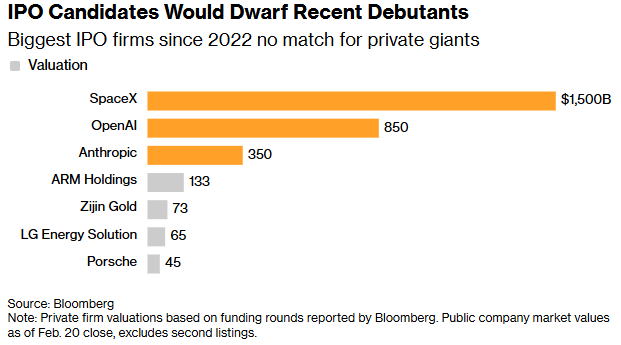
智通财经APP注意到,亿万富翁马斯克正计划为SpaceX进行有史以来规模最大的 IPO ,这对现有投资 者和将获得巨额费用的投行来说是个好消息。 但有一个群体并不感到振奋,那就是其他也计划上市的公司。 SpaceX 可能通过在美国上市融资多达 500 亿美元,这可能为人工智能公司 Anthropic PBC 和 OpenAI Inc. 的 IPO 奠定基础。这两家公司跻身全球估值最高的私营企业之列,今年已采取措施准备上市。 随着马斯克的火箭与卫星制造商计划于 6 月首秀,它和其他潜在的巨额交易可能占据投资者的全部注意 力,并迫使那些权衡规模相对正常的 IPO 的公司设法避开它们。 IPO候选公司规模将远超近期上市的公司 私募股权投资公司 EQT AB 的全球股票资本市场主管马格努斯·托宁认为存在一种风险:如果启动时间 与重磅科技股 IPO 太近,大型资产管理公司可能不会关注规模较小的发行。 托宁在采访中表示,"我认为我们不会愿意出来竞争注意力。"他说,公司将转而尝试将其投资组合公司 的 IPO 时间表提前,至少在像 SpaceX 这样的超级大单出现前一个半月完成。 总部位于斯德哥尔摩的 EQT 正准备最快于今 ...

中国商务部对日出口管制措施解读
Jing Ji Guan Cha Wang· 2026-02-24 09:12
商务部发言人强调,此次措施的核心目标是遏制日本"再军事化"和潜在的拥核动向。近年来,日本在军 事领域动作频繁,不仅大幅增加军费开支,还积极研发和采购先进武器装备。与此同时,日本在核能领 域的某些行为也引发了国际社会对其拥核意图的担忧。 通过将参与提升日本军事实力的实体列入管控名单并严格实施出口管制,中方能够有效阻断这些实体获 取中国两用物项的渠道,从而抑制其军事能力的进一步发展,维护地区的和平与稳定。 针对无法核实最终用户和用途的实体,将其列入关注名单并加强审查,有助于从源头上控制风险,防止 两用物项被用于提升日本军事实力的相关活动。 此次出口管制措施完全符合中国法律框架,是基于国家利益和安全考量所采取的必要举措。 据披露,被列入管控名单的20家日本企业涵盖多个关键领域。例如,三菱造船株式会社、日本海洋联合 株式会社等在船舶制造方面具有重要地位,其产品可能被用于提升日本海上军事力量;三菱重工航空发 动机株式会社、川崎重工航空宇宙系统公司等在航空技术方面具备领先优势,其研发成果可能被应用于 军事领域;富士通防卫与国家安全株式会社、IHI宇航株式会社等在国防和航天领域发挥着重要作用; 防卫大学作为日本军事人才培养 ...
星舰驶向华尔街,史上最大IPO启动
Sou Hu Cai Jing· 2026-02-24 07:17
Core Insights - SpaceX is preparing for an unprecedented IPO in 2026, with a valuation exceeding $1 trillion, marking the largest public offering in history and testing valuation models to their limits [1][3]. Group 1: Valuation and Financial Structure - Following the acquisition of xAI in February 2026, the combined entity's valuation reached $1.25 trillion, with SpaceX's core business valued at approximately $1 trillion and xAI contributing $250 billion [3]. - The IPO aims for a target valuation of $1.5 trillion, which translates to a price-to-sales ratio exceeding 60, significantly higher than competitors like Rocket Lab and Planet Labs [3]. - The $50 billion raised from the IPO will fund three capital-intensive projects: the development of the Starship rocket, the deployment of an "orbital data center," and ongoing support for NASA's lunar system [3]. Group 2: Market Reactions and Investor Sentiment - Since the announcement of the IPO plan in December 2025, SpaceX's private market valuation surged from approximately $80 billion, reflecting investor optimism about the potential $1.5 trillion listing [5]. - The underwriting team, including major banks like JPMorgan, Goldman Sachs, Bank of America, and Morgan Stanley, must substantiate the $1.5 trillion valuation with financial data in the prospectus [5]. - SpaceX plans to allocate a significant portion of shares to retail investors, challenging the traditional allocation favoring institutional buyers, which could increase demand but also pricing uncertainty [5]. Group 3: Strategic Vision and Risks - Elon Musk's strategy involves using solar-powered orbital data centers to overcome terrestrial limitations on AI growth, with plans to launch a system of up to 1 million satellites [8]. - Critics highlight challenges such as high costs of launching payloads, the need for maintenance and cooling of data centers, and the reliance on terrestrial data for AI training [8]. - The integration of rockets, satellites, AI models, and distribution channels presents both synergies and unprecedented concentration risks, as failures in one area could disrupt services across the board [10]. Group 4: Timing and Market Conditions - The IPO is speculated to occur in June 2026, coinciding with Musk's birthday and a significant astrological event, reflecting Musk's personal influence on the timing [10]. - Some bankers and investors express concerns that the June timeline may be too ambitious, given the need for regulatory filings and market conditions, which are increasingly unpredictable [10]. Group 5: Overall Market Implications - The success of SpaceX's IPO hinges on how much the market is willing to pay for exposure to space, AI, and global connectivity narratives [12]. - SpaceX holds a dominant position in the commercial launch market with approximately 90% market share, and its Starlink service has become highly profitable [12]. - The IPO represents a critical test of valuation discipline for Wall Street, requiring a balance between grand narratives and tangible cash flow [12].
马斯克让特斯拉越来越不单纯了
Sou Hu Cai Jing· 2026-02-24 02:59
Core Viewpoint - Elon Musk's ambitions for Tesla and his broader business empire are evolving, with a shift towards robotics and AI, indicating a potential end of an era for traditional electric vehicles and a new milestone in industrial history [2][4]. Group 1: Tesla's Strategic Shift - Tesla plans to cease production of Model S and Model X by the end of Q2 2025 to allocate resources for the production of Optimus robots, which Musk sees as the future growth drivers alongside autonomous vehicles [4]. - The electric vehicle market is becoming increasingly saturated, leading to intensified competition and shrinking profit margins, prompting Musk to redefine Tesla's mission to "create incredible wealth" [4][11]. - In 2025, Tesla's global deliveries of electric vehicles are projected to decline by 8.56% year-on-year, marking a second consecutive year of decline [5]. Group 2: Financial Performance - Tesla's total revenue for 2025 was $94.827 billion, a decrease of 2.83% year-on-year, marking the first annual revenue decline in the company's history [11]. - The automotive segment generated $69.526 billion in revenue, down 9.79% year-on-year, with a gross margin of 17.8% [13]. - The net profit for Q4 2025 was $840 million, a significant drop of 60.47% year-on-year, with the annual net profit at $3.794 billion, down 46.79% [11]. Group 3: Market Dynamics and Competition - Tesla's Model 3 and Model Y continue to lead in several markets but face fierce competition from Chinese brands, with a year-on-year sales decline of 6.97% [7]. - The company plans to double its capital expenditure to approximately $20 billion by 2026, focusing on AI and robotics development [12]. - The shift towards AI and robotics is seen as a response to the evolving competitive landscape, where Tesla aims to transition from an automotive company to an "embodied AI company" [12]. Group 4: Geopolitical Implications - Musk's ambitions extend beyond business, with potential implications for national security, as Tesla and SpaceX engage in projects that may have military applications [19][21]. - The integration of Tesla, SpaceX, and AI initiatives reflects a strategy that intertwines commercial interests with national defense considerations, particularly in the context of U.S.-China relations [19][22]. - The expansion of SpaceX's Starlink satellite constellation raises concerns about space security and the dual-use nature of commercial technologies [22][24].

未来已来!预言 2035 年中国发展新趋势,每一条都令人期待
Sou Hu Cai Jing· 2026-02-23 11:16
Group 1: National Development Goals - The 14th Five-Year Plan and the 2035 vision aim to achieve significant progress in economy, technology, and national strength, targeting a per capita GDP that meets the standards of moderately developed countries and increasing the middle-income population [3] - By 2030, urbanization rate is expected to approach 70%, with urban clusters like Beijing-Tianjin-Hebei, Yangtze River Delta, and Guangdong-Hong Kong-Macau Greater Bay Area becoming more integrated [3][15] - The goal is to enhance the quality of life for ordinary citizens through these developments, not just focusing on numerical targets [3] Group 2: Technological Advancements - The focus on technological independence and self-reliance has led to increased funding support, transforming companies from followers to leaders, particularly in the telecommunications sector with plans for 6G by 2030 [5] - Robotics technology is expected to achieve significant breakthroughs by 2027, stabilizing supply chains and enhancing production capabilities [5] - AI is projected to become a core driver of economic growth by 2035, with over 90% of economic activities being AI-driven by 2030 [13] Group 3: Space Exploration - China's space program is on track for significant milestones, including sending humans to the moon by 2030 and establishing a lunar base by 2035 [7] - The Tianwen-3 Mars exploration mission is set to return soil samples to Earth by 2031, showcasing China's advancements in space technology [7] Group 4: Energy Transition - The National Energy Administration has set a target for non-fossil energy to account for 25% of energy consumption by 2030, with a focus on increasing the share of wind and solar energy [9] - The transition to clean energy is expected to enhance environmental quality and create job opportunities while promoting economic growth [9] Group 5: Education and Health - By 2035, the national action plan aims to strengthen the education system, expanding access to quality education and increasing the enrollment rates for higher education [11] - Improvements in the healthcare system are projected to increase life expectancy to 79 years by 2030, with a focus on preventive measures and resource allocation [9][11]
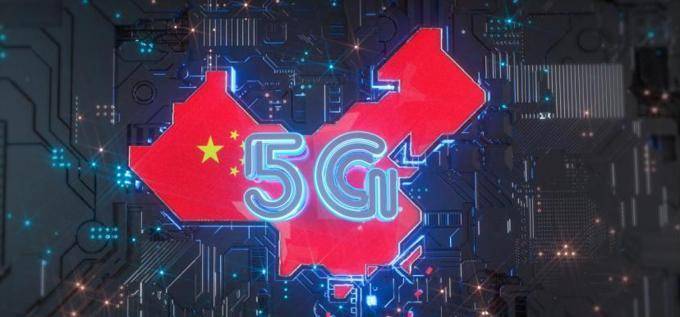
What You Need to Know About the SpaceX-xAI Merger Before the 2026 SpaceX IPO
Yahoo Finance· 2026-02-22 10:25
Core Viewpoint - Elon Musk plans to IPO SpaceX in July 2026 at a valuation of $1.5 trillion, which includes the combined value of SpaceX, Twitter (X), and xAI [1][5][7]. Group 1: Valuation Insights - SpaceX was previously valued at $800 billion but is now believed to be worth $1 trillion, reflecting a 25% increase over two months [6][8]. - The merger between X and xAI in March 2025 established a combined valuation of $113 billion, with X valued at $33 billion and xAI at $80 billion [5]. - Following a year of growth, xAI's valuation has reportedly doubled to $250 billion, contributing to the overall valuation of the combined entities [6]. Group 2: Merger and Growth Strategy - The merger of SpaceX, X, and xAI is positioned to reach a combined valuation of $1.25 trillion, with expectations of growing to $1.5 trillion by the IPO [7]. - The anticipated growth of 20% in five months is considered feasible within the tech industry [8].
伊朗将所有欧盟国家海空军列为“恐怖组织”;哈尔滨冰雪大世界因融化严重闭园;OpenAI将算力支出目标从1.4万亿美元调至6000亿丨每经早参
Mei Ri Jing Ji Xin Wen· 2026-02-21 23:59
Group 1 - Iran's government has designated the naval and air forces of EU member states as "terrorist organizations" in response to the EU's classification of the Iranian Revolutionary Guard Corps as a "terrorist organization" [7] - OpenAI has significantly reduced its total capital expenditure target to approximately $600 billion by 2030, down from the previously stated $1.4 trillion, with an expected gross margin of 33% by 2025 [10] - The Hong Kong government plans to acquire ownership rights of the Hongfu Garden properties at an average price of HKD 8,000 (without land premium) and HKD 10,500 (with land premium), with a total acquisition cost of approximately HKD 6.8 billion [5] Group 2 - The Chinese film box office for 2026 has surpassed 7 billion yuan, with the Spring Festival box office contributing over 4.4 billion yuan, indicating a strong market performance [3] - Three and four-tier cities have contributed 53.72% of the total box office for the Spring Festival, marking a significant increase compared to previous years [4] - The Hong Kong stock market has seen buyback amounts exceed HKD 25.4 billion since the beginning of 2026, with major companies like Tencent leading the buyback efforts [5]

浙江民营经济高质量发展迈出新步伐
Xin Hua Wang· 2026-02-21 03:54
Group 1 - The core viewpoint of the articles highlights the transformation of Zhejiang's private enterprises from labor-intensive industries to technology-driven innovation, showcasing a new generation of entrepreneurs who are more knowledgeable and innovative [1][2][3] - Zhejiang has achieved significant recognition in various rankings, including the "2025 China Private Enterprises Top 500," with 95 companies listed in the "2025 Private Enterprises R&D Investment Top 500" and 115 in the "2025 Private Enterprises Invention Patent Top 500," indicating a strong emphasis on innovation [1][2] - The emergence of "technology new dragons" in Zhejiang, with 96 companies recognized in cutting-edge fields such as artificial intelligence and new materials, reflects the region's commitment to advancing its manufacturing sector [2][3] Group 2 - The participation of private capital in previously restricted sectors, such as nuclear power and transportation, marks a significant shift in Zhejiang's economic landscape, with companies like Geely Technology and Blue Arrow Aerospace leading the way [3][4] - The favorable business environment in Zhejiang, characterized by high rankings in market, legal, innovation, and government service indicators, has been instrumental in fostering the growth of private enterprises [4][5] - The ongoing evolution of the business environment in Zhejiang aims to enhance human-centric approaches, further supporting the development of innovative ecosystems and positioning Zhejiang's private economy as a leading force in the new era of production [5]
马斯克:36个月内太空AI成本低于地面,SpaceX布局轨道数据中心
Sou Hu Cai Jing· 2026-02-21 01:57
Core Insights - Musk predicts that the cost advantages of space AI will become evident within 36 months, with space-based data centers potentially costing 5-10 times less than ground-based deployments, attracting significant attention in the tech and aerospace sectors [1] Group 1: Cost and Energy Advantages - Ground data centers are facing severe energy bottlenecks, with power supply growth unable to keep pace with the exponential increase in chip performance, leading to anticipated power shortages for large chip clusters by year-end [1] - Space offers unmatched energy advantages, with solar power generation capabilities over five times that of ground, eliminating the need for storage batteries and providing continuous clean energy for AI data centers [1] - Space allows for larger chip clusters to be deployed without land constraints, enhancing computational output while avoiding issues like natural disasters, high land costs, and network latency faced by ground data centers [1] Group 2: Industry Transformation - If Musk's predictions materialize, it could fundamentally reshape the global computing industry, fostering deep integration between aerospace and AI technologies and ushering in a new era of "space AI" [3] - Space AI data centers could break through ground computing bottlenecks, providing robust support for AI model training and big data analysis, thus accelerating AI technology development [3] - The development of space AI is expected to drive upgrades in the aerospace industry, leading to technological breakthroughs in satellite manufacturing, space launches, and space energy, creating new business models and job opportunities [3] Group 3: Impact on Daily Life - Although space AI may seem distant for ordinary users, it will indirectly affect various aspects of daily life, enhancing the maturity of AI applications like the metaverse, autonomous driving, and telemedicine, while resolving issues like network lag and delays [5] - The proliferation of space solar power technology could optimize ground energy structures and lower energy costs [5] - Challenges remain for space AI development, including equipment wear in space, high satellite deployment costs, and space debris management, necessitating global collaboration among countries and enterprises [5]
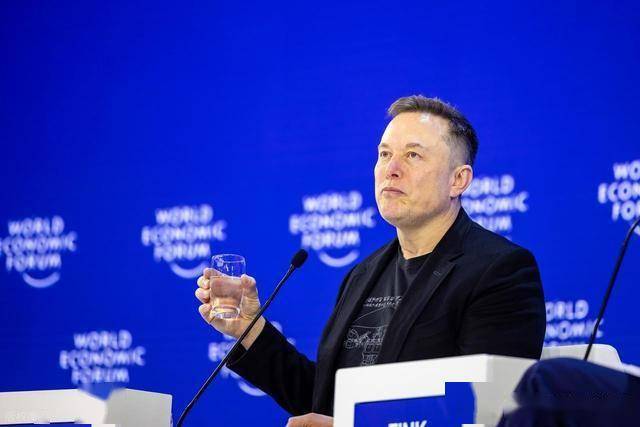
一定要警惕美国的战略收缩
Sou Hu Cai Jing· 2026-02-20 06:15
Group 1 - The core viewpoint of the article is that the U.S. under the current administration has shifted its foreign policy from global interventionism to a more pragmatic, profit-driven approach, focusing on national interests and economic benefits [2][3][4] - The new U.S. National Security Strategy emphasizes "flexible realism," indicating a departure from promoting democracy and maintaining global order, instead prioritizing tangible benefits [3][4] - The strategy reflects a recognition of the rising power of Eastern nations, particularly China, and suggests a return to a Monroe Doctrine-like focus on the Americas as a primary area of interest [4][5] Group 2 - The report criticizes traditional allies in Europe, suggesting that the U.S. will reduce its military commitments in Europe and expects NATO countries to increase their defense spending from 2% to 5% of GDP [5][6] - The U.S. is shifting its stance on Russia, no longer viewing it as a primary threat but rather as a potential partner for negotiations, particularly regarding the Ukraine conflict [6][7] - The strategy acknowledges past misconceptions about China's role in the international order and aims to establish a more balanced economic relationship, focusing on mutual benefits rather than a one-sided trade model [7][8] Group 3 - The article highlights the U.S. intention to maintain military control in the Indo-Pacific region while encouraging allies to take on more responsibility in defense matters [8][9] - The focus on economic security over military deterrence indicates a strategic pivot towards strengthening domestic industries and supply chains within the Americas [9][10] - The narrative suggests that the U.S. is preparing for a competitive landscape with China, particularly in key sectors like AI, aerospace, and semiconductors, urging domestic companies to adapt accordingly [10]