
教育

Search documents
毛戈平、老铺黄金均涨超9%,消费板块投资机会来了?
Sou Hu Cai Jing· 2025-10-15 12:42
Core Viewpoint - The Hong Kong consumer sector has rebounded strongly due to market style switching and favorable policies, with various sub-sectors such as luxury goods, aviation, education, and new consumption showing active performance [2][3] Group 1: Market Performance - The consumer sector saw significant gains, with notable stocks like Guoquan (02517.HK) rising by 11.86%, Mao Ge Ping (01318.HK) by 9.71%, and China Eastern Airlines (00670.HK) by 9.27% [2] - Other strong performers included China Southern Airlines (01055.HK) up 7.98%, and Mijue Group (02097.HK) up 6.58% [2] Group 2: Policy Impact - The surge in the consumer sector was directly triggered by favorable policies announced during a meeting on October 14, emphasizing the need for effective counter-cyclical adjustments and resource utilization to boost domestic demand [3][4] - Ongoing policies such as "trade-in" programs and consumer loan subsidies have effectively activated market vitality [4] Group 3: Investment Insights - Analysts from Zhongyuan Securities noted that the food and beverage manufacturing sector has maintained high investment growth levels, significantly outpacing social investment growth [5] - The report highlighted production trends, indicating a contraction in the output of certain alcoholic beverages while cold fresh meat and edible oil production continued to grow [5] - Price trends showed increases in various food items, suggesting mild inflation in upstream sectors [5] Group 4: Future Consumption Trends - Guojin Securities indicated that Q4 is expected to see a convergence of style and policy in domestic consumption, with opportunities emerging for new consumption growth stocks [6] - The report suggested that the upcoming Double Eleven shopping festival will be a critical indicator for observing market trends [6][7]


四川洪雅:民生项目建设“加速跑”绘就幸福生活新图景
Zhong Guo Jing Ji Wang· 2025-10-15 12:03
Core Viewpoint - The construction of key livelihood projects in Hongya County, including education and healthcare facilities, is progressing rapidly, enhancing the community's sense of well-being and contributing to high-quality development [1][9]. Education Projects - The Hongya Second Primary School project has a total investment of 115 million yuan, with over 70 million yuan already invested. It will include teaching buildings, dormitories, a cafeteria, and a sports field, providing 1,350 student places upon completion [3]. - The new teaching building at Hongya Middle School has a total construction area of approximately 11,600 square meters and will feature 47 regular classrooms and various auxiliary teaching rooms. The project is currently 85% complete [5]. Healthcare Projects - The construction of the Liujing Health and Elderly Care Service Center is also advancing, with a total investment of about 93 million yuan and a construction area of approximately 18,000 square meters. The project aims to integrate medical, elderly care, rehabilitation, and health check-up resources [8]. Project Management and Efficiency - Hongya County has established a comprehensive project management mechanism that includes monthly scheduling, quarterly competitions, and annual assessments to ensure efficient project execution. This system has been instrumental in driving the rapid progress of various projects [9].
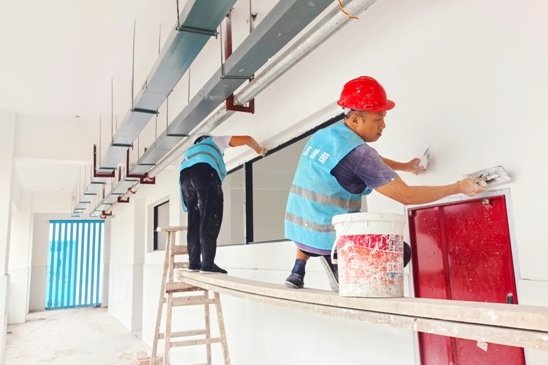
1个中心城市+7个县域,合肥都市圈同城化有3个目标 | 都市圈2.0
Di Yi Cai Jing· 2025-10-15 11:24
Core Viewpoint - The Hefei metropolitan area has undergone significant development, evolving from a small economic circle to a larger urban cluster and now focusing on integrated development with surrounding regions [1][5]. Group 1: Development Process - The Hefei metropolitan area was first proposed in 2006, initially including Hefei, Lu'an, and the former Chao Lake city, and expanded in 2009 to include a central city and four surrounding cities [1]. - In 2024, the National Development and Reform Commission approved the development plan for the Hefei metropolitan area, establishing a one-hour commuting circle that encompasses Hefei and seven surrounding counties, covering an area of 24,900 square kilometers [1]. - The current GDP of the Hefei metropolitan area is 1.66 trillion yuan, with Hefei contributing 1.35 trillion yuan, accounting for 81% of the total [1]. Group 2: Industrial and Technological Collaboration - Hefei is the second national science center in China, focusing on technological innovation and collaboration with surrounding counties to support technology transfer and commercialization [2]. - The city has established 14 sub-markets to promote technology transfer, leveraging the resources of the central city to assist county enterprises [2]. Group 3: Infrastructure and Public Services - Hefei has achieved direct high-speed rail connections with six surrounding counties and has implemented a rapid transit route to Lu'an, enhancing physical connectivity within the metropolitan area [4]. - The city has launched seven customized public transport routes and established a vocational education alliance to improve public service quality in the surrounding counties [4]. Group 4: Future Opportunities and Goals - The Hefei metropolitan area benefits from its strategic geographical location and is positioned to leverage multiple national development strategies, including the Yangtze River Economic Belt and the integration of the Yangtze River Delta [5]. - By 2030, the metropolitan area aims to maintain leading economic growth rates in Anhui province and the Yangtze River Delta, establish a new integrated development pattern, and enhance collaborative development with surrounding cities [5]. - Key initiatives include developing a comprehensive planning system, improving transportation connectivity, and enhancing industrial collaboration and environmental governance [6].
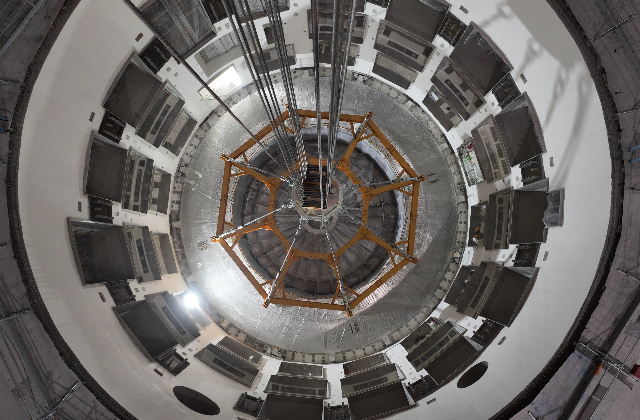
当AI回答一切,企业家最该问什么?
Sou Hu Cai Jing· 2025-10-15 10:18
Core Insights - The article emphasizes the transition from the "Age of AI Exploration" to the "Gold Rush Era" in 2025, highlighting the potential for significant value creation across various industries through AI integration [2] - There is a shift in focus among entrepreneurs from model parameters to practical applications of AI in their respective industries, with a strong emphasis on leveraging unique internal data and industry expertise as key growth drivers [3][4] Industry Trends - The fourth season of the program "Yi Wen" focuses on "Enterprise Innovation and Transformation in the AI Era," featuring leaders from benchmark companies sharing their insights on AI-related challenges and opportunities [4][6] - The program aims to inspire individuals and businesses by exploring the intersection of AI innovation and transformation, with a particular focus on how companies can redefine their strategies in light of AI advancements [4][8] Company Strategies - Companies are encouraged to view the current wave of AI technology not just as a means to optimize existing operations but as a strategic lever for innovation and organizational transformation [6][7] - The article highlights several companies, such as Rokid, BrainCo, and Manus, that are actively reshaping their industries by integrating AI into their core business models [6][7] Key Questions for Businesses - The article poses critical questions for businesses at the strategic crossroads, including how to effectively integrate AI into their operations, the boundaries of AI investment, and the cultural shifts required to support AI initiatives [7][8] - It emphasizes the importance of moving from being mere "users" of AI to becoming "AI changemakers" by leveraging unique industry knowledge and data assets [7][8]



思勰投资原合伙人吴家麒卖掉百亿量化私募股权,转身买下美国私立高中
Sou Hu Cai Jing· 2025-10-14 10:24
Core Insights - The post titled "Why I Sold My Billion Quantitative Private Equity and Bought a Private High School in the U.S." sparked significant discussion in the industry, later confirmed to be true by the author, Wu Jiaqi, a former partner at a billion-dollar private equity firm [4][5] - Wu Jiaqi transitioned from quantitative private equity to the education sector by acquiring a top-ranked boarding private high school near Los Angeles, indicating a strategic shift in focus from finance to education [5][7] - This decision reflects a broader contemplation among finance professionals regarding the long-term value and personal fulfillment in their careers, especially in the context of increasing competition and market volatility in the private equity industry [7][8] Company Overview - Wu Jiaqi co-founded Shixiao Investment in 2016, which grew into a billion-dollar quantitative private equity firm, with a clear division of responsibilities among the founding partners [4] - After Wu Jiaqi's exit in July 2024, his shares were transferred to the company's legal representative, Chen Panying, while Li Susu took over as the general manager [4] Industry Implications - The move from quantitative investment to education signifies a potential trend where finance professionals seek more meaningful engagements, emphasizing human-centric values over purely financial metrics [7][8] - The acquisition of the high school aims to create a "California-style outstanding boarding high school," focusing on personalized education to help students gain admission to their desired universities [5]
卓越教育集团:受托人依据受限制股份单位计划购买合共17.9万股
Zhi Tong Cai Jing· 2025-10-14 09:14
卓越教育集团(03978)发布公告,于2025年10月14日,受限制股份单位计划受托人依据受限制股份单位 计划于公开市场上购买合共17.9万股份。 ...
卓越教育集团(03978):受托人依据受限制股份单位计划购买合共17.9万股
智通财经网· 2025-10-14 09:12
智通财经APP讯,卓越教育集团(03978)发布公告,于2025年10月14日,受限制股份单位计划受托人依据 受限制股份单位计划于公开市场上购买合共17.9万股份。 ...
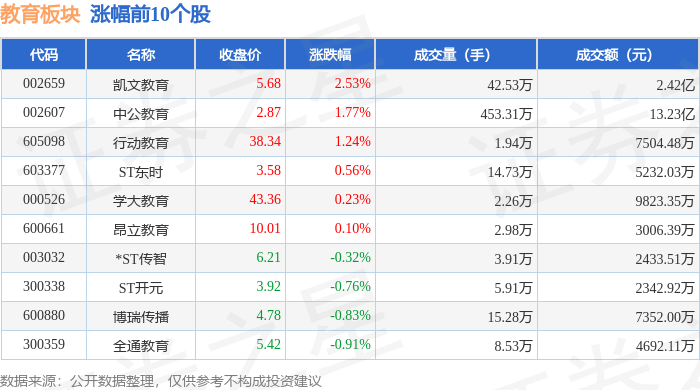
教育板块10月14日跌0.64%,中国高科领跌,主力资金净流入725.96万元
Zheng Xing Xing Ye Ri Bao· 2025-10-14 08:41
Market Overview - On October 14, the education sector declined by 0.64%, with China High-Tech leading the drop [1] - The Shanghai Composite Index closed at 3865.23, down 0.62%, while the Shenzhen Component Index closed at 12895.11, down 2.54% [1] Individual Stock Performance - Kevin Education (002659) closed at 5.68, up 2.53% with a trading volume of 425,300 shares and a turnover of 242 million yuan [1] - Zhonggong Education (002607) closed at 2.87, up 1.77% with a trading volume of 4,533,100 shares and a turnover of 1.323 billion yuan [1] - China High-Tech (600730) closed at 8.08, down 4.04% with a trading volume of 179,200 shares and a turnover of 148 million yuan [2] - Dou Shen Education (300010) closed at 7.49, down 2.22% with a trading volume of 757,300 shares and a turnover of 578 million yuan [2] Capital Flow Analysis - The education sector saw a net inflow of 7.2596 million yuan from institutional investors, while retail investors experienced a net outflow of 6.8507 million yuan [2][3] - Major stocks like Zhonggong Education had a net inflow of 18.4 million yuan from institutional investors, but a net outflow of 58.9373 million yuan from retail investors [3] - Kevin Education experienced a net inflow of 15.4896 million yuan from institutional investors, while retail investors had a net outflow of 10.2938 million yuan [3]





世界老乡@义乌丨我在中国当老师!墨西哥姑娘说这里是她第二个家
Zhong Guo Xin Wen Wang· 2025-10-14 08:12
来自墨西哥的茉莉,从没想过自己会来到义乌,在这里生活并爱上这里。作为一名西班牙语教师,她把 热爱变成了事业,架起了文化交流的"桥梁"。这些年,茉莉不仅见证了学生的成长,也见证了义乌的发 展。她说:"义乌,早已成为自己的第二个家"。 ...
港股午评|恒生指数早盘跌0.2% 航运股逆市走高
智通财经网· 2025-10-14 04:10
Group 1: Market Overview - The Hang Seng Index fell by 0.20%, down 52 points, closing at 25,837 points, while the Hang Seng Tech Index dropped by 1.3% [1] - The early trading volume in the Hong Kong stock market reached HKD 188.8 billion [1] Group 2: Banking Sector - Most bank stocks rose, with expectations of stable annual performance and increased attractiveness of dividend value; China Merchants Bank rose by 4.26%, Chongqing Bank by 3%, and CITIC Bank by 2.49% [1] Group 3: Shipping Sector - Shipping stocks experienced a broad increase, with expectations that the mutual port fees between China and the U.S. will boost freight rates; DeXiang Shipping rose by 5% and Orient Overseas International by 2% [1] Group 4: Solar Industry - Solar stocks saw gains, with recent developments indicating a reduction in internal competition and Chinese solar companies securing overseas contracts; Xinyi Solar rose by 5.7%, Flat Glass Group by 6%, and GCL-Poly Energy by 4.8% [1] Group 5: Education Sector - Fenbi (粉笔) stock rose over 3% following the relaxation of age restrictions for national exams, with institutions optimistic about the potential growth of AI-based exam preparation classes [2] Group 6: Alcohol Industry - Zhenjiu Li Du (珍酒李渡) stock increased by over 6% as Tang Xiangyang took over as CEO, overseeing core brand operations [3] Group 7: Semiconductor Sector - Semiconductor stocks opened high but fell; Huahong Semiconductor dropped by 10% and SMIC by over 6%, with analysts noting that recent events involving Wentai Technology may temporarily impact market sentiment [3] Group 8: Securities Sector - Yaocai Securities (耀才证券金融) experienced a decline of over 9% after a previous surge of 34%, following the approval of Ant Group's acquisition by the Hong Kong Securities and Futures Commission [4] Group 9: Chemical Sector - Dongyue Group (东岳集团) fell by over 7% due to declining prices of silicone products, with its subsidiary reporting a profit drop of up to 97% in the first three quarters [5] Group 10: Gaming Sector - Gaming stocks continued to decline, with Melco International Development down by over 5% and Sands China by over 4% [6]