航空航天

Search documents
吴世春:什么样的初创企业更容易融到钱
创业家· 2025-12-30 10:01
Core Viewpoint - The current investment landscape emphasizes the importance of a solid business model, experienced founders, and validated projects rather than just appealing business plans and presentations [2][3][23]. Group 1: Investment Criteria - Startups that attract investment must align with national trends and address real industry problems, rather than merely following popular trends [4][6][9]. - Founders should be experienced veterans rather than just charismatic speakers, as the team's capability is crucial for success [11][14][15]. - Projects need to demonstrate validation through tangible products, customer interest, and solid data on customer acquisition costs and profit margins [17][20][22]. Group 2: Changing Investment Logic - The investment focus has shifted from future potential and visionary ideas to current realities and practical implementations [24]. - Investors are now more interested in the execution capabilities and resilience of founders rather than their educational backgrounds or past achievements [25][26].


所有的大企业,都起源于小业务
创业家· 2025-12-30 10:01
Core Viewpoint - The article emphasizes the importance of focusing on one's own business and industry, highlighting that even small enterprises can grow into great companies through perseverance and continuous learning [1]. Group 1: Event Overview - The event led by Wu Shichun will take place from January 22 to 24, 2026, focusing on the technology manufacturing industry and digital tourism experience [5]. - Participants will engage in deep exchanges with unicorn companies and investors, aiming to occupy key positions in the industrial chain and build a collaborative ecosystem [8]. - The event promises immersive learning experiences, covering topics from technological innovation to commercialization strategies [8]. Group 2: Featured Speakers and Companies - Wu Shichun, a well-known angel investor and founder of Meihua Venture Capital, has managed over 10 billion in funds and invested in more than 600 companies, with 13 companies going public [10]. - Tianjin Yun Yao Aerospace Technology Co., Ltd. is highlighted as a leading company in the domestic commercial meteorological satellite service sector, having successfully launched 47 commercial meteorological satellites, the highest in the country [13]. Group 3: Agenda Highlights - Day 1 includes participant registration, a welcome dinner, and a private sharing session titled "Poker Entrepreneurship Insights" [15]. - Day 2 features a lecture by Wu Shichun on "The Next Stop for Technological Innovation and Industrial Breakthroughs," along with a visit to the Terracotta Army [16]. - Day 3 includes a peak dialogue with Wu Shichun, a case study on opportunities and challenges in commercial applications of aerospace, and project presentations with one-on-one feedback from mentors [16]. Group 4: Target Industries - The event targets various sectors, including robotics, smart manufacturing, low-altitude economy, aerospace, hard technology, and new materials [17][18][19][20][21].

观网2025年中国十大科技新闻,“西方科学霸权不再无人挑战”
Guan Cha Zhe Wang· 2025-12-30 09:51
Core Insights - China's contribution to applied sciences reached a score of 22,261, accounting for 56% of global output, significantly surpassing the United States' 4,099 points at 10% [1] - The dominance of Chinese research institutions in the top thirty positions has raised global awareness and highlighted a shift in scientific leadership [1] Group 1: AI Developments - The release of the DeepSeek R1 model marks China's entry into the top tier of global AI, surpassing OpenAI in several authoritative tests and achieving the top position in app store rankings [2] - DeepSeek's open-source model and competitive pricing (1%-3.6% of competitors) have disrupted the global AI landscape, demonstrating China's capability to lead in AI innovation [4] Group 2: Drone Technology - The issuance of the first operational certificates for manned drones in China signifies the country's leadership in the low-altitude economy, opening up a trillion-level market [5] - The successful flight of the TP1000 unmanned transport aircraft represents a significant advancement in logistics capabilities, with a payload of 1,000 kg and a range of 1,000 km [14] Group 3: Space Exploration - The successful launch of the Tianwen-2 probe initiates China's first asteroid sampling mission, enhancing its deep space exploration capabilities [8] - The launch of the "Three-Body" satellite constellation establishes the world's first space computing network, aiming to revolutionize data processing methods [11] Group 4: Energy Research - The EAST nuclear fusion experiment achieved a record operation time of 1,066 seconds, marking a significant advancement in fusion energy research [17] - The successful operation of the Jiangmen neutrino experiment represents a major milestone in particle physics, aiming to uncover fundamental questions about the universe [25] Group 5: Space Safety and Infrastructure - The Shenzhou-22 spacecraft's readiness for emergency launch reflects the maturation of China's manned space safety system, enhancing astronaut safety during missions [28] - The completion of the second phase of the Meridian Project enhances China's capabilities in space environment monitoring, contributing to global space governance [19]

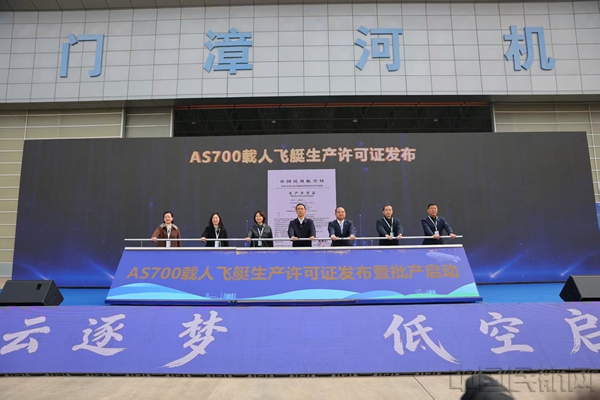
“祥云”AS700取得首张国产载人飞艇生产许可证
Zhong Guo Min Hang Wang· 2025-12-30 06:03
Core Insights - The successful acquisition of the first domestic manned airship production license (PC certificate) by the AS700 airship marks a significant milestone in China's low-altitude economy and paves the way for mass production and commercial operation of domestically developed airships [1][3]. Group 1: Production Milestone - The AS700 airship has officially entered the mass production phase following the issuance of the PC certificate by the Civil Aviation Administration of China (CAAC) [1][3]. - This achievement is a result of rigorous quality control and a commitment to production standards by the research and manufacturing team [3]. Group 2: Development and Testing - The AS700 airship previously obtained the Type Certificate (TC) in December 2023, completing over 187 test flights and accumulating 602 hours of safe flight time [3][5]. - A comprehensive quality control system has been established, covering all processes from raw material procurement to final inspection [3][5]. Group 3: Economic Impact - The establishment of a full-chain system for the development, production, testing, and service of manned airships supports the entry of the AS700 into the trillion-level low-altitude economy [5]. - The mass deployment of the AS700 airship is expected to enhance the civil aviation manufacturing ecosystem and provide innovative solutions for low-altitude tourism, urban security, and cultural consumption [5].
18个专班攻坚,推动立园满园新成效
Xin Lang Cai Jing· 2025-12-30 04:38
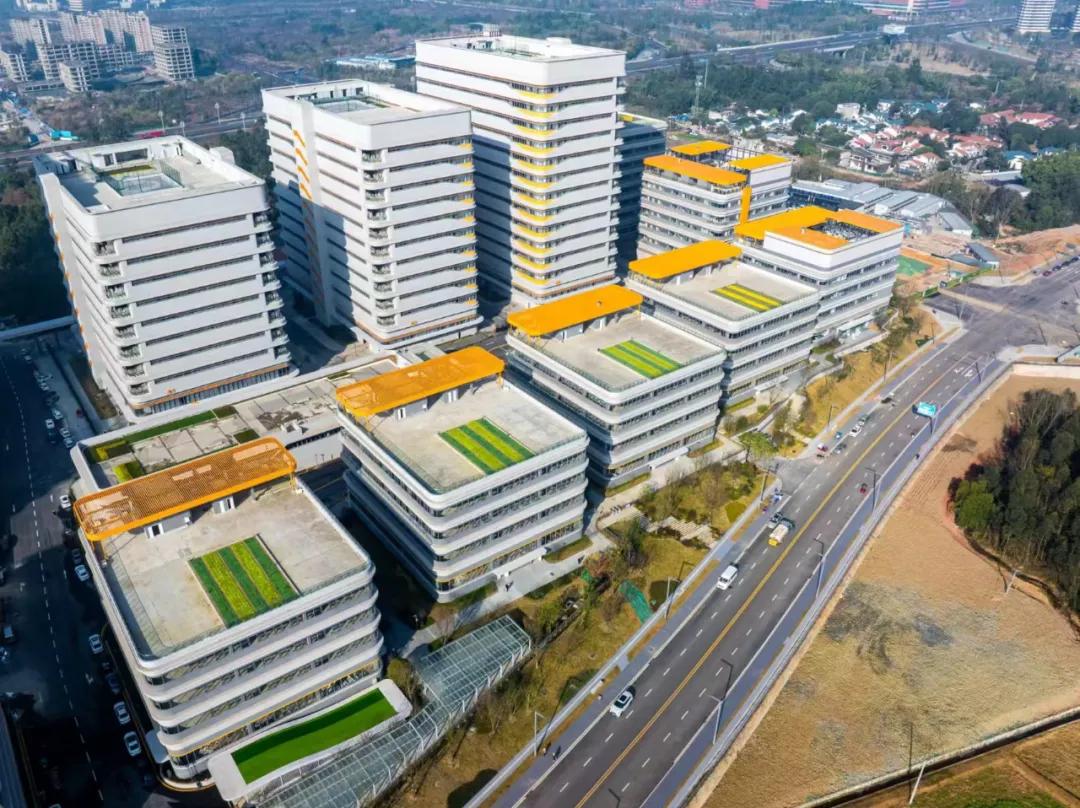
Core Viewpoint - The article highlights the successful collaboration between Chengdu Tian Investment Group and various enterprises, particularly focusing on the integration of the semiconductor industry in the Sichuan Tianfu New Area, showcasing effective strategies for attracting and supporting businesses [1][4][19]. Group 1: Project Development and Investment Attraction - Chengdu Tian Investment Group is actively promoting the Fengqi Valley Technology Innovation Industrial Park, which has attracted Jiangsu-based semiconductor company Jia Zhao Electronics, leading to significant industrial growth in the region [1][3]. - The first phase of the Fengqi Valley Technology Innovation Industrial Park has commenced production, with an expected annual output value exceeding 2 billion yuan (approximately 0.3 billion USD) upon full completion [3]. - The group employs a "six ones" working method, establishing a four-level linkage mechanism to enhance collaboration and efficiency in attracting quality enterprises [4][6]. Group 2: Trust and Communication with Enterprises - The investment team from Chengdu Tian Investment Group emphasizes sincerity and problem-solving capabilities during site visits to potential enterprises, which has been crucial in building trust [6][10]. - The team has been responsive to enterprise needs, facilitating 120 million yuan (approximately 17 million USD) in investments and addressing concerns related to supply chain and employee welfare [6][10]. Group 3: Comprehensive Enterprise Support - Chengdu Tian Investment Group has transitioned from a "recruiter" to an "operator," focusing on the entire lifecycle of enterprise support, including regular visits to understand and address their challenges [7][12]. - The group has implemented a dual service model, providing tailored support to meet various enterprise needs, including housing and transportation solutions for employees [10][12]. Group 4: Industrial Ecosystem and Policy Innovation - The industrial park strategy focuses on specific sectors, creating a strong magnetic effect that attracts related businesses and talent, enhancing the overall ecosystem [13][19]. - Chengdu Tian Investment Group has introduced dynamic pricing mechanisms for rent and has provided over 68 million yuan (approximately 9.5 million USD) in rental discounts to 41 recognized enterprises, encouraging new business signings [13][19]. Group 5: Future Development Goals - The ultimate goal is to achieve "full park" and "full production" status, with ongoing efforts to enhance industrial development and collaboration within the Sichuan Tianfu New Area [15][17]. - The group is exploring innovative funding models and talent development strategies to ensure sustainable growth and competitiveness in key industries such as artificial intelligence and aerospace [17][19].
航空航天概念股早盘表现亮眼,航空航天ETF天弘(159241)标的指数涨约2%,商业航天有望迎来具备规模化商业价值的产业变革
Mei Ri Jing Ji Xin Wen· 2025-12-30 04:06
Group 1 - The A-share market saw a strong performance in the aerospace sector, with notable gains in stocks such as Aerospace Development rising over 9%, China Satellite and Guobo Electronics over 8%, and AVIC Heavy Machinery over 7% [1] - The Tianhong Aerospace ETF (159241) tracked the aerospace industry index, which opened low but rose approximately 2%, reaching a new high in this market cycle [1] - The Shanghai Stock Exchange recently issued guidelines to encourage commercial rocket enterprises to innovate in key technologies, aiming to enhance the inclusiveness and adaptability of the regulatory framework to support the development of the commercial aerospace sector [1] Group 2 - The Tianhong Aerospace ETF (159241) focuses on aerospace equipment, domestic large aircraft, low-altitude economy, and military information technology, with 99% of its index constituents belonging to the defense and military industry, indicating a higher purity and investment value compared to other military indices [2]
重大利好!万亿“航母级”国家引导基金来了!生物制造将大爆发
合成生物学与绿色生物制造· 2025-12-30 02:54
Core Viewpoint - The National Venture Capital Guidance Fund aims to systematically promote China's biomanufacturing industry from a follower to a leader in key areas, establishing it as a core pillar of new productive forces [2]. Group 1: Fund Structure and Scale - The National Venture Capital Guidance Fund will utilize long-term special treasury bond funds, with a total fiscal contribution of 100 billion yuan at the national level, encouraging social capital participation to form a fund scale of one trillion yuan [5]. - The fund will attract participation from local governments, central enterprises, financial institutions, and private capital, focusing on strategic emerging industries and future industries [5][6]. - The fund will be structured in a three-tier architecture: "Fund Company - Regional Fund - Sub-Fund" [7]. Group 2: Investment Focus and Strategy - The fund will prioritize early-stage investments, focusing on seed, startup, and early-mid stage enterprises, with a long-term investment horizon of 20 years [8][16]. - It will adopt a "4 investment" approach: investing early, investing small, investing long-term, and investing in hard technology [10][16]. - The fund will not directly manage daily operations, ensuring market-oriented management through competitive selection of experienced fund management institutions [9]. Group 3: Regional Funds and Projects - The first three regional funds (Beijing-Tianjin-Hebei, Yangtze River Delta, and Guangdong-Hong Kong-Macao Greater Bay Area) are expected to exceed 50 billion yuan each and have already signed investment intentions with 49 sub-funds and 27 direct investment projects [11][12]. - The regional funds will focus on early projects and seed enterprises in fields such as integrated circuits, artificial intelligence, aerospace, low-altitude economy, biomanufacturing, and future energy [6][12]. Group 4: Long-term Vision and Goals - The fund aims to cultivate "small giants" and "unicorns" across various industries by providing patient capital and supporting original and disruptive technological breakthroughs [8][16]. - It will address the long-term capital shortage in the venture capital industry and promote reform and innovation in the industry through a comprehensive service platform [9].

安徽省通航控股集团牵头低空飞行导航项目入选省级科技创新攻坚计划
Zhong Guo Min Hang Wang· 2025-12-30 02:03
Core Insights - The project "Research and Application of Beidou Anti-Interference High-Precision Intelligent Navigation System for Low-Altitude Flight" led by Anhui Tonghang Holding Group has been selected for the 2025 Anhui Provincial Science and Technology Innovation Plan, aiming to develop a robust navigation system for low-altitude applications such as drone logistics and emergency rescue [1][2] Group 1 - The project focuses on addressing key technical challenges in low-altitude navigation, particularly in complex electromagnetic environments, to enhance navigation accuracy and reduce interference [1] - Collaboration involves Anhui Tonghang Holding Group, Chinese Academy of Sciences, Anhui University, and Yujing Technology, pooling resources in Beidou navigation, anti-jamming algorithms, intelligent perception, and low-altitude operation management [1] - Successful completion of expert reviews, integrity checks, and public disclosure processes has been achieved, indicating a thorough evaluation and approval process [1] Group 2 - The project team plans to establish a joint laboratory to accelerate the development of key technologies and demonstration applications, aiming to create a replicable technology system and application model by 2027 [2] - The initiative is expected to inject new technological momentum into the high-quality development of low-altitude economy in Anhui and nationwide [2]
多举措助力产业科技创新能力提升
Ren Min Ri Bao Hai Wai Ban· 2025-12-30 01:50
Core Insights - The article emphasizes the importance of applying technological innovations to specific industries and supply chains to enhance industrial competitiveness. The recent national industrial and information technology conference outlined key initiatives for 2026 aimed at accelerating the transformation of technological innovations into productive forces, signaling a deep integration of technological and industrial innovation [1]. Group 1: Focus on Core Technologies - The conference highlighted the need to "overcome a batch of core technologies that drive industrial development," indicating a strong focus on innovation guided by industrial needs and applications. This approach is crucial for building a modern industrial system [2]. - The strategy involves targeting current needs for "precision" innovation while aligning with broader industrial transformation trends. Strengthening key common technologies, frontier leading technologies, modern engineering technologies, and disruptive technology innovations is essential for establishing a solid technological foundation for industrial development [2]. Group 2: Manufacturing Pilot Platforms - China has established over 2,400 pilot platforms for manufacturing in recent years. Statistics show that the industrialization success rate of technological achievements verified through pilot testing can reach over 80%, compared to only 30% for those that have not undergone such validation [3]. - The conference called for enhancing high-level manufacturing pilot platforms and emphasized the creation of a national manufacturing pilot service network that encourages multi-party participation and resource sharing, aiming to address the "last mile" challenge in technology transfer [3]. Group 3: Market-Oriented Technology Transfer - The conference proposed a "pay after use" reform pilot for technology achievements by 2026, aimed at lowering the barriers for technology transfer and reducing innovation risks for enterprises. This initiative is expected to increase the willingness and motivation of companies to engage with technological innovations [4]. Group 4: Cultivating New Industries - The focus on new industries includes the development of emerging pillar industries such as integrated circuits, new displays, new materials, aerospace, low-altitude economy, and biomedicine. Support for artificial intelligence breakthroughs and the orderly launch of satellite IoT commercial trials are also highlighted [5]. - The Ministry of Industry and Information Technology plans to nurture high-quality enterprises, including new "little giant" companies and manufacturing champions, while also addressing overdue payments to businesses and creating public service demonstration platforms for small and medium-sized enterprises [5].
商业火箭企业IPO细则正式发布!航空航天ETF天弘(159241)跟踪指数昨日收涨1.44%,盘中交易价格连续3日创新高!
Sou Hu Cai Jing· 2025-12-30 01:32
Core Insights - Aerospace ETF Tianhong (159241) has reached a new high in trading price for three consecutive days, with a turnover rate of 15.98% and a transaction volume of 100 million yuan, indicating active market trading [1] - The CN5082 index tracking the aerospace industry has risen by 1.44%, with significant gains in constituent stocks such as Aerospace Development (000547) up 10.01%, China Satellite (600118) up 10.00%, and Aerospace Technology (688239) up 8.42% [1] - As of December 29, the latest scale of Aerospace ETF Tianhong (159241) has reached 624 million yuan, marking a new high since its establishment [1] Product Highlights - The capital market is expected to maintain high activity levels, with explosive growth in revenue and net profit for the aerospace industry in Q3, indicating increased industry prosperity [1] - Investors are advised to focus on Aerospace ETF Tianhong (159241) to seize investment opportunities in the aerospace sector [1] Hot Events - On December 26, the Shanghai Stock Exchange released guidelines for the fifth set of listing standards for commercial rocket enterprises on the Sci-Tech Innovation Board, effective immediately [2] - The guidelines specify that "successful launch of payload into orbit" is a core requirement for commercial rocket companies seeking to list, providing clear review criteria for several companies aiming for an IPO [2] Institutional Views - CITIC Securities believes that the release of the listing standards for commercial rocket enterprises marks the formal opening of the capital market channel for these companies, with clear standards set [3] - Emphasis on "undertaking national tasks, participating in national engineering projects," and "reusable technology" is expected to accelerate the IPO process for leading private commercial rocket companies [3] - The industrialization of commercial rockets, as the "transportation base" of commercial space, will directly drive demand in satellite manufacturing, ground equipment, and space applications [3]