
渔业

Search documents
农业农村部:中国海洋渔业资源衰退势头得到遏制
Zhong Guo Xin Wen Wang· 2025-09-16 11:49
Core Viewpoint - The trend of decline in China's marine fishery resources has been effectively curbed, with a gradual recovery in the variety and quantity of aquatic biological resources in the Yangtze River [1][2] Group 1: Marine Fishery Resource Management - The Ministry of Agriculture and Rural Affairs emphasizes a sustainable development approach that balances protection and utilization of aquatic resources [1] - A nationwide fishing ban and a ten-year fishing moratorium in the Yangtze River have been implemented to allow aquatic species to reproduce and thrive [1] - Strict regulations on fishing activities are enforced, including controlled fishing intensity and pilot programs for quota-based fishing to prevent overfishing [1] Group 2: Conservation Efforts - Special rescue action plans are in place for endangered species such as the Yangtze River dolphin and Chinese sturgeon, incorporating modern monitoring technologies like drones [2] - The government conducts large-scale restocking efforts, releasing over 30 billion fish in the previous year alone [2] - From 2021 to 2024, a total of 344 native fish species have been monitored in the Yangtze River basin, with an increase of 36 species compared to the pre-moratorium period [2]
海鲜来源难追踪?最新报告聚焦如何完善渔获物追溯体系
Nan Fang Du Shi Bao· 2025-09-16 11:01
南都讯 记者王玮 发自北京 9月16日,我国近海伏季休渔全面结束。近海捕捞渔业在保障民生和供应水 产品方面发挥着重要作用,但过度捕捞、海洋污染及栖息地破坏等因素已导致渔业资源严重衰退。 近年来,中国高度重视渔业资源保护与可持续利用,不断改革渔业管理措施,并逐步尝试推行渔获物可 追溯管理。然而,当前渔业管理体系的完善与政策落地仍面临诸多挑战,资源衰退态势尚未根本扭转。 为解决上述痛点,报告提出四项行动建议,助力中国构建"来源可追、去向可查、责任可究"的近海捕捞 渔获物可追溯体系。 在制度设计上,报告建议加强顶层设计与法律框架,出台电子化管理与跨系统数据互通的配套规定,填 补制度空白;优先在重点渔区和高价值物种中开展试点,稳步推进全链条可追溯。 在此背景下,近日发布的《中国近海捕捞渔获物追溯体系构建研究与行动建议》报告,旨在为中国建设 完善的近海渔获物可追溯体系提供参考,推动渔业可持续转型。 报告还建议实施差异化监管,根据物种和渔船规模分类管理,以降低合规成本,同时确保监管有效性。 该报告聚焦渔获物从捕捞到上岸阶段的可追溯管理。厦门大学南强特聘教授曹玲指出:"渔获物可追溯 管理至关重要。一套架构完整、执行有效的体 ...
19.4亿亩、1.75亿吨、7358万吨……“数”说百姓吃得更好、更健康 | 梳理↓
Yang Shi Wang· 2025-09-16 09:31
Core Insights - During the "14th Five-Year Plan" period, China has achieved dual improvements in both the quantity and quality of arable land [1][3] - The government has implemented a new round of land spatial planning, with strict assessments on arable land quantity, aiming for a national arable land area of 1.94 billion mu by the end of 2024, an increase of 28 million mu from 2020 [3] Group 1: Arable Land and Quality Improvement - Over 100 million mu of high-standard farmland has been built, with central government investment exceeding 700 billion yuan during the "14th Five-Year Plan" [5] - The average central government financial input per mu has increased to over 2,000 yuan since 2020, significantly enhancing agricultural production capacity [5] - The governance of degraded arable land is actively promoted, including infrastructure construction and protective farming practices [7][9] Group 2: Food Supply and Nutrition - China is accelerating the construction of a diversified food supply system to ensure not only sufficient food but also better and healthier nutrition for the population [10] - By the end of 2024, the total output of meat, eggs, and milk is projected to reach 175 million tons, an increase of 2.778 million tons or 18.8% from 2020 [12] - Per capita consumption of meat and poultry eggs in China has reached 72 kg and 25 kg respectively, both above the world average [15] Group 3: Aquaculture and Fisheries - The total output of aquatic products has reached 73.58 million tons by 2024, a growth of 12.3% from 2020, maintaining China's position as the world's largest producer of aquatic products for 36 consecutive years [18] - The development of ecological fisheries and comprehensive rice-fish farming is being actively promoted to enhance sustainable resource utilization [14] Group 4: Agricultural Infrastructure and Facilities - The area of facility agriculture has rapidly developed, reaching 40 million mu, with annual vegetable production achieving 200 million tons, ensuring year-round supply [19]

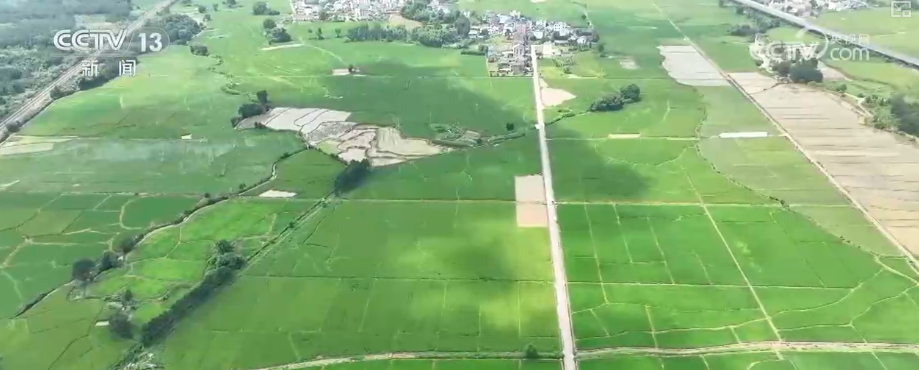
新华社权威速览·非凡“十四五”丨老百姓的餐桌:供给越来越多样 品类越来越丰富
Xin Hua Wang· 2025-09-16 09:27
Group 1: Agricultural Development - The agricultural sector is promoting a diversified food supply system by sourcing food from forests, grasslands, rivers, lakes, seas, and through facility agriculture, leading to a richer variety of food on consumers' tables [1] - The total output of meat, eggs, and dairy products reached 175 million tons by the end of last year, an increase of 27.78 million tons or 18.8% compared to 2020 [2] - Per capita consumption of meat and poultry eggs reached 72 kg and 25 kg respectively, both exceeding the global average [2] Group 2: Aquaculture and Fisheries - In 2024, the total output of aquatic products reached 73.58 million tons, representing a 12.3% increase since 2020 [4] - China has maintained its position as the world's largest producer of aquatic products for 36 consecutive years, with abundant supplies of fish, shrimp, crab, and shellfish [4] Group 3: Facility Agriculture - The area of facility agriculture has reached 40 million acres, with annual vegetable production exceeding 20 million tons [6] - The annual output of edible fungi has surpassed 42 million tons, accounting for 85% of global production [6] Group 4: Biotechnology in Agriculture - The agricultural sector is accelerating the development of biotechnology and bio-industries, leading to the emergence of new food products [8] - China is at the forefront of algae cultivation technology [8]

东方海洋9月16日现4笔大宗交易 总成交金额4521.53万元 溢价率为0.00%
Xin Lang Cai Jing· 2025-09-16 09:21
第1笔成交价格为2.85元,成交327.07万股,成交金额932.15万元,溢价率为0.00%,买方营业部为招商 证券股份有限公司深圳益田路免税商务大厦证券营业部,卖方营业部为华泰证券股份有限公司绍兴府山 证券营业部。 炒股就看金麒麟分析师研报,权威,专业,及时,全面,助您挖掘潜力主题机会! 9月16日,东方海洋收涨0.71%,收盘价为2.85元,发生4笔大宗交易,合计成交量1586.5万股,成交金 额4521.53万元。 进一步统计,近3个月内该股累计发生4笔大宗交易,合计成交金额为4521.53万元。该股近5个交易日累 计上涨4.40%,主力资金合计净流入313.17万元。 第2笔成交价格为2.85元,成交719.60万股,成交金额2,050.86万元,溢价率为0.00%,买方营业部为国 盛证券有限责任公司苏南分公司,卖方营业部为华泰证券股份有限公司绍兴府山证券营业部。 责任编辑:小浪快报 第3笔成交价格为2.85元,成交474.41万股,成交金额1,352.07万元,溢价率为0.00%,买方营业部为中 国中金财富证券有限公司烟台黄海路证券营业部,卖方营业部为华泰证券股份有限公司绍兴府山证券营 业部。 第 ...

农业农村部:海洋渔业资源衰退的势头得到遏制
Zhong Guo Xin Wen Wang· 2025-09-16 09:04
Core Viewpoint - The trend of decline in marine fishery resources in China has been effectively curbed through various sustainable development measures implemented by the Ministry of Agriculture and Rural Affairs [1][2]. Group 1: Sustainable Development Measures - The government emphasizes a balanced approach between protection and development, as well as production and ecology, to ensure sustainable high-quality development in fisheries [1]. - A nationwide fishing ban and seasonal fishing restrictions have been implemented, including a ten-year fishing ban in the Yangtze River, allowing aquatic species to recover during breeding and migration periods [1][2]. - Strict regulations on fishing activities have been established, including quota-based fishing to prevent overfishing and severe penalties for illegal practices such as electric fishing and poison fishing [1][2]. Group 2: Resource Enhancement Initiatives - The government conducts large-scale stocking of various fish and shrimp species in rivers and seas, with over 30 billion fish released in the previous year alone [1][2]. - The construction of "marine ranches" is being promoted to create artificial habitats for fish, supporting both ecological and recreational fisheries while advancing ecological restoration [2]. - Special protection plans are in place for endangered species such as the Yangtze River dolphin and Chinese sturgeon, utilizing modern monitoring technologies for effective conservation [2]. Group 3: Positive Outcomes - Efforts have led to a noticeable recovery in marine fishery resources, with the number of indigenous fish species in the Yangtze River increasing by 36 species from 2021 to 2024, totaling 344 species [2]. - The frequency of sightings of endangered species like the Yangtze River dolphin has also increased, indicating a positive trend in biodiversity recovery [2].
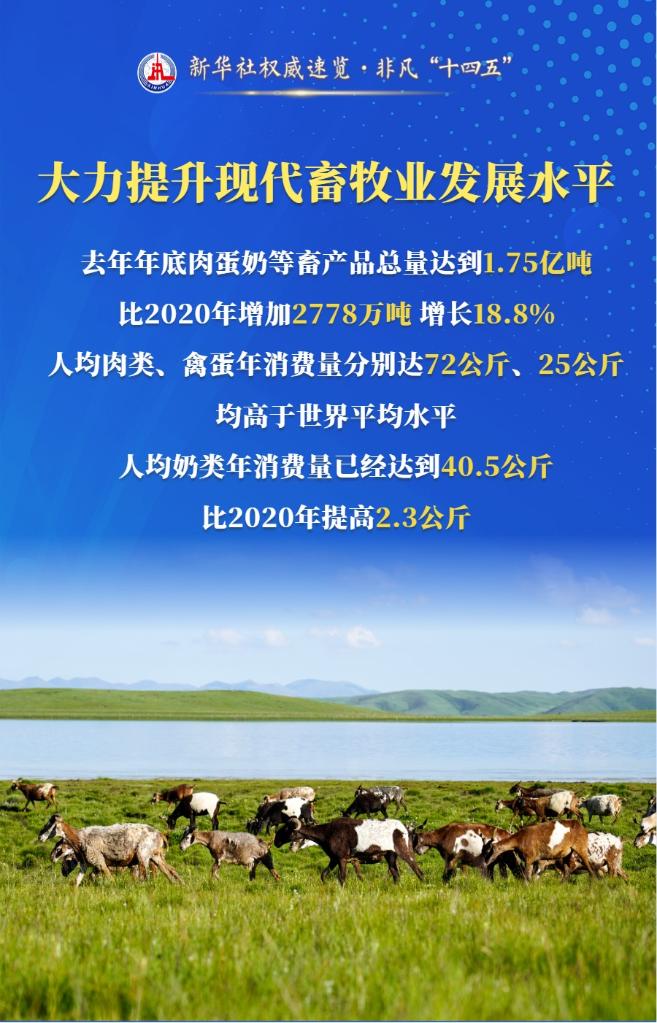
农业农村部:我国人均肉类、禽蛋年消费量分别达72公斤、25公斤 均高于世界平均水平
Qi Huo Ri Bao· 2025-09-16 08:53
Core Viewpoint - The Chinese government is making significant progress in diversifying food supply systems and enhancing agricultural development during the "14th Five-Year Plan" period, focusing on modern livestock, fisheries, facility agriculture, and biotechnology [1][2]. Group 1: Modern Livestock Development - The level of modern livestock development is being significantly improved, with a stable supply of livestock products. By the end of last year, the total output of meat, eggs, and milk reached 175 million tons, an increase of 27.78 million tons or 18.8% compared to 2020 [2]. - Per capita consumption of meat and poultry eggs in China reached 72 kg and 25 kg respectively, both exceeding the global average. Per capita dairy consumption also increased to 40.5 kg, up by 2.3 kg from 2020 [2]. Group 2: Modern Fisheries Development - The development of modern fisheries is being prioritized, with a focus on sustainable use of fishery resources, ecological fisheries in large water bodies, and deep-sea aquaculture, contributing to the creation of a "blue granary" [2]. Group 3: Facility Agriculture Development - Facility agriculture is rapidly advancing, with the area of facility crops reaching 40 million acres and annual vegetable production exceeding 20 million tons, achieving year-round balanced supply [2]. Group 4: Expansion of Agricultural Development Space - The agricultural sector is expanding from traditional crops and livestock to a wider range of biological resources, accelerating the development of biotechnology and new food products through breakthroughs in key technologies [2]. Group 5: Nutritional Improvement - The nutritional health levels of food consumed by urban and rural residents are approaching those of developed countries, indicating that the population is not only well-fed but also has access to healthier and more nutritious food [3].
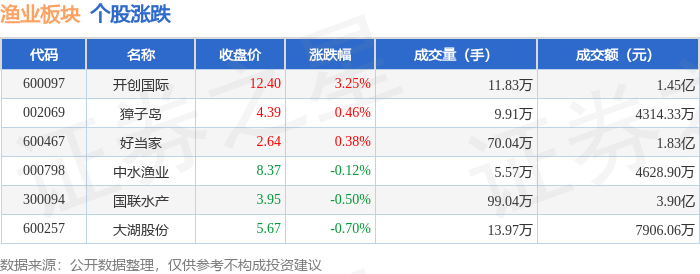
渔业板块9月16日涨0.39%,开创国际领涨,主力资金净流出5250.82万元
Zheng Xing Xing Ye Ri Bao· 2025-09-16 08:39
| 代码 | 名称 | 主力净流入 (元) | 主力净占比 游资净流入 (元) | | 游资净占比 散户净流入 (元) | | 散户净占比 | | --- | --- | --- | --- | --- | --- | --- | --- | | 600097 | 开创国际 | 1572.54万 | 10.85% | -154.74万 | -1.07% | -1417.80万 | -9.78% | | 000798 中水渔业 | | 7.81万 | 0.17% | -367.62万 | -7.94% | 359.81万 | 7.77% | | 002069 | 猿子岛 | -648.44万 | -15.03% | 387.94万 | 8.99% | 260.50万 | 6.04% | | 600257 | 大湖股份 | -812.99万 | -10.28% | -350.37万 | -4.43% | 1163.36万 | 14.71% | | 600467 | 好当家 | -905.64万 | -4.95% | -882.30万 | -4.82% | 1787.94万 | 9.77% | | 300094 | ...

高质量完成“十四五”规划丨“十四五”时期我国加快构建多元化食物供给体系
Xin Hua Wang· 2025-09-16 08:09
Group 1 - The core viewpoint of the articles emphasizes China's commitment to ensuring food security and enhancing the diversity of food supply during the "14th Five-Year Plan" period [1][2] Group 2 - The Ministry of Agriculture and Rural Affairs has introduced measures to strengthen food security, including increasing grain yield and implementing a large-scale production enhancement initiative [1] - By 2024, China's grain yield per mu is expected to reach 394.7 kg, an increase of 12.5 kg compared to the end of the "13th Five-Year Plan," with single yield contributing over 60% to the growth of grain production [1] - The total grain production in China is projected to exceed 1.4 trillion jin by 2024, an increase of 74 billion jin from 2020, ensuring basic self-sufficiency in grains and absolute safety in staple food [1] Group 3 - By the end of 2024, the total output of meat, eggs, and dairy products in China is expected to reach 175 million tons, an increase of 18.8% from 2020 [2] - The per capita annual consumption of meat and poultry eggs in China is projected to reach 72 kg and 25 kg, respectively, both exceeding the global average [2] - The total output of aquatic products in China is expected to reach 73.58 million tons by 2024, marking a 12.3% increase from 2020, maintaining the country's position as the world's largest producer for 36 consecutive years [2] Group 4 - The area of facility agriculture in China is expected to reach 40 million mu, with the annual output of facility vegetables exceeding 20 million tons [2] - The nutritional intake of urban and rural residents in China is approaching that of developed countries, indicating improved dietary quality and health [2] - The overall message conveys that the Chinese population is not only able to eat enough but also enjoys better and more nutritious food [2]
香港特区政府欢迎世贸组织《渔业补贴协定》正式生效
Zhong Guo Xin Wen Wang· 2025-09-16 07:37
Core Points - The Hong Kong SAR government welcomes the official implementation of the WTO's Fisheries Subsidies Agreement, which took effect on September 15, 2023 [1] - The agreement marks a significant step towards sustainable ocean development and highlights the WTO's role in addressing global issues [1] - The agreement regulates fisheries subsidies among WTO members, promoting sustainable fishing practices and reducing harm to marine and global fish resources [1] - The implementation of the agreement is expected to benefit trade, development, and the environment [1] Summary by Sections - **Agreement Details** - The Fisheries Subsidies Agreement was adopted at the WTO's 12th Ministerial Conference in June 2022 and opened for member accession thereafter [1] - China approved the agreement on June 27, 2023, becoming one of the early major members to complete the ratification process [1] - **Regulatory Aspects** - The agreement requires the elimination of subsidies for illegal, unreported, and unregulated fishing, as well as for overfished species and unregulated high seas fishing [1] - It incorporates elements of fisheries management such as enforcement, resource sustainability assessment, policy transparency, and international cooperation [1] - **Local Implementation** - Following the acceptance of the agreement in August 2023, the Hong Kong SAR government's Agriculture, Fisheries and Conservation Department has made appropriate adjustments to relevant fisheries subsidy and support program guidelines [2]