旅游业

Search documents
超828万人次 前11个月上海接待入境游客同比增近四成 入境游市场重回高速增长轨道
Jie Fang Ri Bao· 2025-12-31 01:47
Core Insights - Shanghai's inbound tourism market is experiencing rapid growth, with a total of 8.2824 million inbound tourists from January to November, representing a year-on-year increase of 38.84%. The total number of inbound tourists for the year is expected to surpass the peak of 2019 [1] Group 1: Tourism Experience - Shanghai offers a diverse culinary experience, featuring local dishes and international cuisines, allowing tourists to enjoy a rich and varied food culture [1] - The city provides a wide range of accommodation options, from luxury hotels to budget-friendly choices, enhanced by technology such as AI translation devices to assist international visitors [1] Group 2: Transportation Advantages - Shanghai's transportation infrastructure includes two major international airports and a comprehensive city transport network, making it easy for international tourists to navigate the city [2] - Unique transportation experiences, such as the magnetic levitation train and double-decker sightseeing buses, contribute to the overall urban tourism experience [2] Group 3: Shopping and Entertainment - The commercial appeal of Shanghai attracts international tourists, with popular shopping areas and services tailored to foreign visitors, such as Korean language support in local supermarkets [3] - The city's vibrant entertainment scene, including concerts, theater performances, and cultural exhibitions, enriches the travel experience and showcases China's cultural heritage [3]
2025年科尔尼行业系列回顾|零售
科尔尼管理咨询· 2025-12-31 01:29
Core Insights - The retail industry is transitioning from "traffic and price competition" to "value creation and efficiency realization" by 2025, with a focus on rational consumption and deeper user relationships [1] Group 1: Fresh Produce Value Transformation - Fresh produce retail maintains high growth but faces widespread losses, necessitating a shift from scale expansion to value competition driven by supply chain efficiency, category structure, and operational capabilities [2][4] Group 2: Rise of Efficient Retail - The return to rational consumption is pushing retail from "large and comprehensive" to "small and refined," with membership and discount stores becoming key carriers of efficient retail through quality-price ratio and human-centric experiences [5] Group 3: Sports Business Monetization - The sports industry is moving from sentiment-driven to value management, with event IP, broadcasting, and gambling forming the core value pool, where commercial success relies on systematic layout of growth levers and operational efficiency [6] Group 4: Revival of Physical Experience - Physical retail is not dying but is reshaping growth logic through "small and beautiful" stores, modular design, and immersive experiences, with fashion and beauty sectors leading the store upgrade [8] Group 5: Consumer Sentiment Dullness - Consumers are not collapsing under pressure but are developing "tolerance" for uncertainty, indicating that retail growth hinges on alleviating long-term emotional fatigue and experience monotony [10] Group 6: Sustainable Tourism Industry Transformation - The tourism industry is shifting from merely pursuing scale and foot traffic to a core development path centered on "regenerative growth," balancing economic value with environmental protection, cultural heritage, and community win-win [13] Group 7: Reconstruction of Tourism Retail - Global traveler numbers are recovering, but tourism retail growth is lagging, with a decline in per capita spending evolving from short-term fluctuations to structural imbalances, necessitating a reconfiguration of products, experiences, and operational models to regain consumer appeal [16] Group 8: Active Membership Management - Membership systems are evolving from rule-driven passive management to proactive management centered on data, emotions, and scenarios, becoming a key engine for leveraging existing and ecological growth [17][18]


中国旅游市场步入稳态繁荣阶段 2024年旅游及相关产业增加值58631亿
Chang Jiang Shang Bao· 2025-12-30 23:14
2024年旅游业增加值达53546亿 国家统计局发布的数据显示,从内部构成看,2024年中国旅游业增加值为53546亿元,占旅游及相关产 业增加值比重为91.3%,比上年提高0.3个百分点。旅游相关产业增加值为5085亿元,占旅游及相关产业 增加值比重为8.7%,比上年下降0.3个百分点。综合计算,2024年中国旅游及相关产业增加值为58631亿 元,占国内生产总值的比重为4.35%。 稍早一些时候发布的《2025中国旅游业发展报告》显示,2024年中国国内旅游市场稳步进入稳态繁荣阶 段,总人次达56.15亿,同比增长14.80%;旅游总收入5.75万亿元,同比增长17.11%,消费增速高于人 次增速,彰显市场内生动力。消费端呈现鲜明升级特征:77.1%的城乡居民过去一年有出游经历,自由 行占比达79.7%,16—25岁青年与单身群体成为高频出游主力;游客需求从观光打卡转向深度体验,文 化沉浸、亲子互动与性价比受关注度显著提升,但排队、设施陈旧等仍是共性痛点。 目前,中国旅游业已进入从"有没有"到"好不好"的结构性升级阶段,需以新质生产力为引擎,从宏观调 控、部门管理、行业经营三方面协同发力。同时,区域与城市 ...
“生态账本”有效变现
Jing Ji Ri Bao· 2025-12-30 22:21
Core Viewpoint - The article discusses how Tonggu County in Jiangxi Province has successfully transformed ecological value into economic value through innovative systems, industry cultivation, financial support, and talent assurance, marking the 20th anniversary of the "Green Mountains and Clear Water are Gold and Silver Mountains" concept. Group 1: Ecological Value Transformation - Tonggu County has established the first county-level GEP (Gross Ecosystem Product) accounting system in Jiangxi, which quantifies ecological value into economic terms, addressing challenges in measuring, mortgaging, trading, and realizing ecological products [1][2]. - The GEP accounting system consists of a "1+3" framework, linking a county-level general ledger with detailed accounts at the town, village, and industry levels, allowing for precise ecological value assessment [2]. Group 2: Innovative Practices and Economic Growth - The first pilot village for GEP accounting, Ping Tian Village, demonstrated a per capita GEP of 262,000 yuan, leading to successful applications for green credit and the establishment of over 20 businesses [3]. - The "small class management" model encourages collaboration among government, leading enterprises, village collectives, and farmers, resulting in the circulation of 490,000 acres of forest land and a transaction amount of 450 million yuan [4]. Group 3: Industry Development and Economic Impact - Tonggu County has developed 73,000 acres of Huangjing (a medicinal plant) cultivation, generating an annual output value exceeding 300 million yuan, showcasing the potential of ecological industries [6]. - The bamboo industry has seen significant transformation, with the value of bamboo products increasing from 2,000 yuan to 10,000 yuan per ton through deep processing [8]. Group 4: Financial Innovations and Carbon Trading - The county has pioneered carbon trading in Jiangxi, with a carbon trading agreement valued at over 10 million yuan signed in December 2022, and has quantified carbon credits from 57,800 acres of forest land [10][11]. - Green finance has been activated through innovative "ecological asset pledge" models, leading to a green loan balance of 1.872 billion yuan by the third quarter of 2025 [12]. Group 5: Future Development and Challenges - The county aims to enhance its ecological and economic benefits through continuous innovation in financial products and talent cultivation, with a focus on sustainable development [16]. - The integration of ecological protection and economic growth is emphasized, with a commitment to transforming ecological value into tangible benefits for local communities [16].
在曼谷夜市邂逅市井浪漫,中国游客“点亮”泰国夜经济
2 1 Shi Ji Jing Ji Bao Dao· 2025-12-30 14:58
Group 1 - The article highlights the vibrant atmosphere of night markets in Thailand, which serve as a cultural hub for both locals and tourists, particularly Chinese visitors [1] - The introduction of a visa exemption agreement between China and Thailand has facilitated travel, allowing Chinese passport holders to stay in Thailand for up to 30 days without a visa [1] - Local businesses, especially food stalls, have seen a significant increase in Chinese customers, driven by social media exposure and the popularity of night markets [1] Group 2 - According to SCB EIC, the Thai government’s tourism stimulus measures and the resurgence of Chinese tourists are expected to lead to an increase in foreign tourist arrivals, projecting around 34.1 million visitors by 2026, up from 32.9 million in 2025 [2]
“旅选上海 超级元旦”打卡活动启幕
Guo Ji Jin Rong Bao· 2025-12-30 13:44
Core Insights - The "Travel Selection Shanghai Super New Year" event will take place from January 1 to 3, 2026, organized by the Shanghai Municipal and District Cultural and Tourism Bureaus, aiming to promote cultural tourism consumption during the New Year holiday [1] - The event will cover over 350 unique locations across 16 districts and the Lingang New Area, encouraging citizens and tourists to participate in a creative way to celebrate the New Year [1] - The initiative emphasizes "co-creation and sharing," generating an authoritative "Shanghai Must-Visit List for New Year" based on public participation, which will serve as a practical guide for visitors and enhance the branding of "Shanghai Culture" and "Shanghai Tourism" [1] Event Details - The event will feature diverse check-in points, including scenic spots, historical landmarks, trendy districts, and art venues, with unified signage, exclusive QR codes, and clear guidance provided at each location [1] - Participants can engage through Douyin (TikTok) by posting content with the hashtag TravelSelectionShanghaiSuperNewYear or by collecting stamps at physical locations [1] - Each district has planned unique thematic routes, such as Baoshan's "Welcome the New Year with the First Light of Wusongkou," Xuhui's "Binhai Art Exploration," and others, facilitating itinerary planning for citizens [1] Community Engagement - The event's highlight is the concept of "co-creation," allowing citizens to become not just participants but also promoters of Shanghai's cultural tourism, enhancing the credibility of tourism recommendations through genuine sharing [2] - The combination of "New Year check-ins" and a "strategy competition" enables participants to create practical tourism resources based on their experiences, whether they are ordinary citizens or travel enthusiasts [2] - After the event, data such as video views and check-in numbers will be used to generate the "Shanghai Must-Visit List for New Year," providing authoritative guidance for future tourism consumption [2]
2025年摩经济形势总体向好,贸易赤字进一步扩大
Shang Wu Bu Wang Zhan· 2025-12-30 10:46
Core Insights - Morocco's economy is projected to close 2025 with strong domestic demand, ongoing investment activities, and an expanding trade deficit [1] Economic Performance - Household consumption remains robust, with a low inflation rate of -0.3% as of November [1] - Remittances from overseas Moroccans have increased, contributing to rising consumer credit [1] - The third quarter saw the creation of 220,000 new jobs [1] - Government investment spending has increased, with equipment spending growing by 16.9% as of the end of November [1] - Foreign direct investment has improved, with investment amounts increasing by 28.2% as of the end of October [1] Sectoral Developments - Agricultural production is expected to benefit from favorable climate conditions for the 2025-2026 season, with dam water storage reaching 34.7% as of December 24 [1] - Agricultural exports increased by 7.3% as of the end of October [1] - Industrial activity shows mixed performance, with manufacturing output growing by 2.2% and mining increasing by 7.4% in the third quarter [1] - Electricity generation rose by 6.1% and cement sales increased by 10.6% as of the end of November [1] - The service sector continues to strengthen, with inbound tourism reaching 18 million visitors, a 14% year-on-year increase, and tourism revenue growing by 16.7% [1] Trade Dynamics - Despite positive domestic conditions, the trade deficit is under increasing pressure, with exports growing by 2.6% as of the end of October [2] - Key export sectors include phosphates and derivatives (up 16.7%), aerospace products (up 8.3%), and agricultural products and food (up 1.1%) [2] - Imports increased by 9.4%, with a notable decline in energy imports by 4.4% [2] - The trade deficit expanded by 19.6%, with the export coverage ratio dropping to 56.5% [2] - Foreign exchange reserves are sufficient to cover 5 months and 21 days of import needs [2]
香港旅议会:料香港圣诞游客同比增10% 相信元旦假期内地访港旅客人数理想
智通财经网· 2025-12-30 05:59
Group 1 - The Hong Kong tourism industry is expected to see a 10% year-on-year increase in visitor numbers during the Christmas period [1] - From December 25 to 27, daily visitor numbers are projected to reach record levels post-pandemic, ranging from 48,000 to nearly 51,000, with overseas tourists accounting for 32% [1] - The cancellation of the New Year's Eve fireworks due to a fire incident will not significantly impact tourism, as various events, including those at Hong Kong Disneyland and West Kowloon, will still attract visitors [1] Group 2 - The "Hong Kong Industrial Brand Tourism" initiative launched this month has been well-received, with the first group consisting of mainland tourists and a three-month reservation period still open [1] - The program aims to maintain a balance in visitor numbers, with activities tailored to different brands and factory designs, averaging two events per week with approximately 20 participants each [1]
2026品牌营销:不投“广告”,投资“生活”
Sou Hu Cai Jing· 2025-12-30 05:59
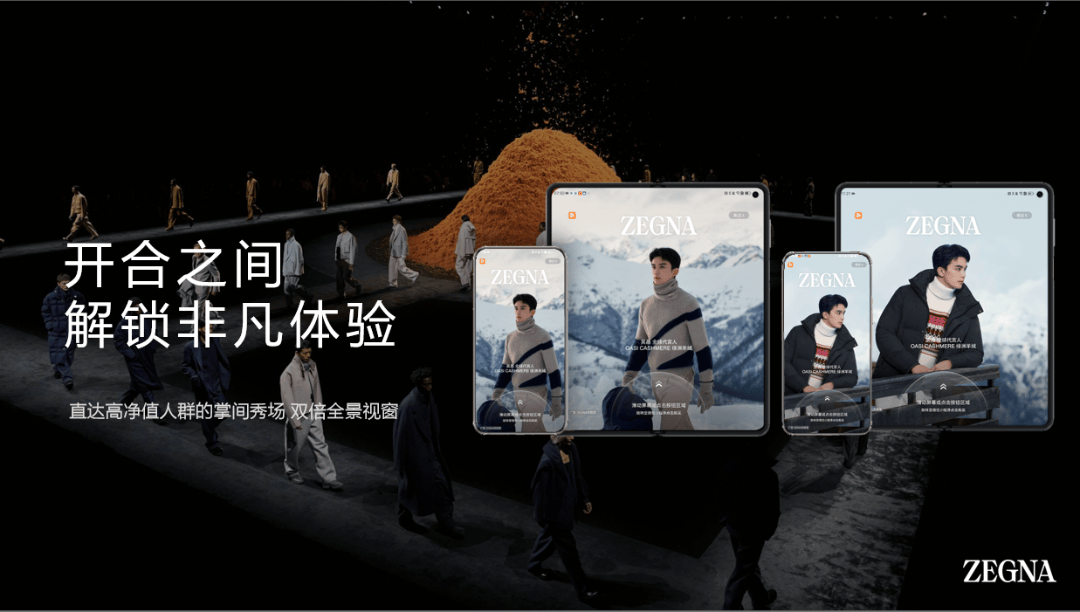
Core Insights - Marketing is undergoing a historic shift from chasing traffic to integrating into consumers' daily lives, as brands face growth anxiety amid a saturated market and changing consumer values [1] Group 1: Trends in Scene Revolution - Trend 1: Multi-Screen Interaction - Brands are creating continuous narratives across multiple screens to maintain user engagement, exemplified by ZEGNA's collaboration with Huawei to enhance user experience through immersive storytelling [2][3] - Trend 2: Content Customization - Brands are focusing on niche communities rather than broad audiences, using tailored content to build trust, as seen with Grab's travel show in China [9][11] - Trend 3: AI with Empathy - AI is being utilized to provide personalized and responsive services, transforming user interactions into meaningful experiences, demonstrated by Abu Dhabi Tourism's smart travel project [13][14] - Trend 4: Ecological Co-Creation - Brands are forming alliances to create a shared narrative ecosystem, as illustrated by the "Scar Advocacy" initiative involving multiple partners to address maternal health issues [17][19] Group 2: Marketing Evolution - The marketing landscape is shifting from disruptive advertising to seamless integration into daily life, emphasizing the importance of understanding consumer needs and emotions across various contexts [22][23] - Brands must enhance their internal value propositions while leveraging external partnerships to navigate the evolving marketing environment effectively [22][23]
均有提高!国家统计局发布2024年全国文化产业和旅游业数据
Xin Lang Cai Jing· 2025-12-30 04:39
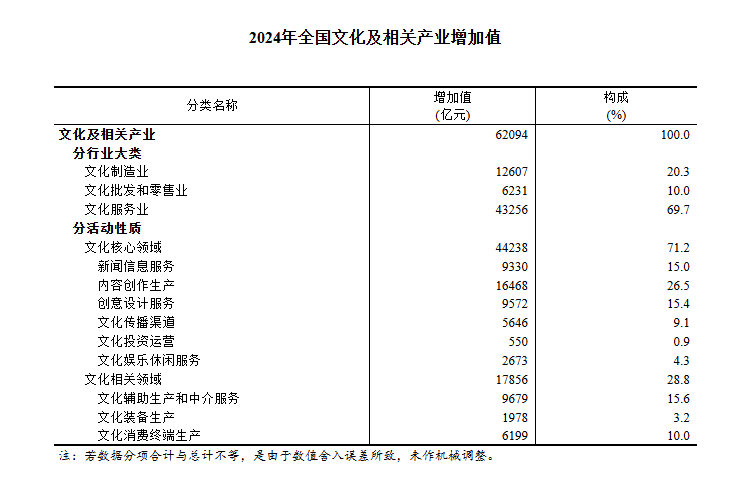
Core Insights - In 2024, the value added of the cultural and related industries in China is projected to be 62,094 billion yuan, accounting for 4.61% of the GDP, an increase of 0.02 percentage points from the previous year [1] - The value added of the tourism and related industries is expected to reach 58,631 billion yuan, representing 4.35% of the GDP, with a rise of 0.11 percentage points compared to the last year [1] Cultural and Related Industries - The cultural service industry is anticipated to contribute 43,256 billion yuan, making up 69.7% of the total value added in the cultural sector, an increase of 0.5 percentage points year-on-year [1] - The cultural manufacturing industry is expected to add 12,607 billion yuan, accounting for 20.3%, which is a decrease of 0.2 percentage points from the previous year [1] - The cultural wholesale and retail industry is projected to contribute 6,231 billion yuan, representing 10.0%, down by 0.3 percentage points from last year [1] - The core cultural sector is expected to generate 44,238 billion yuan, which is 71.2% of the cultural and related industries' total value added [2] Tourism and Related Industries - The tourism industry is projected to add 53,546 billion yuan, which constitutes 91.3% of the total value added in the tourism sector, an increase of 0.3 percentage points from the previous year [4] - The tourism-related industries are expected to contribute 5,085 billion yuan, accounting for 8.7%, which is a decline of 0.3 percentage points year-on-year [4] - Within the tourism sector, tourism shopping is anticipated to account for 35.1% of the total value added, with a contribution of 20,593 billion yuan [6]