智能汽车

Search documents
小米集团(1810.HK):全生态协同发力 盈利创历史新高
Ge Long Hui· 2025-08-23 02:40
Core Viewpoint - Xiaomi Group reported strong financial results for Q2 2025, with revenue of 115.96 billion RMB, a year-on-year increase of 30.5%, and adjusted net profit of 10.83 billion RMB, up 75.4% year-on-year, exceeding Bloomberg consensus expectations and setting historical highs [1] Group 1: Smartphone Performance - Xiaomi's smartphone revenue decreased by 2.1% year-on-year to 45.52 billion RMB, primarily due to a 2.7% decline in average selling price (ASP) to 1,073.2 RMB, partially offset by a 0.6% increase in shipment volume to 42.4 million units [1] - Despite an increase in high-end smartphone shipments in mainland China, the launch of the REDMIA5 series in April 2025 led to a decline in ASP in overseas markets, contributing to a 0.6 percentage point drop in smartphone gross margin to 11.5% [1] Group 2: IoT and Internet Services - IoT and lifestyle consumer products achieved revenue of 38.71 billion RMB in Q2, a year-on-year growth of 44.7%, setting a historical high, with a gross margin of 22.5%, up 2.8 percentage points year-on-year [2] - Internet services revenue reached 9.1 billion RMB, growing 10.1% year-on-year, with a gross margin of 75.4%, slightly down year-on-year but still a core profit contributor [2] - Global monthly active users increased to 731.2 million, up 8.2% year-on-year, supporting revenue growth in services [2] Group 3: Automotive Business - The company delivered 81,302 new vehicles in Q2, a historical high, with the Xiaomi YU7 series SUV achieving over 240,000 orders within 18 hours of launch, indicating strong market interest [2] - The vehicle models feature high-end configurations such as an 800V silicon carbide high-voltage platform and laser radar, with an ASP of 253,700 RMB, up 10.9% year-on-year, contributing to improved profitability [2] Group 4: Investment Outlook - The company's effective execution of its "high-end + full ecosystem + globalization" strategy led to another quarter of unexpected growth in Q2 2025, with short-term growth driven by YU7 vehicle deliveries and AIoT product launches [3] - Long-term growth potential is anticipated from the implementation of large model technology and the synergy of the "people, vehicle, home" ecosystem [3] - The company is assigned a target price of 62.3 HKD per share, indicating an upside potential of 18.6% from the recent closing price, maintaining a "buy" rating [3]

小米集团(1810.HK):2Q25汽车业绩表现亮眼 智能手机业务调整基本符合预期
Ge Long Hui· 2025-08-23 02:40
Group 1 - The core viewpoint of the articles highlights Xiaomi's strong performance in the automotive sector, with a significant increase in revenue and profit margins, while the smartphone business faces challenges due to ASP declines and rising component costs [1][2][3] Group 2 - In Q2 2025, Xiaomi reported revenues of 116 billion yuan and adjusted net profits of 10.8 billion yuan, meeting market expectations [1] - Automotive revenue grew by 40% year-on-year, with a gross margin reaching a historical high of 26.4%, driven by ASP growth and economies of scale [1] - Smartphone revenue declined by 2% year-on-year, primarily due to the impact of the REDMI A5 release on overseas ASP, while ASP in mainland China benefited from a higher proportion of high-end models [1] - AIOT revenue increased by 45% year-on-year, although gross margin decreased by 2.7 percentage points to 22.5% due to promotional activities [1] - The management maintains a sales target of 350,000 vehicles for the year, emphasizing the scale effects of the platform [1] Group 3 - In Q2 2025, 81,000 smart vehicles were delivered, with ASP increasing by 6.7% to 254,000 yuan, and adjusted net losses narrowed to 300 million yuan [2] - The automotive gross margin increased by 3.2 percentage points to 26.4% in Q2 2025, with forecasts for 2025/26 adjusted to 26.0% and 27.1% respectively [2] - The smartphone gross margin is expected to stabilize and recover with the release of new high-end models, despite a downward trend due to rising memory prices [2] Group 4 - The target price for Xiaomi has been lowered to 60 HKD, with revenue forecasts for 2025/26 adjusted to 483 billion and 605.8 billion yuan respectively [3] - Adjusted EPS for 2025/26 has been revised down to 1.67 and 2.01 yuan, reflecting uncertainties in the smartphone and AIoT businesses [3] - The valuation for the smartphone and AIoT segment is set at 25 times earnings, while the automotive business maintains a sales multiple of 2.2 times [3]
美股异动|阿里巴巴股价飙升4.11%业务重组引燃市场热情
Xin Lang Cai Jing· 2025-08-23 00:11
Core Viewpoint - Alibaba's stock price surged by 4.11% on August 22, driven by significant updates on its official website and a strategic restructuring of its business segments [1][2] Group 1: Business Restructuring - Alibaba has restructured its operations into four main divisions: Alibaba China E-commerce Group, Alibaba International Digital Commerce Group, Cloud Intelligence Group, and "All Other" businesses, marking the end of its previous "1+6+N" structure [1] - The restructuring integrates Ele.me and Taobao Deals into the Instant Retail business under the China E-commerce Group, while Cainiao Group and the Entertainment Group are categorized under "All Other" businesses [1] - This change reflects Alibaba's focus on its core businesses, particularly in e-commerce and AI, generating market optimism regarding its growth potential and achievements in intelligent transformation [1] Group 2: Strategic Initiatives - Alibaba announced plans to spin off Zhaoma Network Technology Co., Ltd., aiming for an independent listing on the Hong Kong Stock Exchange, which will allow it to gain independent valuation in the financial market [1] - Alibaba will retain over 30% ownership of Zhaoma, highlighting its strategic positioning in the smart automotive sector [1] - The company is enhancing its global market influence through continuous integration of global resources [1] Group 3: Market Opportunities and Challenges - The rapid growth of the local lifestyle service market presents an opportunity for Alibaba's Instant Retail business to achieve large-scale expansion [2] - Developments in smart automotive solutions and AI technology provide new growth avenues for the company [2] - Investors should remain aware of the changing global economic environment and competitive dynamics in the tech industry, which could significantly impact Alibaba's long-term performance [2]

阿里分拆!斑马独立上市 是“放飞梦想”还是“甩掉包袱”?
Sou Hu Cai Jing· 2025-08-22 14:57
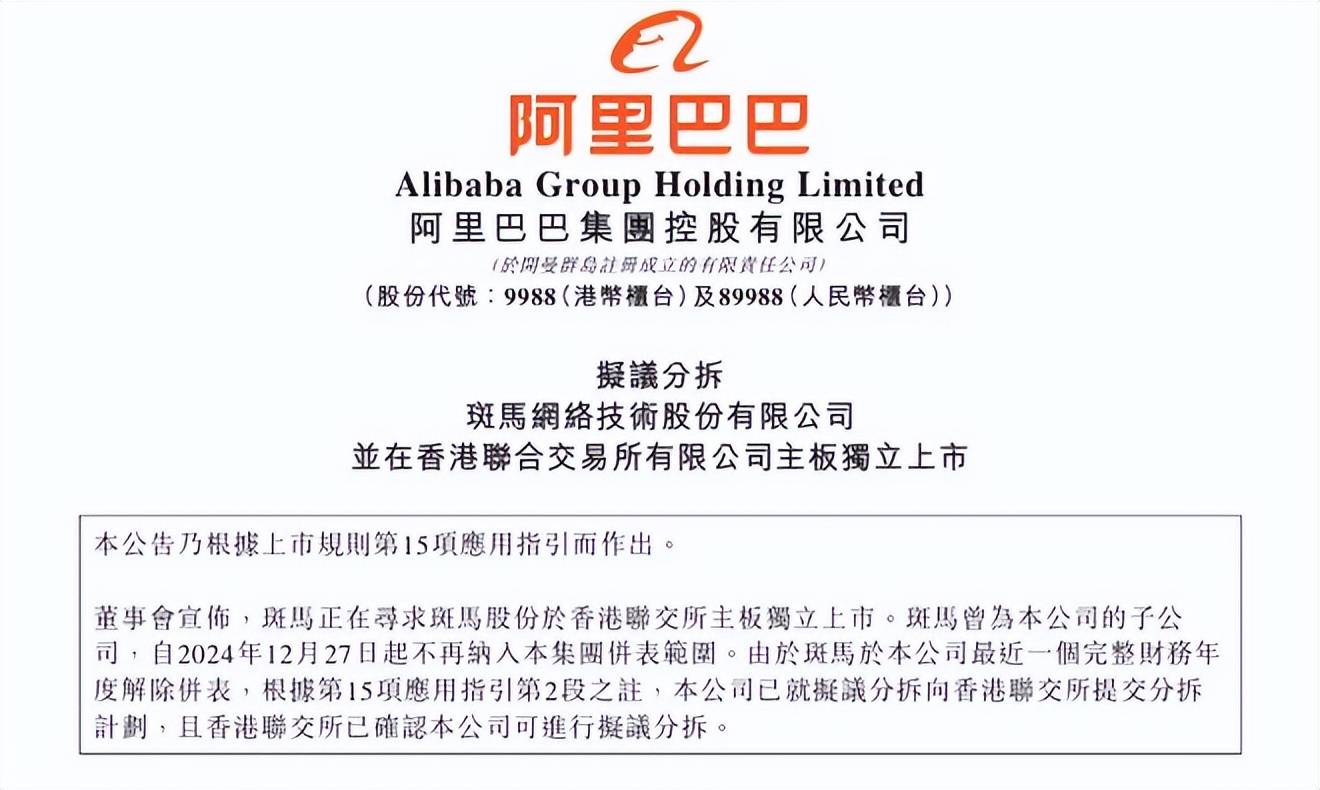
Group 1 - Alibaba announced the proposed spin-off of Zhibo Network Technology Co., Ltd. (Zhibo Zhixing) for independent listing on the Hong Kong Stock Exchange [1][4] - Zhibo Zhixing is the largest software-centric intelligent cockpit solution provider in China, with over 8 million vehicles equipped with its solutions across more than 14 countries as of June 30, 2025 [4][8] - Alibaba holds approximately 44.72% of Zhibo Zhixing's shares and plans to retain over 30% post-spin-off [8][11] Group 2 - The spin-off is part of Alibaba's "1+6+N" organizational transformation strategy, aimed at enhancing operational agility and addressing the challenges of large enterprises [11][16] - Zhibo Zhixing's revenue for 2022, 2023, and 2024 is projected to be 805 million, 872 million, and 824 million yuan respectively, with total losses of approximately 2.6 billion yuan over three years [13] - The spin-off is expected to improve financial transparency and allow investors to evaluate Zhibo Zhixing's performance separately from Alibaba's broader operations [13][16] Group 3 - The independent listing of Zhibo Zhixing is seen as a strategic move to release the investment value of high-potential businesses while maintaining synergies with Alibaba's ecosystem [17][19] - Zhibo Zhixing aims to leverage Alibaba's technological support in cloud services and AI while expanding its client base beyond Alibaba's ecosystem [17][21] - The spin-off reflects a broader trend among Chinese tech companies to separate high-potential businesses for independent growth and market valuation [19][21]

一图看懂佑驾创新(02431.HK)2025年上半年业绩
Ge Long Hui· 2025-08-22 14:39
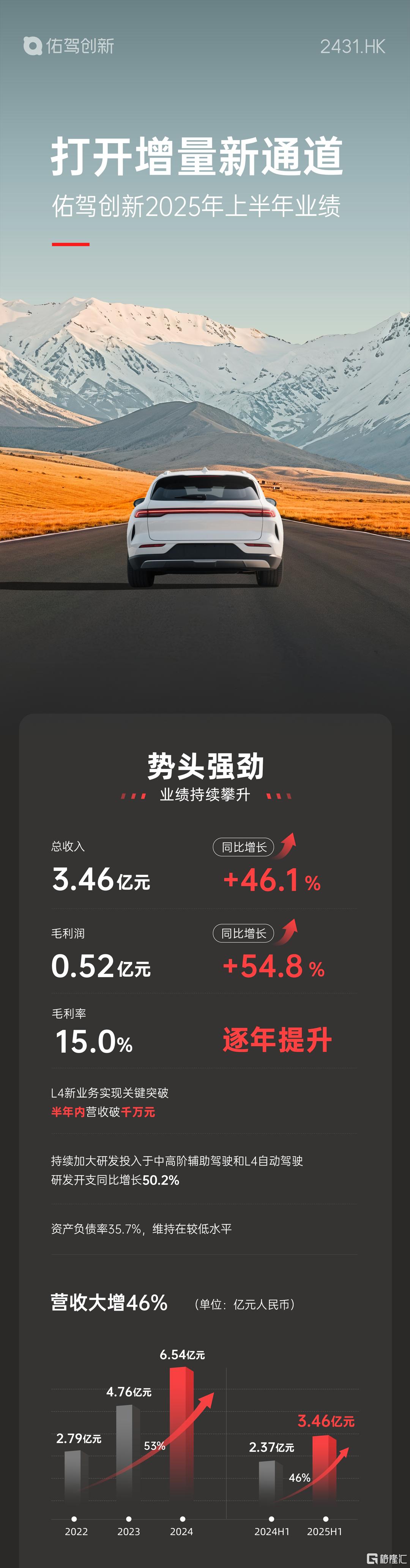
Core Viewpoint - The company demonstrates strong growth in revenue and profit, with significant advancements in its L4 autonomous driving business and international expansion efforts [2][4][21]. Financial Performance - Total revenue reached 3.46 billion RMB, reflecting a year-on-year increase of 46% [4]. - Gross profit increased by 54.8%, amounting to 0.52 billion RMB, with a gross margin of 15.0% [2][6]. - The asset-liability ratio stands at a low level of 35.7% [4]. Business Segments - The intelligent driving solutions segment generated revenue of 2.41 billion RMB, up 32.4% year-on-year [10]. - The intelligent cockpit solutions segment saw revenue of 0.61 billion RMB, marking a substantial growth of 99.0% [10]. - The vehicle-road collaboration segment reported revenue of 0.39 billion RMB, with a year-on-year increase of 63.4% [10]. Product Development - The company launched the iPilot 4 Plus and iPilot 4 Pro advanced driving solutions, achieving mass production for 42 automotive manufacturers [13]. - The iRobo solution generated over 10 million RMB in revenue in the first half of the year, contributing significantly to the L4 business [21]. - A new intelligent cockpit model, BamBam, and an integrated DMS machine, iCabin Lite, were introduced [15]. International Expansion - The company has successfully integrated its solutions into various export models, targeting markets in the EU, Australia, and Mexico [22]. - A subsidiary was established in Singapore to enhance international operations [24]. - Collaborations with international Tier 1 suppliers have been initiated to penetrate the global automotive supply chain [23].
华为乾崑激光雷达累计发货量破100万
Zheng Quan Shi Bao Wang· 2025-08-22 12:08
人民财讯8月22日电,8月22日,华为智能汽车解决方案BU官方微博宣布,华为乾崑激光雷达累计发货 量破100万,华为乾崑智驾车位到车位领航辅助P2P已累计使用1000万次。 ...
要被阿里分拆上市的斑马,成色几何
虎嗅APP· 2025-08-21 14:11
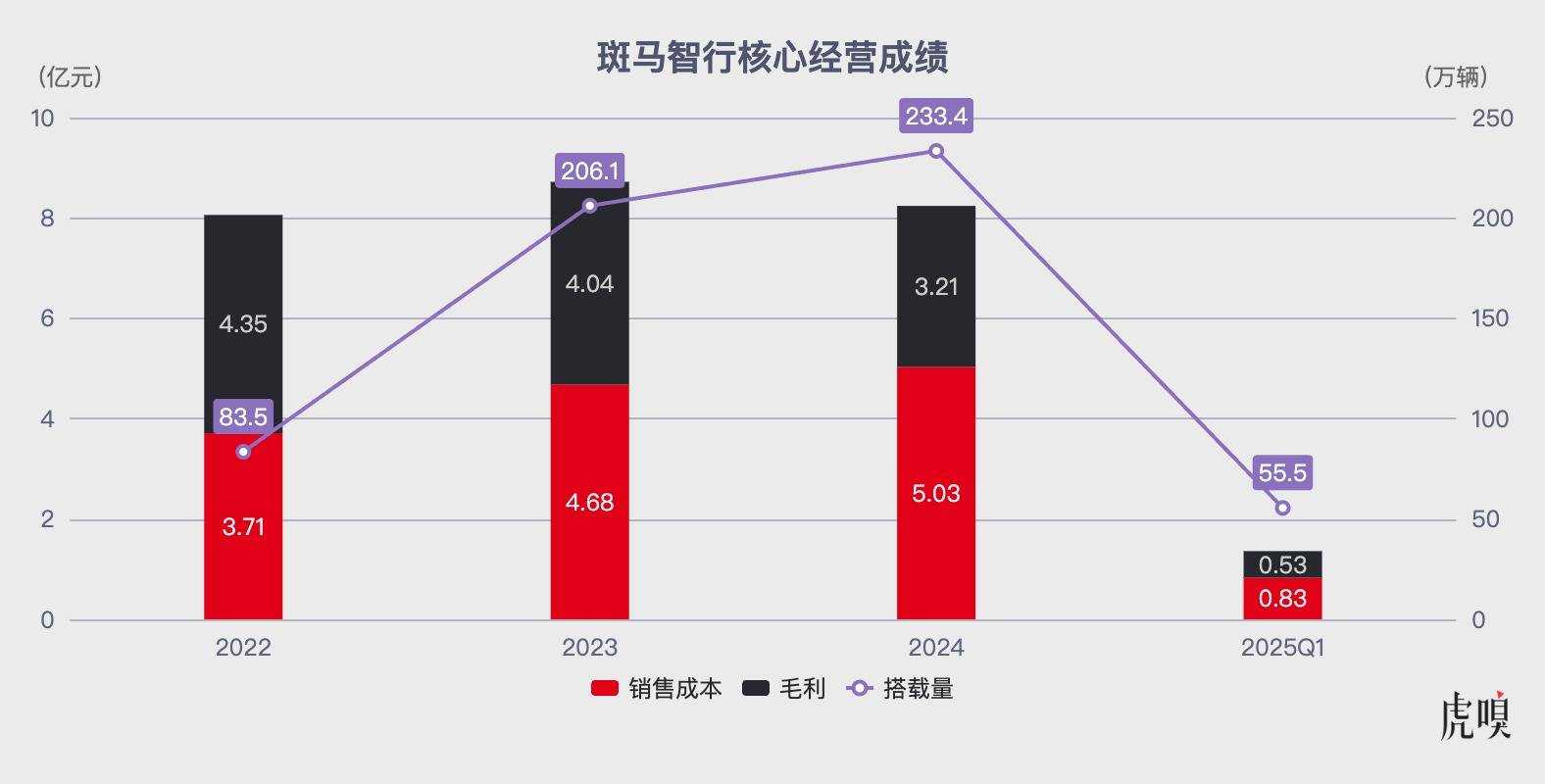
Core Viewpoint - Alibaba Group plans to spin off Zhibo Network Technology Co., Ltd. (Zhibo Zhixing) for independent listing on the Hong Kong Stock Exchange, aiming to enhance funding and operational transparency while addressing competitive pressures in the smart automotive sector [2][3]. Group 1: Company Background and Market Position - Zhibo Zhixing was established in 2015 through a joint investment by Alibaba Group and SAIC Group, focusing on integrating technology with automotive manufacturing capabilities [4]. - As of Q1 2025, Zhibo Zhixing has collaborated with over 40 automotive brands, including Volkswagen and BMW, and has deployed smart vehicles exceeding 10 million units, achieving a market share of over 15% in China by 2024 [4]. - The company primarily focuses on smart vehicle operating systems and related solutions, indicating a strong market presence despite increasing competition [4]. Group 2: Financial Performance and Challenges - Zhibo Zhixing's revenue has remained stable since 2022, but its gross margin has been declining, reflecting intensified competition in the industry [6]. - The company has invested heavily in research and development, with R&D expenses exceeding revenue, leading to a cash loss of 3 billion yuan since 2022 [8]. - As of June 30, 2025, Zhibo Zhixing's cash and cash equivalents stood at 3.16 billion yuan, with total equity at 4.743 billion yuan, indicating financial strain [9]. Group 3: Strategic Shift and Future Outlook - To sustain significant investments in artificial intelligence, Zhibo Zhixing views the IPO as a crucial step for securing long-term and stable funding sources [10]. - The company is shifting its strategic focus towards AI-driven technologies, as evidenced by the launch of the "Yuan Shen AI" brand, which aims to redefine smart cabin experiences [12]. - Zhibo Zhixing faces fierce competition from major players like Huawei and Baidu, as well as from self-developing automakers, which will impact its future profitability and survival [14].
要被阿里分拆上市的斑马,成色几何
Hu Xiu· 2025-08-21 13:30
Core Viewpoint - Alibaba Group plans to spin off Zhibo Network Technology Co., Ltd. (Zhibo Zhixing) for independent listing on the Hong Kong Stock Exchange, aiming to enhance funding and operational transparency [1][2]. Company Overview - Zhibo Zhixing was established in 2015 through a joint investment by Alibaba Group and SAIC Group, focusing on integrating technology with automotive manufacturing capabilities [3]. - As of Q1 2025, Zhibo Zhixing has collaborated with over 40 automotive brands, achieving a market share of over 15% in the domestic market for smart vehicle operating systems [4]. Financial Performance - The company has maintained stable overall revenue since 2022, but its gross margin has been declining due to increasing competition in the industry [7]. - Zhibo Zhixing has incurred a cash loss of 3 billion yuan since 2022, with R&D expenses exceeding its revenue [9]. - As of June 30, 2025, the company had cash and cash equivalents of 3.161 billion yuan and total equity of 4.743 billion yuan [11]. Strategic Shift - The company is pivoting towards AI-driven business models, as indicated by its new AI technology brand "Yuan Shen AI," launched in September 2024 [17]. - Zhibo Zhixing's AI model has been rated highly in a recent IDC report, outperforming competitors in several key areas [18]. Competitive Landscape - The competition in the smart automotive sector is intense, with major players like Huawei and Baidu also developing their own operating systems and AI solutions [21][22]. - The ability to secure sufficient funding post-IPO will be crucial for Zhibo Zhixing to enhance its product offerings and maintain competitiveness in the rapidly evolving market [23].
阿里宣布子公司分拆上市
Di Yi Cai Jing· 2025-08-21 13:14
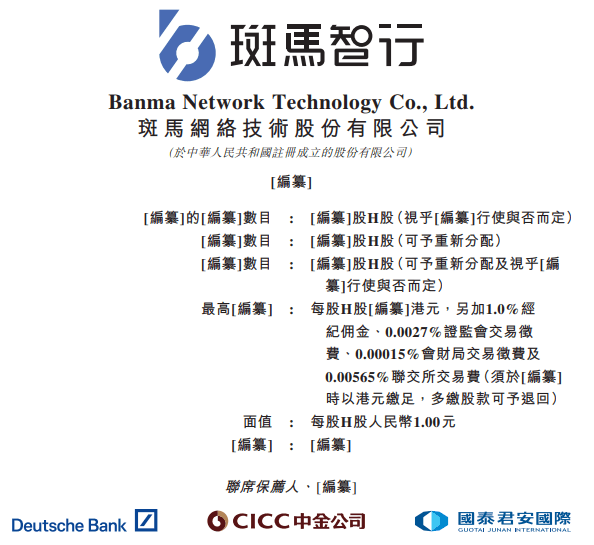
Core Viewpoint - Alibaba Group announced plans to spin off Zhaoma Network Technology Co., Ltd. and list it independently on the Hong Kong Stock Exchange, aiming to enhance Zhaoma's independent valuation and attract specific investors in the automotive system solutions sector [2][7]. Company Information - Zhaoma Network Technology Co., Ltd. was established in November 2015 with a registered capital of approximately 3.2 billion RMB. The ultimate beneficiary is Zhejiang Tmall Technology Co., Ltd., holding 31.07% of the shares [5][6]. - As of the announcement date, Alibaba holds approximately 44.72% of Zhaoma's shares, and post-spin-off, it will retain over 30% [6][7]. IPO Application - Zhaoma Zhixing submitted its IPO application to the Hong Kong Stock Exchange on August 20, with Deutsche Bank, CICC, and Guotai Junan International as joint sponsors [3][7]. - The IPO aims to raise funds for research and development, market expansion, capital operations, and working capital [9][12]. Market Potential - The global smart vehicle sales are projected to grow from 58 million units in 2024 to 86.5 million units by 2030, with a compound annual growth rate (CAGR) of 6.9%. The market size for smart cockpit solutions in China is expected to increase from 129 billion RMB to 327.4 billion RMB, with a CAGR of 16.8% [12]. Strategic Focus - Zhaoma will utilize part of the raised funds to enhance its technological leadership in the smart cockpit solutions market, increase market share in China, and support business acquisitions and expansions [10][11][12].
这家国内排名第一的公司,将从阿里巴巴分拆上市!逾800万辆车搭载其方案,最大客户是上汽集团
Sou Hu Cai Jing· 2025-08-21 12:20
Group 1 - Alibaba announced the proposed spin-off of Zhaoma Network Technology Co., Ltd. (Zhaoma Zhixing) for independent listing on the Hong Kong Stock Exchange [1][3] - Zhaoma Zhixing reported cumulative revenue of 2.637 billion RMB and losses and comprehensive expenses of 4.183 billion RMB from 2022 to Q1 2025 [1][5] - As of the announcement date, Alibaba holds approximately 44.72% of Zhaoma Zhixing's shares and will retain over 30% post-spin-off [4] Group 2 - The IPO proceeds will be used to enhance R&D investment, increase market share in China, expand globally, support business acquisitions, and supplement working capital [6] - Zhaoma Zhixing is the largest software-centric intelligent cockpit solution provider in China, with a projected market size of 327.4 billion RMB by 2030 [7] - The company’s intelligent cockpit solutions have been installed in over 8 million vehicles across more than 14 countries as of June 30, 2025 [9] Group 3 - From 2022 to 2024, Zhaoma Zhixing achieved revenues of 805 million RMB, 872 million RMB, and 824 million RMB, with corresponding losses of 878 million RMB, 876 million RMB, and 847 million RMB [8] - The gross profit margins for the same period were 53.9%, 46.4%, and 38.9%, respectively, with Q1 2025 showing a revenue of 136 million RMB and a loss of 1.582 billion RMB [8]