二手车出口

Search documents
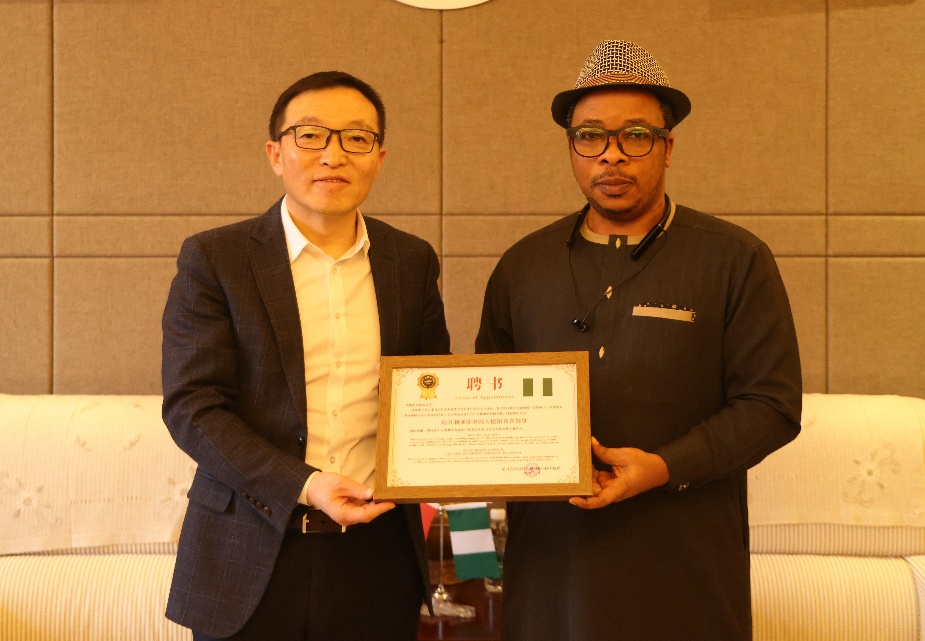
二手车出口体系获认可,尼日利亚驻华大使馆向神州租车授予双项荣誉
Zhong Guo Qi Che Bao Wang· 2026-02-05 06:18
Core Insights - The expansion of China's used car export scale necessitates the establishment of a comprehensive service guarantee system overseas, marking a critical shift from "going out" to "integrating in" for companies [1] - Shenzhou Car Rental has been recognized by the Nigerian Embassy in China for its product quality and service capabilities in the local used car market, receiving two significant certificates [1][2] Group 1 - In 2025, Shenzhou Car Rental achieved an export volume of 3,100 used cars, positioning itself competitively in the international used car market [2] - The company aims to introduce mature inspection standards, sales service systems, and after-sales experience to the destination countries, creating a complete service chain that includes vehicle preparation, quality inspection, cross-border logistics, destination delivery, and after-sales support [2] - Nigeria is currently one of the largest export destination countries for Shenzhou Car Rental and is viewed as a core market with significant potential for the future [2] Group 2 - The Nigerian Embassy's recognition of Shenzhou Car Rental reflects the Nigerian government's positive attitude towards China's mature automotive circulation and mobility service systems [2][3] - The Nigerian Deputy Chief of Mission emphasized the importance of collaboration with Shenzhou Car Rental, noting that high-quality used cars from China will significantly aid the modernization of Nigeria's transportation sector [3] - Shenzhou Car Rental's CEO expressed that the recognition from the Nigerian Embassy not only affirms the company's comprehensive capabilities but also demonstrates the trust of the Nigerian government in China's automotive circulation system [3][4] Group 3 - The company aims to transition from "product output" to "service system output," contributing long-term value to China-Nigeria economic cooperation [4] - By connecting with official institutions in the destination country, Shenzhou Car Rental is exploring a new path for overseas expansion that combines official empowerment, system support, and market-oriented operations [4] - With ongoing cooperation between China and Nigeria, Shenzhou Car Rental is expected to continue playing a leading role in the Nigerian and broader African markets, exploring diverse mobility services and automotive circulation models [4]

成都市双流区去年出口额占四川省近一半 铺就二手车出海快速通道
Jing Ji Ri Bao· 2026-01-20 06:17
Core Insights - The second-hand car export industry in China, particularly in Chengdu's Shuangliu District, is experiencing significant growth, with over 1,000 vehicles exported to Belt and Road Initiative countries in the past two years and a projected 60% year-on-year increase in export value by 2025 [1] - The establishment of the first second-hand car export base in Sichuan Province aims to create a comprehensive and efficient ecosystem for the second-hand car export industry, leveraging the region's strong automotive industry foundation [1] Group 1 - The Shuangliu District is actively promoting the effective connection between domestic supply and overseas demand, hosting the first Sichuan second-hand car export supply and procurement matchmaking conference and engaging with countries like Russia and Uzbekistan [2] - By 2025, Shuangliu District aims to export 23,271 second-hand cars, accounting for nearly 50% of Sichuan Province's total second-hand car export value, thereby driving industrial clustering and trade growth [2] Group 2 - The district has established a unique service mechanism involving government, foreign trade service platforms, and second-hand car export service providers to enhance export efficiency and international competitiveness [3] - Efforts are being made to standardize and regulate the second-hand car export industry, with a focus on preventing price wars and enhancing the international reputation of Chinese second-hand cars [3] - The district plans to advance the digitalization of the second-hand car export business by creating a public service platform to improve resource matching and application efficiency [3] Group 3 - During the 14th Five-Year Plan period, Shuangliu District will implement national economic policies to promote the integration of domestic and foreign trade, using second-hand car exports as a starting point for innovation in foreign trade and integration of domestic resources [4]
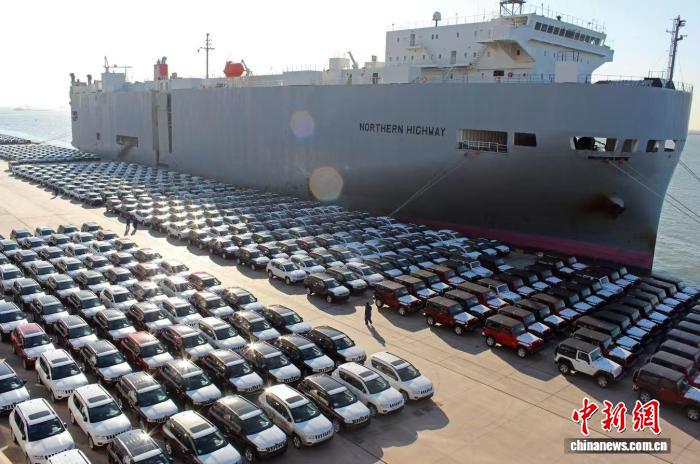
天津东疆二手车出口再攀新高
Zhong Guo Xin Wen Wang· 2026-01-12 13:42
Core Insights - The export of used cars from Tianjin Dongjiang has reached new heights in 2025, with both export volume and value achieving double-digit growth, serving over 60 enterprises and exporting more than 34,000 vehicles worth over 6 billion yuan, accounting for approximately two-thirds of Tianjin's total used car export value [1][3]. Group 1: Export Performance - In 2025, Dongjiang's used car export business achieved a volume of over 34,000 units and a value exceeding 6 billion yuan [1]. - The region has maintained high growth for six consecutive years, with cumulative exports since 2019 reaching nearly 90,000 vehicles and a total export value of nearly 16 billion yuan [3][4]. Group 2: Strategic Initiatives - Dongjiang is leveraging opportunities from the Shanghai Cooperation Organization (SCO) summit to enhance trade connections with Central Asian countries, the UAE, and Russia, covering about 80% of SCO member states [3]. - The establishment of a "Tianjin Dongjiang Used Car Export Base" and a comprehensive development system is aimed at improving the entire export process, including logistics, financial services, and after-sales support [4]. Group 3: Support and Collaboration - Dongjiang has organized workshops and training sessions in collaboration with business and tax departments to assist enterprises with licensing, export tax refunds, and understanding new policies [3][4]. - The region is creating platforms for cooperation among industry associations, financial institutions, and manufacturers to facilitate resource connections for enterprises [3].
多项新法规,元旦起实施
Zhong Guo Zheng Quan Bao· 2025-12-31 12:27
Group 1 - The China Securities Regulatory Commission has revised the Corporate Governance Guidelines for listed companies, effective from January 1, 2026, to further regulate the behavior of directors, senior management, and controlling shareholders, enhancing corporate governance standards [1] - The People's Bank of China has issued the Interbank Market Brokerage Business Management Measures, effective from January 1, 2026, which prohibits brokerage firms from providing services for financial institutions participating in bond issuance, while emphasizing the need for enhanced internal controls and process management [2] - The People's Bank of China has announced a one-time credit repair policy, effective from January 1, 2026, allowing individuals to have overdue information removed from credit databases if they repay overdue debts by specified deadlines [3] Group 2 - The Financial Regulatory Bureau has revised the Trust Company Management Measures, effective from January 1, 2026, to strengthen the regulatory framework for the trust industry, requiring major shareholders to provide accurate operational and financial information [4] - The Financial Regulatory Bureau has issued the Financial Leasing Company Management Measures, effective from January 1, 2026, focusing on the unique functions of financial leasing companies and outlining specific regulations for various leasing activities [5] - The new Value-Added Tax Law will come into effect on January 1, 2026, marking significant progress in implementing the principle of tax legality in China [6] Group 3 - The Ministry of Commerce and other departments have issued a notice to strengthen the management of used car exports, effective from January 1, 2026, requiring additional documentation for vehicles registered less than 180 days before export [7] - A mandatory national standard for electric vehicle energy consumption will be implemented on January 1, 2026, setting stricter limits on energy consumption compared to previous recommendations [8][9] - The State Council Tariff Commission has announced adjustments to import tariff rates and categories, effective from January 1, 2026, including zero tariff treatment for 43 products from least developed countries [10] Group 4 - The new management measures for oil and gas infrastructure will take effect on January 1, 2026, promoting private sector participation in oil and gas pipeline projects and related infrastructure [11] - The Ministry of Finance and the State Taxation Administration have announced changes to the value-added tax policy for personal housing sales, effective from January 1, 2026, imposing a 3% tax on properties sold within two years of purchase [12] - The national medical insurance drug list will be updated on January 1, 2026, adding 114 new drugs, including 50 innovative drugs, significantly improving coverage for critical health areas [13] Group 5 - The National Development and Reform Commission, along with other ministries, has issued a notice to improve kindergarten fee policies, effective from January 1, 2026, allowing various types of fees while implementing government-guided pricing for public and non-profit kindergartens [14] - A subsidy program for the purchase of new household appliances and smart products will begin on January 1, 2026, offering a 15% subsidy on eligible products, with specific caps on the amount per item [15]
四季内蒙古·冬季的冲刺 | 实现里程碑式跨越!呼和浩特综保区跻身“百亿园区”
Xin Lang Cai Jing· 2025-12-28 14:16
Group 1 - The core viewpoint is that the Hohhot Comprehensive Bonded Zone has achieved a significant milestone by surpassing an import and export volume of 10 billion yuan, marking its entry into the "billion-yuan park" category, which reflects a substantial leap in its level of openness to the outside world [1] - The Hohhot Comprehensive Bonded Zone has seen robust development in various sectors, including bonded logistics, precious metal deep processing, used car exports, and cross-border e-commerce [1] - As of January to November 2025, the import and export volume of the Hohhot Comprehensive Bonded Zone reached 9.309 billion yuan, representing a year-on-year growth of 16.06%, with processing trade accounting for 46.69% of Inner Mongolia's total [3] Group 2 - The industrial output value of the Hohhot Comprehensive Bonded Zone reached 4.262 billion yuan, showing a remarkable year-on-year increase of 310% [4]
二手车出口翻番,上海外贸有了新增长级
Xin Lang Cai Jing· 2025-12-19 05:29
Core Viewpoint - The launch of the Shanghai Second-Hand Car International Trade Comprehensive Service Platform (Waigaoqiao) is expected to propel the standardized and large-scale development of second-hand car exports in Shanghai and nationwide, with a target of exporting 50,000 second-hand cars by 2027 [1][4]. Group 1: Platform Overview - The platform is operated by a subsidiary of Waigaoqiao Group and is designed to integrate various resources and services for second-hand car exports, including public services, logistics, and financial services [2][4]. - It leverages the advantages of the Shanghai Free Trade Zone and the Waigaoqiao port to create a comprehensive service ecosystem that enhances the efficiency of second-hand car exports [4][5]. Group 2: Industry Impact - The platform aims to consolidate industry resources, allowing for better coordination among second-hand car exporters, financial institutions, and logistics providers, thus addressing the previously fragmented nature of the industry [6][9]. - The integration of services has significantly reduced the time and cost for businesses, enabling them to complete necessary processes in half a day instead of several days [5][6]. Group 3: Export Trends - In the first 11 months of this year, Shanghai exported over 20,000 second-hand cars, marking a year-on-year increase of over 100% [1]. - The platform is expected to facilitate the export of non-zero-kilometer second-hand cars, with a target of 3,000 units in the first quarter of next year, moving away from the practice of exporting new cars as second-hand vehicles [7][8]. Group 4: Market Expansion - The platform is already connecting individual sellers with 47 pilot enterprises for direct transactions, and it has launched a vehicle information system for online trading with overseas buyers [6][9]. - The acceptance of Chinese second-hand cars in international markets is increasing, with a notable shift in perception among consumers in regions like Southeast Asia and the Middle East [9][11]. Group 5: Logistics and Supply Chain - The platform is enhancing the logistics supply chain by integrating various resources, which helps to address industry pain points such as financing difficulties and logistics challenges for second-hand electric vehicles [8][12]. - Companies like Yuanchu International Logistics are utilizing the platform to expand their operations in the Middle East, benefiting from the streamlined processes and increased efficiency in the supply chain [11][12].

前11个月上海出口二手车超2万辆 同比增长超100% 依托自贸区政策优势 一站式服务平台入驻外高桥
Jie Fang Ri Bao· 2025-12-19 01:47
Group 1 - Shanghai is a key export base for used cars in China, with over 20,000 used cars exported from January to November this year, representing a year-on-year increase of over 100% [1] - The Shanghai International Trade Comprehensive Service Platform for Used Cars (Waigaoqiao) aims to enhance the export capabilities of used cars by integrating various services such as public service, logistics, and financial services [1] - The platform significantly reduces the time required for export procedures, allowing for completion in half a day instead of two days [1] Group 2 - The platform's aggregation effect is expected to enhance the quality and efficiency of the regional used car export industry, providing comprehensive supply chain services for companies looking to export to markets like Dubai and the Middle East [2] - China's automotive export volume remains the highest globally, with increasing acceptance of Chinese used cars among overseas consumers, particularly for both new energy and traditional fuel vehicles [2] - The Shanghai Municipal Commission of Commerce has issued an action plan to promote used car exports, aiming to cultivate 3-5 leading used car export enterprises and reach an export scale of 50,000 vehicles per year by 2027 [2]

二手车出口新政出鞘:半数中小外贸车商将被淘汰
Jing Ji Guan Cha Bao· 2025-12-07 07:04
Core Viewpoint - The new policy on used car exports in China is expected to significantly reshape the industry, leading to the elimination of approximately half of the small and medium-sized foreign trade car dealers due to stricter regulations on exporting vehicles labeled as "used" [1][2][3]. Summary by Sections Policy Changes - The new regulations, effective from January 1, 2025, will strictly control the export of new cars under the guise of used cars, requiring a "Post-Sale Maintenance Service Confirmation" for vehicles registered less than 180 days prior to export [2][3]. - The policy aims to eliminate the practice of exporting "zero-kilometer used cars," which have been a significant part of the export market, causing confusion and unfair competition [3][6]. Industry Impact - The number of used car exporters in China, currently around 3,000, is projected to decrease by at least 50% due to the new regulations, particularly affecting smaller traders and those less knowledgeable about the market [3][5]. - The export volume of used cars has surged from under 3,000 units in 2019 to an estimated 436,000 units in 2024, but this growth may face a downturn as the new policy is implemented [5][6]. Market Dynamics - Despite the anticipated short-term pain, the long-term outlook for used car exports remains positive, with expectations of reaching over 600,000 units by 2025, particularly in Southeast Asia [6][8]. - The demand for used cars in overseas markets, especially in regions like Russia, Central Asia, and Africa, is expected to remain strong, providing opportunities for compliant exporters [6][9]. Strategic Intent - The policy is designed to elevate the quality of exports and ensure compliance with international standards, moving the industry from a focus on volume to one centered on high-quality service and long-term value [9][10]. - The shift aims to stabilize domestic used car prices and promote new car consumption by addressing the oversupply in the domestic market [10].
二手车出口: 要从车辆“搬运工”变身生态服务商
Zhong Guo Qi Che Bao Wang· 2025-12-01 02:40
Core Insights - The recent issuance of the "Notice on Further Strengthening the Management of Used Car Exports" aims to regulate the used car export industry in China, promoting healthy and orderly development [2][3][4] Group 1: Industry Context - The used car export market in China has been experiencing rapid growth, with expectations for the total export volume to exceed 436,000 units in 2024, representing a year-on-year increase of 46.5% [5] - The market is shifting from traditional fuel vehicles to used electric vehicles, particularly in Southeast Asia and the Middle East, where acceptance of such vehicles is increasing [6][12] Group 2: Regulatory Impact - The new regulations are expected to curb the export of "zero-kilometer used cars," which have been a source of market distortion and could lead to a temporary adjustment in the market [7][12] - The regulations will enhance the credibility of Chinese used cars in international markets, particularly those that meet standardized testing and transparency requirements [7][12] Group 3: Challenges and Opportunities - The industry faces challenges such as the need for standardized vehicle condition assessments and the establishment of a comprehensive after-sales service network [6][9] - Companies that comply with the new regulations and can adapt to international standards are likely to benefit, particularly those with stable vehicle sources and robust overseas channels [12] Group 4: Future Directions - The government will support enterprises in enhancing their international operational capabilities and establishing a complete export support system, including after-sales services and logistics [8][9] - The combination of large auction platforms and export service providers is becoming the mainstream model for used car exports, with over 70% of used car exports in developed countries facilitated through such platforms [4]

“十四五”看内蒙古|内蒙古跨境电商交易额达36.4亿元,增长90.1%
Sou Hu Cai Jing· 2025-11-27 19:06
Core Viewpoint - The Inner Mongolia Autonomous Region is actively promoting high-quality development and regional cooperation during the "14th Five-Year Plan" period, focusing on integrating into domestic and international dual circulation [1] Group 1: International Cooperation - By 2025, the region plans to implement nine policies to enhance its northern opening capabilities, including measures to innovate border trade and deepen cooperation with Russia and Mongolia [3] - From January to October 2025, the region's foreign trade import and export volume reached 175.13 billion yuan, an increase of 2.2%, with cross-border e-commerce transactions amounting to 3.64 billion yuan, growing by 90.1% [3] - The first second-hand car export auction platform to Russia and Mongolia was launched, exporting 11,943 vehicles worth 1.35 billion yuan, representing growth of 66.36% and 72.7% respectively [3] Group 2: Port Development - The region invested 27.1 million yuan in foreign trade and economic funds to support processing projects, promoting the development of three major processing areas [4] - All 85 key projects for high-quality port development have commenced, with the Arxan Port becoming the fourth year-round open international land port in Inner Mongolia [4] - From January to October 2025, the total cargo volume at ports reached 112 million tons, an increase of 11.77%, leading the nation among border land port provinces [4] Group 3: Domestic Cooperation - The region is actively integrating into the national regional development strategy, enhancing inter-provincial cooperation and industrial transfer, with domestic investment reaching 490.7 billion yuan from January to October 2025, a year-on-year increase of 13.4% [4] - Key regions such as Beijing-Tianjin-Hebei, Yangtze River Delta, and Guangdong-Hong Kong-Macao Greater Bay Area contributed 342.74 billion yuan, accounting for nearly 70% of total investment [4] - The region has successfully organized various investment promotion activities, including the fifth China-Mongolia Expo and the third Northward Opening Economic and Trade Fair [4] Group 4: Regional Coordination - The implementation of the "Sixfold Increase Plan" and "Four Actions" in the Beijing-Inner Mongolia collaboration has led to 321 joint technology projects and services for 375,000 patients by over 1,700 "Beijing Medical" experts [5] - The region has expanded sales channels for green food and organized several promotional events, achieving a sales volume of 30.2 billion yuan for "Mongolian Products in Beijing" [6] - Policies have been introduced to promote high-quality development in different regions, with 40 supporting measures from the Commerce Department to activate new development momentum [6]