内存制造

Search documents
美股三大期指全线跳水;科技巨头普跌,英伟达、谷歌跌超3%;军工股集体走强,石油股多数上涨,美国能源上涨18.26%【美股盘前】
Mei Ri Jing Ji Xin Wen· 2026-03-03 11:15
Market Overview - Major stock index futures declined, with Dow futures down 1.14%, S&P 500 futures down 1.50%, and Nasdaq futures down 1.96% [1] Energy Sector - Oil stocks saw a pre-market increase, with U.S. energy stocks rising over 18%. Notable increases included Exxon Mobil up 2.00%, Chevron up 1.56%, and ConocoPhillips up 2.49%. WTI crude oil futures rose 5.19% to $74.97 per barrel [1] Defense Sector - Defense stocks collectively strengthened in pre-market trading, with Lockheed Martin up 1.56% and Raytheon Technologies up 0.82% [1] Airline Sector - Airline stocks experienced a pre-market decline, with American Airlines down 3.12%, Delta Air Lines down 3.05%, and United Airlines down 2.91% [1] Memory Stocks - Memory stocks faced a pre-market downturn, with Micron Technology down 6.15%, Western Digital down 5.04%, and Seagate down 4.80% [2] Technology Sector - Star technology stocks also saw a decline, with Nvidia and Google down over 3%, AMD down 3.71%, and Microsoft down 1.70% [3] - Palantir Technologies experienced a drop of 3.46% after co-founder Peter Thiel announced plans to sell up to 2 million shares worth $280 million [3] Precious Metals Sector - Precious metals stocks fell in pre-market trading, with Hecla Mining down 6.21%, Newmont Gold down 3.53%, and Pan American Silver down 4.6%. Spot gold prices decreased by 1.11% to $5260 per ounce, while spot silver prices fell by 6.04% to $83.96 per ounce [3] Corporate Debt Rating - Paramount Global's debt rating was downgraded to junk status (BB+) by Fitch Ratings following its acquisition of Warner Bros, which resulted in a net debt of $79 billion for the combined company. Paramount's stock fell by 5.55% [4]



新思CEO:存储芯片缺货到2027年
半导体行业观察· 2026-01-27 01:26
Core Viewpoint - The semiconductor industry is facing a prolonged memory chip shortage, potentially lasting until 2027, driven by the surge in demand from AI infrastructure and data centers [1][2]. Group 1: Memory Chip Demand and Supply - A semiconductor industry executive indicated that the memory shortage crisis, exacerbated by the AI infrastructure boom, may last longer than expected [1]. - High bandwidth memory demand is particularly strong, with significant investments flowing into data center infrastructure, leading to unprecedented price increases for memory chips [1]. - Synopsys CEO Sassine Ghazi stated that the chip shortage will persist until at least 2026 or 2027, as major manufacturers like Samsung, SK Hynix, and Micron struggle to ramp up production capacity [1][2]. Group 2: Price Trends and Market Impact - Analysts describe the current memory market conditions as a "super cycle," indicating a golden period for memory companies due to high demand and low supply [2]. - The rising memory prices may force consumer electronics companies to consider price increases, with Xiaomi predicting smartphone price hikes by 2026 [4]. - Lenovo's CFO Winston Cheng expressed confidence that the current cycle will allow the company to pass costs onto consumers, despite some impact on demand for electronic devices [4].

传华硕有意进军DRAM
半导体行业观察· 2025-12-26 01:57
Core Viewpoint - ASUS plans to enter the DRAM manufacturing market by 2026 to secure a stable memory supply for its PC product line amid ongoing memory shortages affecting the personal computer industry [1][2]. Group 1: ASUS's Market Entry - ASUS aims to optimize memory supply for its key products, including laptops and desktops, as it faces rising procurement costs [2]. - The entry into the DRAM market comes as other memory manufacturers, like Crucial, exit the market, highlighting the competitive landscape [2]. - If successful, ASUS's move could benefit other PC manufacturers that can meet their own needs and have excess capacity [2]. Group 2: Memory Price Trends - DRAM prices are expected to rise significantly, with an 88% increase predicted for 2024 compared to the previous year's low [6]. - Analysts forecast that DRAM prices will peak around 2026, with stabilization not expected until 2027, followed by another potential increase in 2028 [6][9]. - The demand surge driven by artificial intelligence is a key factor behind the rising memory prices, complicating the supply situation for manufacturers [6][7]. Group 3: Market Dynamics - The DRAM market is characterized by volatility, with prices fluctuating based on inventory levels and new capacity coming online [3][6]. - Major OEMs like Dell and HP are less affected by shortages due to their ability to lock in orders, while smaller manufacturers face more significant challenges [7]. - The market is shifting towards high-bandwidth memory (HBM), which is primarily used in high-end data center GPUs and AI accelerators, creating a bifurcated market [8]. Group 4: Future Outlook - TechInsights predicts that while the memory market may stabilize by 2027, the demand from AI data centers will keep supply below demand for the foreseeable future [9]. - Micron Technology reported a 56% revenue increase and a more than doubling of net profit, indicating strong financial performance amid rising memory prices [9].
DDR4价格飞涨,厂商要重新生产
半导体行业观察· 2025-07-05 04:07
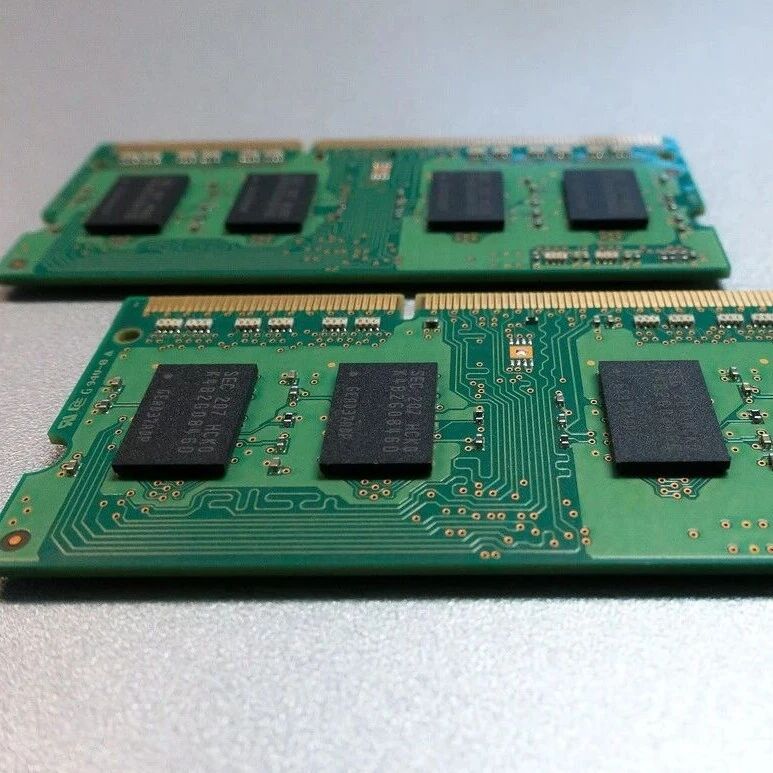
Core Insights - DDR4 memory prices have doubled in the past two months due to supply shortages, with 8GB DDR4-3200 chips now exceeding $5, up from $1.75 earlier this year [1] - Smaller manufacturers are starting to ramp up DDR4 production in response to rising prices, while larger manufacturers like Micron are unlikely to follow suit as they focus on DDR5 and HBM production [1] - The overall DDR4 memory market is expected to stabilize once smaller manufacturers resume production, but a return to previous price levels may take time [2] Group 1 - Major DRAM manufacturers, including Micron, Samsung, and SK Hynix, have announced plans to cease DDR4 production by the end of 2025, contributing to the price surge [1] - Nanya Technology, a Taiwanese memory manufacturer, is benefiting from the price increase due to its extensive DDR4 product lineup and limited DDR5 offerings [1] - The demand for HBM chips driven by the growth of artificial intelligence is causing major manufacturers to shift their production focus away from DDR4 [2] Group 2 - The DDR5 standard was officially introduced by JEDEC in 2020, and while Intel's latest CPUs support both DDR4 and DDR5, AMD's Zen 4 and later processors only support DDR5 [2] - Despite the transition to newer technologies, the widespread use of DDR4 in existing systems means that the technology will not disappear immediately [2]